
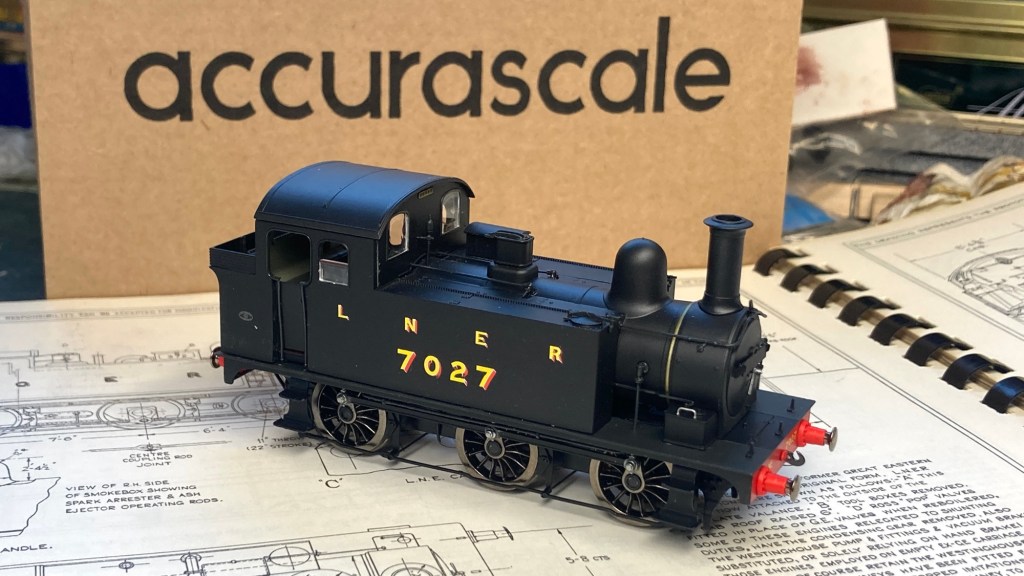
If like me as a yoof you had an N gauge Graham Farish J69, the prototype may well hold a special place in your heart. Years later the late Iain Rice in MRJ treated us to tales of Buckjumpers and a very good detailed essay on the class in issues 35 and 36 of Model Railway Journal. Not only that, there were numerous references and images of Iains model in his articles all written with that unique and for me, engaging style. The hobby owes him a great deal.

So then, about a month or so back Accurascale asked if I’d be interested in the opportunity to do a sort of preview, first look, overview, non determined written, picture, thingy assessment of the J69 engineering prototype, (EP), for the blog. This may have been due to me being regularly seen licking the showcase every time they were at a show. I very quickly said ‘yes please’, and the following notes are my thoughts regarding this model. There will be a YouTube presentation too, which will feature its running performance , thats currently in editing. I also had the pleasure of test running the sample on Tony Wrights Little Bytham layout as part of the first look, and thank him for that opportunity.

One thing I’m not going to do here, is list any of the items I had queries on. This is because this is an engineering prototype and livery sample. So there are possible elements which are still being resolved and this model doesn’t necessarily reflect the final product. There’s also another reason. A few years ago a manufacturer placed images on the web of one of their EP’s which had a few faults extant, which were rightly commented on and fed back. That manufacturer then revised that section of tooling and all production samples have been correct from day of release. However, a week or so ago I happened to see a post which commented that the model in question still had these faults. Clearly the rubberhead making the comments has not bought or even bothered to look at any images of the production item. So, to cut any rubberheads off at the pass, as this is an EP, I’m looking at it from that perspective. Any queries I had, (there’s been two), have been passed back to Accurascale for them to consider.
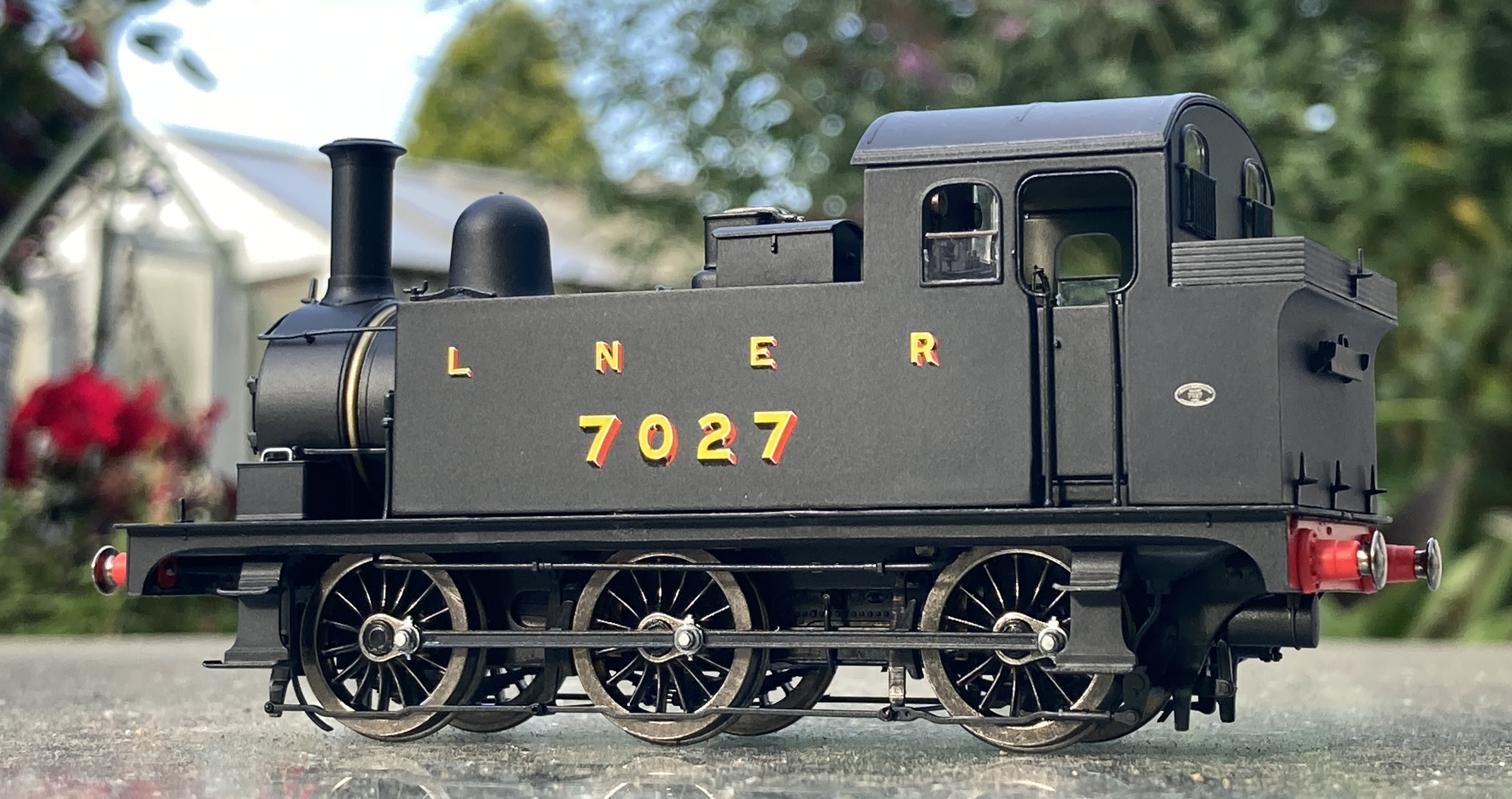
Spoiler alert!, I can’t tell you anything about the packaging or detail packs and instructions. The locomotive arrived as you see it, literally, rather than in production packaging. I have no worries though regarding the future packaging, particularly judging from the quality of previous releases for the Class 37 and Manor locomotive, that have visited the man cave.
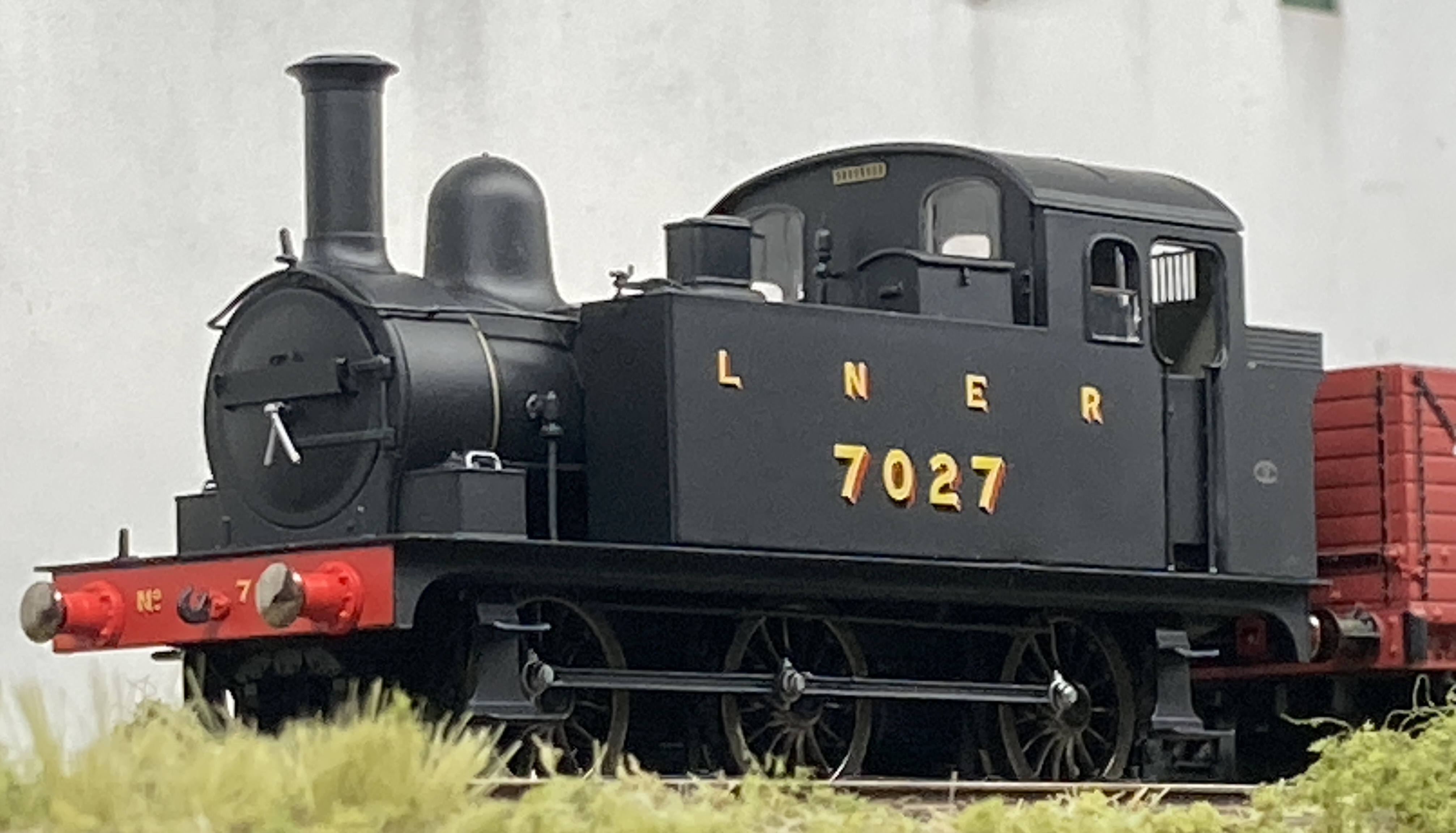
The prototype model supplied reflects a J68, these are the easy types to determine, as they are the only version of the J67/68/69 family with the high cab windows and cab side windows. The J67 and J69 variants have circular porthole windows and a large number of detail variations, making them a little more challenging to tell apart. However, the J68 is no slouch as far as variations are concerned in its own right. More of that later…
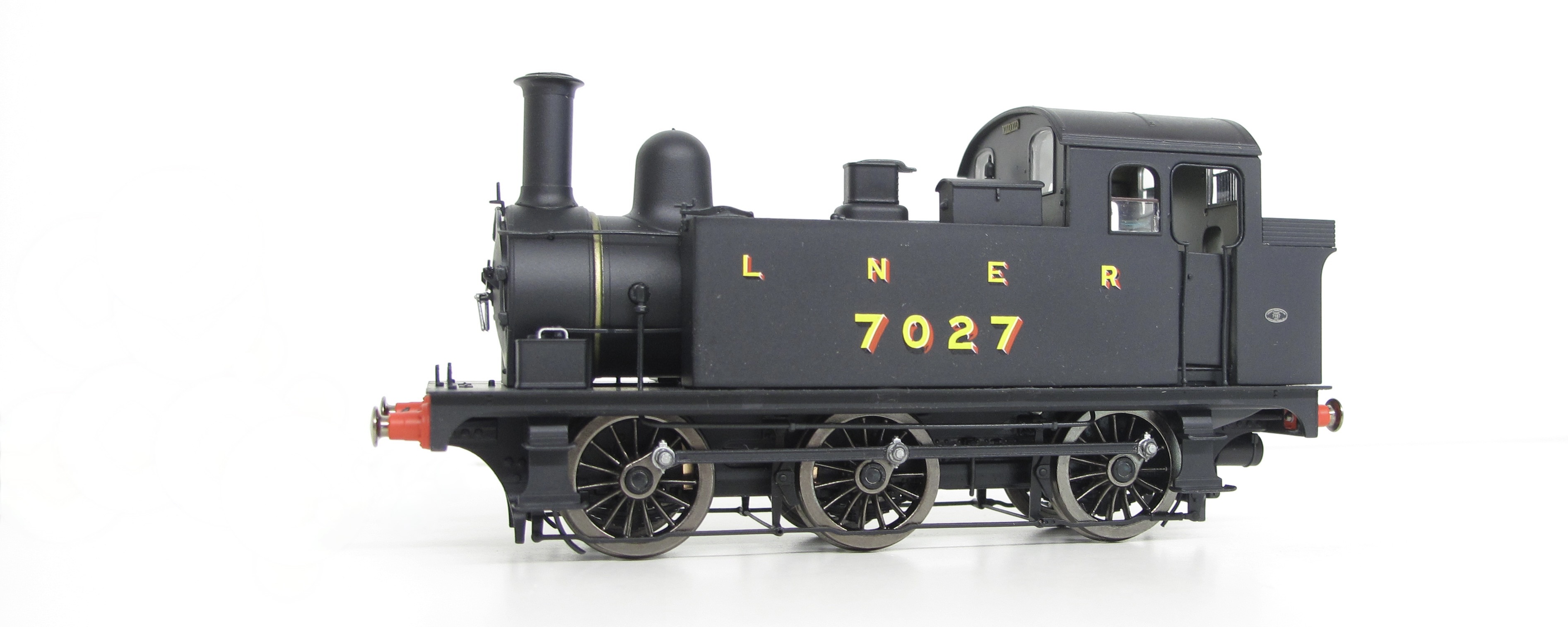
The first impression on unwrapping the model was of its overall quality and weight. Its mass indicating there was a good amount of metal within its construction, and this likely to result in a good haulage potential. The finish was a very good matt black with just the hint of satin. The opacity of the livery printing is excellent, crisp and legible. No components had become detached, as this hadn’t been sent in any of its release packaging this bodes well for its production assembly qualities. No glue assembly smudges or smears were evident either, and the only slight jarring note on this engineering prototype is the sheen on the driving wheels. A more realistic finish for the driving wheels appearance is already on Accurascales ‘to do’ list.
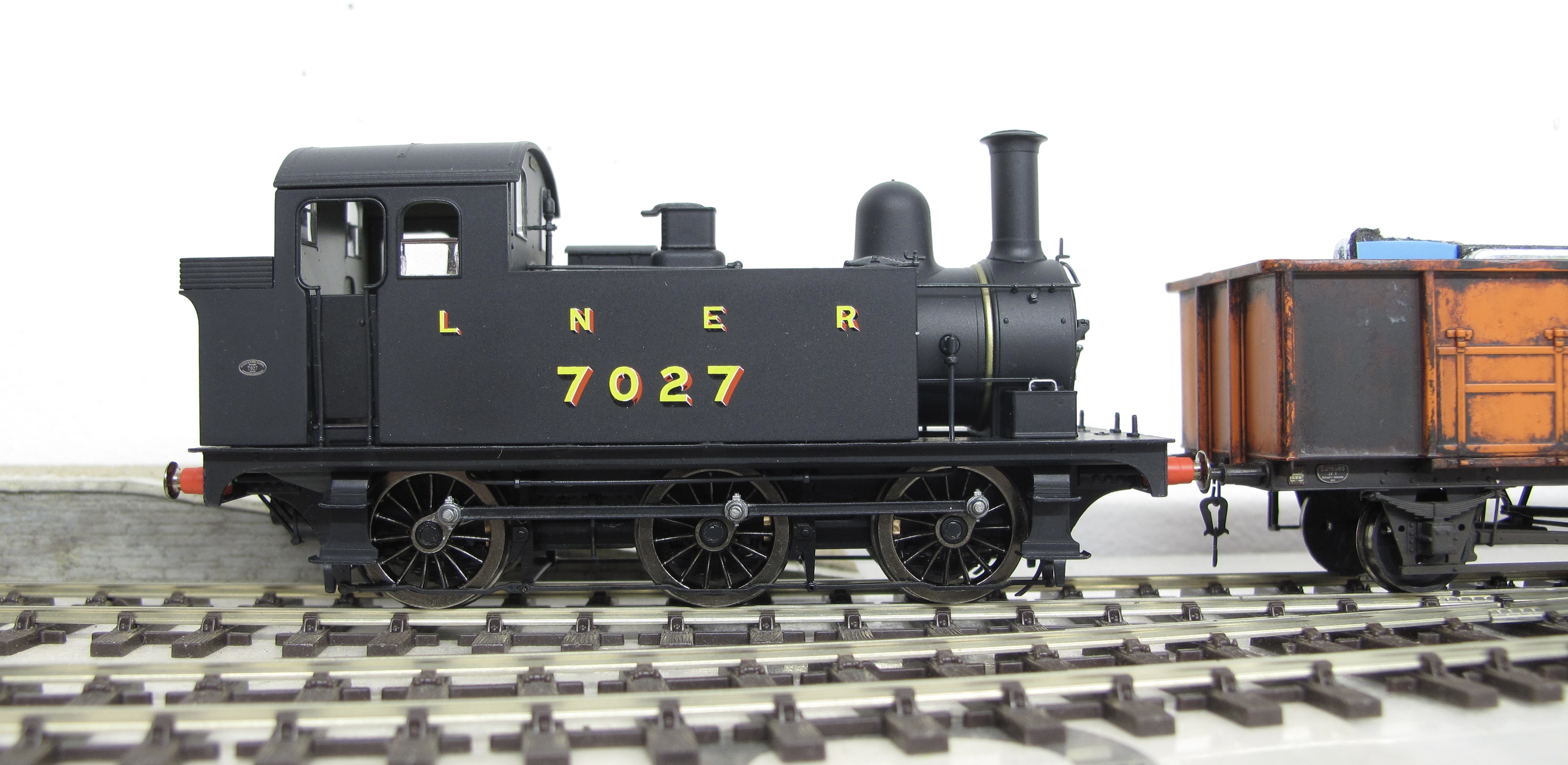
The first thing I did was to check running qualities on a Bachrus rolling road, the model had been supplied as a DC/DCC ready version. The mechanism was quiet and smooth with a realistic range of speed from very slow, to a good pace at its maximum speed. It was quiet and responded well to the Gaugemaster W controller I’m using for the bulk of my layouts.
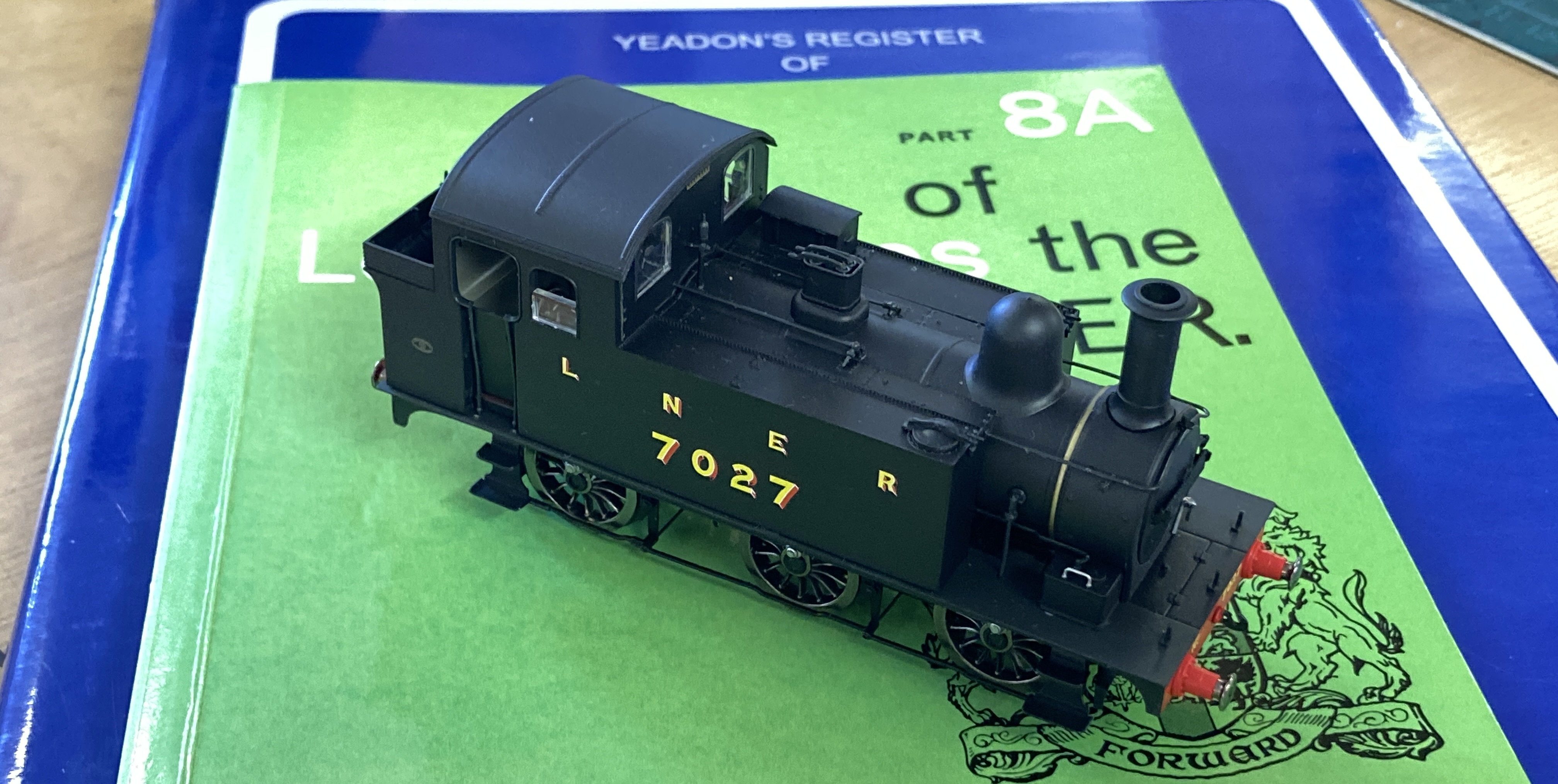
With that out of the way, the next thing was to have a rummage through some texts to see what was in front of me! Whilst familiar with the prototype, I don’t consider myself a subject matter expert on these three classes. The references used were the aforementioned MRJ issues 35/6, RCTS green book 8A and Yeadon’s register of the J67/8/9’s. This model depicts LNER 7027, one of the original Great Eastern Railway C72 class. Two production runs were made and 7027 came from the 1912-14 built group, (1913 for 7027), rather than the post group batch of ten built in 1923.
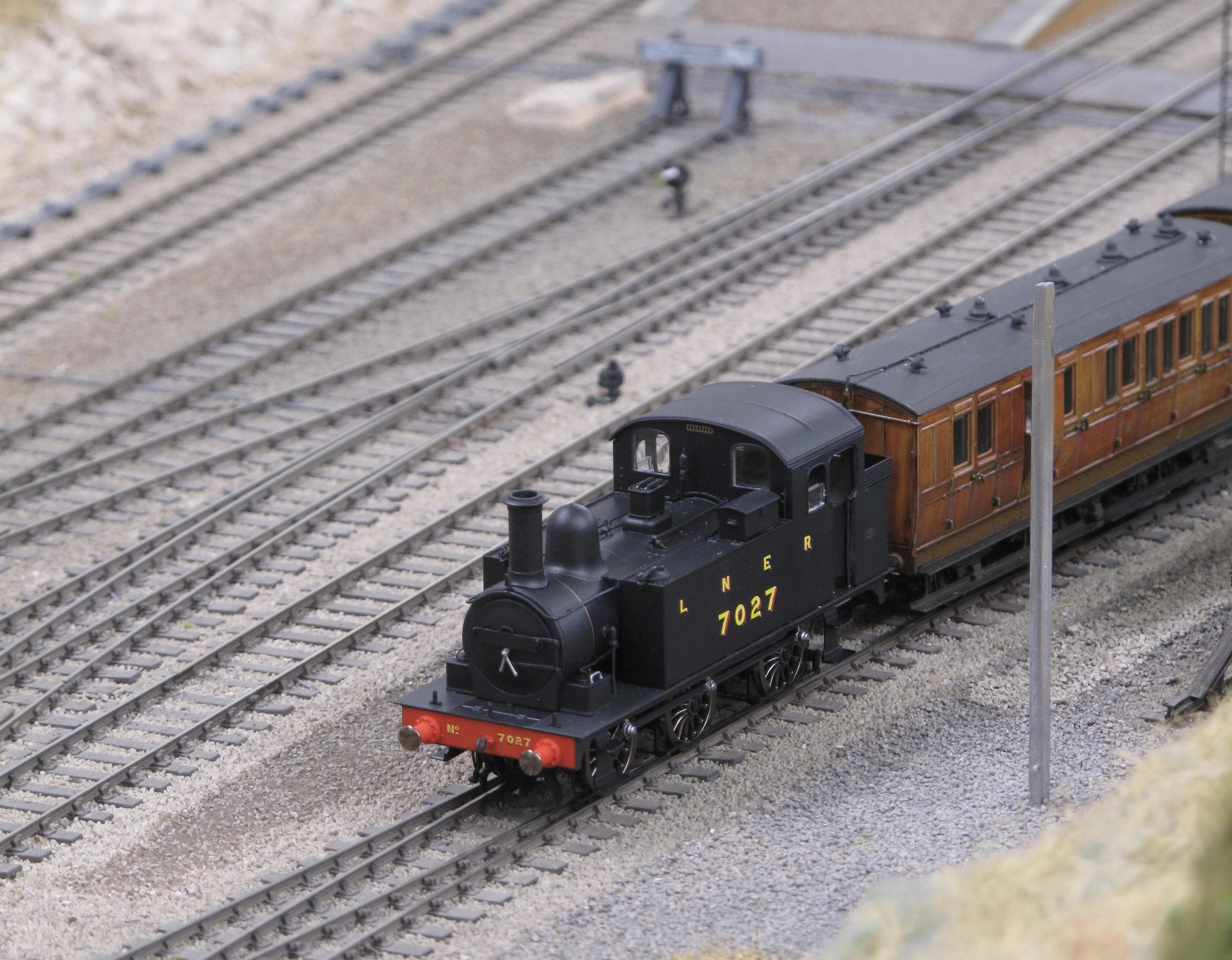
Within that first group of J68’s, GER Nos.21-30 to Order G75, differed from the initial C72 order by being designated for shunting duties, and differed in build accordingly. 7027 is from that batch. Fifteen spoke, unbalanced wheels were fitted, along with lever reverse and the side tanks were straight topped, thus lacking the raised chambers of the passenger tanks. Ramsbottom safety valves were fitted, the 160lb and 180lb boilers had them in different locations, the 180lb boiler fitting being slightly further forward. Steam brakes were fitted from new, along with a wide-rimmed, parallel sided chimney.
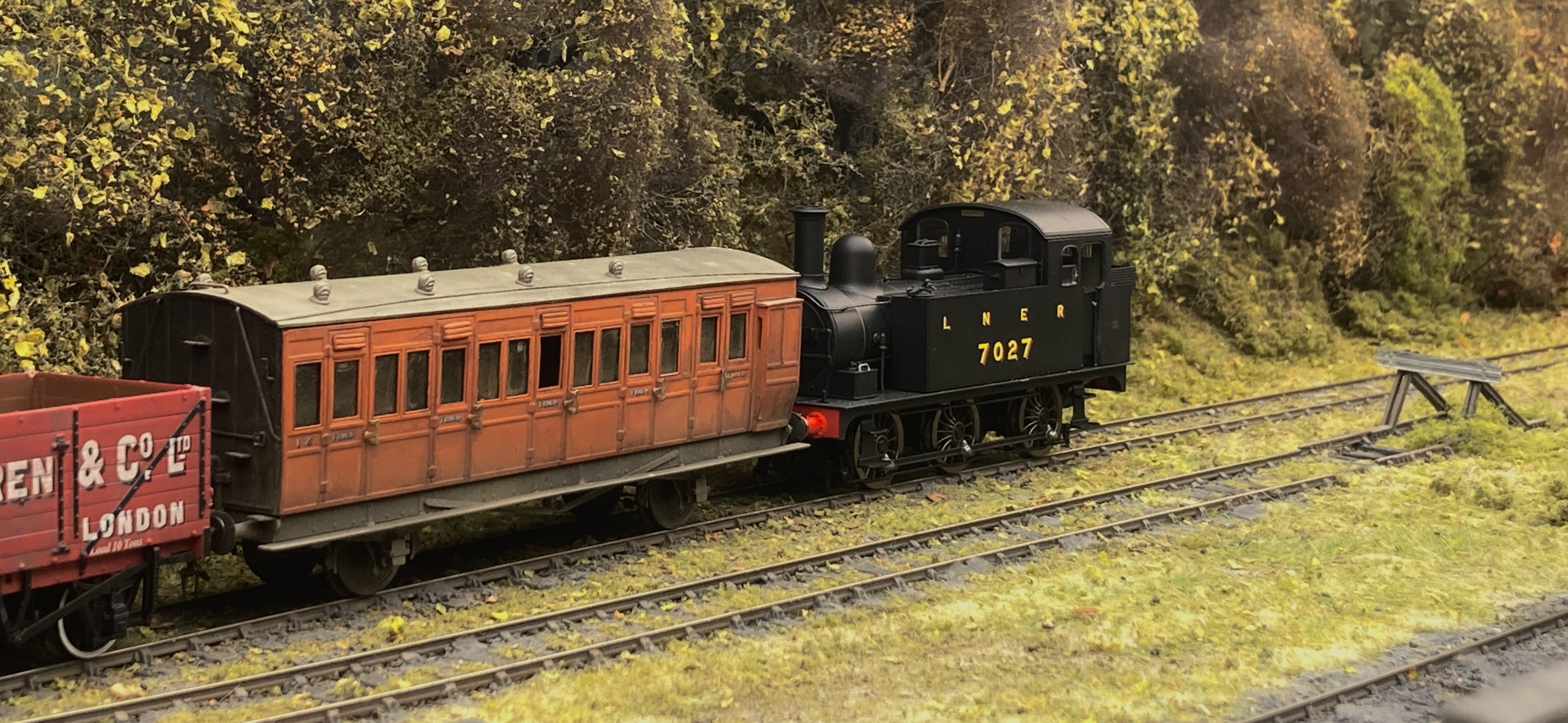
Built at Stratford as GER No.27, in December 1913, the locomotive was allocated to Cambridge Shed from new and by Grouping was present at Peterborough East on shunting duties, before being renumbered as 7027 under the LNER. It was also one of the later survivors being withdrawn in July 1957.
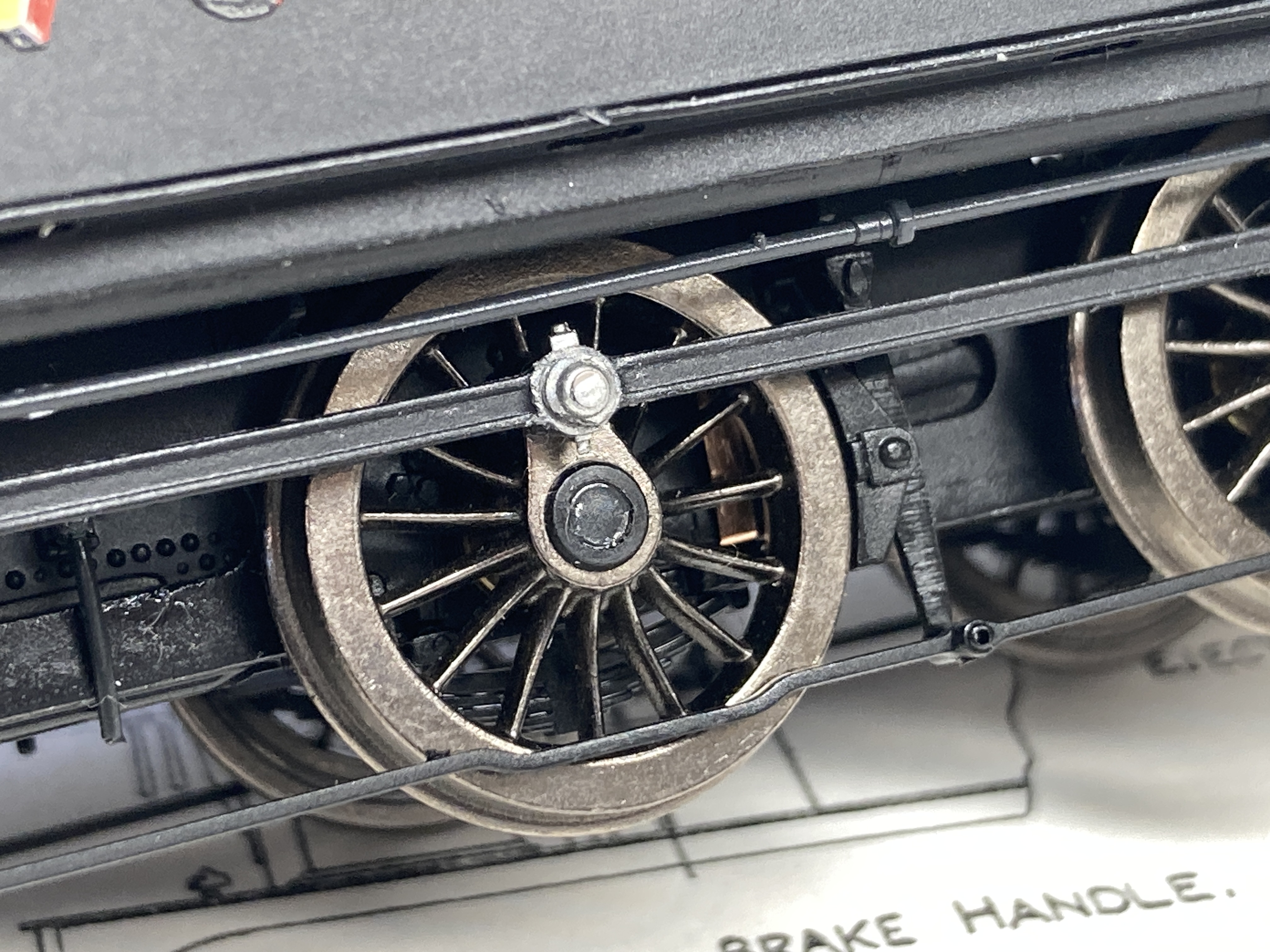
As an engine primarily used for shunting the locomotive was fitted with non balanced fifteen spoke wheels and joggled brake pull rods. The joggle was to allow clearance for the crankpin on the fifteen spoke wheels. The EP represents an as built locomotive with the above wheels and pull rods, however later in life some J68’s received balance weighted wheels with differing numbers of spokes and profiles from the J67 and J69 classes as they went through maintenance.

The original distinctive high arched roof was removed in August 1925, being replaced by the lower profile wooden roof as shown on the model. Further modifications were made across the fleet with an additional three bunker rails fitted during October 1928. This gives the solid look rather than the earlier fence type of appearance. 7027 was also the pioneer locomotive for the trial fitting of grease lubrication to the coupling pins and connecting rods in 1936. The trial coupling rods aren’t fitted to the model, 7027 reflecting the normal equipment fitted to the locomotives.

The Chimney is of the later style LNER Wordsell design, with a flush riveted smokebox and continuous handrail. Buffers are softly sprung and are of parallel tapered design. The locomotive was fitted the lowered cab roof and six bar coal rails in the late 1920’s and early 1930’s. Later, in 1936 a vacuum ejector was fitted, which isn’t reflected on the model. The livery as supplied is correct for the LNER in the 1930’s so the model has appropriate detailing, and reflects a good representation of a mid 1930’s J68 locomotive. The livery and details match published images of this particular locomotive.
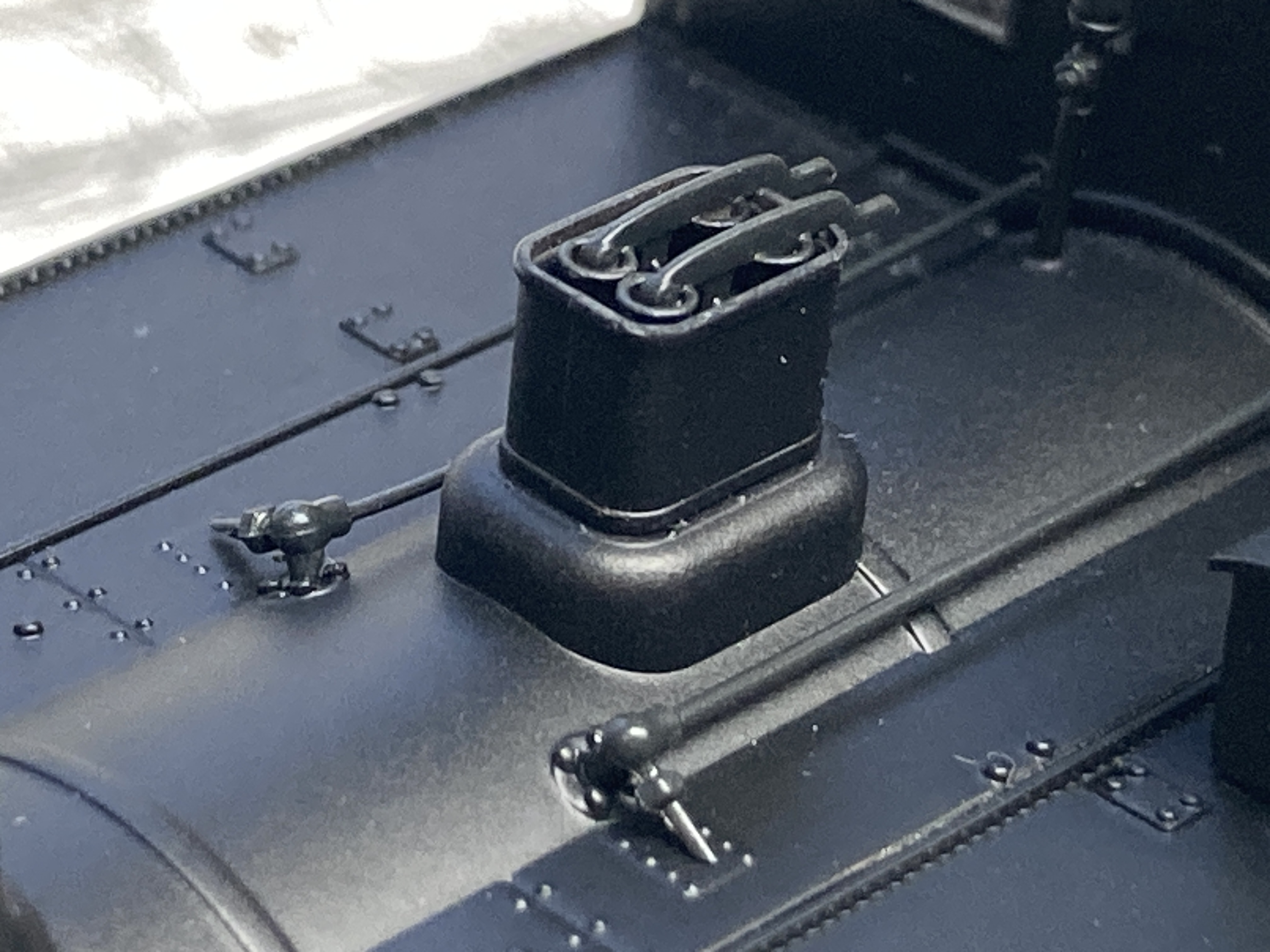
Dimensions were cross checked against the data within the RCTS and Yeadon’s volumes, the MRJ issues and the drawing by R. J. Roche. All dimensions taken from the model have matched published data.
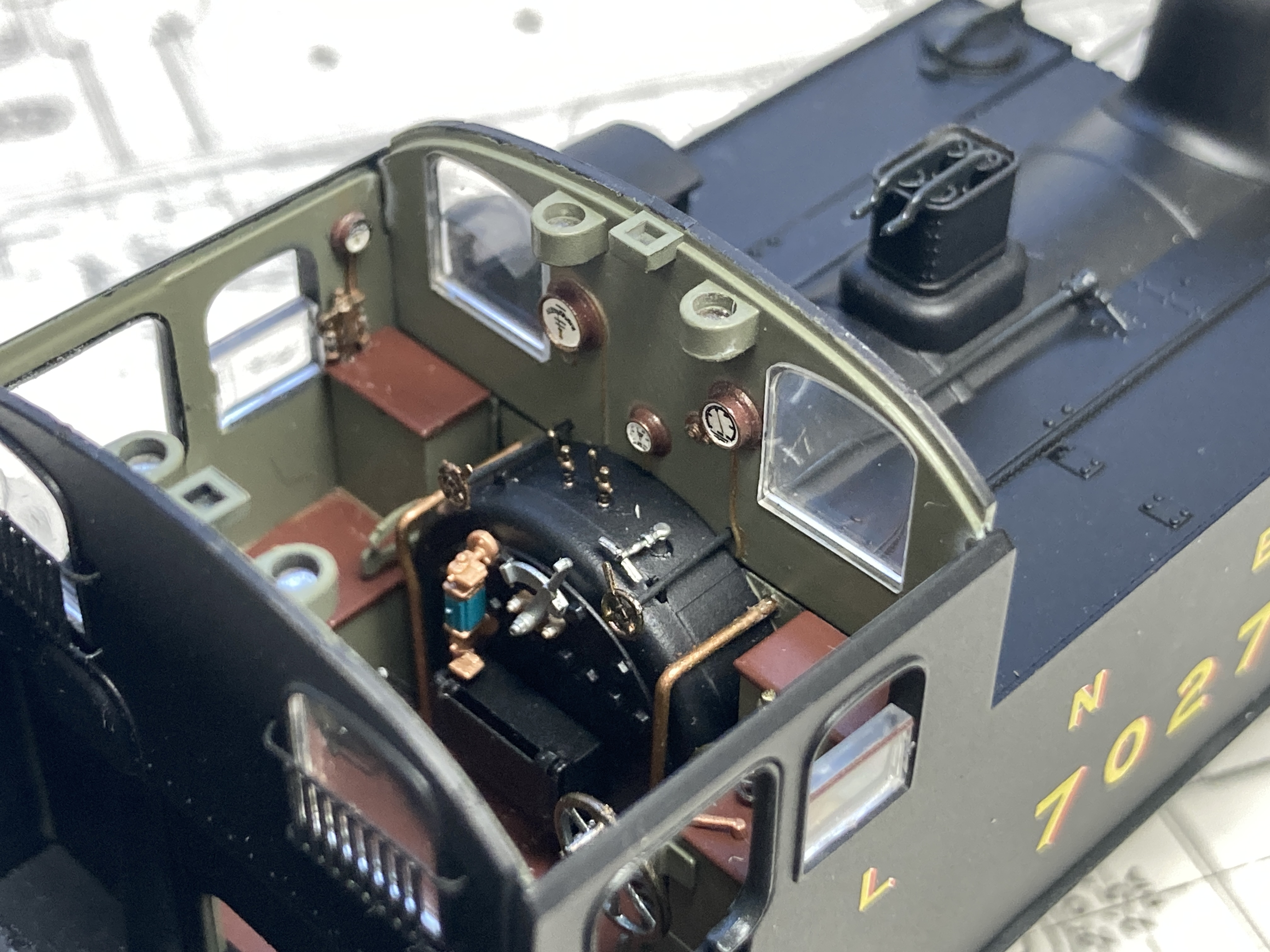
The overall detailing on the model is exquisite, the cab detail above being a particularly notable feature. The cab roof is held in place by four magnets which can be seen above in the top centre of the cab faces. The roof has a lip at the front edge which is larger than the lip at the rear of the cab roof. The magnets ensure that the cab roof is a one way fit. Not only does this allow you to enjoy the detail within the cab, including the open bunker door, it makes the fitting of locomotive crew a very easy task. The cab also has a glowing firebox fire in the DCC versions, which I was unable to test.
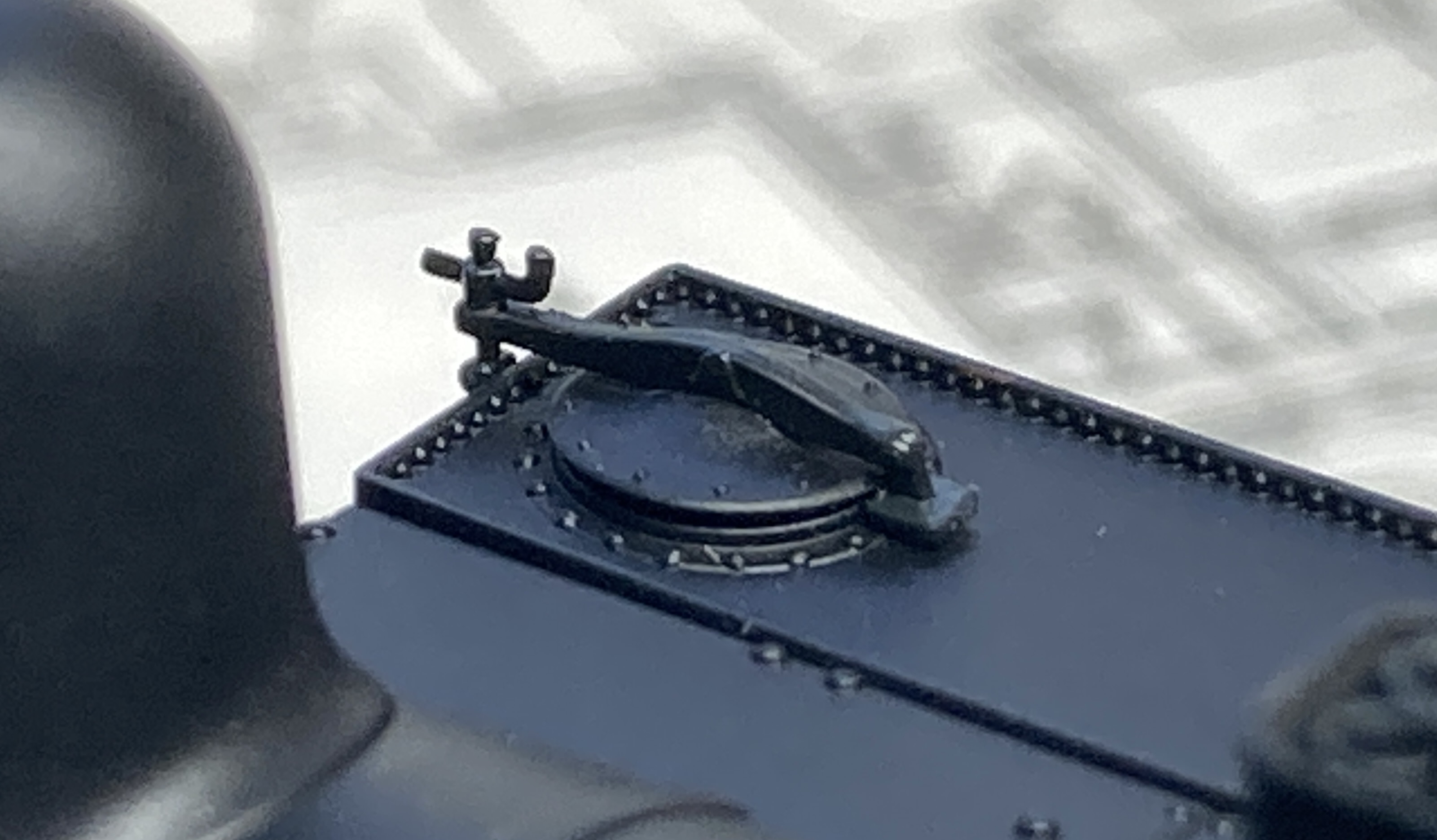
As well as the cab interior details, the whole model shows restrained and subtle detailing. The rivets around the chassis, brake gear pull rods, the Ramsbottom valve housing and the tank tops are examples of this attention to detail. From 1925, 7027 carried the LNER goods livery of unlined standard black with shaded 7.5″ LNER lettering and 12″ numbering. The J68 is initially being offered in two liveries, LNER as per this prototype model, and late British Railways era.
As this was an EP on loan I was unwilling to dig too deep into the mechanism by removing the body. Not having an instruction manual I wasn’t prepared to send a kit back! There are several screws holding the body in place and it looks as though the access into the structure of the model won’t be too challenging. Looking underneath the tanks there are three holes each side which are vents for the speakers for DCC sound versions.

The motor is a coreless type and the base of the chassis indicates that it drives through a vertical gear train onto the rear axle. Pickups are phosphor bronze strips on all six wheels, these bear on the backs of the tyre rather than the tread of the wheel. Running properties with the coreless motor were excellent using Gaugemaster controllers and a Bachmann 44211 DC controller. The chip is mounted in the smokebox and is a Next18 micro mount. The smokebox door is held on by magnets and is easily removed for access to fit a chip if required.
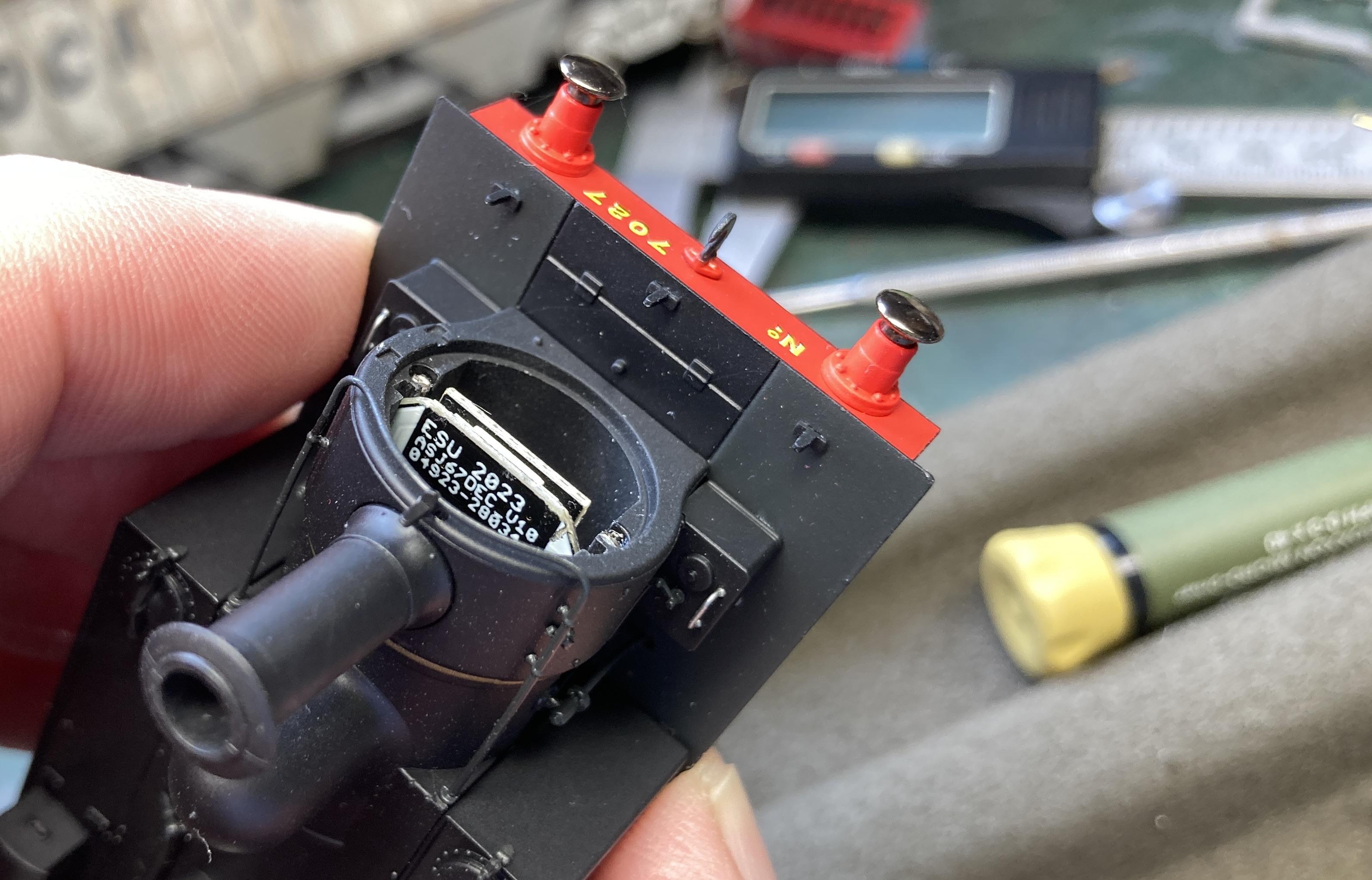
However, whilst doing running trials I tried a Hornby R965 train set controller and the motor is not compatible with that controller. The model runs very poorly and stutters through each wheel revolution. Any prolonged running with this controller will undoubtedly damage the model. The reason for trying the R965 is it’s one of those cheap DC train set controllers that people have bought to run models in and test on DC, prior to then fitting a DCC chip. The R965 is not compatible with coreless motors, for any manufacturer. However if you need a reliable and cheap controller to do that sort of work, the Bachmann 44211 is widely available. To date I’ve not experienced any incompatibility from any manufacturers models with it in any scale.
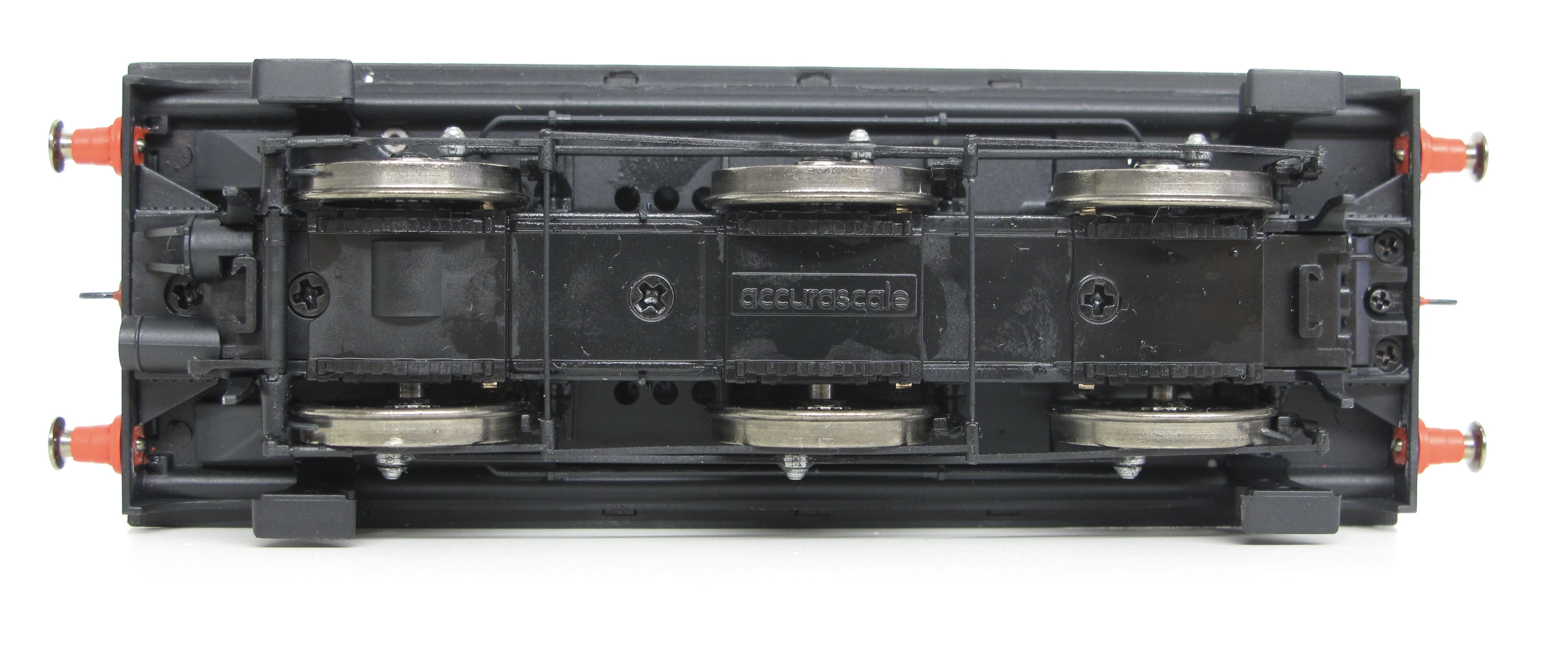
Coupling rods are one piece castings, there is a good amount of lateral movement for the wheel assemblies not to cause any issues around second radii set track curves, and insulfrog points. I personally prefer jointed coupling rods, however this model and some other recent manufacturers releases indicate that perhaps my prejudices are unjustified. The wheel back to backs weren’t measured due to the model being an EP. The model was tested on several different types of track. Peco Code 100 set track, Peco second radius set track points, Peco Code 75 Streamline, Peco Code75 Bullhead, Kato Code 80 track, Micro Engineering Code 80, Code 70 track and hand built code 75 were all used, and no issues were found with any of them. Without digging into the internals of the model the driving axles appear to be 2mm diameter or very close to it. Clearances underneath look viable for an EM or P4 conversion with possibly no major problems. The footplate is metal however, so if in due course there are clearance issues for anyone doing a conversion, some metal may need removing from the footplate.

As mentioned above the running qualities were excellent, particularly as this is an EP and has seen some action. The model weighs in at 180 grams which is a healthy weight for this size of model. The footplate, boiler and some parts of the chassis are metal thus helping the size for weight ratio. Under test it was trialled on a 3 percent gradient using standard Woodland Scenics foam risers under the test board. I initially gave it a 500 gram loading which unsurprisingly it struggled with, but did move a short distance before slipping. Reducing the loading to a more reasonable 430 grams had the model moving, both pulling and pushing the weighted wagon without any problem. This load equates to around 16-17 wagons, most of my RTR mineral wagons are weighing around the 25 gram mark. Having the opportunity to run it on Tony Wright’s Little Bytham layout was useful too, over the course of an hour or so the locomotive circulated faultlessly and shunted freight stock with no hesitation.
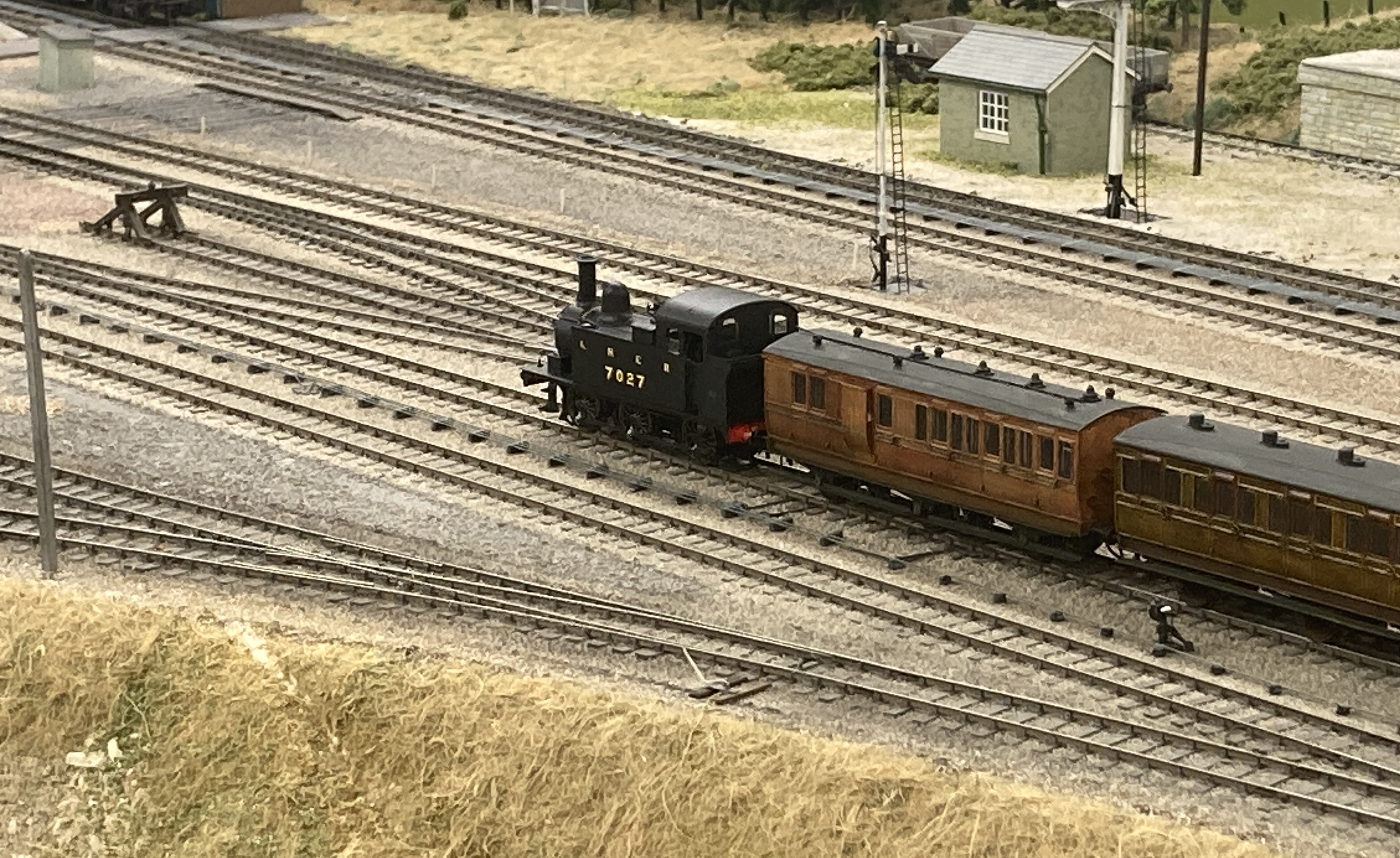
At the head of the article I mentioned Iain Rice and his connection and love of this class of locomotive. Not only did the N gauge Grafar J69 light a fire for me but Iain’s writing did too. The class is one of those where it is just as at home on a rural branch line such as the Tollesbury line, as in an urban east end of London dockland setting. Flicking through the OPC Tollesbury book and glancing across at a J15 there’s an itch developing looking at Tiptree. Such a simple but interesting through station with character by the bucket full. As such I think the three classes will do well for Accurascale, it’s been one of those low hanging fruit for many years, despite the wide variety of detail differences between the classes and individual locomotives. On my maturing shelf there’s an etched kit of a J69 designed by Iain. Often I’ve found that an RTR release will dilute my interest in building a kit like that. To my surprise I found that I dug the kit out and started looking at it, the Monday Motivation edging seriously towards building it. I’ve got all the bits, I never thought we’d see the Buckjumper family so well defined in 4mm scale, so I made sure I got everything required! I think these Accurascale models are likely to stand well against such a kit, and vice versa, it’s not often that occurs. If this has sparked your interest in Great Eastern related modelling, on the blogroll attached to this page is Adrian Marks’ Basilica Fields blog, and it is really worth digging through, just a beautifully written web page.
To close I must extend my sincere thanks to Accurascale for the opportunity to have a first look at the J68 and share the thoughts on the blog and YouTube channel. At the moment the retail deliveries are forecast to be arriving late 2024, and I think there’ll be a few under the Christmas tree if that delivery date holds up! By a chance conversation in the early development I was able to put both Accurascale and Iain in touch. I hope that possibly from that introduction there’s a bit of Rice in this J68’s DNA, it’d be a nice touch to a very fine modeller, and model.
 Albion Yard
You must be logged in to post a comment.