

Over the past few weeks I’ve been revisiting my layout building plans and aspirations, having worked over a Bachmann 3F ‘Jinty’ for a future bookazine article. That tasking took me back to the makeovers I’ve done in the past on Bachmann GWR Panniers. In the week preceding the Warley NEC exhibition in November 2023 Accurascale announced their introduction of the GWR ‘standard’ 57xx pannier locomotives to the product range. When I say ‘standard’ it’s just to lump them all together coming from the Genesis 57xx locomotive. This then includes, 36/37/46/57/67/77/87/96/97xx panniers, and exclude the 15/16/34/54/64/74/84/94xx families for clarity.


Three engineering prototypes were available to view and I was fortunate enough to be allowed a quick look at them outside the display case. The news of the large and pannier introduction was well received, notwithstanding the pretty good model introduced by Bachmann albeit about 20 years ago. The big news with the Accurascale announcement is the volume of variants they’re going to be producing. From the first look it’s clear that both high and low cab will be covered, and perhaps the most time consuming make over element on a Bachmann model, the top feed removal, will not be required on appropriate Accurascale versions.


Over the years I’ve done a good few detailing and conversion makeovers of the old Bachmann faithful. It’s safe to say unless you really want to do them, the Accurascale range as they are introduced, are going to render the need to do those redundant. I’ve still got a few in stock, and don’t see me passing on my existing fleet, just adding to it.

The main thing that struck me was the overall finesse of the fittings and mouldings. With one glance at the three EP’s you could see a wealth of detail differences to the cab and superstructure of all three types.
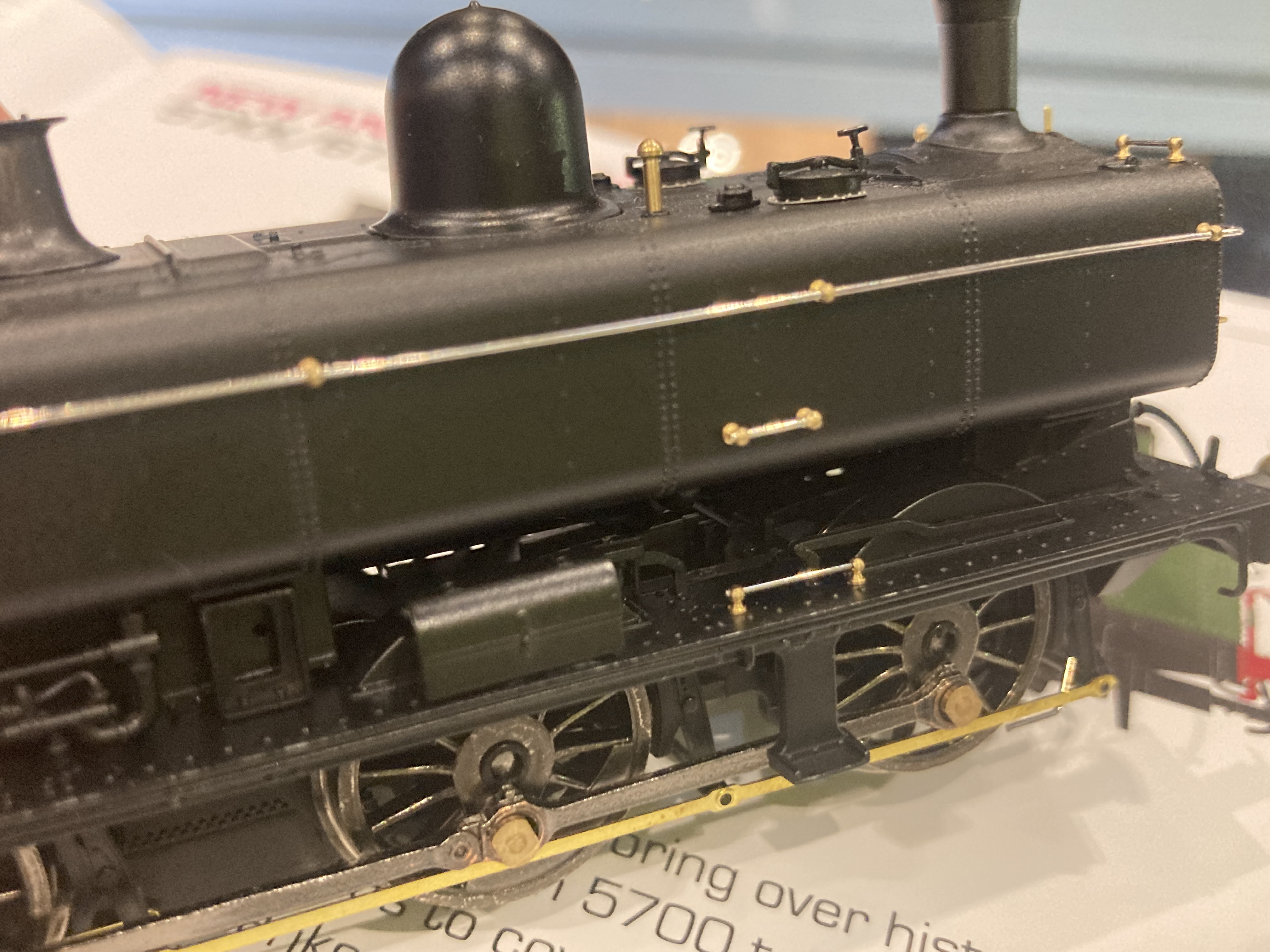
The obvious differences are the two cab styles, the low and high cab versions. Then perhaps the top feed, and following that the mass of detail differences that come from the different batches, built either by the Great Western themselves, or sub-contracted out.
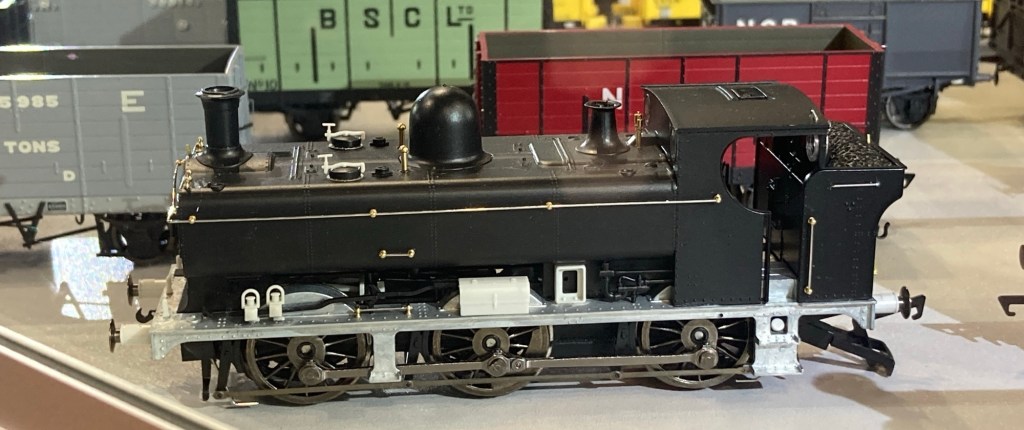
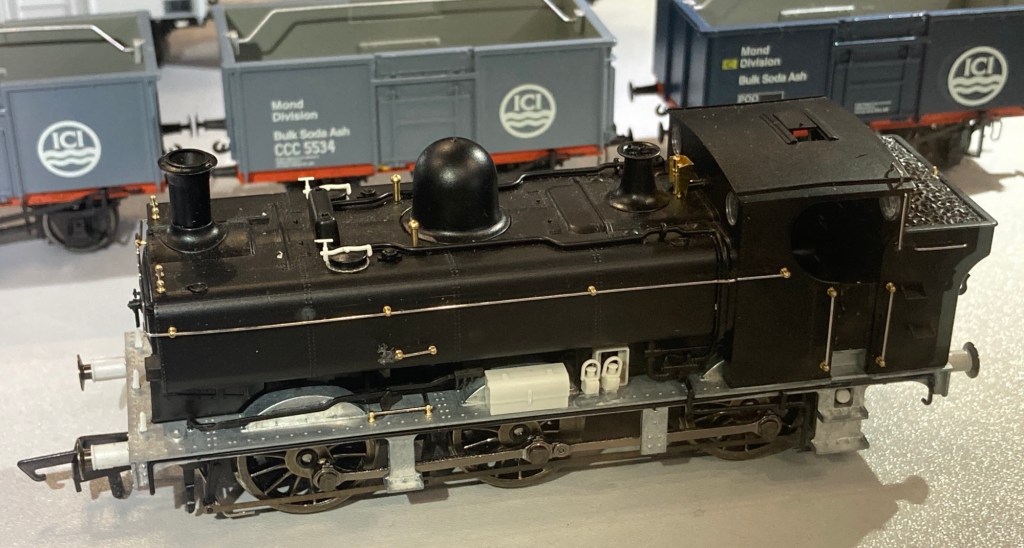
The differences include tank types, tank fillers, tank steps, bunkers, whistles and their respective guards. Cab sides, doors and other njectors akdo enter the mix in this mass of detail variations. For example in the above picture we can tell this is an early GWR version, no top feed, no cab side doors, no whistle guards, no bunker steps. Looking at other EP’s we can see the changes where the prototype developed over the years, and these changes reflected in the tooling and details fitted to individualise each model as we see in the model below.
The chassis is interesting too. A look underneath indicates a centre drive axle, from a tower gearbox. This means the motor must be quite a compact unit, likely similar to the coreless motor fitted to their J69 family. Anyone either a Bachmann 57xx family model will recall the motor drives to the rear axle, with some of the mechanism visible at the right (wrong), angle. The drive on the Accurascale models is totally enclosed, pick ups being wipers on the rear of the wheel rims.

Another feature which caught my eye with the EP’s is the coupling rods are one pice rather than jointed. My preference is for the joint to be functional or alternatively hidden in an overlap on the central drive wheel. Accurascale have used solid rods on the J69 family and that works really well through second radius set track points. Other manufacturers have used them too recently, Heljan and Rapido so it may be a ‘habit’ thing for me. Brake pull rods are etched and this gives a marked visual difference to previous RTR models and sit very close to the wheel face, they also include the rear double pull rods which I don’t think has been on any previous RTR Pannier model. As part of the assembly the cross rods are alloy with plastic fittings to attach the pull rods to eliminate any electrical shorts. That seems a quite complicated assembly, but if they can be manufactured consistently it’ll help with the fine scale appeal of the model. The wheels look like they are fixed to 2mm diameter axles with shoulders, the spoke profile on these early EP’s is a bit one dimensional, not quite capturing the look of the prototype wheels. The wiper pick ups indicate these will be a conventional axle rather than a split chassis. The running plate is a metal casting and it was difficult to tell how much room there is between the wheel face and the inside of each splasher. This isn’t an issue for OO modellers but it may make conversion to wider gauges such as EM or P4 more challenging as there’s unlikely to be a simple drop in replacement without some work to be done around the brake gear assembly.
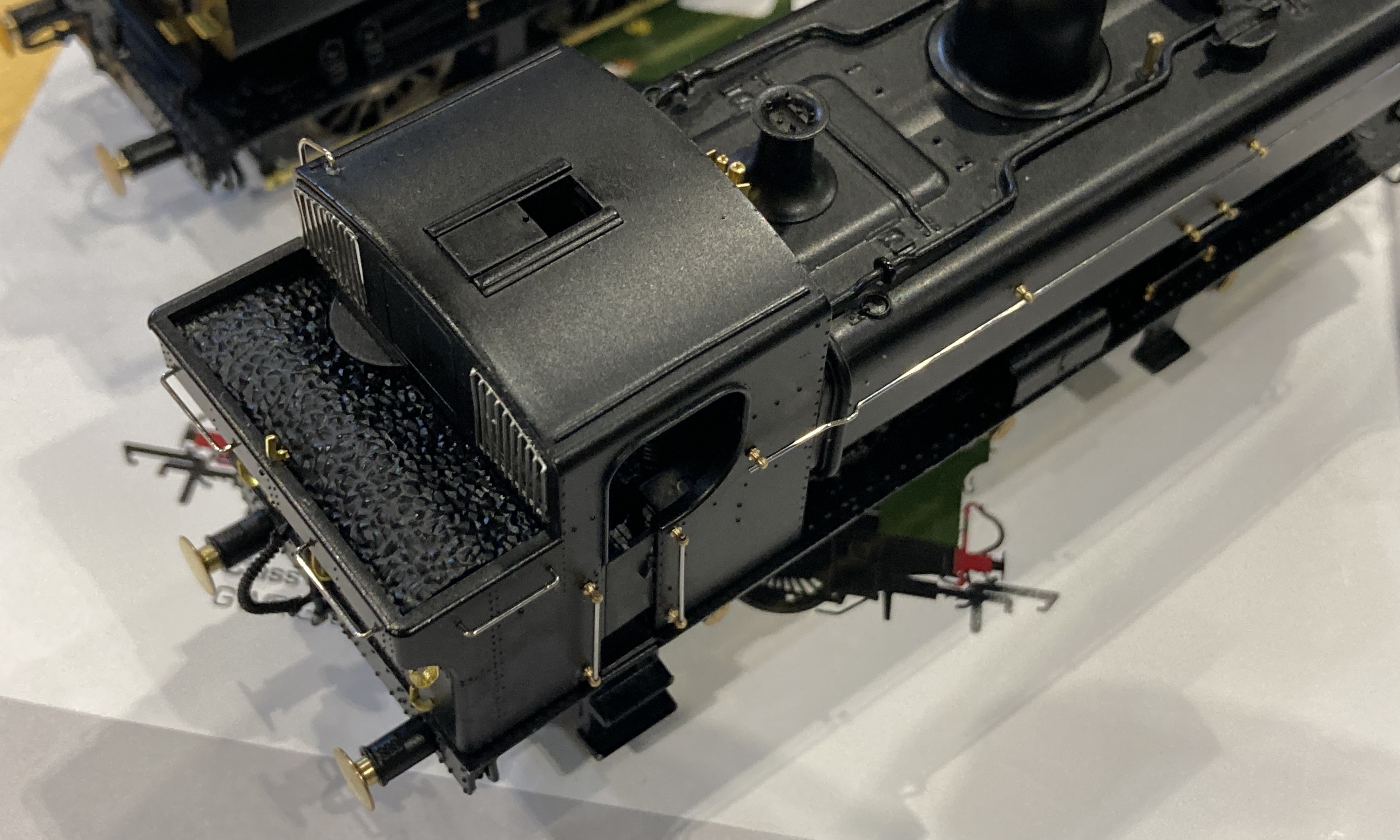
Both low and high cab versions are to be released and feature sliding cab roof shutters.
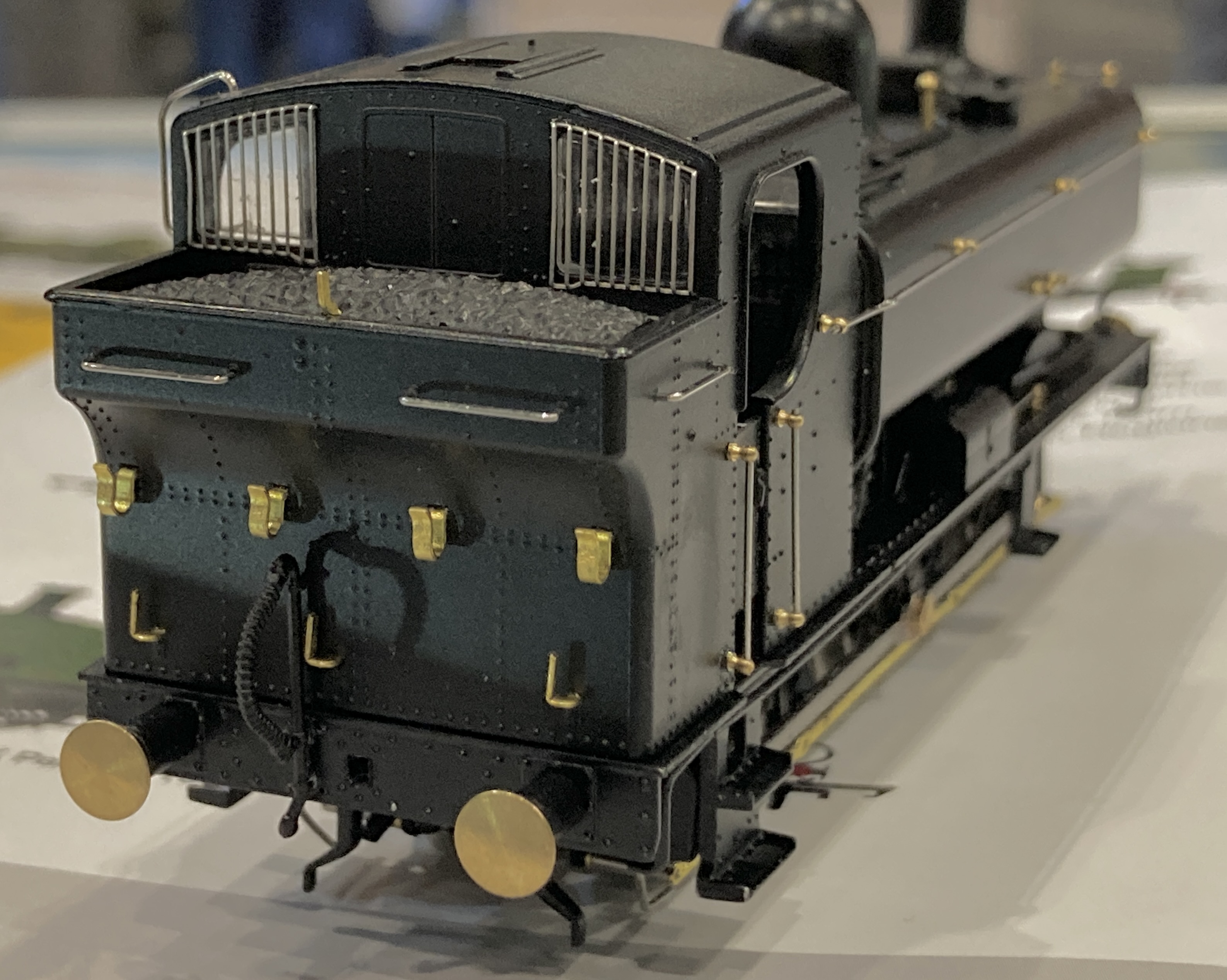

The rear of the cab faces have etched glazing bars which opens up the access for light to get into the cab, as does the roof vent. This will make quite an impact visually, having done similar on my Bachmann conversions the amount of detail that is then illuminated in the cab is very noticeable.
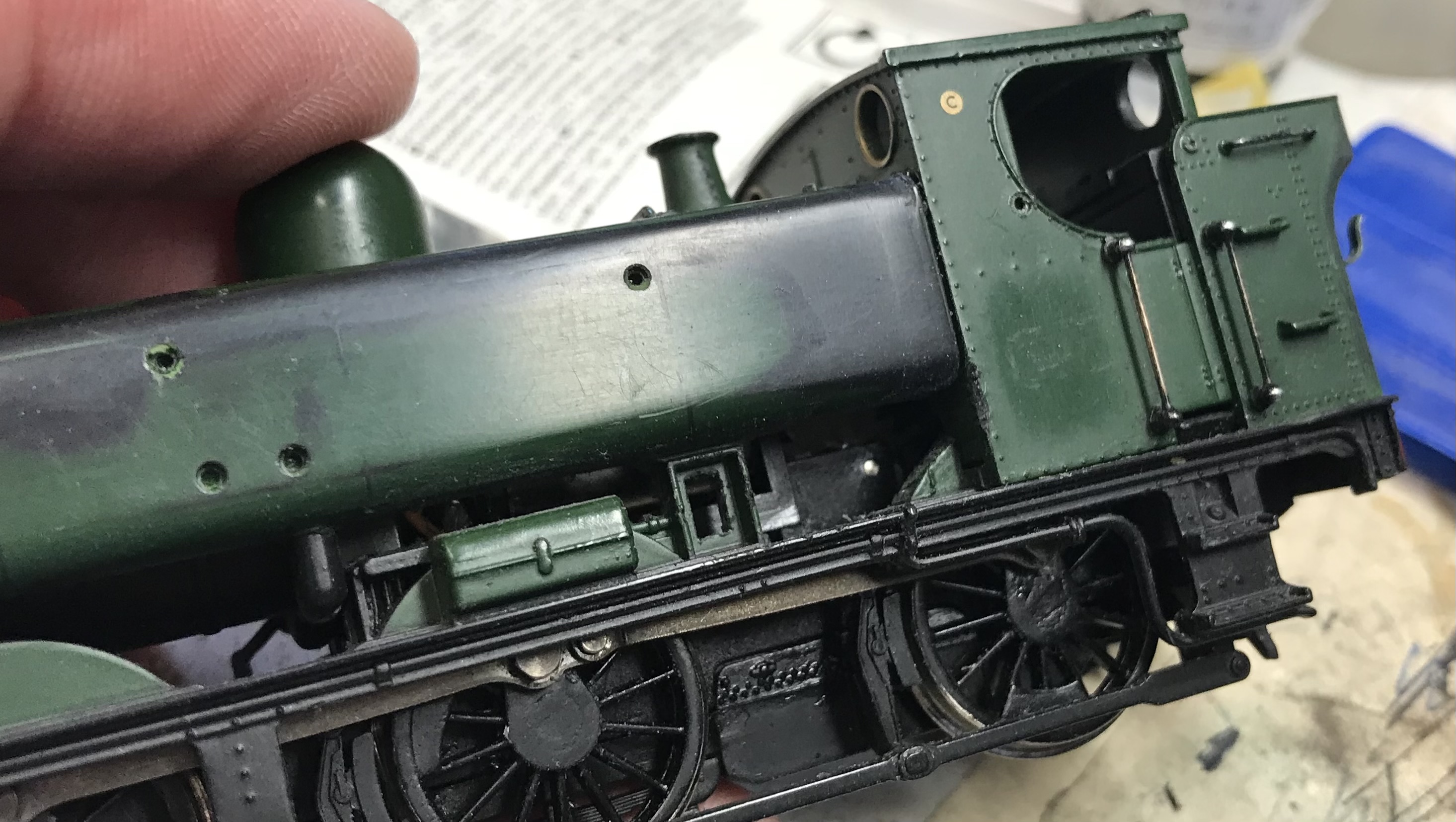
So with the future release of the Accurascale family of 57xx panniers end my conversions? Almost certainly it will for the core structures.
However, while the conversions I’ve done work and look good, there’s still a few areas that can be lifted to bring them more into line with the Accurascale offering. I’ve not lost out by any means, the enjoyment I’ve had from my fifteen or so Bachmann models is irreplaceable and they taught me some new skills too. However, if I feel the need for a new one then I’ll save my time and look closely at these Accurascale models once released (Q1 2025 estimated). If they run as well as the J68 EP has done they’ll be well worth the money, and the time saving, which is my most precious resource!
 Albion Yard
You must be logged in to post a comment.