
Below is a Facebook post from the Hobby Industry Coalition, a group of North American hobby companies whom in the main supply ‘US’ outline products for their market.
https://www.facebook.com/share/v/1L1txjXbEn/?mibextid=wwXIfr
The US Tariffs are recognised above, as a potential threat to the North American model railroad hobby the longer the Chinese Import tariffs remain in place.
This is from Craig Fuller CEO at Freightwaves
The beloved hobby of model railroading, a cornerstone of American culture for generations, faces an existential threat. As the toy and hobby industry grapples with potential new tariffs, small and mid-sized businesses find themselves on the brink of collapse. The proposed up to 145% tariff increase could spell doom for an entire sector, reducing it from a vibrant niche to a relic of the past.
At the heart of this crisis lies the unique economic structure of the model train industry. Unlike mass-market products, model trains operate on razor-thin margins, typically 15-20%. The industry relies heavily on pre-selling, with 95% of products sold months before arrival. This leaves no room for sudden price adjustments when shipments arrive, making the proposed tariff increase catastrophic.
The nature of model train production further compounds the problem. These are not mass-produced items but highly specialized, low-volume products. The costs of tooling and engineering are spread across small production runs, meaning there’s no economy of scale to offset the tariff’s impact. Whether a company produces 2,000 or 10,000 units, the fixed costs remain high, making any significant tariff increase devastating to the pricing structure.
Some might suggest moving production domestically, but this solution is neither economically viable nor logistically feasible. Labor and compliance costs in the U.S. are 5-10 times higher than in Asia. More critically, the specialized infrastructure required for model train production—including tooling, mold-making, and specialty die-casting—no longer exists in the United States. Decades of outsourcing have left the country without the plants, parts, or trained labor to match the precision and efficiency of Asian manufacturers.
It’s crucial to understand that these tariffs miss their intended target. Model trains and similar hobby products are not subject to dumping or unfair subsidies, nor do they pose a threat to national security. These legacy products, deeply embedded in American culture, were previously distinguished by the Section 301 exclusion process, but its removal now lumps them with mass-market imports that operate on much larger volumes and margins.
The consequences of this tariff threat are already unfolding. Inventory is frozen, orders for future seasons are being canceled, and production lines have ground to a halt. Small importers find themselves unable to clear containers or finance future shipments. Retailers are not receiving pre-ordered stock, and entire product lines are being shelved indefinitely.
If this tariff increase stands, it won’t just lead to temporary price hikes. It threatens to eradicate a uniquely American subculture, leading to permanent closures and the disappearance of generational brands that have been fixtures in the hobby for decades.
The model railroad industry isn’t seeking a bailout or special treatment. Rather, it’s calling for the reinstatement of the Section 301 exclusion process—a targeted tool that recognizes the economic scale, cultural significance, and trade harmlessness of this industry. Without such recognition and action, a cherished piece of American life may soon vanish, taking with it not just businesses and jobs, but a rich tradition of creativity, craftsmanship, and community.
As one industry insider poignantly stated, “If this stands, it’s not a temporary price hike—it’s the end of a uniquely American subculture.” The clock is ticking, and without intervention, the model railroad industry may indeed face its final stop.
The US RTR industry is very similar to ours, whilst we consider the brands we see on the shelves as manufacturers, for the most part they are comissioners, and no disrespect is given to them for that business practice. For us in the UK we need to go back to the 1980’s where we saw the first examples, Mainline and Airfix with Hong Kong produced models that we welcomed with open arms. The quality of their products compared to old Triang tooling releases, or even the contemporary Hornby releases of the time was significant.

Well, in parallel across the pond a similar revolution was taking place. The US hobby was familiar with high quality products from the far east, the expensive pinnacle of their RTR were Japanese and Korean brass models, which are still well regarded today. However like the UK, at street level the importing and production of mass produced models at attractive prices had a similar impact, and you’d see latest releases at knock down prices.
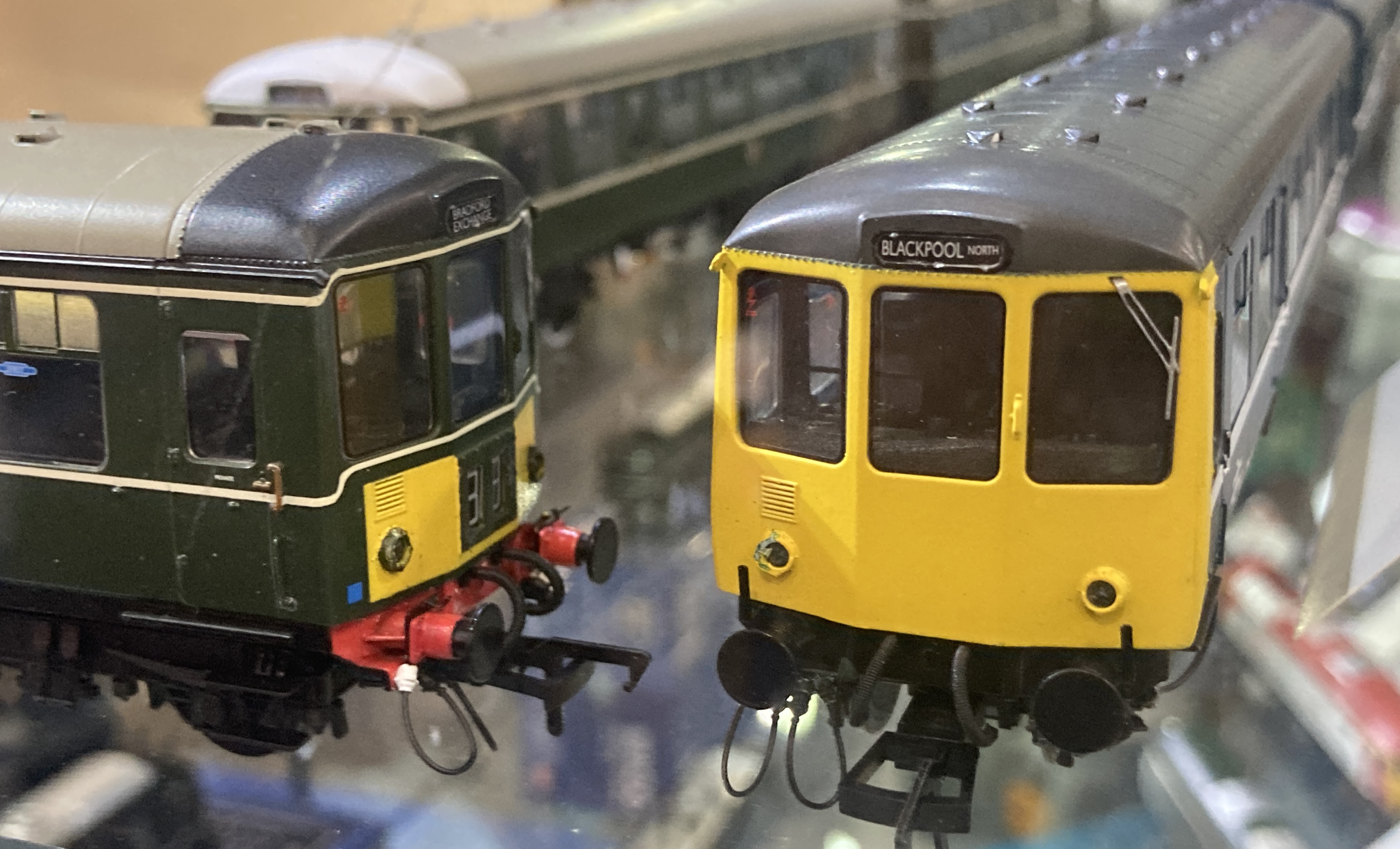
Simply put the Chinese factories were able to produce better, more affordable RTR models than the home industries, and production for our and North American ‘manufacturers’, moved offshore. Over the past years there have been comments to bring it home from voices who appear to have no commercial sense. And cutting to the chase can’t understand that even at UK national adult minimum wages of £12.25/hr (2025), assembly of highly detailed and intricate models will be unviable. Thats without all the backup of a factory, premises, machines for tooling and injection moulding, and paying the toolmakers and designers whose skillset would demand higher wages for their efforts.

So where does US tariffs potentially affect us? Well short term if the American market stagnates with companies holding off new production, then those slots will possible be available for the UK market manufacturers. This could mean faster deliveries of announced products, and also completely new products. Selfishly for the UK modellers this may be super news, but only if ‘we’ continue to buy new releases. Is our hobbies commercial appetite sufficient to sustain a flood of new products? Going back to the bring it home mouth breathers, whom already cry that our toy trains are too expensive, its safe to say that they aren’t going to support either an increase of new, expensive, Chinese manufactured imports, let alone more expensive UK made models flying the Union Jack.

Retailers on both sides of the pond will have their challenges too, regardless of if they’re a one man band or superstore. In the US there may be a dearth of products on the shelves, no product to sell no income, or if its doubled in price, a much smaller customer base. Here, if we aren’t going to buy this windfall of new products, then the retailers will have bulging shelves and no stock going out of the door in sufficient volume…
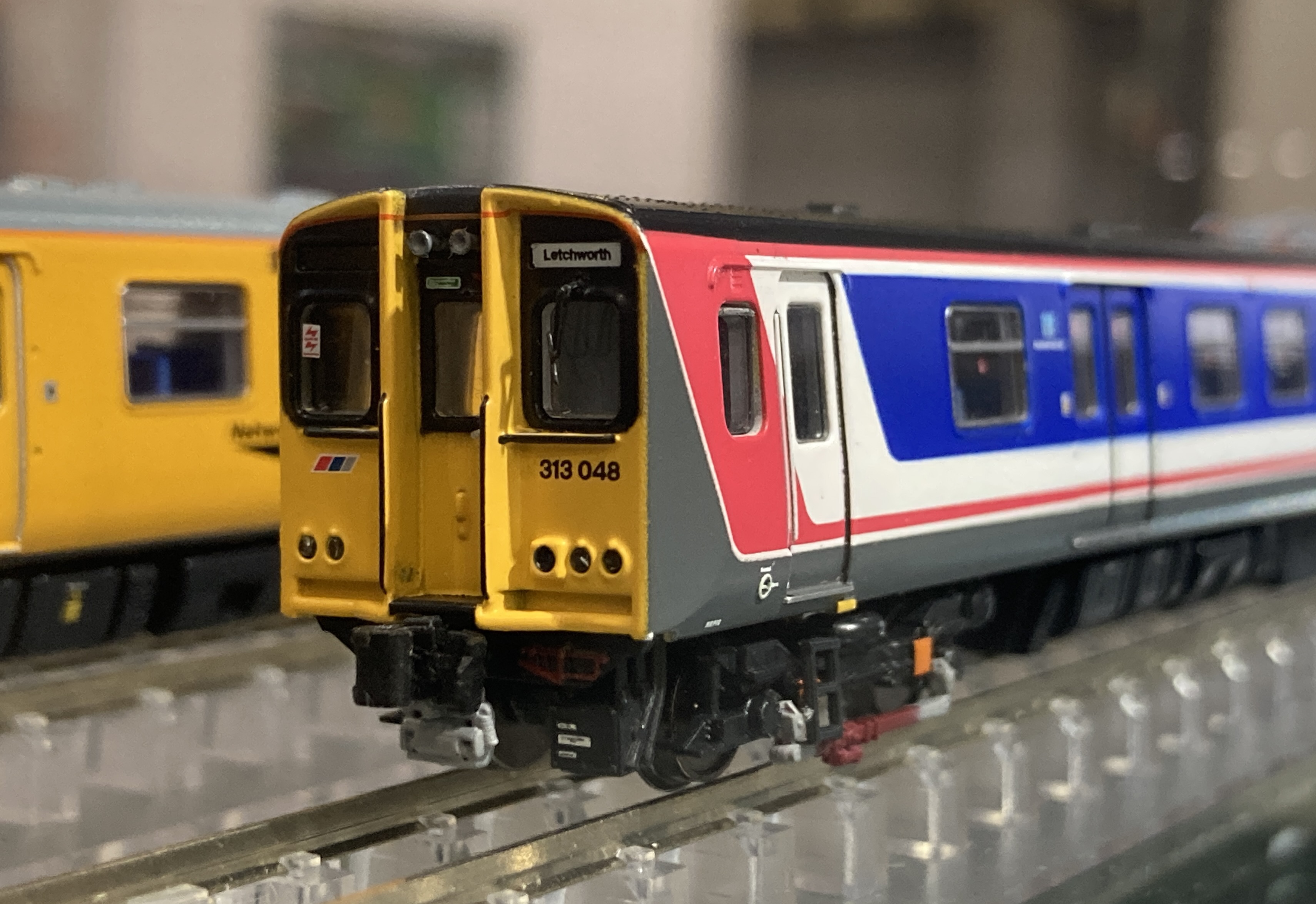
The above thoughts are just my own musings, there is no connection with any of my friends who work within it. The images chosen are at random, varying in scale and manufacturer, they all however are Chinese manufactured, and taken on exhibition trade stands.
One thing is for sure, the hobby isn’t going to die, but it will adapt to a new world.
 Albion Yard
A point made in the video is that the USA, and the UK, never had the capability to mass produce RTR models of the quality now available.Presumably there is a downside to this from a UK perspective, in that those fixed costs have to be paid for by someone if USA demand isn’t there.
Its absolutely the case that high detail mass produced models came from China/Hong Kong. The original J72 from Mainline was the indicator that an affordable and significant rise in accuracy and quality was available, just not home grown. I imagine there may have been a similar ‘breakthrough’ model in the US market around a similar time. I’m sure that fixed Chinese manufacturing costs may be a potential price increase side effect too. One unknown, is the size of the contribution of the US and other regions share of the manufacturers markets. It makes sense the US market is significant, but by what percentage as a whole. In the unlikely event that the US gap can be filled by the rest of the world those costs might not be passed on.
One issue the US market will have with the ‘stop’ of imports, is whether the retail customer will have the buying capacity for the stock piled releases assuming tariffs are lifted or significantly reduced.
The issue with preorders could also hit UK consumers if production timetables get accelerated. I must admit to normally having at least a couple of items on pre-order presuming I can spread the cost
Would you like your austerity kit back, so you have something to do with the economic hinterland in model trains post Trump?