
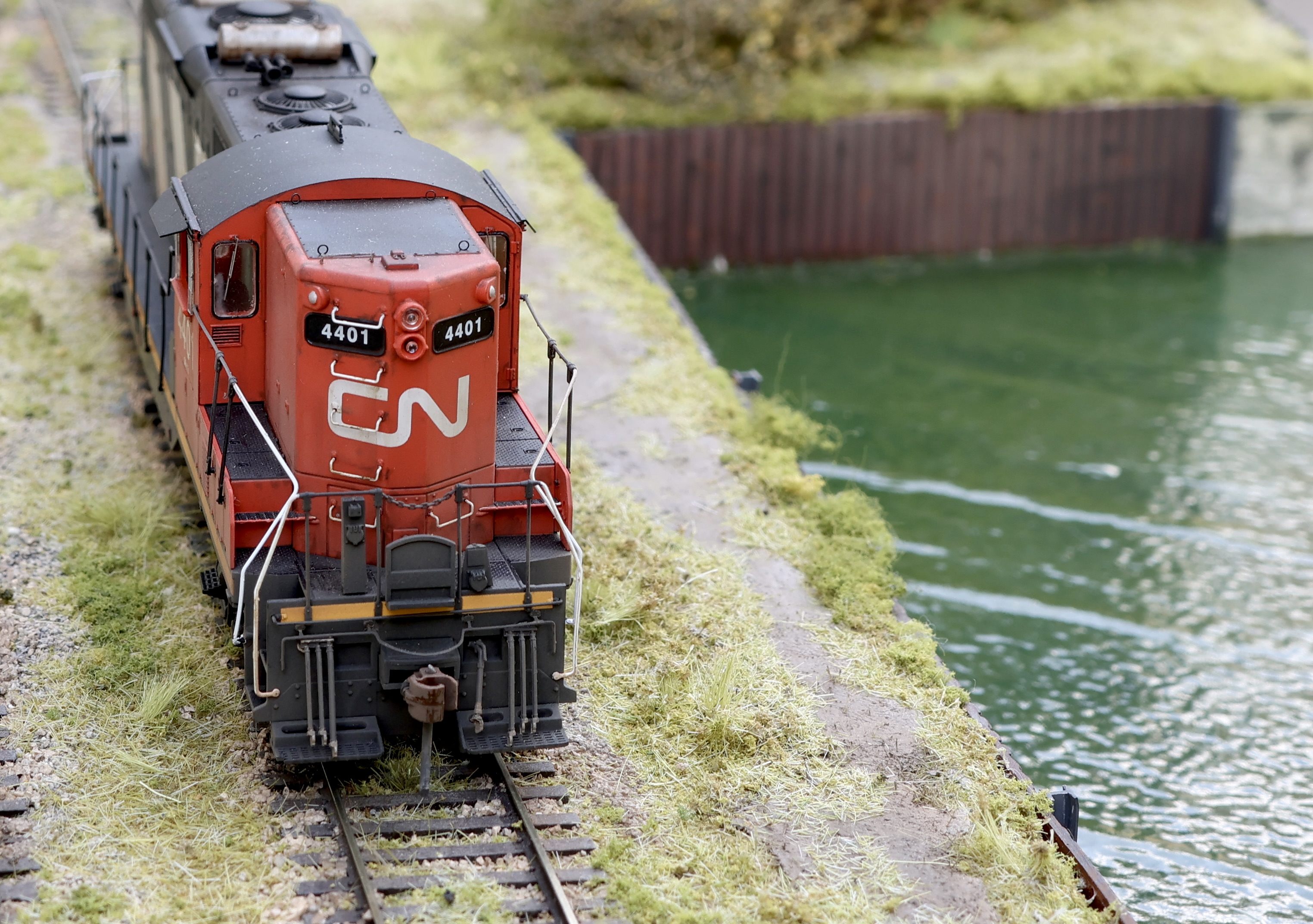
Here’s a thing, often in the UK there’s a lot of emphasis on being in a model railway club or society for all the benefits and experience you can gain. At the moment I’m only a member of one society, I’ve not been a conventional club member for twenty plus years. Quite a few of my close associates are the same. If I take one of my layouts to a show it’s very common to be asked what club are you from?, and I’m not sure why there’s an assumption that a layout or team is from a club.
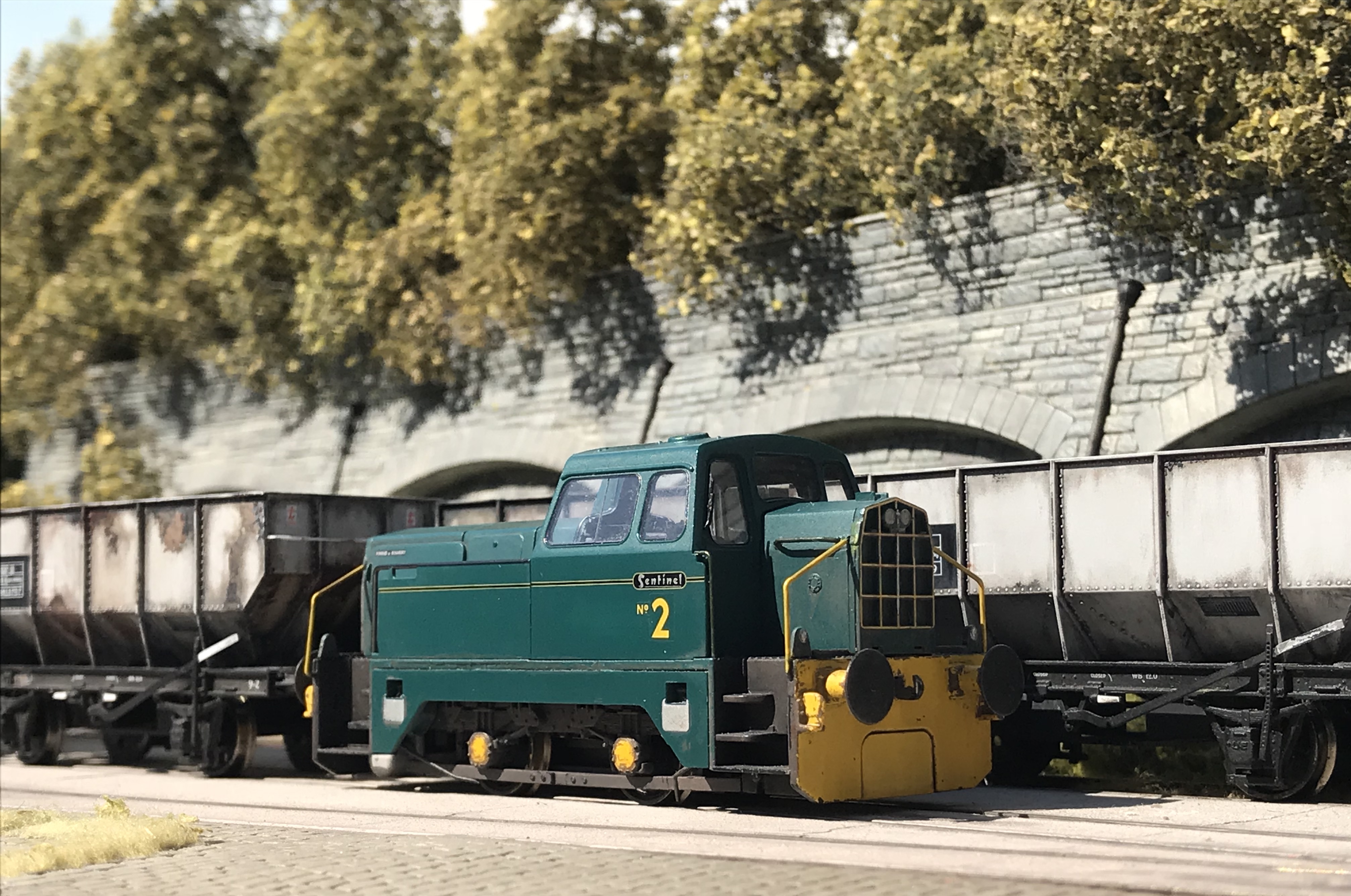
It may be part historical that UK exhibitions traditionally have been organised by clubs, therefore if exhibiting you’re probably a club layout or personal layout with a show team made up from club members, as thats the convention. I left club membership after the last one I’d joined closed more than a few years back, but realistically the writing was on the wall before that, as I found for me there wasn’t a great deal of benefit of actually being a member. Now thats not to say that clubs are’t excellent places to learn skills, techniques and immerse yourself in the hobby, they are, especially if you’re new to the game. For me however the independent route works.

Independence works for a good number of my friends too, regardless of whether they are making a small layout or like Simon’s monster Heaton Lodge junction. What works for me is the freedom of not being constrained by a ‘requirement’ to build something that works in a club context, I can swap from scale to scale, era to era etc as and when I desire. Thats a good thing the way I work because it gives me the opportunity to do multiple projects, and also contribute to other external projects too.
An area where the indy route has benefits for me, is in trying new techniques. Above you can see some of the trials I did with AK Interactive acrylic gels to get the right water effect I desired for a river side scene on Shelfie 4. This went through many iterations before I settled on the finish I preferred. I think that process in a club environment would be quite tricky, particularly if spread out over several weeks or in this case with the number of trials I did, it would have been months in a club ‘once a week’ context.

Independence also allows me to change direction on a project, it’s all on me, time, costs and frustration. Shelfie 2 above had a significant variation in its gestation, at one stage being a southern region 3rd rail terminus, now its complete as a Northumbrian coal disposal point. Where independence really helps me is in the thought processes behind some of the design concepts I have had. This is very apparent on Shelfie 3, Lower Mill Street.
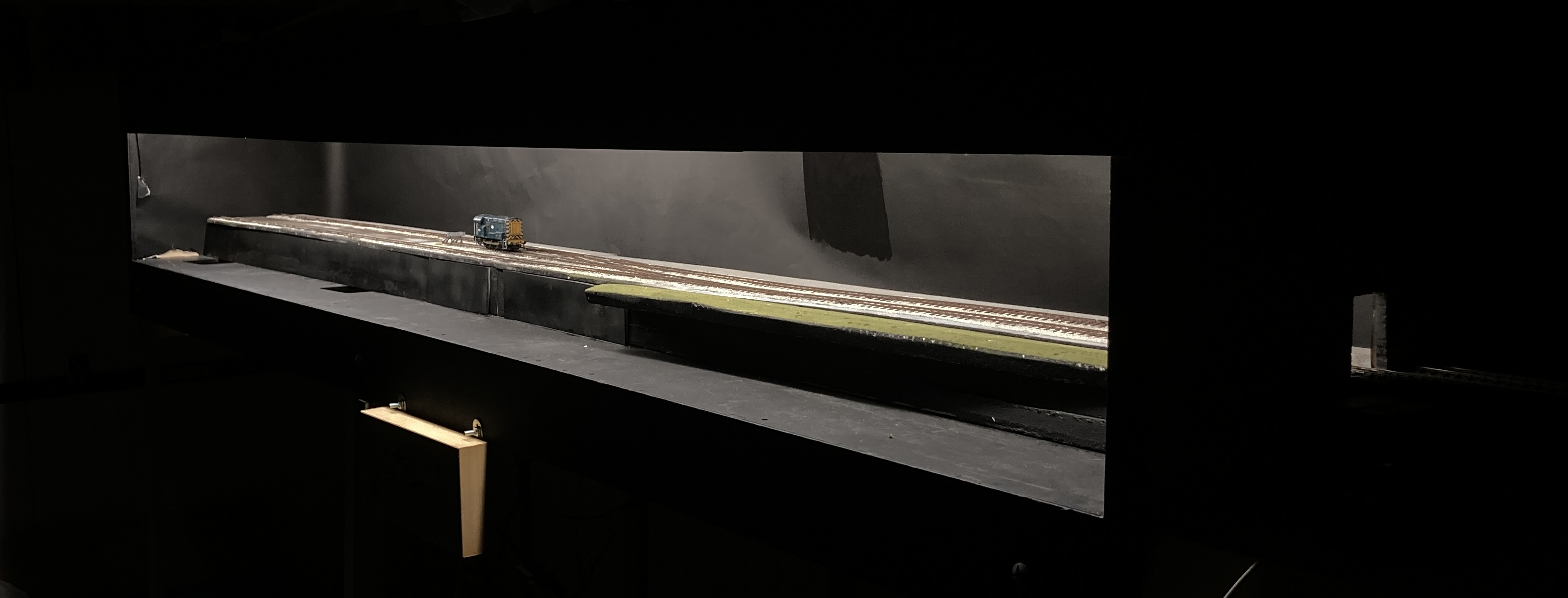
This is one that hasn’t worked and is in the process of revision, potentially to a completely new presentation. I’ve got a provisional booking next year already so I’ll need to act on this in the foreseeable future. What has been good is pushing the display potential which I have in mind, and it’s really only the type of build you can do for yourself, there’d be too many WTF questions in a club environment! I’ve still learnt from it though, even if what I want isn’t going to work in the current context. So changes are coming and are likely to involve the concept on, and in, a different scale.

Independence then, something to embrace!
 Albion Yard
I was a club member from the mid-1960s until I left the area in 1992 but I had been one of the founder members of the club. We had six different layouts each with its own small group of like-minded builders/operators. It worked fine and still does though the layout I worked on has gone because all but one of the group have either died or moved away. For the next 30 years I was not a club member because I could not face going ‘cold’ into a club where I would be the new boy. Following cancer treatment my kids thought I should get into something ‘social’ so I was taken to a club near where I now live and introduced. 12 months on I’m secretary (because no one else wanted the job) but I’ve yet to get involved with work on any of the layouts. Getting into a club is one thing. Getting into an established club layout is something else particularly when your modelling interests relate to where you used to live (WR/SR) and the club interests are ‘local’ to where you now live (LMR).
Fascinating to compare the relationship with clubs. I grew up on a diet of British model railway magazines.
That club environment always seemed to underpin so much of how I understood things were: societies to provide a kind of community-based support beyond the reaches of retail’s fingers to facilitate modelling; through to clubs to make it easier to do the work of making model railways.
Compared to the solo artist on their isolated island that feels like the experience on this side of the ocean. Club houses and shared spaces are alien here. We seem to struggle with knowing how to support each other and make a collective progress in the hobby possible.
-Chris
I’m still very much the solo artist as you mention. One big difference is physical geography, here, we’re much closer to each other generally, so meeting up and visiting exhibitions is easier even if you’re an independent modeller
Probably so. I never considered the exhibition frequency but do know I envy it. Closer together in geography making it easier to think it terms of together.
And it does seem to work and it does sound nice.