
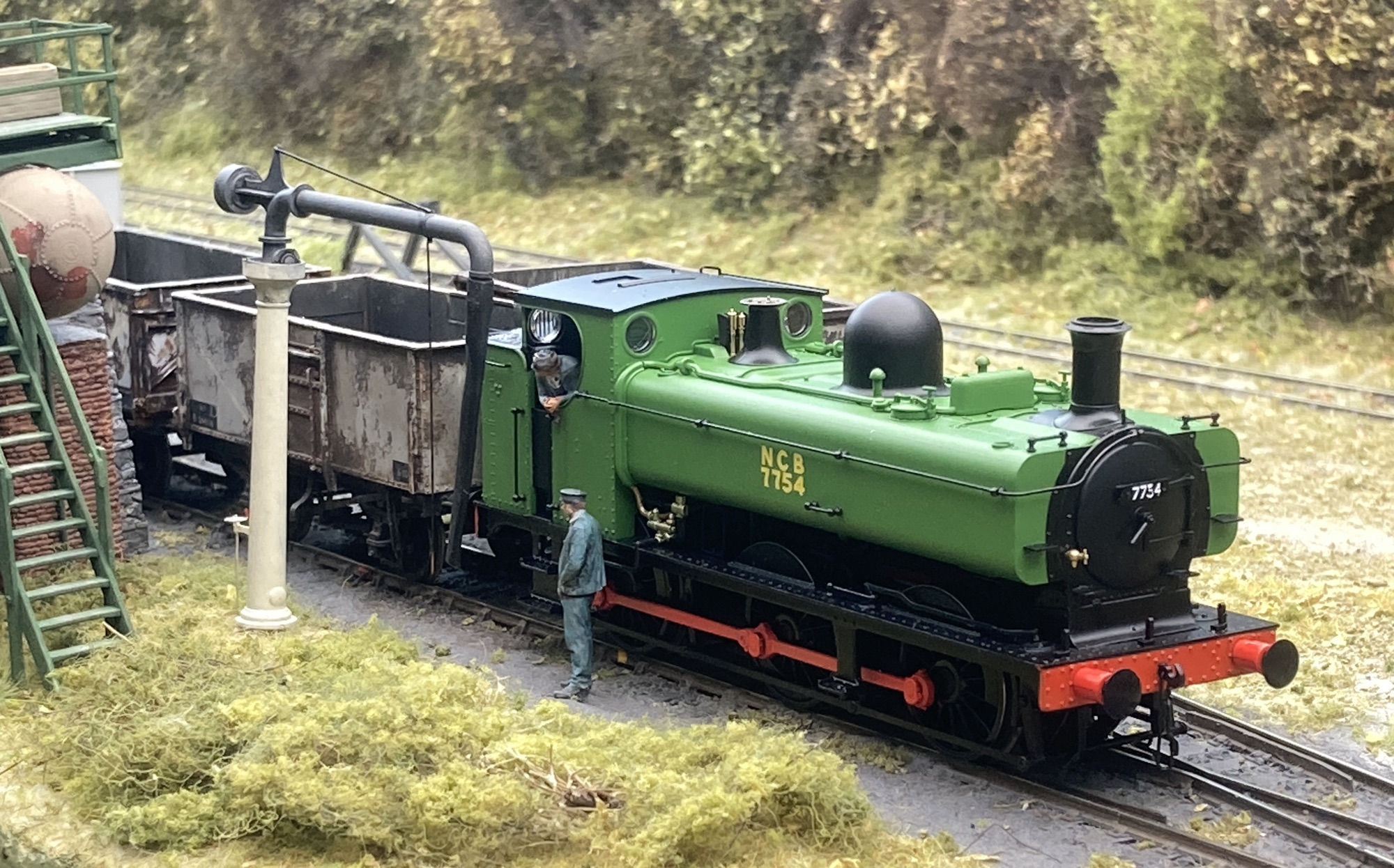
Well it’s here, the Accurascale 57xx, and spoiler alert, its definitely been worth the wait. This release really brings the Pannier family up to date with a contemporary high quality and detailed model of this iconic and promiscuous family, nearly 900 of them! A question that might be asked is what’s taken so long for an updated model to arrive over and above Bachmann’s 2004 release. An answer maybe that Bachmann in fairnesss to them actually got the 57xx varieties they tooled very right indeed all that time ago, with a well detailed and mechanically sound model. So much so that the kit manufacturers like Malcolm Mitchell and Martin Finney would have had a job getting people to buy into building a kit whilst the Bachmann version was extant, I’ve got fourteen of them….

Well some twenty two years later Accurascale have taken the next step with their version, and has set the standard which is unlikely to be surpassed for a considerable time to come. They also have tooled versions not previously available, riveted tanks, boilers without top feeds immediately spring to mind, and have tooled the bodies in such a way that the ability to produce a mainstream version of any member of the class is just a tool slide change away. Whilst not as detail varied as their other recent model the J67/8/9 classes, there are plenty of subtle variations to capture both in locomotive details and livery variations.

Accurascale have kindly lent a DCC sound fitted model for review, from the production batch, not an EP or decorated sample. As Shelfie2 was at the NEC show and running in its normal DC configuration we wondered how well it would work running on DC as its bimodal so to speak. Well the answer was surprisingly well. Using a Gaugemaster model W controller the sound worked and the locomotive works as expected. It does need turning up to maximum speed to activate the decoder, once. it starts moving turn the speed down and the model moves prototypically and has a bit of a momentum feel to it. It rapidly became second nature, and the exhaust beat matches the wheel revolutions even in DC operating mode. There’s no volume control operating like this, but in the environs of the NEC the relative loudness wasn’t in any way obtrusive. Subsequently at home it was loud, but thats not really a problem, If I were buying a sound fitted version, I’d bite the bullet and buy a DCC system anyway.

The initial look over the model at the NEC certainly captured the look and mass of the 57xx class. Some models just don’t look like they capture the mass of the real locomotive, but this one does, adding subtley to its prescence on or off the layout. Getting it home means that a more relaxed look at the model can take place, and this has just confirmed the accuracy and attention to detail of this class act.
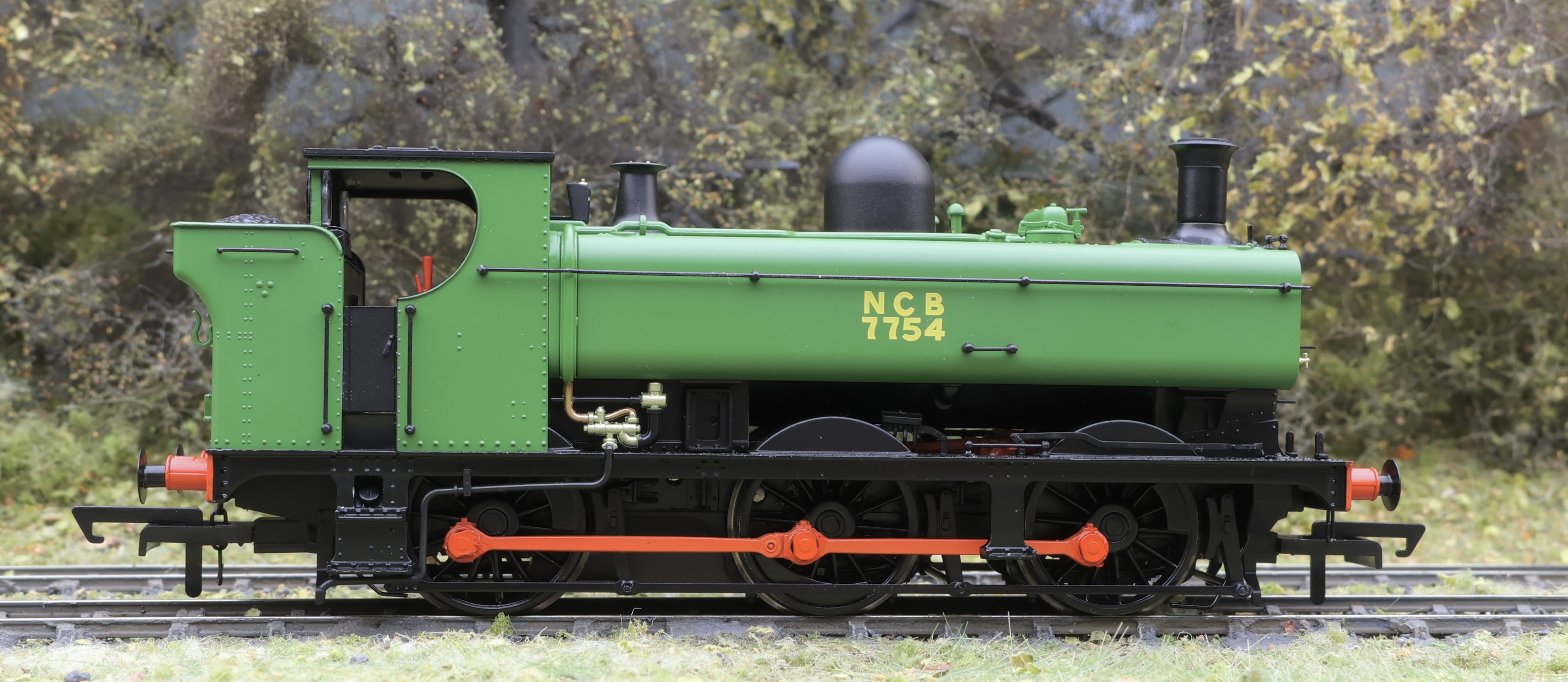
Arriving in the standard Accurascale packaging the model had no major defects and one lamp bracket missing from the bunker top. No superficial glue marks or assembly errors were evident and the paint and printing is all crisp and legible. The model comes fitted with standard tension lock couplings and NEM pockets on the chassis, they were removed for photos and video. The model was literally fresh off the aircraft so we received the same standard product that a regular purchaser will. Within the box is an outline of the class and its history with some interesting notes from their use in preservation, real lived life experience. Also is a detail package with a smokebox number plate and two locomotive lamps. There are tweezers to help replace the decoder, an instruction leaflet with spares listing and the DCC sound instructions with relevant CV’s and settings. So taking the measuring stick to it and dimensions published, it meets all of them without exception. Importantly the various shapes and radii of the fittings just pop, capturing the character of the prototype, possibly to perfection.

This was emphasised by the small delay in the production process when the dome top contour was changed, the original wasn’t bad by any stretch, (see above), but a change was made and definitely for the better. The above image actually shows some of the detail variation within the tooling suite too, note the injector through the running plate, the riveted tanks, no whistle guard and no top feed compared to the review sample.

So what is on the man cave desk then? It’s an industrial version of the 57xx, and specifically 7754, which was sold from British Rail service with a few other panniers to the National Coal Board, and worked into the early 1970’s which is the detail and livery configuration this is portrayed in. Whilst many automatically associate the GWR Pannier with Swindon, this locomotive was built in a batch of 24 engines by the North British Locomotive Company in Glasgow in 1930. Does the detail on the model match published images of the locomotive? It does, I had thought the North British works plates should have been extant on the front splasher. After writing the review a friend advised his GW version had the NB works plates as a separate etched accessory. Leaving them off makes sense as the various builders had different shaped plates and this can accommodate those differences. A subsequent image search found this locomotive in 1970 without the plates fitted, so this is correctly reflected on the model. The other details for this are excellent with the correct type of whistle shield (short), injectors and pipe across the top of the running plate. At the front end of the welded tanks are the steps, these are correct angle plate types, others had a stirrup shape. The face is completed with the steam lance fitting and a convincing shape and diameter of the smokebox door, this being removable to allow easy access to the decoder.
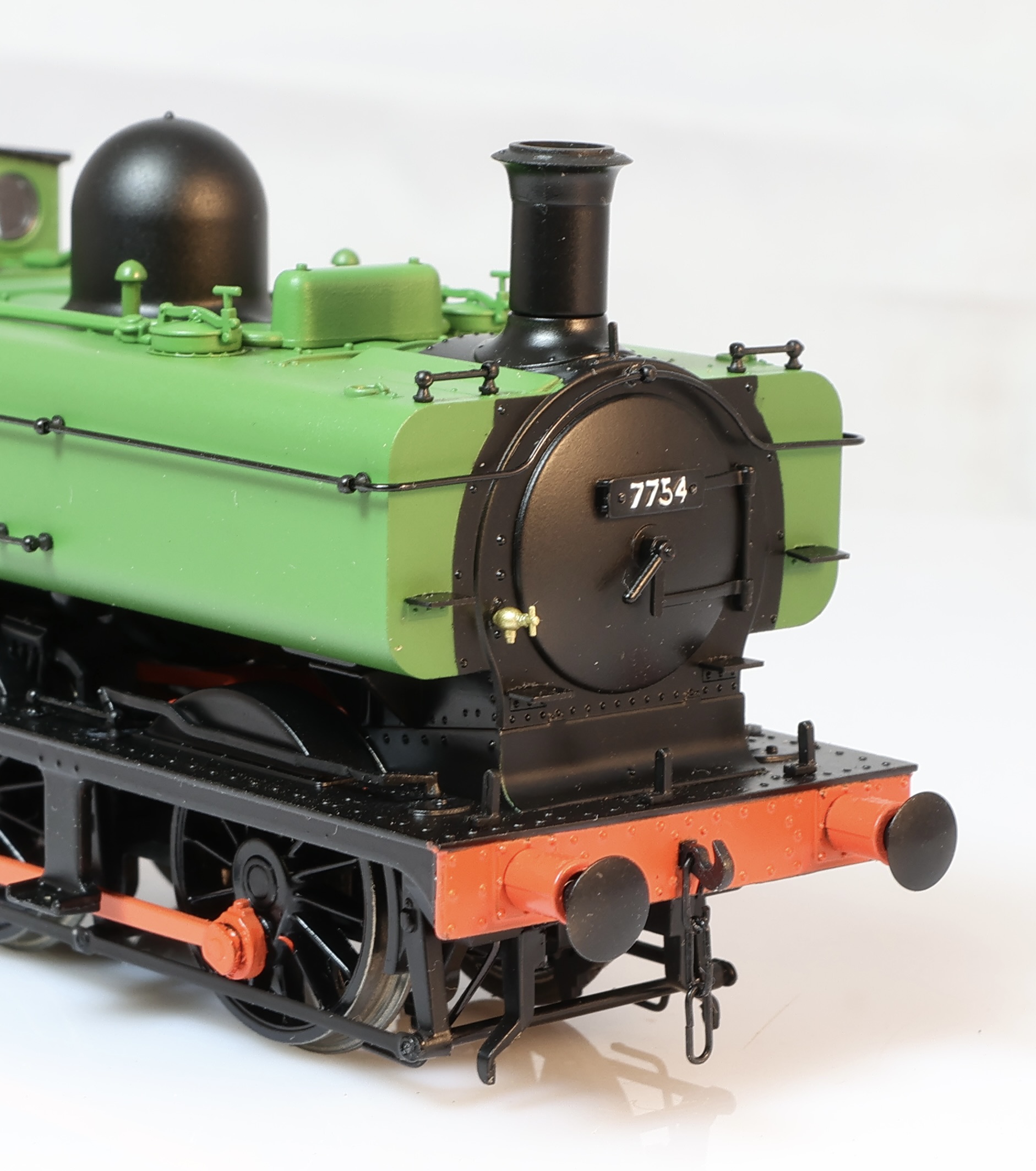
The tank fillers are the correct screw type (another variation) emphasising the attention to detail that Accurascale have paid to these models, there is a slight error in the tank opening handles in that they should have a right angle bend in them which is missing. This version of the pannier has the top feed fitted and the separate pipework and topped casing look particularly good rather than folded as one piece integral with the body. Nestled underneath those tanks are the lubricators, another detail not featured on other models.

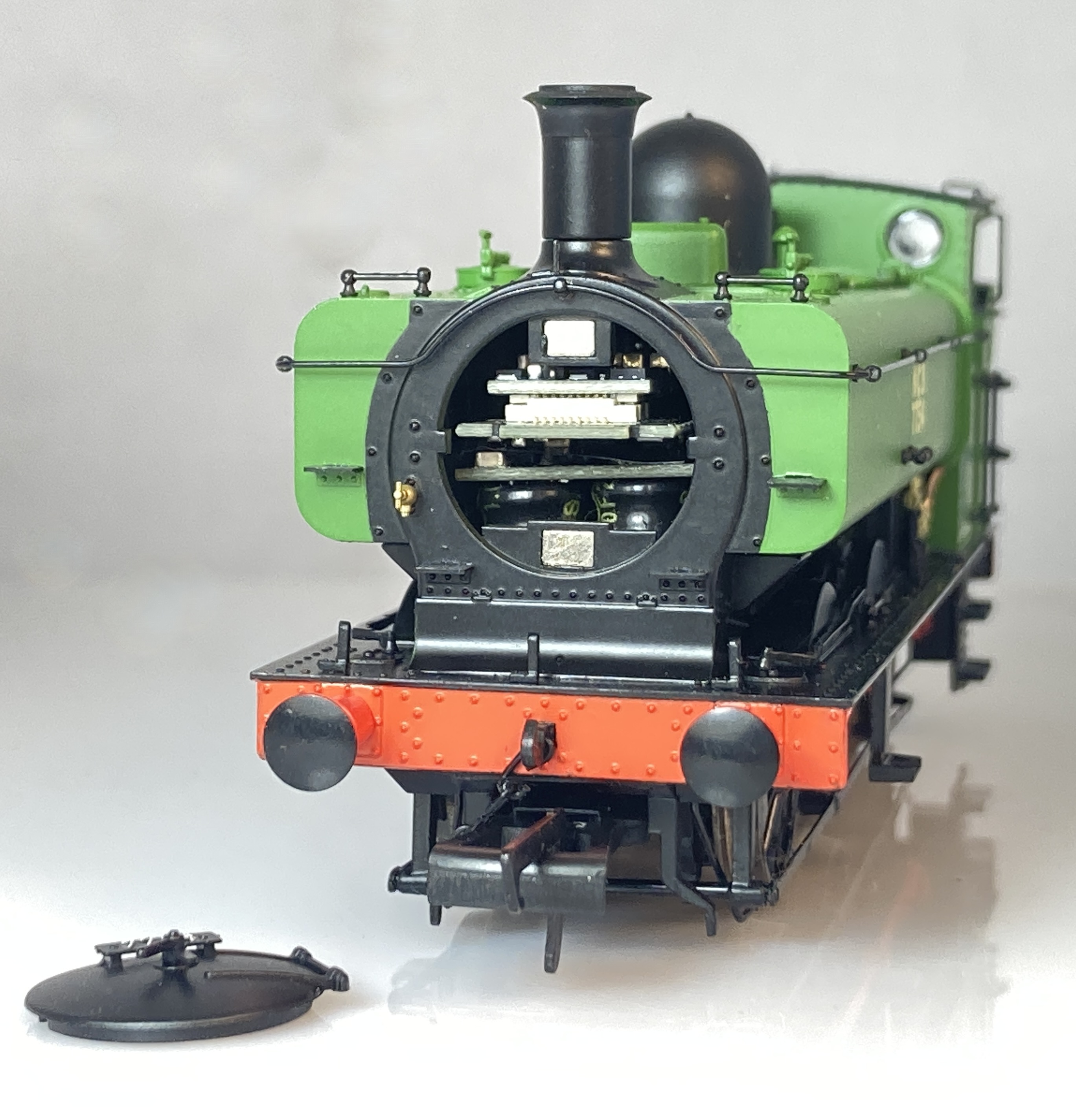
Handrails and tank lift rings are much finer than previous models like my Bachmann versions, and its this precision and detail variation that really lift this model and puts real distance between it and the (much) older Bachmann versions. The other big difference from previous models is the access to the decoder, seen below, the smokebox door is removable and tweezers allow access to to the decoder if required. The magnets are pretty strong so its unlikely that the door will drop off and go missing. Someone will though..
Other areas where there are significant improvements to previous models are the cab and its fittings. The models have sliding roof vents, but not separate cab roofs. This is because I understand making a viable component join across the tooling range wasn’t practical whilst keeping the fidelity of the models appearance. Different bunker step options are covered, this having the correct type for later in its life, early GWR versions will prototypically have them omitted. On the low cab version here the rear window looks a touch close to the edge of the cab sheet, but isn’t really noticeable.
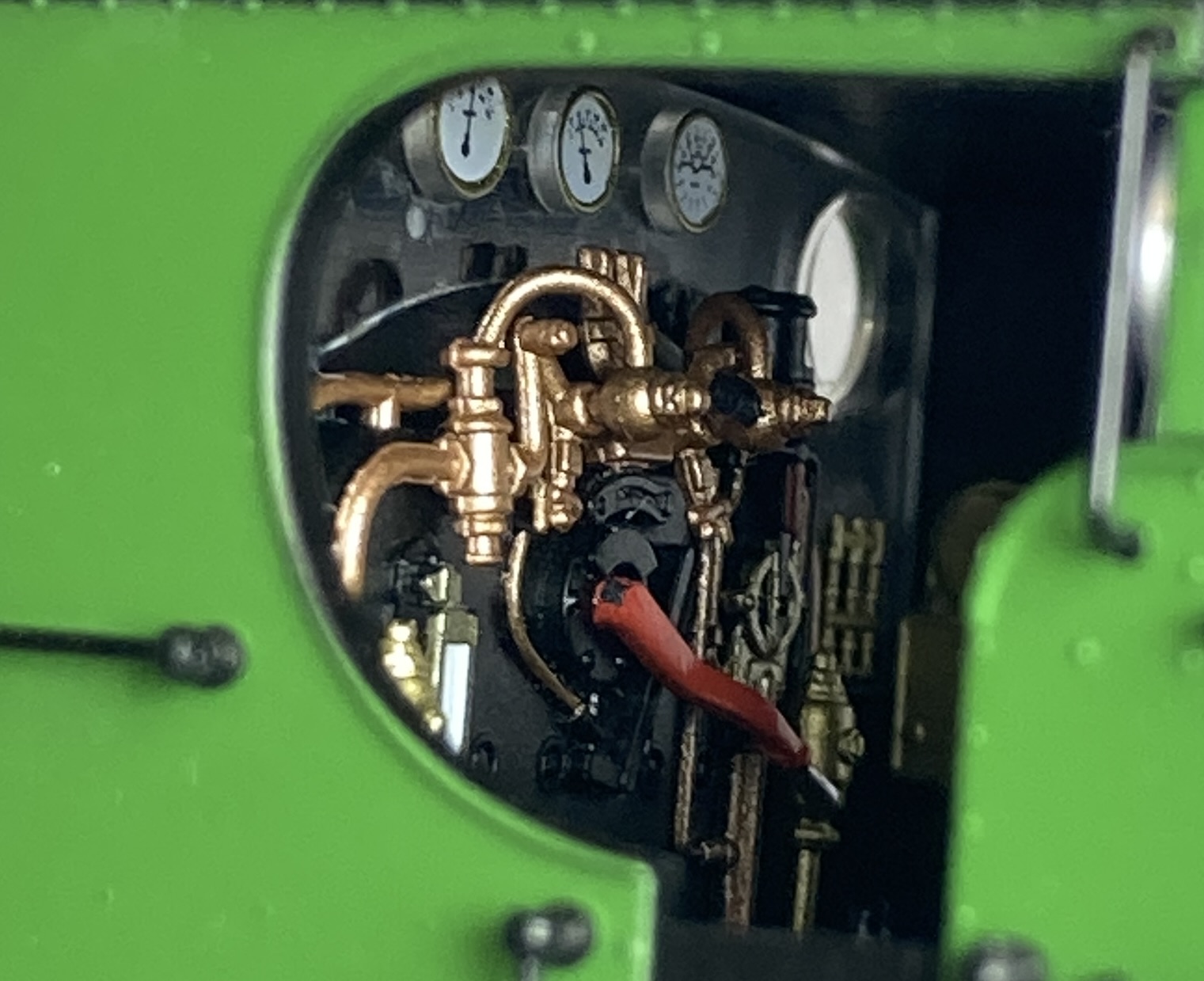
Cab detail is excellent as illustrated, the bunker shape and panelling has the look of thin sheet metal and the characteristic GWR angled lamp brackets and fire iron hooks are fitted. The chassis is rigid with rigid coupling rods. My preference is for jointed rods, however both Accurascale and Rapid have released recent models with solid rods and there have been no adverse comments regarding their operation, so they’re not like to present any problems, certainly none were apparent in the tests I’ve done with this or other types. I’ve run this through Shelfie 2, and 3’s track which are Peco code 75 streamline and Bullhead (2 & 3 electrofrog) all work with no problems. The other types that I’ve tried are Peco set track 2nd radius points and Kato unitrack, where it has performed brilliantly. As its DCC with stay alive that makes sense, and judging from the J68’s performance over the same track I anticipate a similar result with a DC specification model.

The chassis is a tidy well designed and built assembly. It’s fixed to the body with two retaining screws, one at each end of the chassis. The chassis has all wheel pickup with wipers on the rear face of the tyre and the motor wirings hidden within the chassis assembly. Wheels are nicely profiled with the correct number of spokes and appearance. The metal chassis core has a plastic baseplate with separate ashpan and etched brake pull rod assemblies, the axles have enough lateral movement that they don’t foul the brake gear, and axles appear to be 2mm in diameter. The brake shoes are aligned with the wheel treads and the stretchers between then are plastic ensuring electrical insulation. It doesn’t look like there’s any significant hurdle to converting these to EM/P4 but without pulling this loaner apart (not going to), I can’t say for sure. The running plate is metal so there may be some work needed there to ensure clearances.

The drive is to the centre axle via a vertical gear housing. This has allowed excellent cab detail to be shown and left the area underneath the boiler open. Sitting on this is a representation of the internal valve gear and this is a notable feature as the area otherwise looks odd with no detail there.

Prominent at the front of the chassis are twin capacitors for the stay alive function, these are hidden from sight in the smokebox when assembled. On top of those lies the decoder, which normally is accessed by the front of the smokebox, and Accurascale provide tweezers to remove or replace the decoder if you wish to do so. immediately behind that are two vertically mounted sprung electrical connectors. These are the speaker pickups and compress against strips within the body that provide power to the factory installed speaker. The speaker is situated in the left hand side of the tank and is a neat and tidy installation.

Spinning the chassis round the rear of the gear housing has the LED for the firebox flicker which is subtle and not overpowering. The compact nature of the design and tidy wiring loom has left the room for the cab details too.

So what does it sound like in DCC? Unmodified out of the box, in a word, eleven. See Spinal Tap, I’ve not altered any settings as this is a loan item, but it’s loud. At the NEC it wasn’t noticeable due to the size of the venue, at home in the mancave it’s loud, but having said that, the sound quality is excellent. The functions using an NCE power cab are easy to use and the controllability is excellent. This is the first model that I’ve had with F2 as the brake function, and I’ve been really impressed with it, it rapidly becoming intuitive. The difference between a heavy exhaust beat F5 and a light locomotive F6, is very marked and I really like the list engine sound. Several whistles are programmed too, it’d be nice to have a few more, for example dropping the shovelling coal sound. A retailer friend tells me the coal sound is one of the most popular functions, so I guess that isn’t going away any time soon.

The sound is unsurprisingly a very big improvement over the sound fitting I did way back in 2007 with a Bachmann 37xx and 57xx. They were good for the time, the difference of the sound files and speaker quality then compared to today is an immense leap for the better. The twin stay alive capacitors which give 4 seconds overrun on a fast speed setting, are also a very big factor in the running and acoustic qualities of this model.

Downsides? Well there are really very few, this particular model had a missing bunker top lamp bracket. The join at the base of the chimney could be tidier, this one isn’t quite flush. On the sides of the buffers the tooling slide join line is quite visible, it should be a smooth sided cylinder. On this example thats about it, and if all thats I’ve got to whinge about, thats excellent. None of those are insurmountable if I wanted to go crazy and do some modelling to resolve them.

So is this a worthy successor to the ubiquitous Bachmann 57xx? Undoubtedly, with an emphatic yes. Above you can see one of my modified sound fitted locomotives from 2007. Will I replace my shed full of Bachmann versions? Nope. Thats because over the years I’ve done quite a bit of work to them, and once you’ve spent that time they do stand up reasonably well against this release. That is a testament to the design team of the early 2000’s and the production values over the years. They do need quite a lot of work and I’ll cover that in the future. I did ask the Accurascale team if the etched details would be available, and they said they would be widely available, as an incentive to purchase them they would supply a free fitted painted body and working chassis included too. If starting today, then the Accurascale version would be the ‘go to’ model almost without hesitation. Within their range there are the core different detail differences, and with the opportunity to ring the changes with livery and detail variations across the lifespan of the class, what’s not to like? If you want a model of one of the last panniers working for a living, buy this! I do hope that perhaps in the future liveries they might consider one of the 96xx high cab versions that also ended up in the South Wales coalfield eaking out a living in the late 60’s.
Where can Accurascale go with this tooling in the future? My money is on the missing link in the late pannier family. A condensing London 97xx, and my cheque book is ready and waiting.
 Albion Yard
You must be logged in to post a comment.