
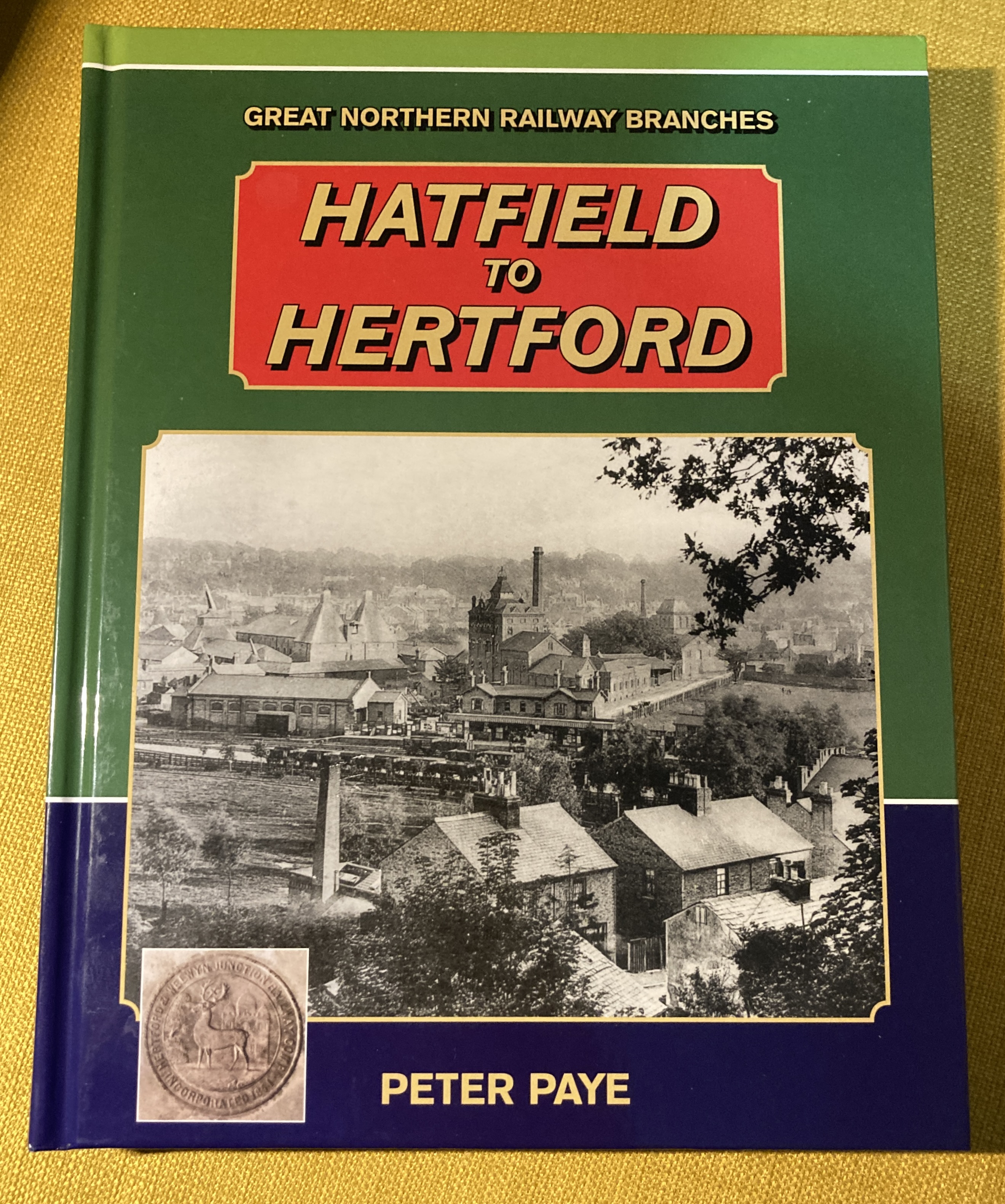
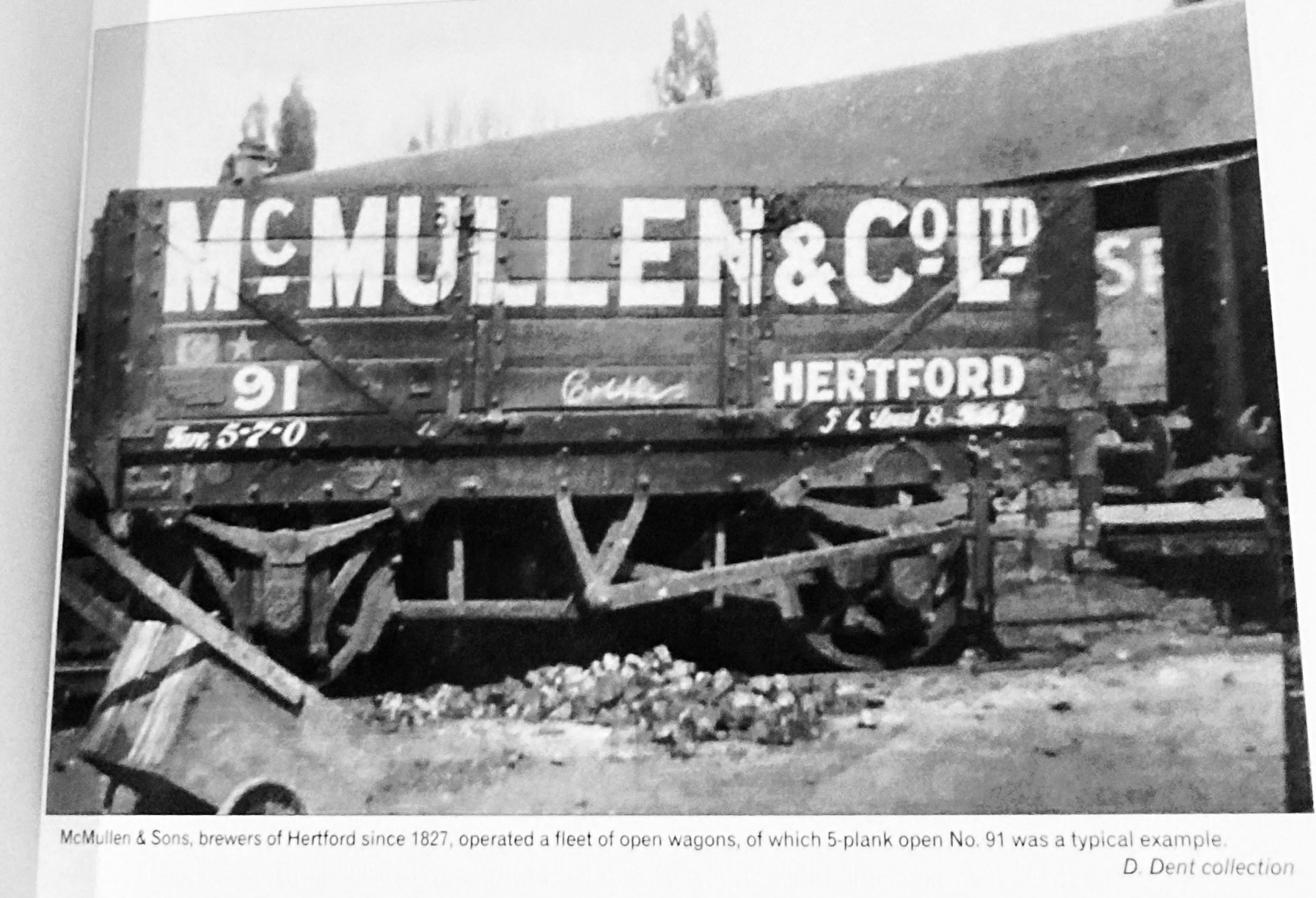
McMullens. If you’ve ever had the pleasure of drinking McMullens finest, let me know what it is, me and my mates are still waiting. The memories of their Hartsman (see what they did there), and Steingold lagers and the truly dreadful AK Mild, were rapidly brought to consciousness by the opening title page of the book. Why so? On the opening title page therein, lies a picture of an RCH wooden chassis five plank private owner wagon in McMullens livery. As a pup living in Hertfordshire adjacent to the Great Northern main line at Welwyn Garden City the book was immediately of interest. The book is written by Peter Paye whom has been providing well written and interesting books on the railways of East Anglia and southern England since the 1980’s and this is another of his incredibly well written and engaging books.
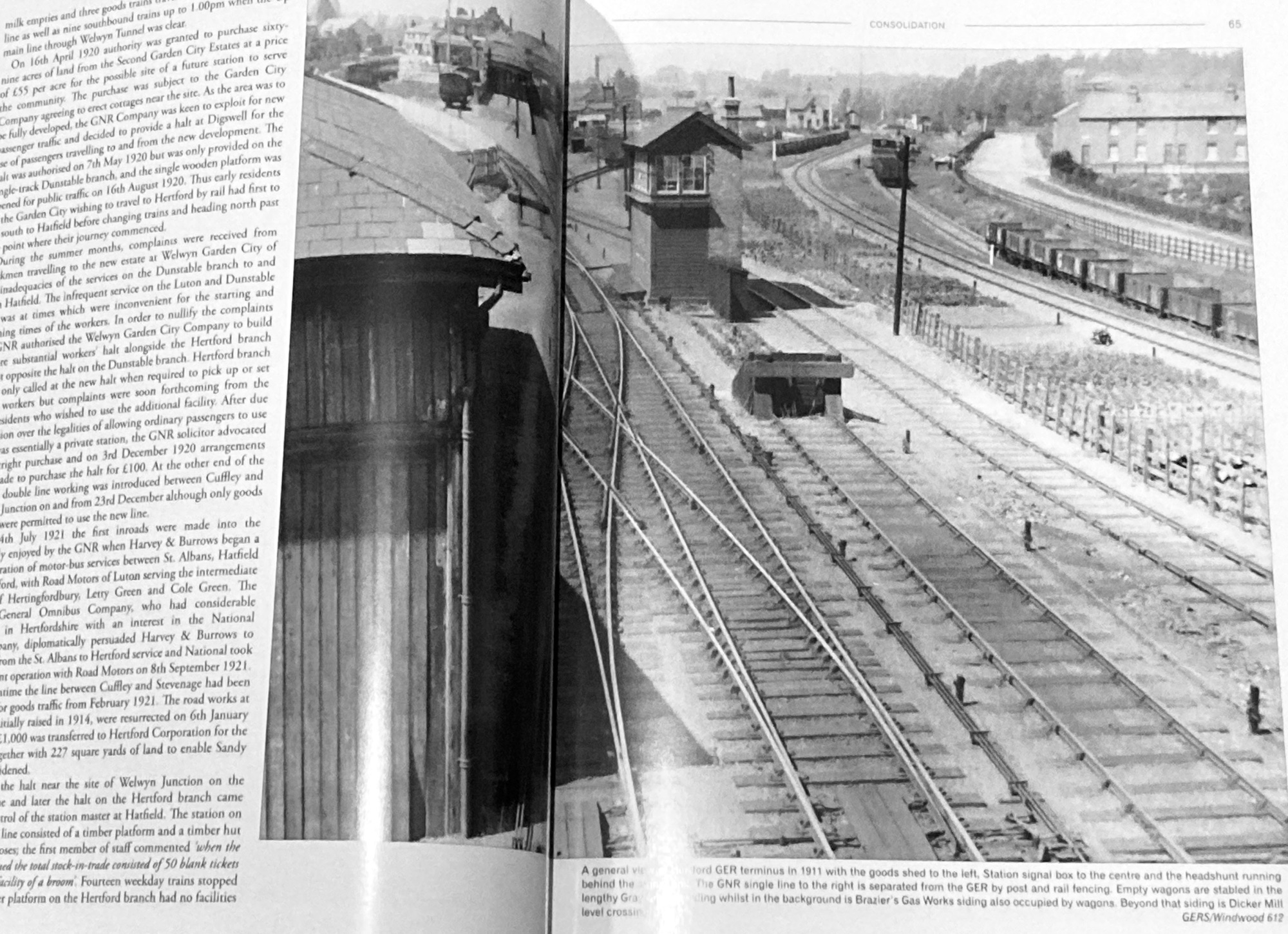
The style of the book is familiar and follows a sort of OPC/Wild Swan format but in the design style of Lightmoor. At around 270 pages there is plenty of detail, interesting images and maps are abundant throughout the book, and reproduction quality is uniformly good. The book takes us from early days and the first development of the line and its route into Hertford, this connecting the GER at Hertford East for goods exchange traffic. This is part of the appeal for me even in the 70’s and 80’s you could see the traces there. Why the connection then? Well, Hertford was our county town, and we lived between Welwyn North and Welwyn Garden City. My late mother did teacher training at Balls Park College, and my father had friends and work interests in the town too, so we were frequently in the vicinity following the course of the line above the Mimram valley to and from Hertford. The last part of the line didn’t close until 1981 so there was remnants to see at our (Welwyn GC) end of the line.
The development is well covered with plenty of researched detail and anecdotes, the first seven chapters covering opening to closure. The chapters are written in a way that tells the story, in a logical and interesting sequence, the subject matter could be ‘dry’ but despite the amount of text it isn’t, even allowing for my natural local interest. While it’s seven chapters, it takes up less than a third of the book, and the latter chapters are for me where the real heart of the book lies.
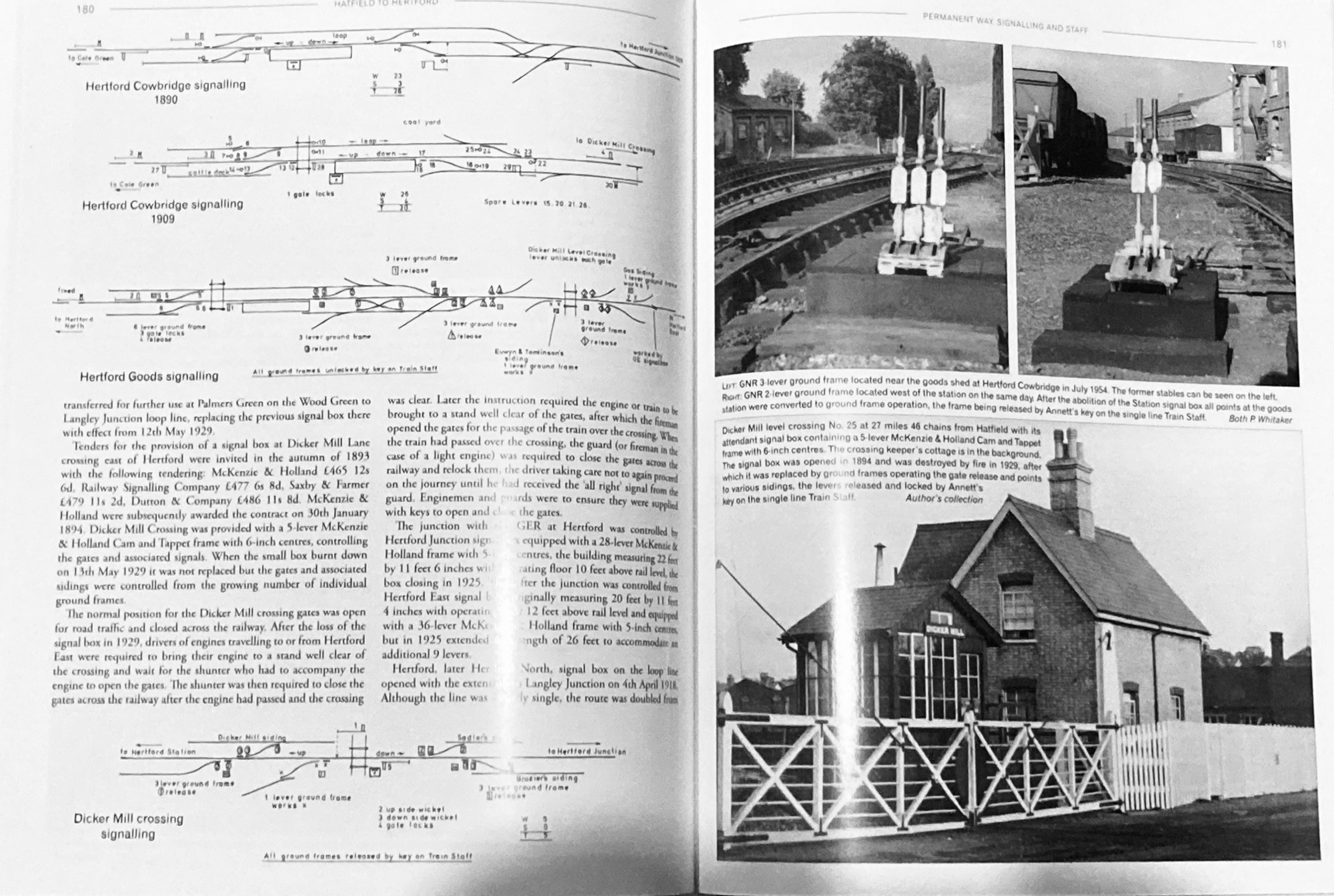
It’s easy to assume that the Hertford loop line running parallel to the GN mainline was already extant while the branch was in operation, however this wasn’t the case. The book covers the development of how the Hertford North station developed and the impact that had on the branch line. The route described had me particularly interested even though the route was ‘wrong side of the tracks’ for me. The stations are well illustrated and track plans too, there’s a good cross section of era’s covered in the imagery ranging from post closure to early postcards. If someone is looking for a branch junction to secondary line on two levels to build, Hertford North is well worth considering, the potential of through, terminating and joining trains has much to recommend it.
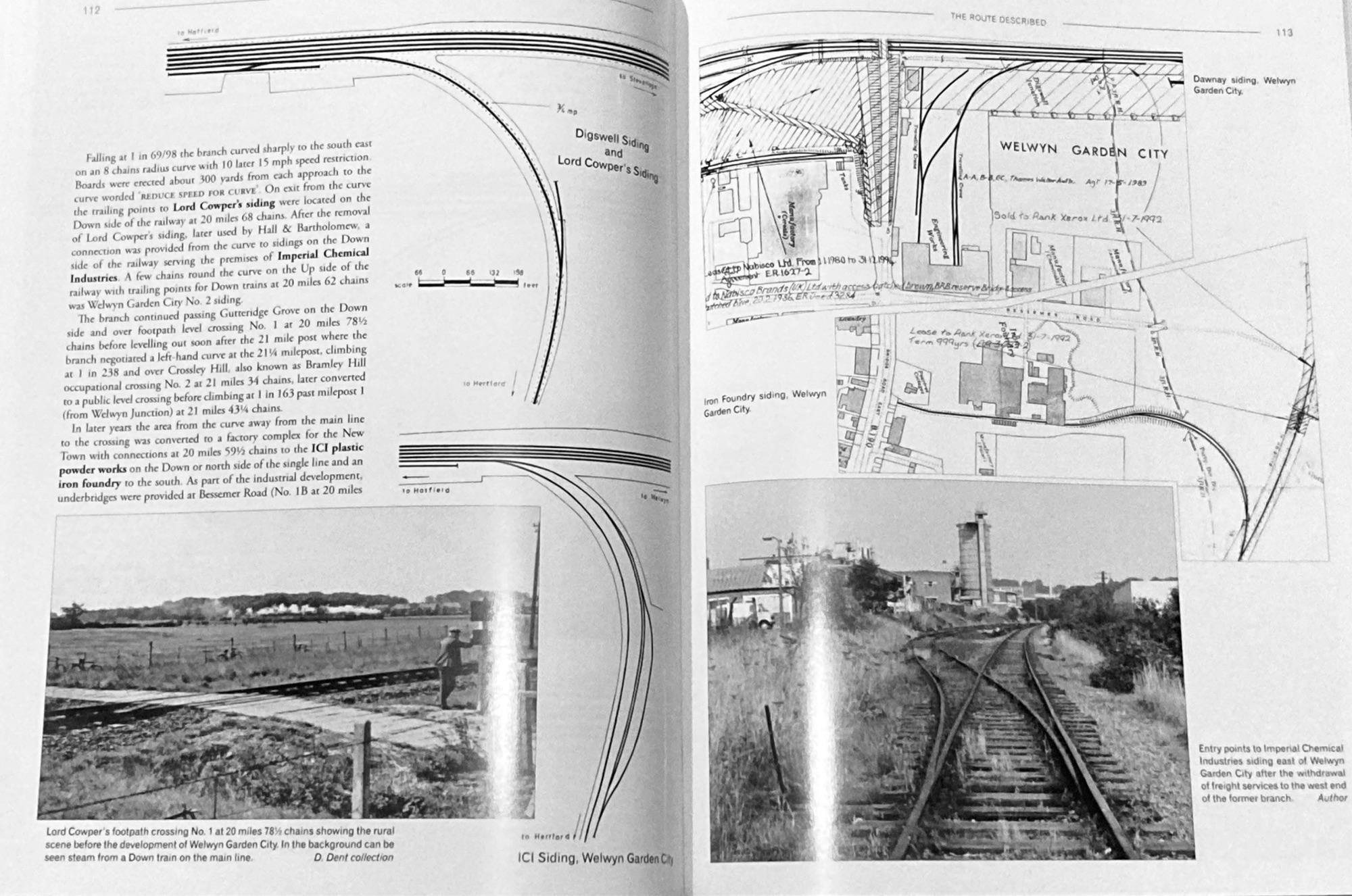
Within the signalling diagrams there are various era’s covered so it’s possible to see the changes discussed in the narrative of the book, as well as relevant images of the locations along the line. The traffic and timetable section underlines just how underused the passenger traffic was, today with road congestion and environmental concerns its interesting to think if this route, as well as the Dunstable to Welwyn section were open how an east west route avoiding roads could be of benefit. In terms of the goods traffic there’s plenty of information on those services, looking in detail at traffic at Welwyn as well as that in the Hertford end. The anecdotes are across the era’s and locations theres a good deal of the social history in there too, the impact of the Cowper family, a large land owner of the area.
The operation of the line is covered from LNER days up to closure from chapter six, leading into the route description permanent way, signalling, staff and Timetables and Traffic. The last part of the book covers the locomotives and rolling stock identifying particular 350HP 08’s that operated on the line, that has already got the modelling trigger finger twitching as you can imagine. I’ve got an N gauge black 08 and some Finetrax code 40 that needs a home. It’s only going one way isn’t it?…
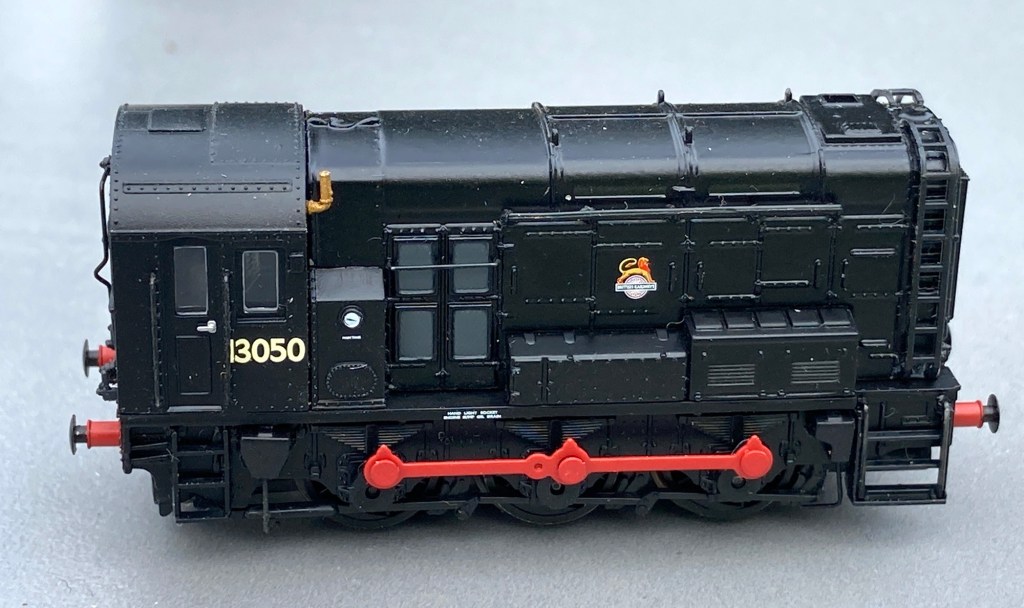
Within the locomotives and rolling stock there’s a good selection of goods and passenger stock identified as typical for the line. I really like this element as if you’re tempted to look at it as a modelling exercise there’s plenty of background data there, and when I look at the releases over the past five or so years in 4mm scale there immediately are several items to make a good headway into a realistic representation of the lines prototype stock and motive power. In 4mm scale Oxford’s N7, Hornby Gresley and Thompson suburban stock, Accurascale, Bachmann, Hornby 08’s, Bachman class 105, Accurascale J67, Hornby and Rapido’s J52, Heljan’s class 16, Hornby N2, plenty of items to capture the flavour of the route in one form or another.
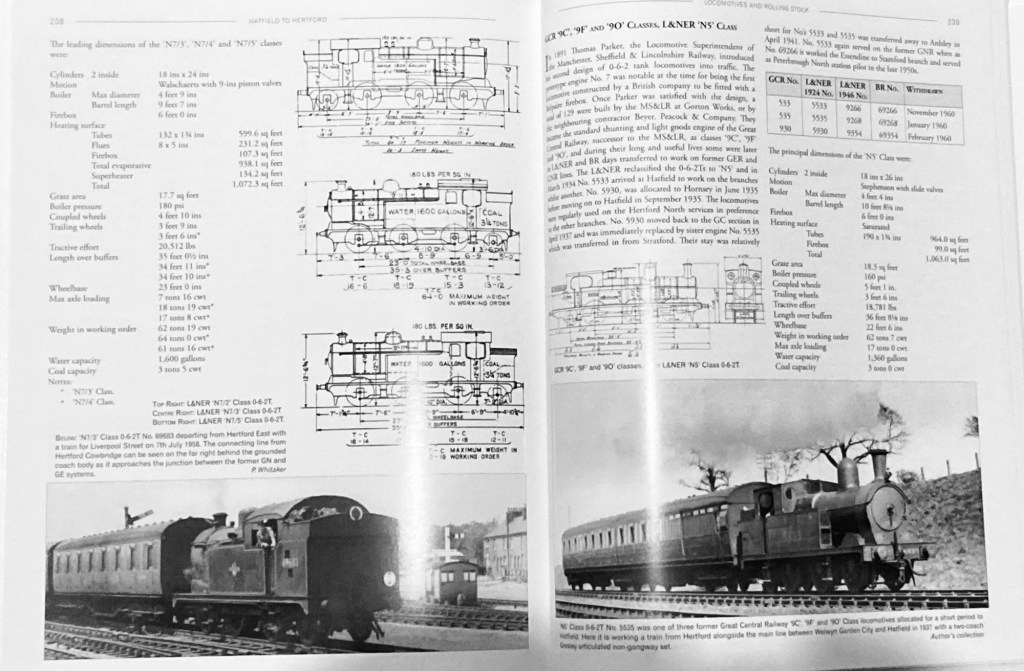
Hertfordshire is one of those unsung counties but this area some twenty miles north of London has still got a large element of rural charm in it, and the line in its day must have been a pleasant ride for those lucky enough to have travelled on it, with the last passenger service run in 1951 you’d be hard pressed to find someone with first sight memories of that traffic. The book was a bit of a slow burner for me, primarily I bought it as it was local interest as well as rail related, but as I got further into it the detail was really what caught my attention, especially when discussing the development of Welwyn Garden City and the industries there. I saw the remnants of them, and this book filled in those questions that people couldn’t answer at the time, or rather we didn’t know whom to ask. It’s a fascinating journey through Hatfield to Hertford, brilliantly illustrated and written, and really brought to life some cherished memories. I’ll even forgive Mr Paye the flashback to the Long and Short Arm at Lemsford, The Cowper Arms at Welwyn North or the Nags Head at Covent Garden. I’m no CAMRA junkie but howMacs have managed to stay an independent brewery is perhaps a contemporary mystery of our time, especially if you ever drank Hartsman or Steingold. I never realised there was a Cowper Arms at Letty Green either such is the depth of social history covered in the book.
I wonder if Mr Paye could do a similar time on the Hatfield to Dunstable branch, that’s the book that would have me shouting ‘Shut up and take my money’
The book was supplied by Bill Hudson Books whom has a very wide and varied catalogue with both exhibition appearances and mail order service.
Hatfield to Hertford Lightmoor Press ISBN 9781 911038 89 4 £30.00
 Albion Yard
You must be logged in to post a comment.