
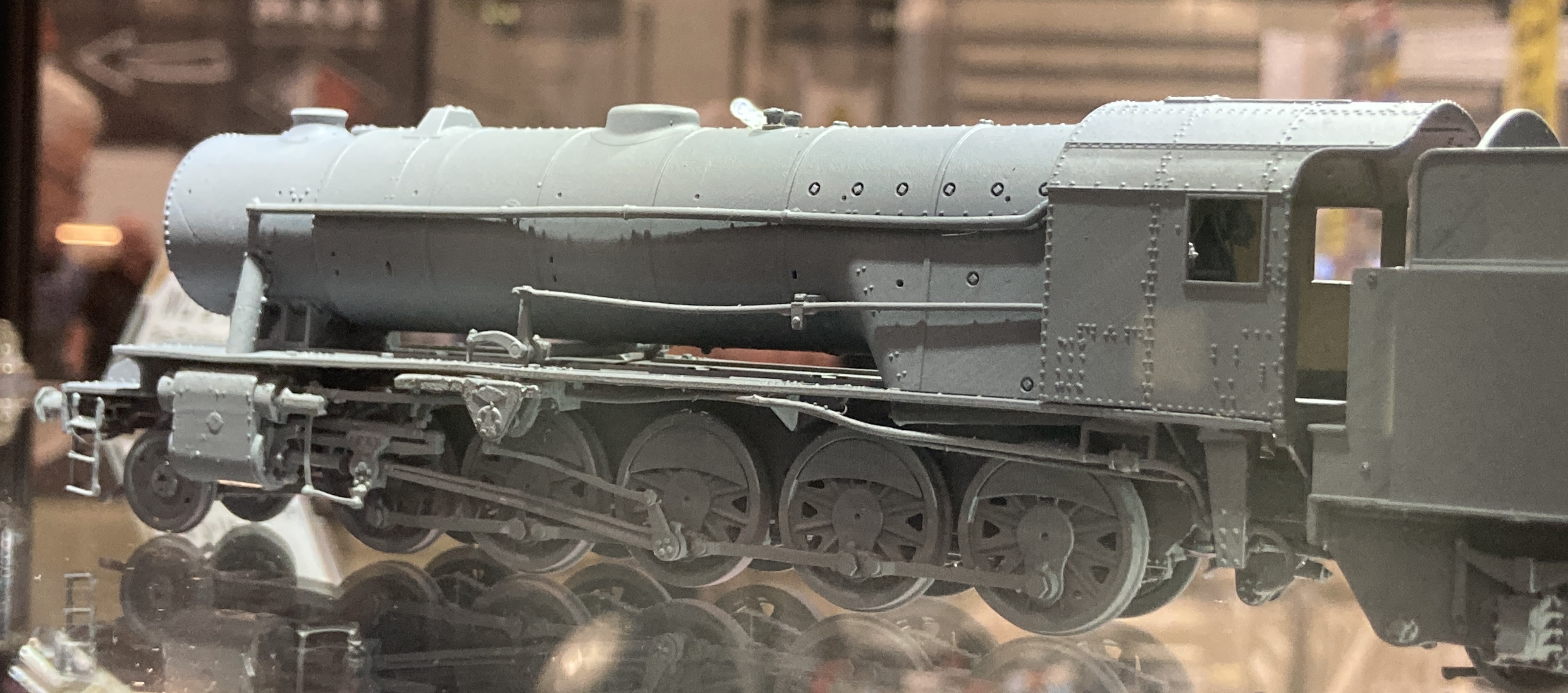
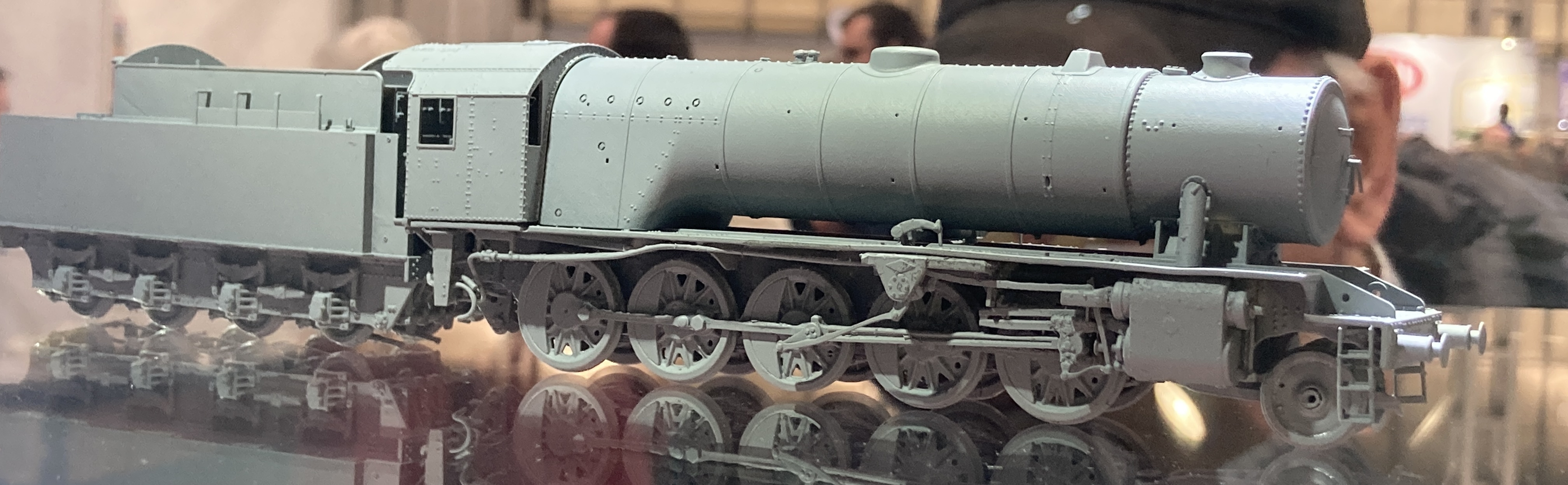


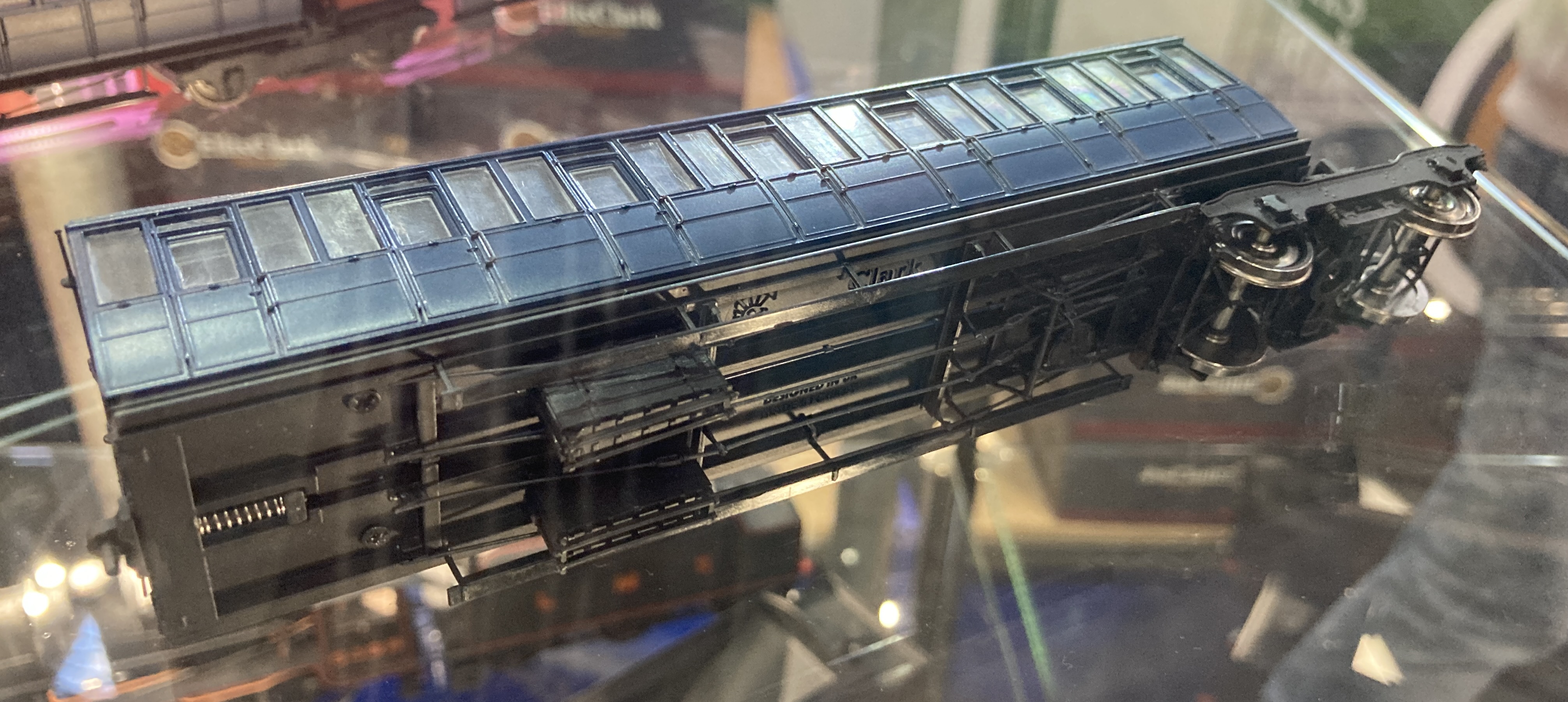


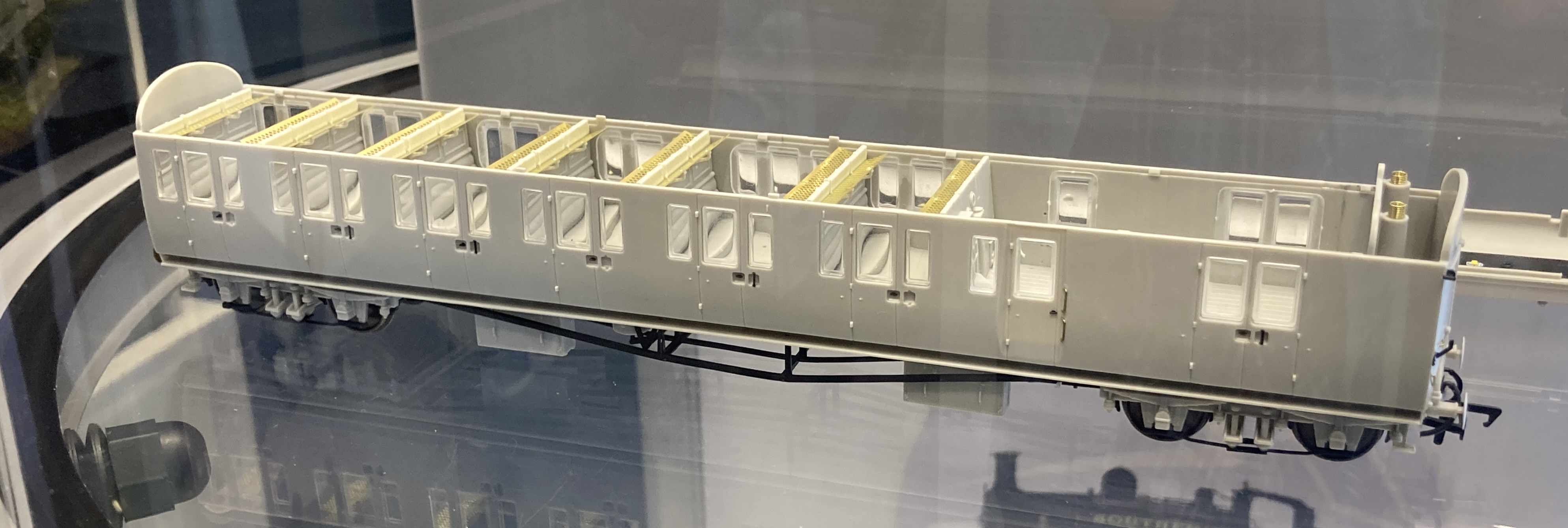
As with the Dapol 14T tank wagon these GWR B-Set coaches are of interest for my Forest of Dean project. Whilst not specific to the lines in question to passenger services finishing before my core interest period, they tick the right boxes for appropriate coaching stock if I choose to go down a passenger service route.
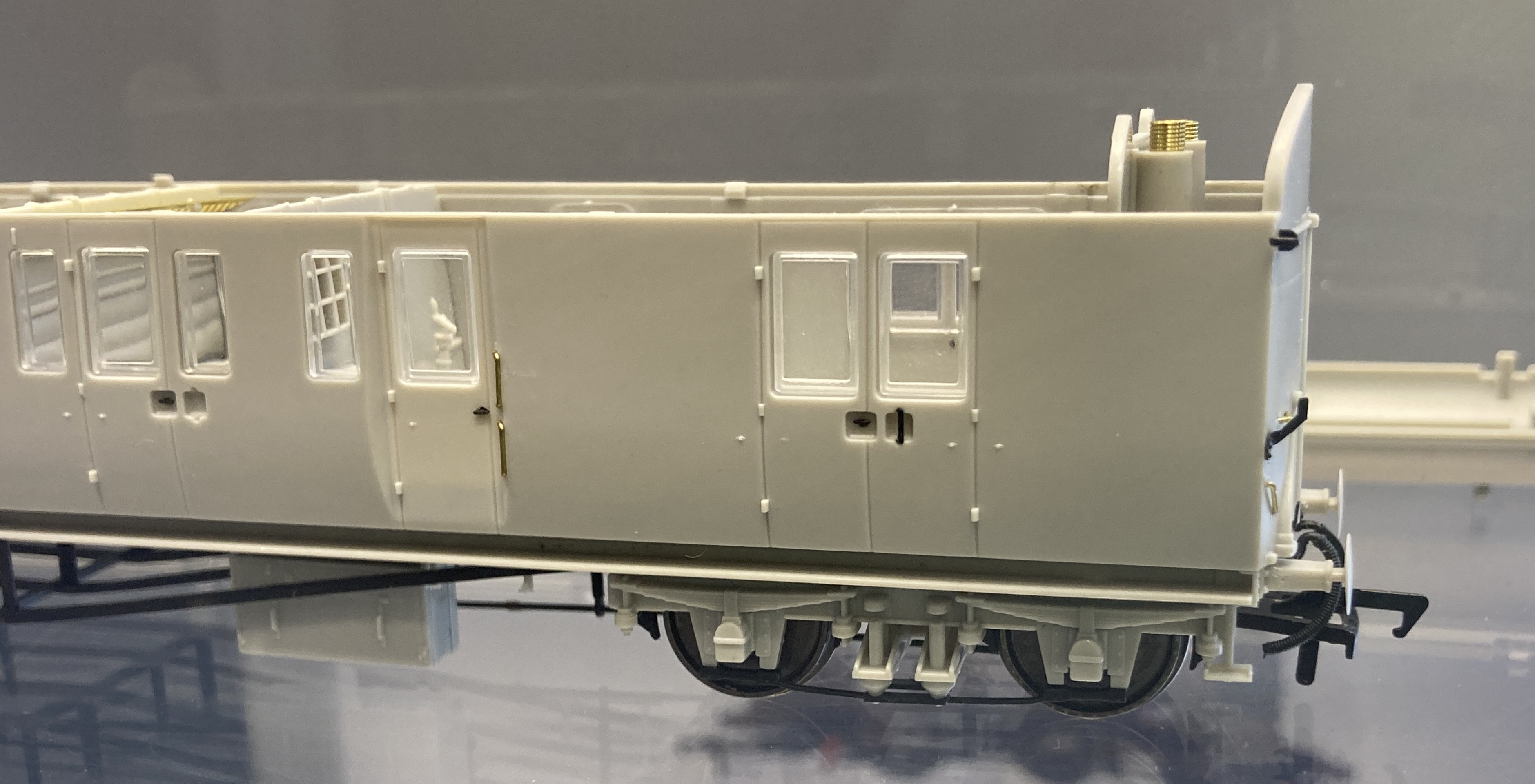
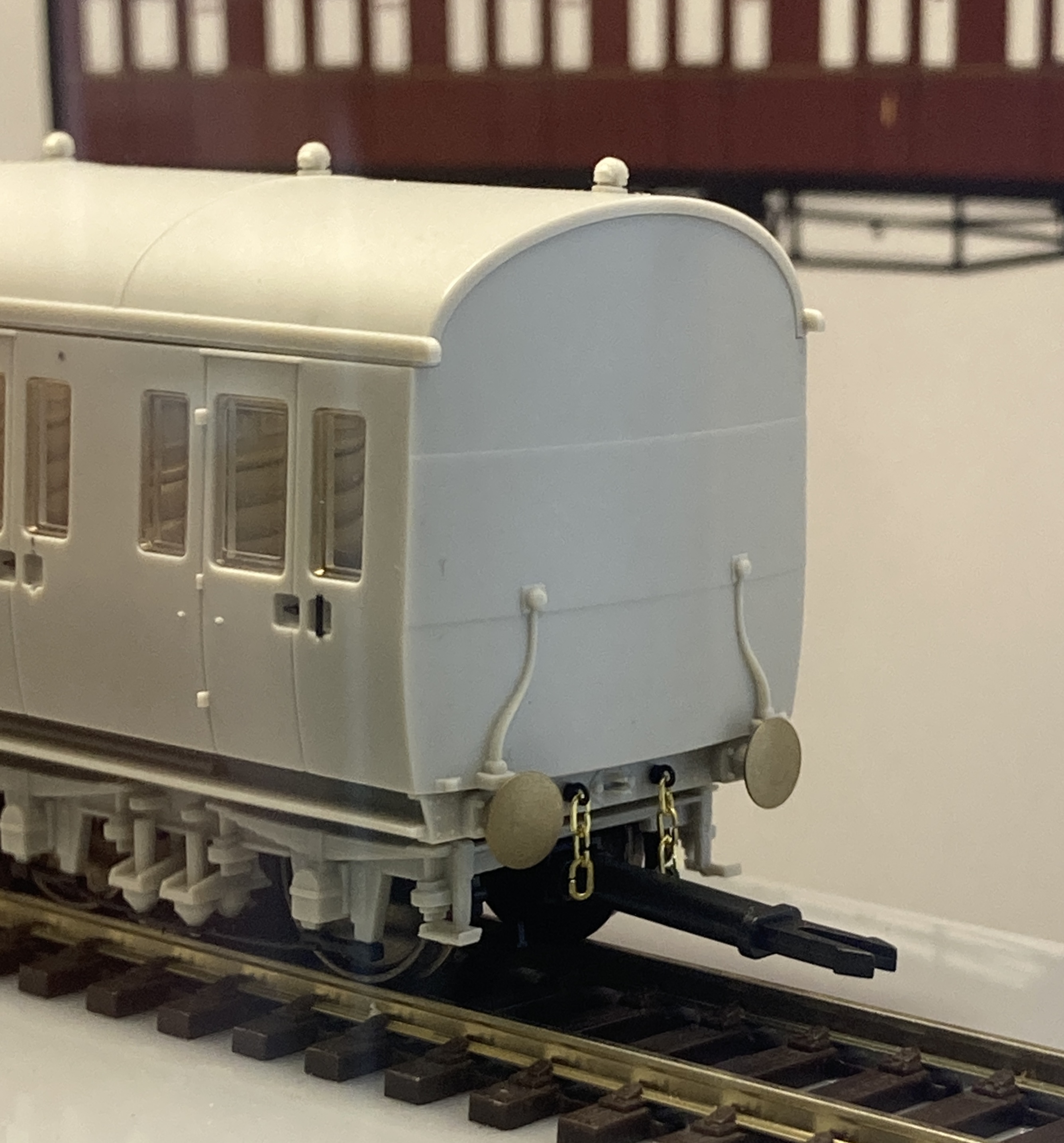


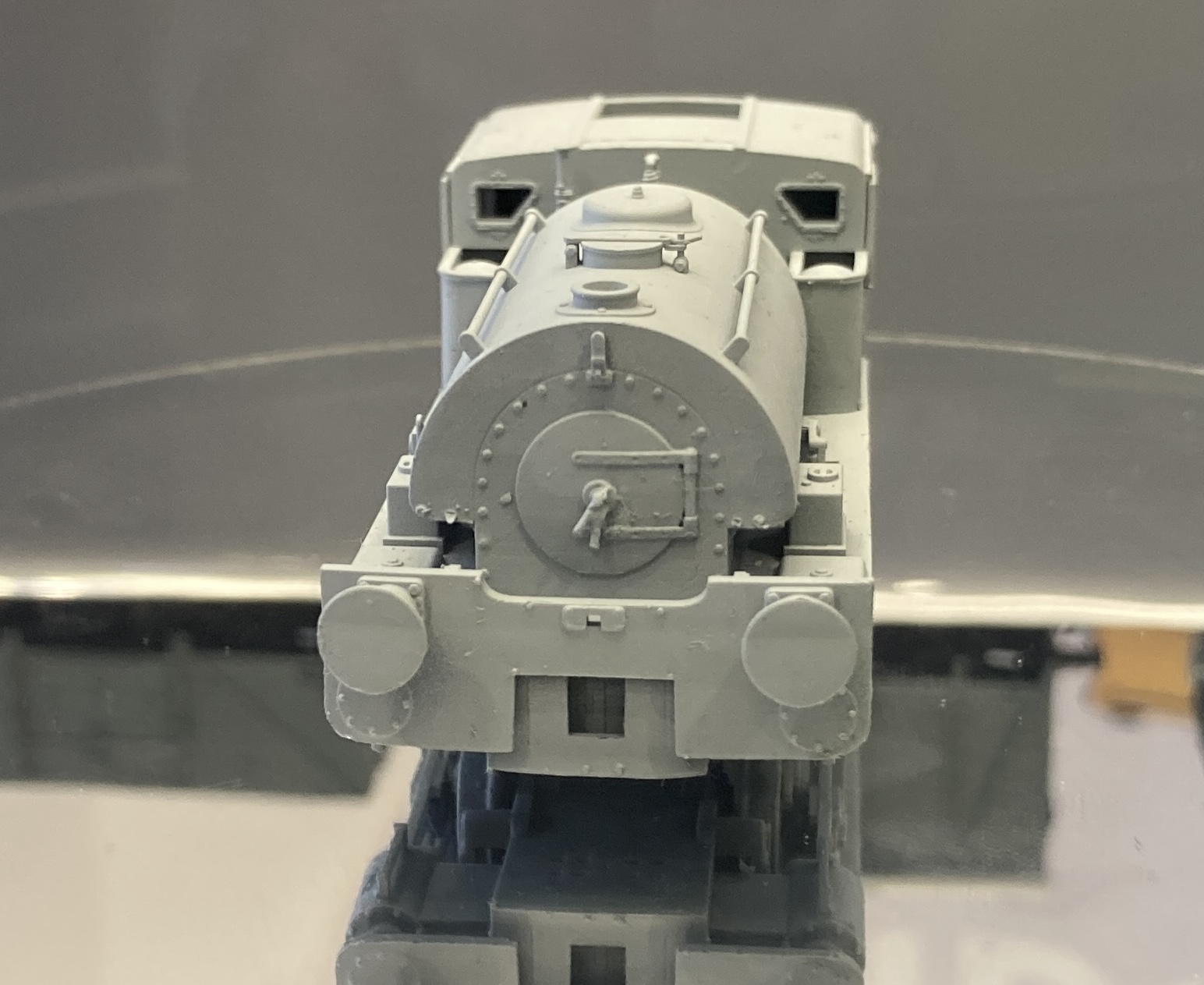
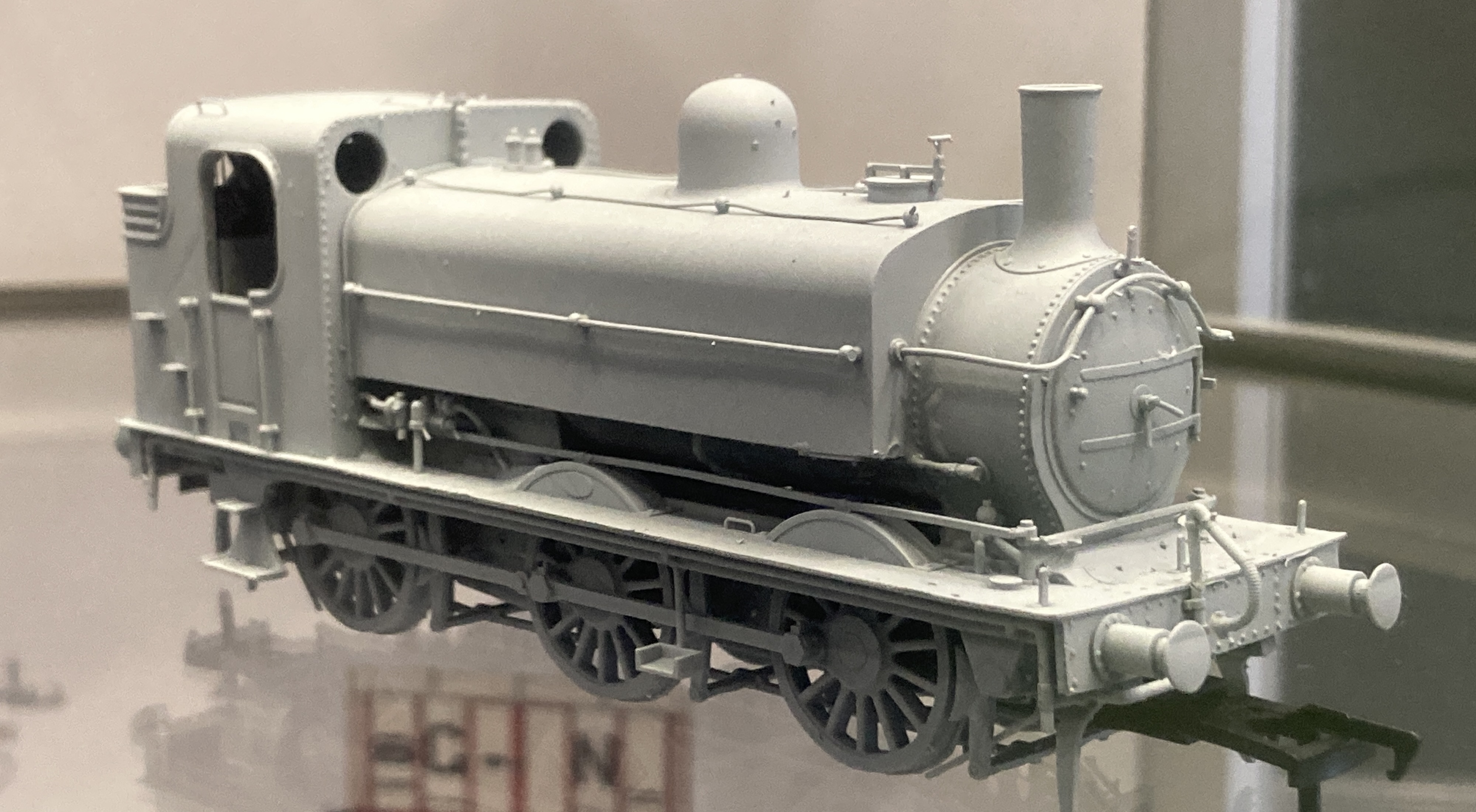
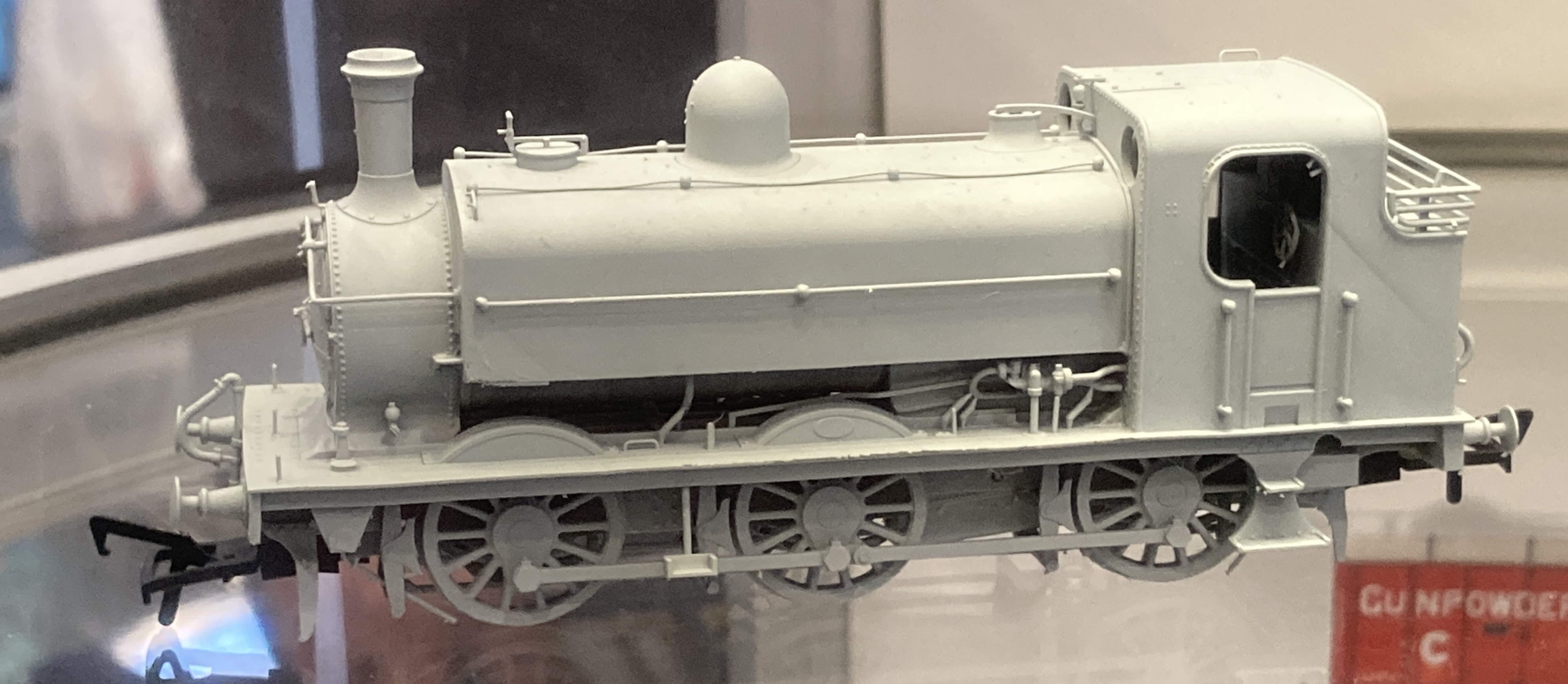
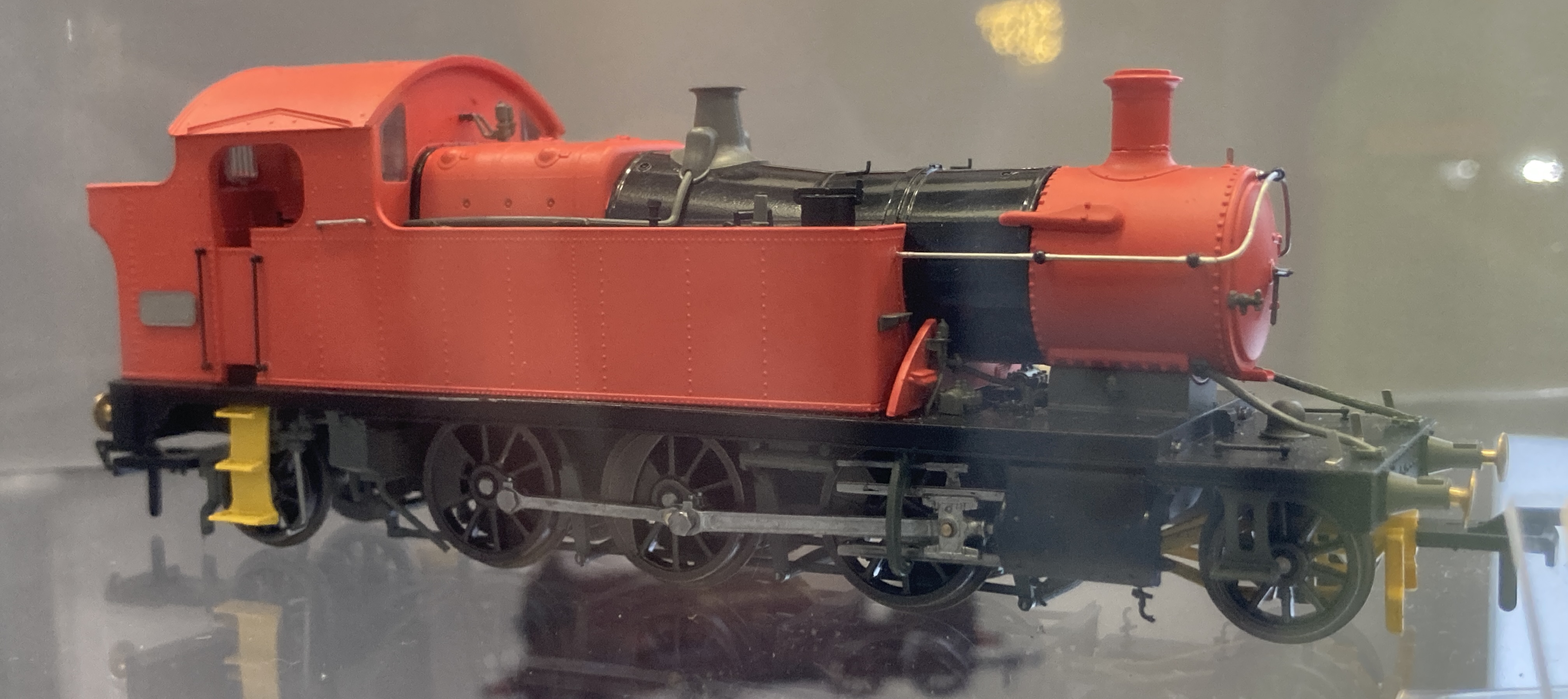
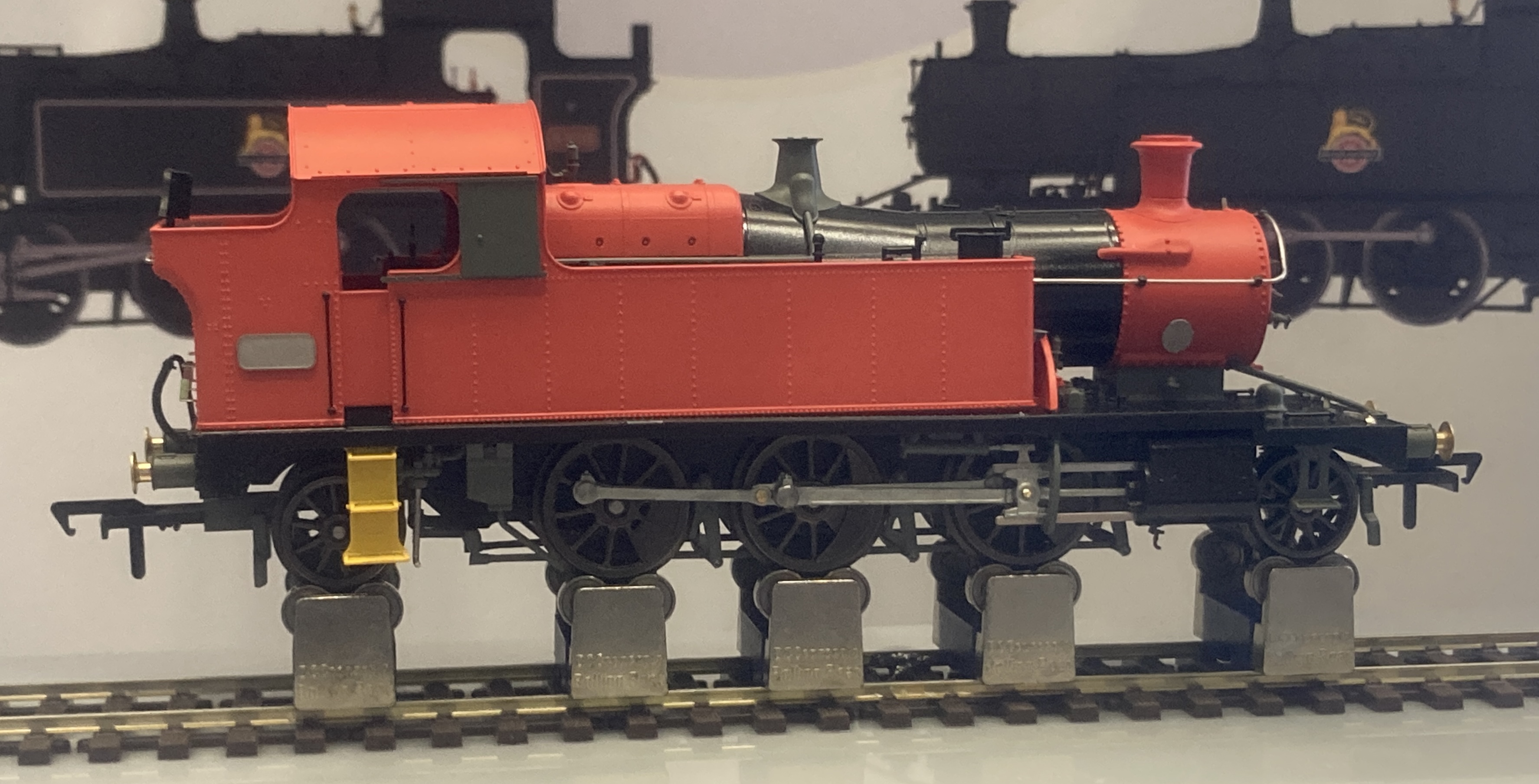
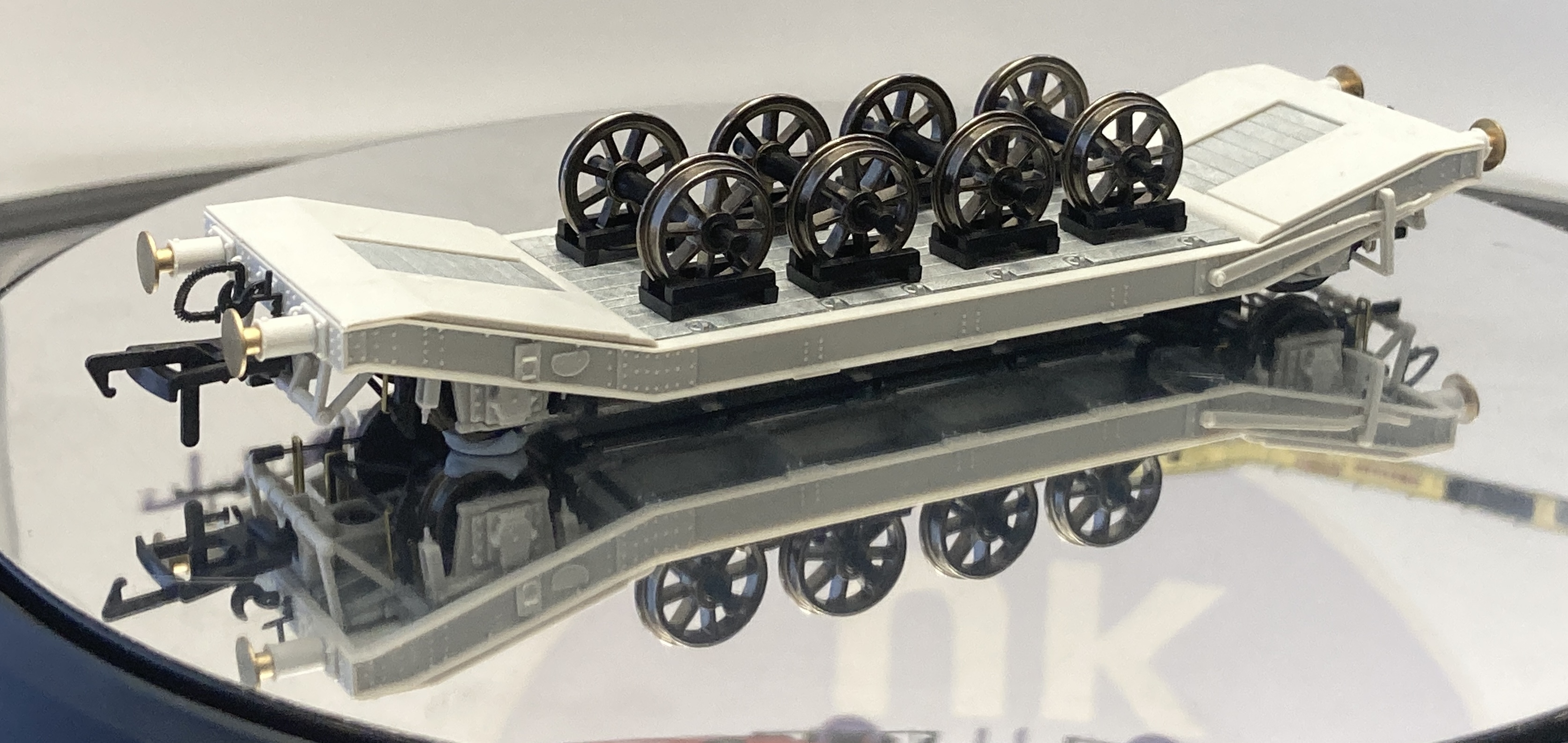

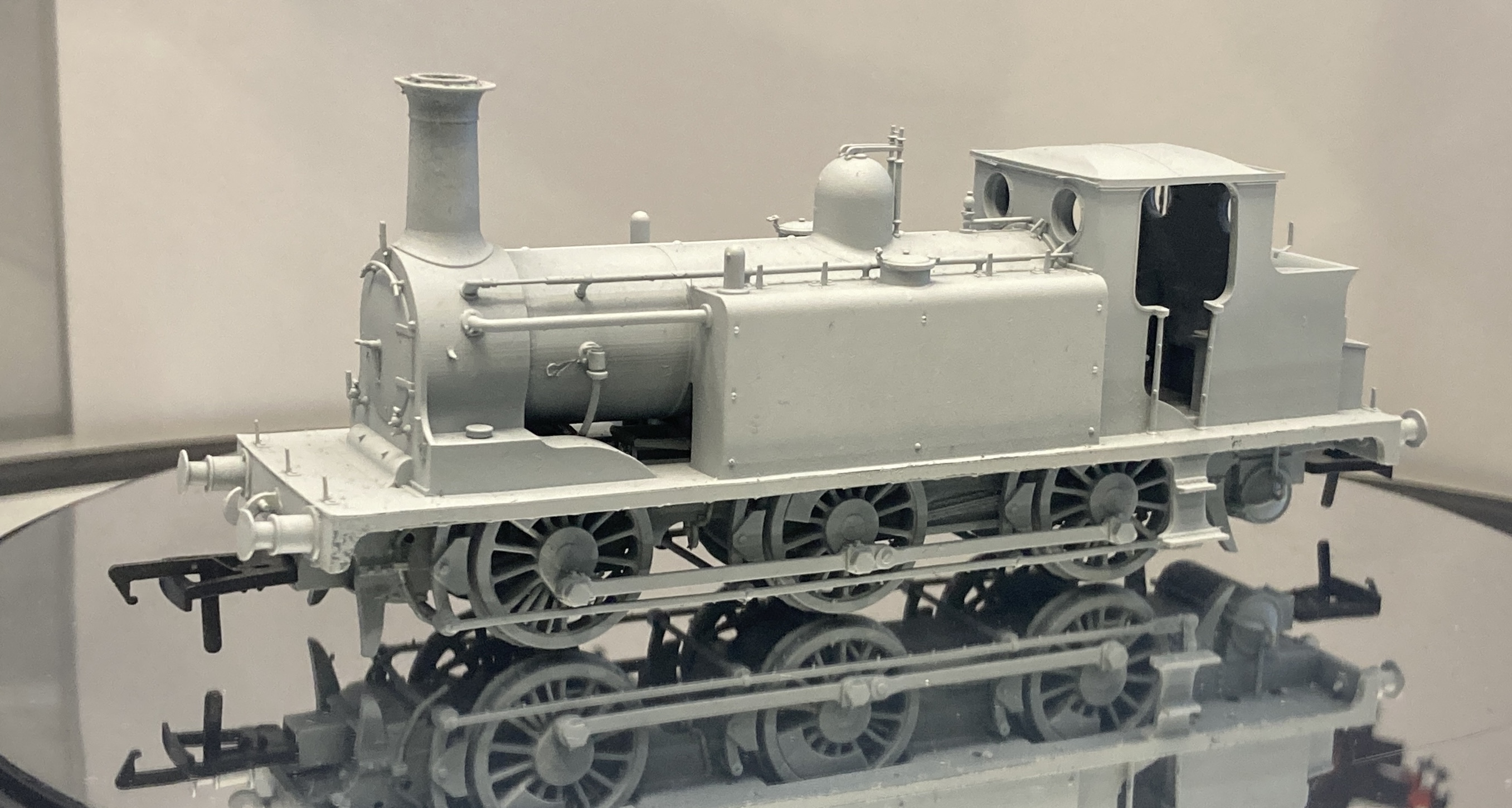
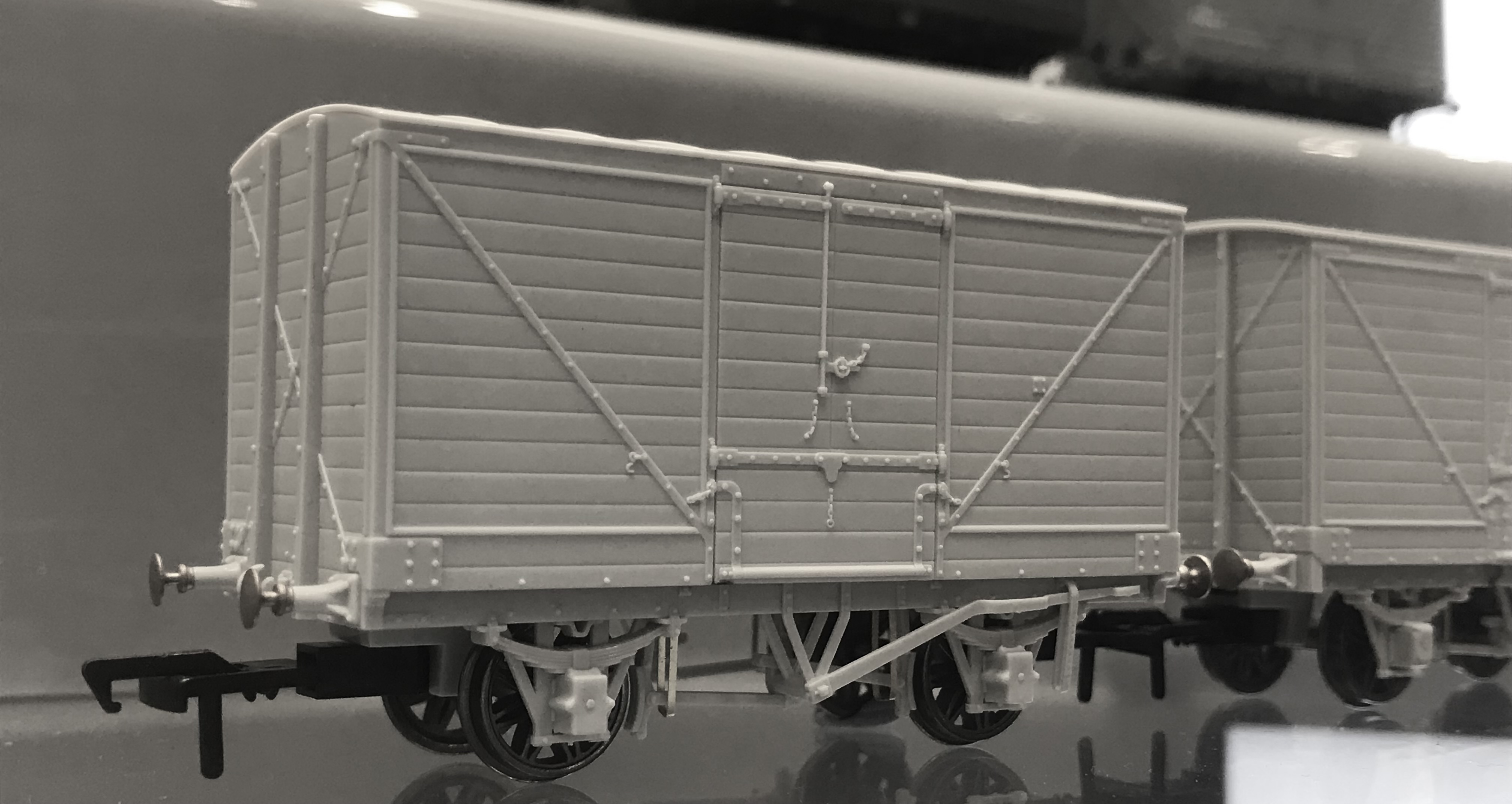

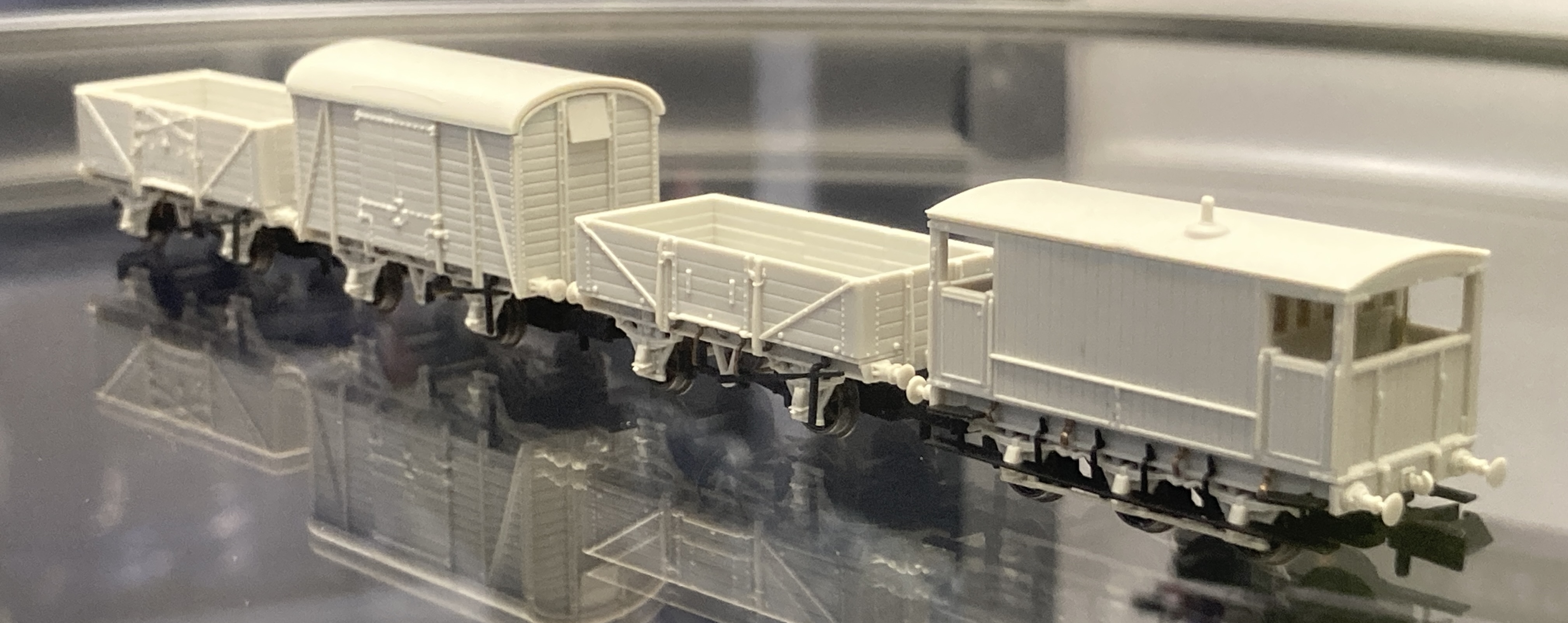
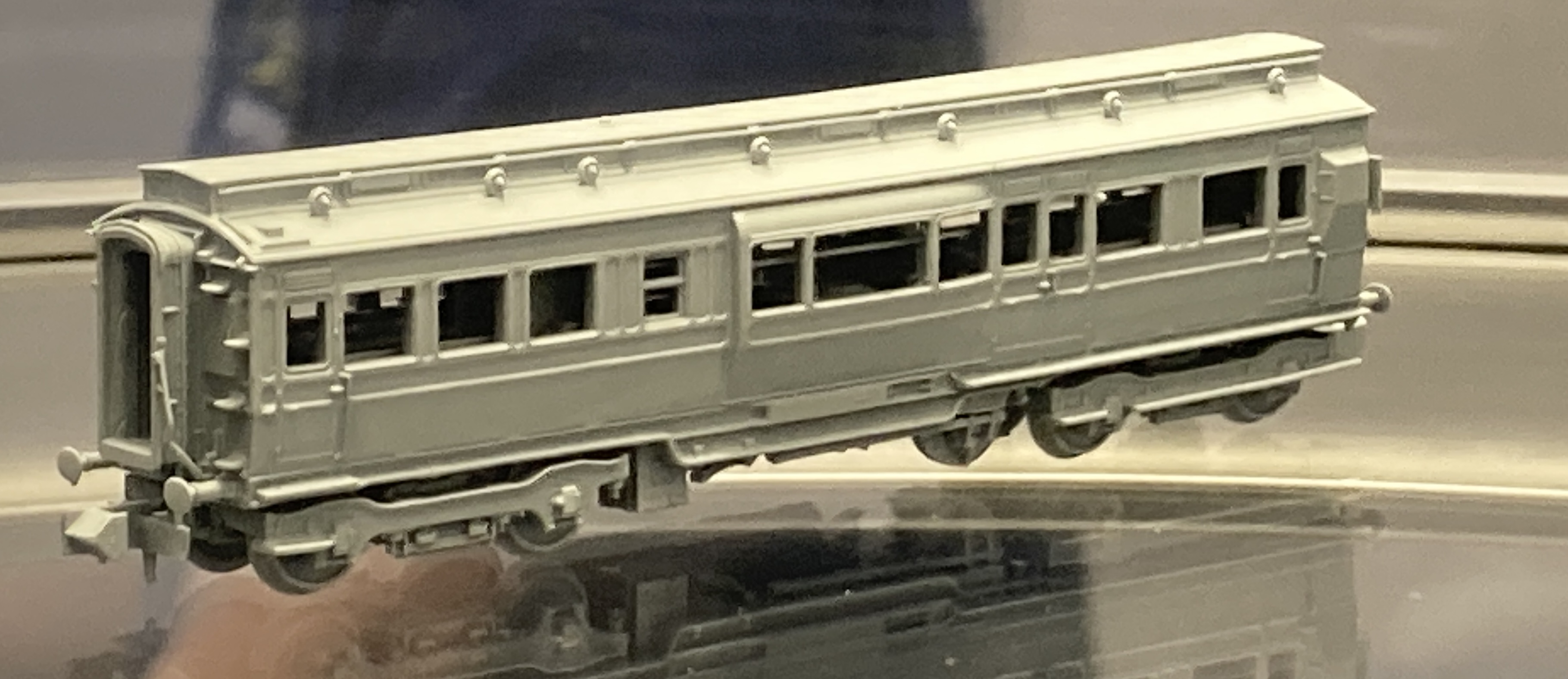
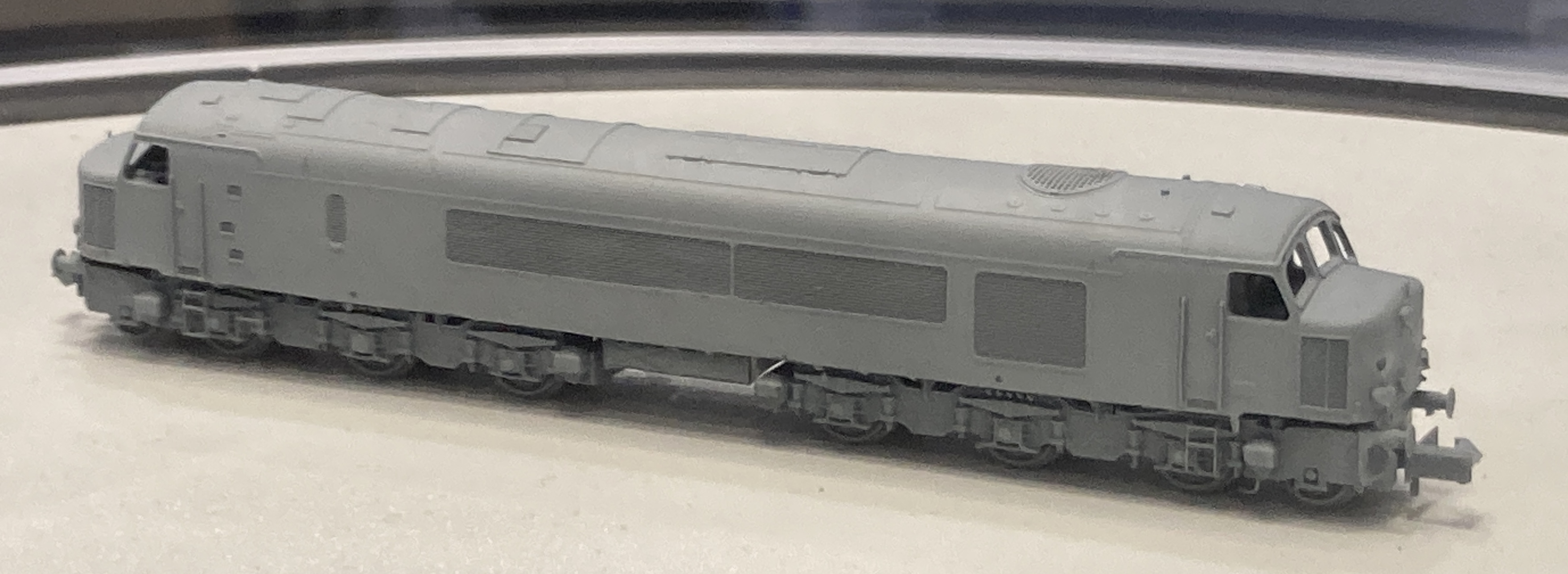
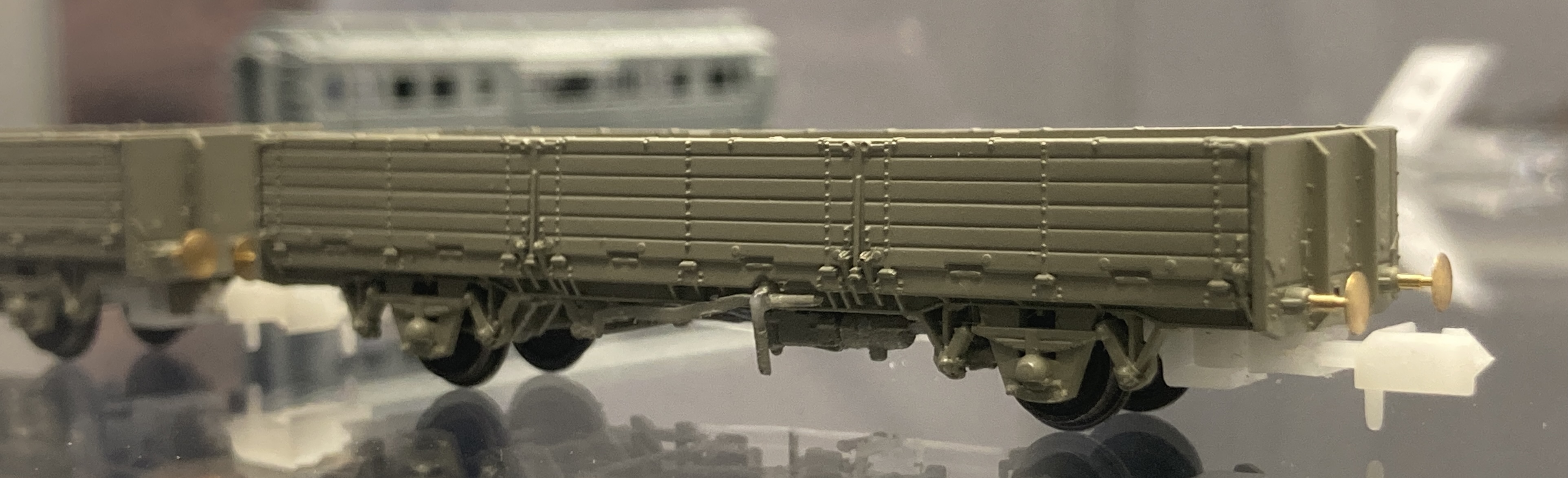


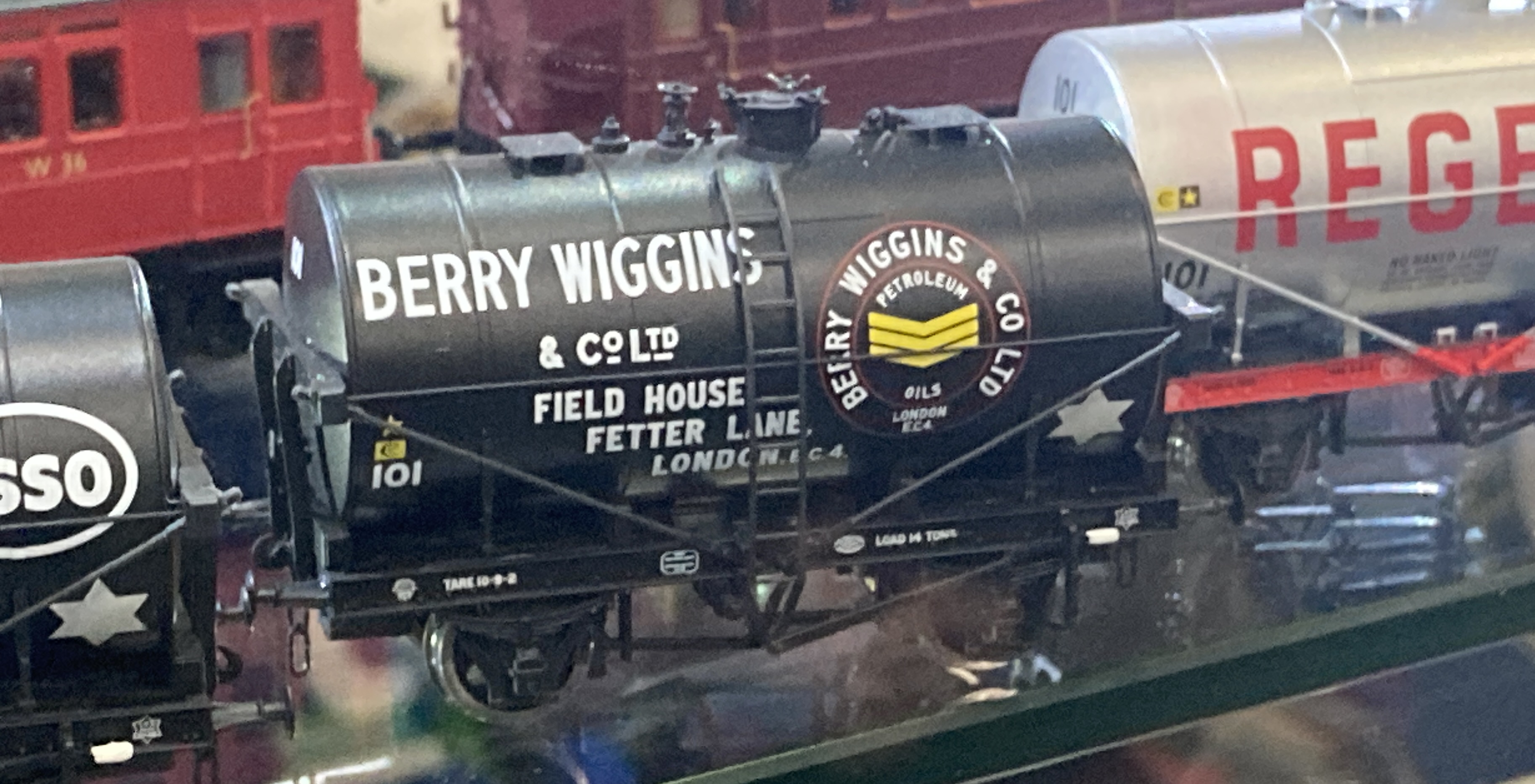
The Dapol stand was quite difficult to get non reflective images from, this 14T tank wagon in an appropriate Forest of Dean colour scheme grabs my interest immediately. The big Forest of Dean project is still kicking around in the ideas vault so this tank and the GWR Autocoach below are of key interest.


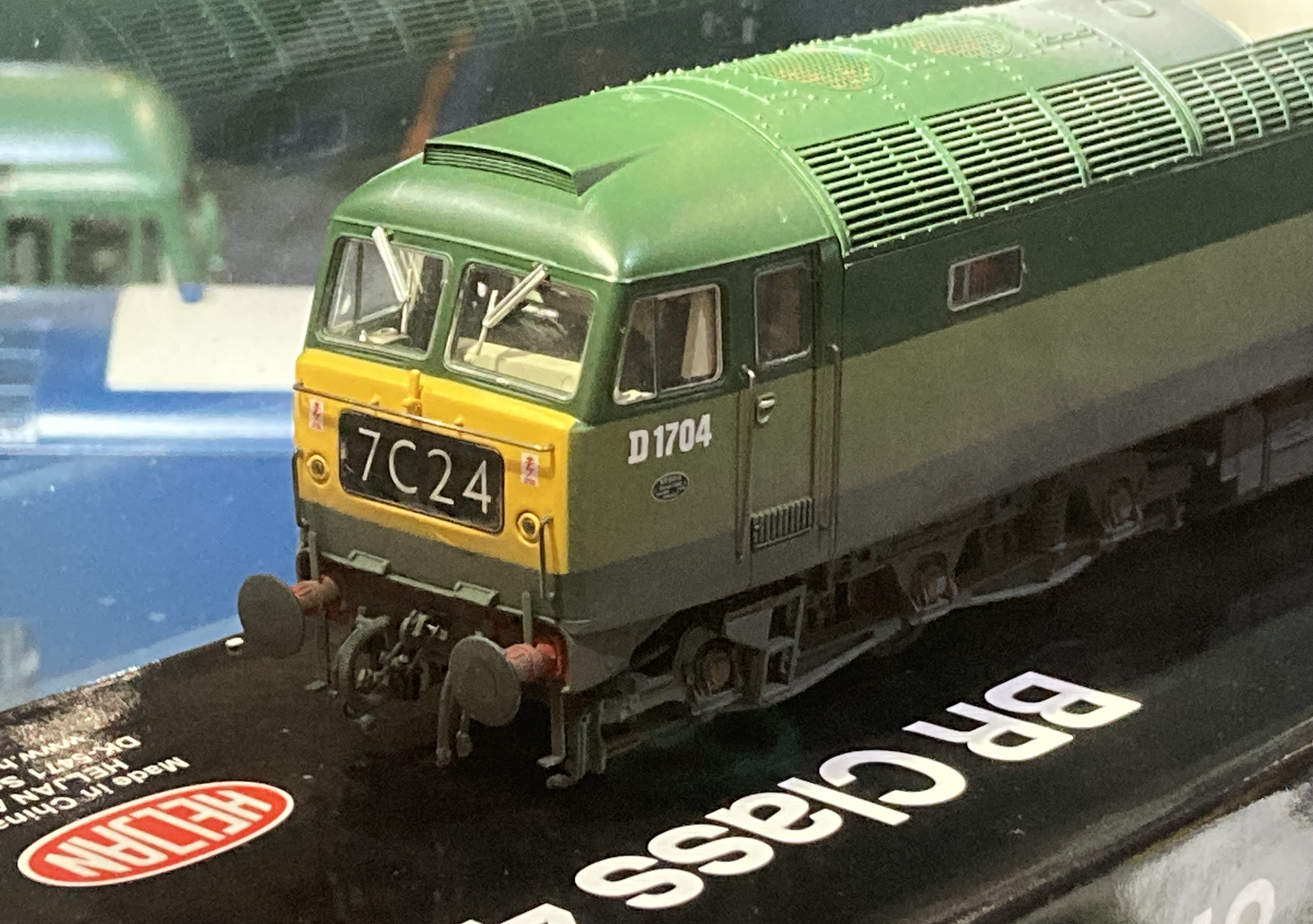


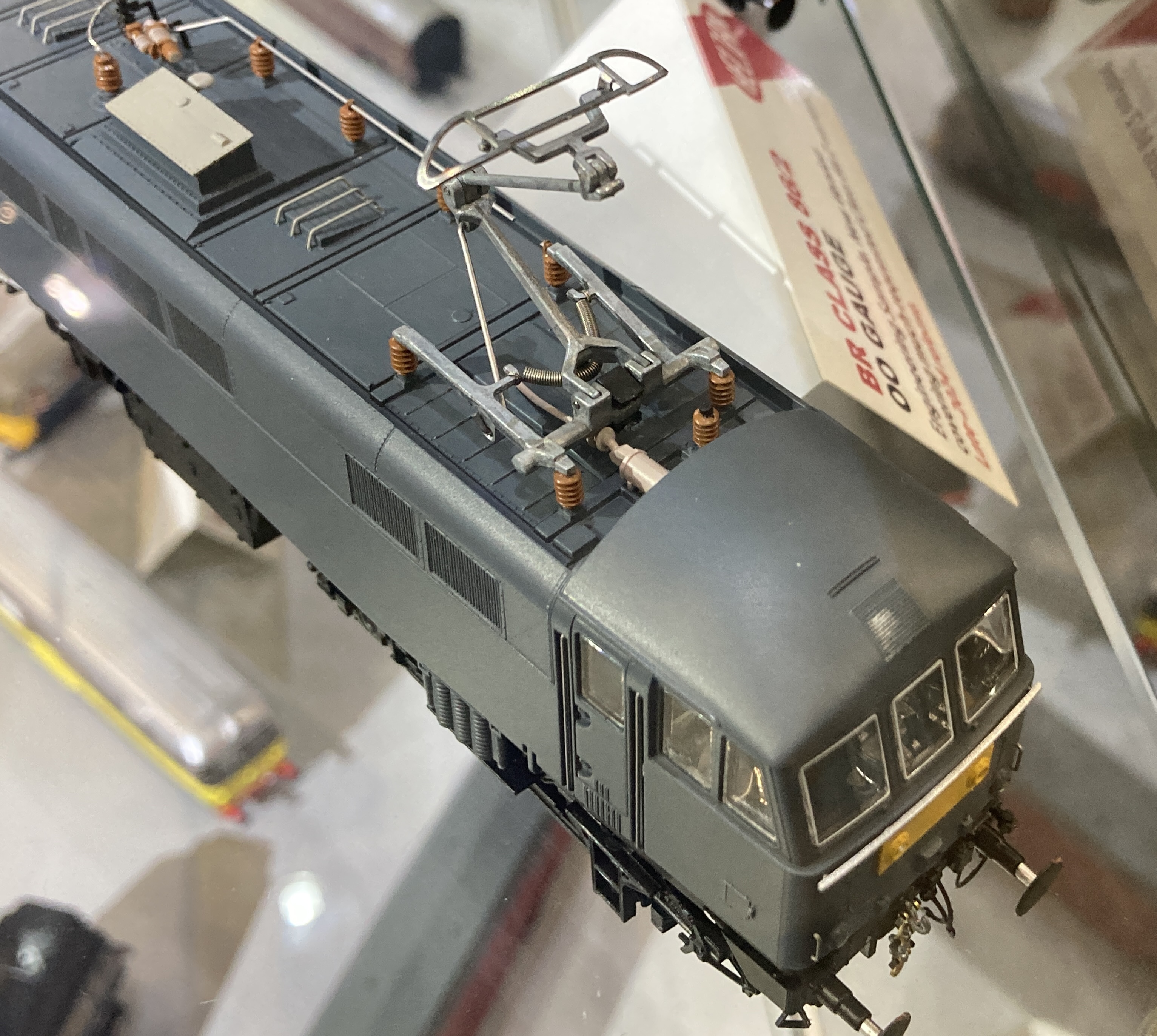


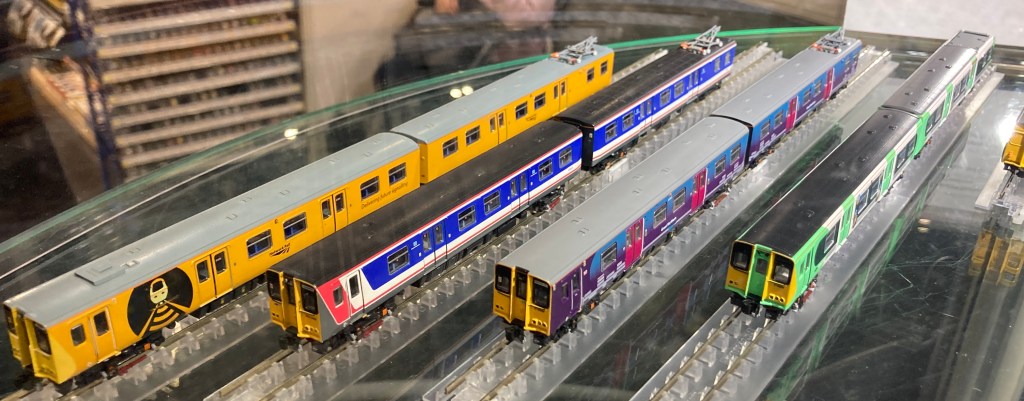
There are some models that have that X factor, I don’t have any significant interest in O gauge, I have no connection at all to the 153 DMU class, I’ve never even ridden in one that I recall, yet somehow this model is very, very, appealing.
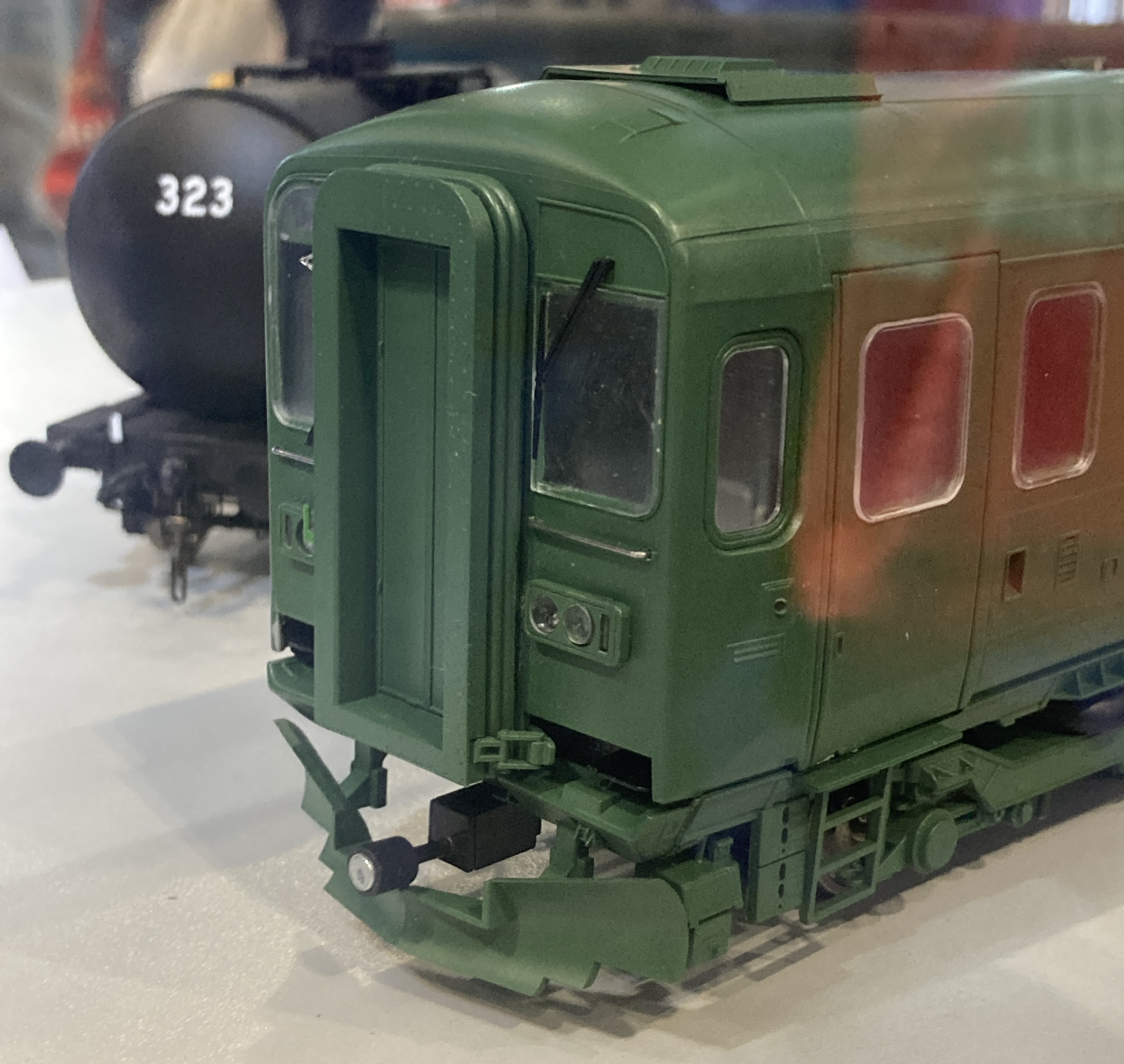
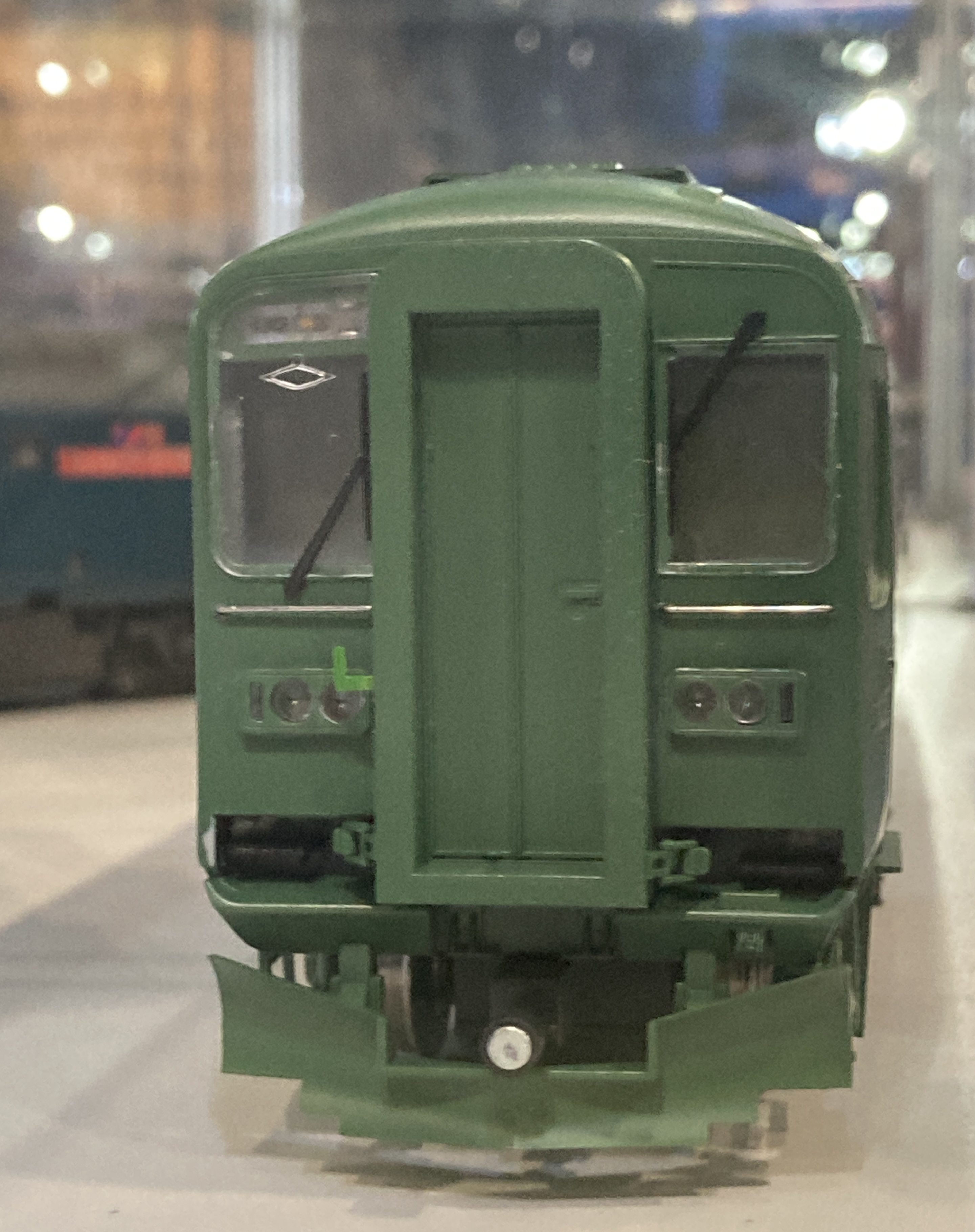
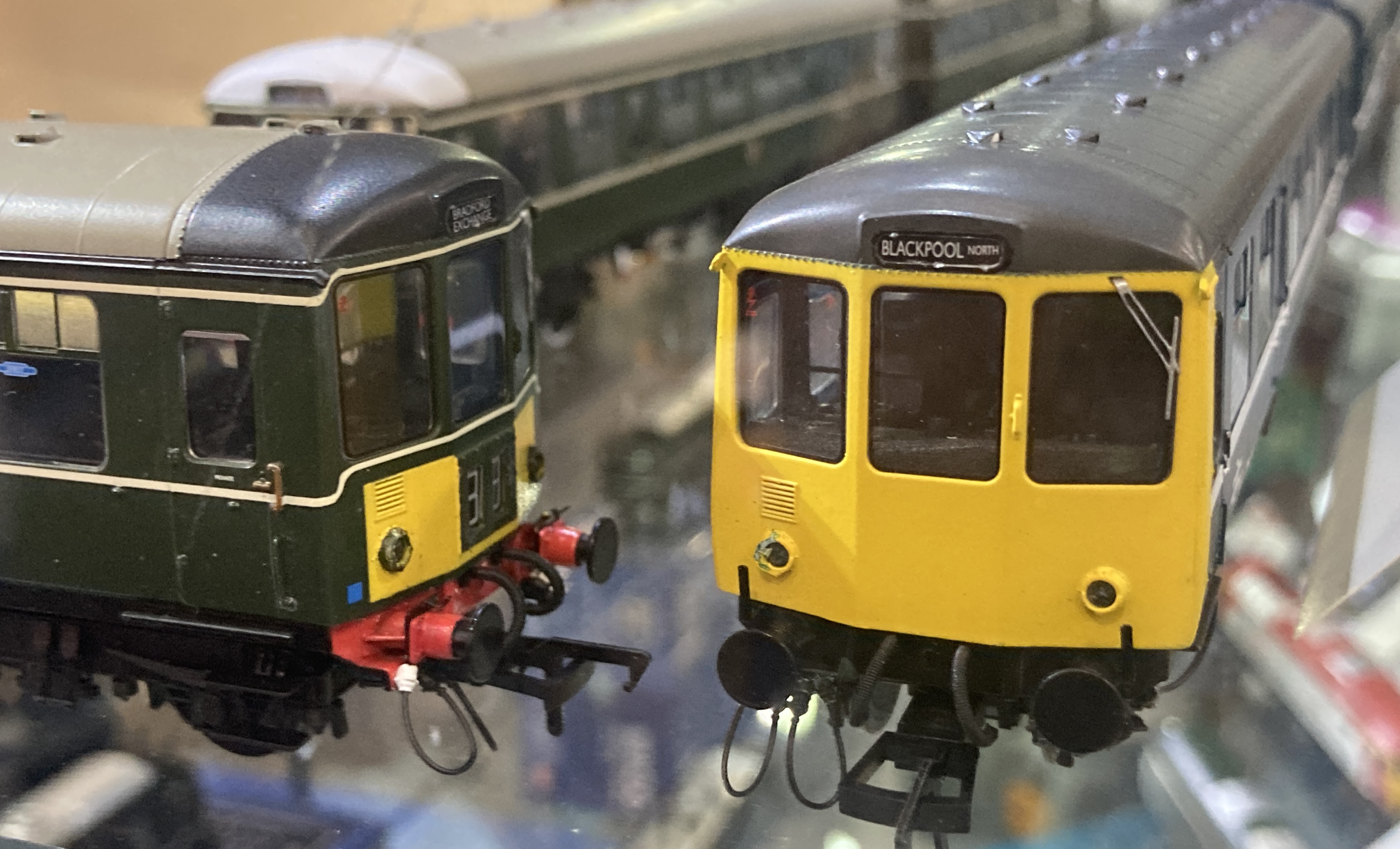

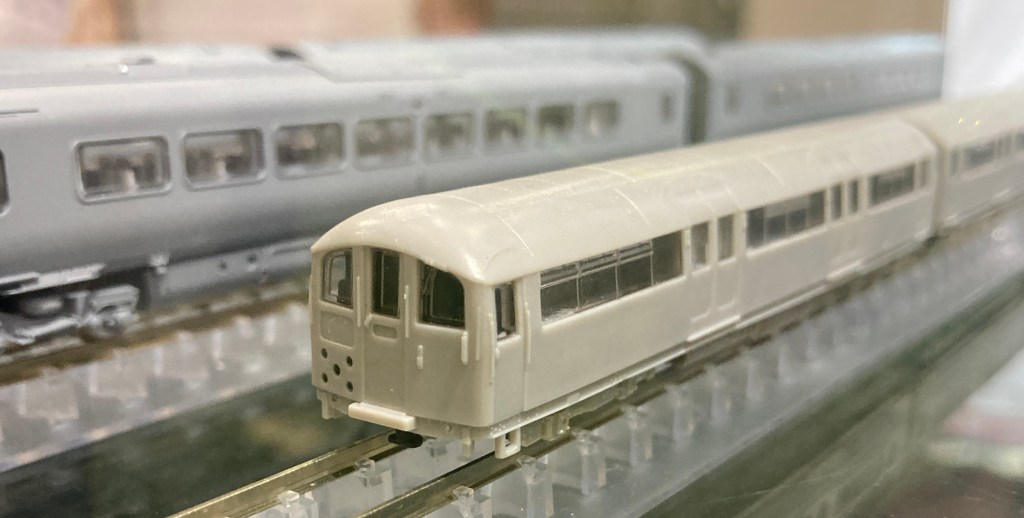
The OO class 104 DMU is really hitting the mark in my eyes. The internal seating components and compartments will be painted or printed which will really make these pop.



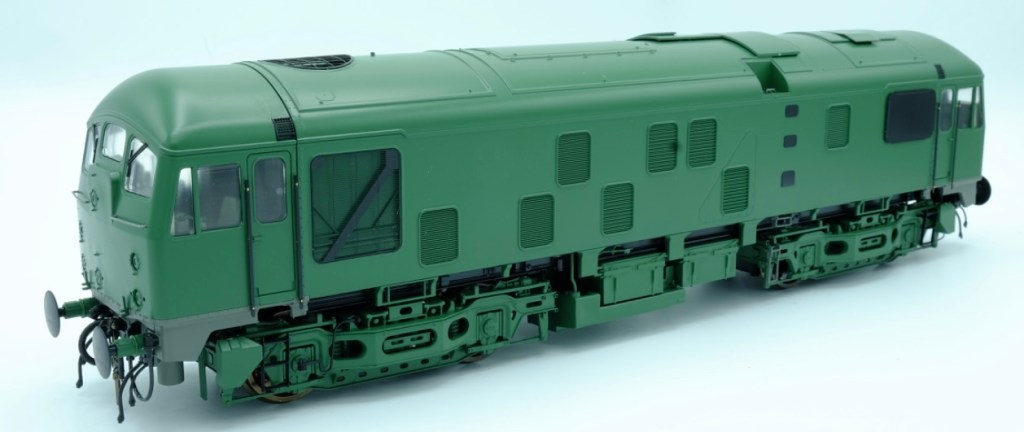
In recent years Heljan has received more requests for an ‘O’ gauge Class 24 than anything else. So they’ve gone ‘all out’ to bring you not just a Class 24/0, but also the later Class 24/1s AND Scottish Region ‘24/1s’ with twin headlights.
The ‘skinhead’ Class 24/0s will arrive first, in six authentic BR era liveries, with five Class 24/1s to follow in 2025. Look out for the first engineering prototypes on display at the Warley NEC show on November 25/26 2023 and Model Rail Scotland in Glasgow on February 23-25 2024.
These outstanding new models feature all-new body toolings with authentic variations between the different sub-types, bespoke bogie and underframe parts, detailed cab interiors and much more! Variations include bodies with original skirts or skirts removed, Scottish Region tablet catcher equipment, different roof panel and fuel/water tank arrangements, original or revised sandboxes and twin car style headlights fitted to Class 24/1s based at Inverness in the 1970’s

Other features include authentic drilled out wheels and bogie equalising beams, etched grilles, separately fitted handrails and pipe runs, separate headcode discs, etched metal step covers and boiler grille cover plates.
These new generation also feature a plug and play DCC decoder interface (ESU Loksound XL decoder required), powered roof fan, six separately switchable light functions and our renowned heavy duty twin motor/flywheel chassis.
The first engineering prototype sample has just arrived for review and will be on display at the Warley NEC show on November 25/26. First releases planned for early-2025. Look out for further updates soon.

Production of all versions will be strictly limited – contact your regular HELJAN stockist today to secure yours. Visit Heljan to find out more!
Premium Features – Delivered As Standard
Class 24/0 Models
2450: BR Green Unnumbered
2451: BR Green Unnumbered (Small Yellow Panels)
2452: BR Two-Tone Green Unnumbered (Small Yellow Panels)

2453: BR Blue Unnumbered (Full Yellow Ends)
2454: BR Green 24090 (Full Yellow Ends) WEATHERED
2455: BR Railway Technical Centre 97201 Experiment
Class 24/1 Models
2470: BR Green Unnumbered
2471: BR Green Unnumbered NER (Small Yellow Panels)
2472: BR Green Unnumbered ScR (Small Yellow Panels)
2473: BR Blue Unnumbered LMR (Full Yellow Ends)
2474: BR Blue Unnumbered ScR (Full Yellow Ends) TWIN HEADLIGHTS

SRP £649.00 (SRP £669.00 WEATHERED)

Heljan today are bringing the UK’s largest and most powerful steam locomotive to the market. It’s one of those ‘X factor’ locomotives, in OO it’s been available as a DJH kit which I always thought an odd choice, but it seemed to sell well when we had it in stock. It promises a very interesting power train with the motors set into each chassis. So over to Heljan…

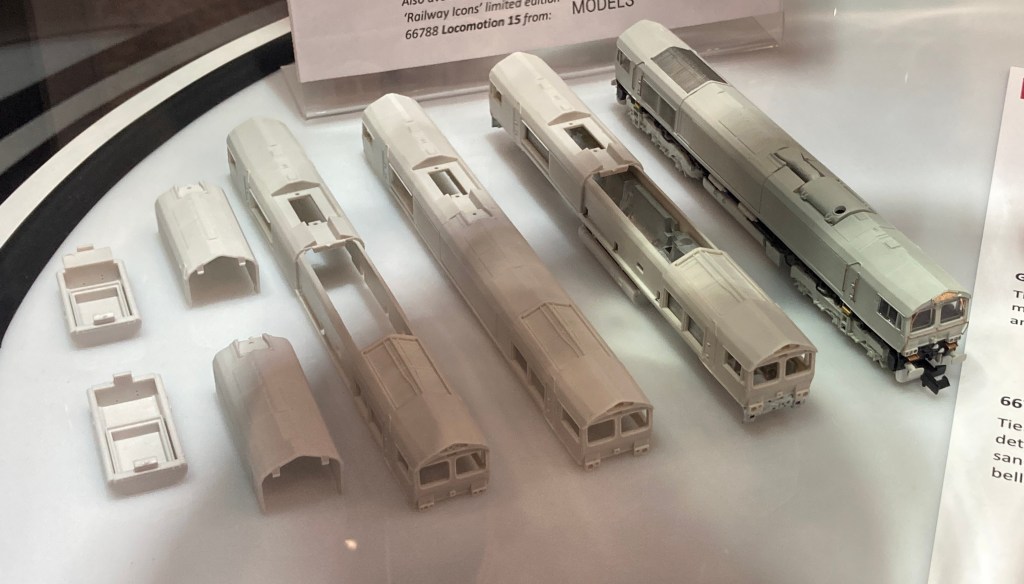
The LNER’s unique ‘U1’ 2-8-0+0-8-2T Beyer-Garratt was a true behemoth and our amazing articulated model will bring it to life in time for the centenary of the prototype in 2025.
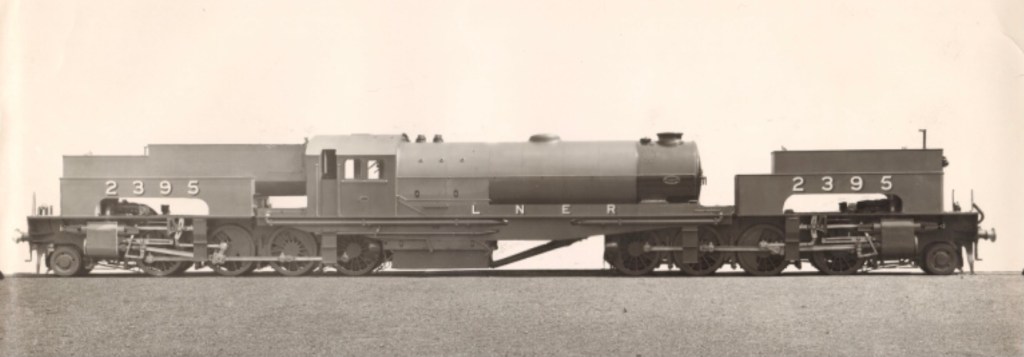
No. 2395 famously made its public debut at the LNER’s celebrations to mark the centenary of the opening of the Stockton & Darlington Railway in 1925 and 100 years later we will celebrate this remarkable machine with a unique high-specification model that will appeal to collectors and fans of historic locomotives alike.

For 30 years, the ‘U1’ was deployed on arduous banking duties on the infamous inclines at Worsbrough near Barnsley, and Lickey Incline near Birmingham. Although not always popular with those who worked on it, No. 2395 (BR No. 69999) was by some distance the largest and most powerful steam locomotive ever to work in Britain.
Our ‘OO’ model is the result of in-depth research supported by the National Railway Museum, the Manchester Museum of Science and Industry’s Beyer Peacock Archive and the Gresley Society. We’re also delighted to be working with Rails of Sheffield and Locomotion Models to produce an exclusive edition for their ‘Railway Icons’ collection.
Celebrating the centenary of the ‘U1’ and 200th anniversary of the Stockton & Darlington Railway opening in 1825, the exclusive model will depict No. 2395 in works grey, as it appeared at the LNER’s S&DR centenary cavalcade shortly after completion in 1925 (see below). This very special collectors’ edition will feature bespoke packaging plus DCC Ready and factory-fitted DCC Sound options and production will be strictly limited. Early ordering is strongly recommended to avoid disappointment.

See www.locomotion models.com/railway-icons and https://railsofsheffield.com/ for more information.
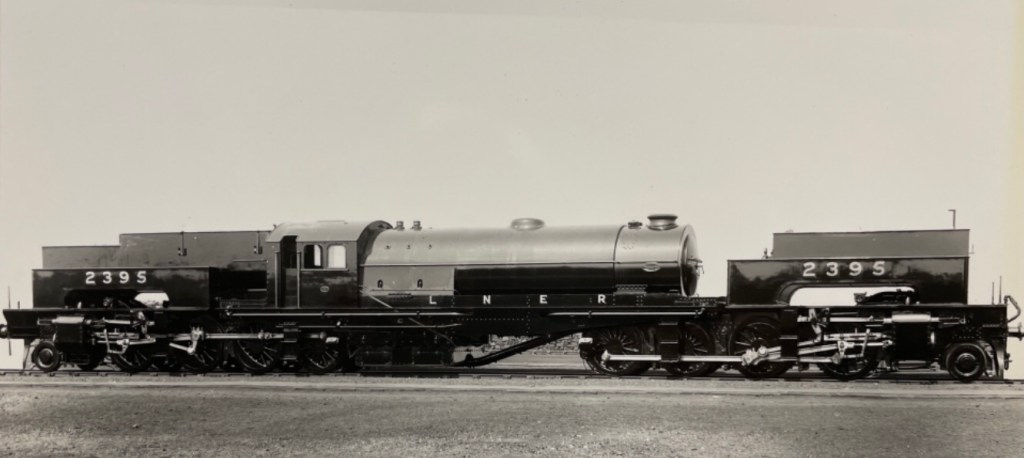
Using original works drawings and photographs we have created a collection of museum qualitymodels covering the entire career of the locomotive and the various modifications it underwent over its 30-year life. These include changes to the smokebox, water tank breather pipes, coal bunker, handrails, cab and additional vacuum tanks. Also included is a model depicting the locomotive after conversion to oil firing, which saw modifications to the former coal bunker, the addition of a turbo generator for the electric headlight and associated pipework/cable runs.

Packed with authentic details specific to period and livery, our ‘U1’ will be the ultimate expression of steam power for ‘OO’ layouts and a must for collectors of historic locomotives.

The model is currently in tooling and we expect to receive the first working samples for review in January 2024 with first releases planned for early-2025. Look out for further updates soon. Production of all versions will be strictly limited – contact your regular HELJAN stockist today to secure yours!

Premium Features – Delivered As Standard
• High Quality Design & Construction
• Twin Motor/Flywheel Drive
• Working LED lamps
• 21-pin DCC Interface
• DCC Ready and DCC Sound Options
• Factory Fitted Speakers
• Coal or Oil Fired Options
• Sprung Buffers
• Extensive Detail Variations
• Removable Cab Roof
• Smoke Unit Compatible
• NEM Couplings
• Separate Pipework and cable runs

HELJAN LNER ‘U1’ Models
#3000 LNER lined black No. 2395 (as built) DCC READY
#30003 LNER lined black No. 2395 (as built) DCC SOUND

#3001 LNER Stockton & Darlington Centenary Cavalcade Grey No. 2395. RAILWAY ICONS EXCLUSIVE – DCC READY
#30013 LNER Stockton & Darlington Centenary Cavalcade Grey No. 2395. RAILWAY ICONS EXCLUSIVE – DCC SOUND

#3002 LNER 1946-48 unlined black No. 9999 DCC READY
#30023 LNER 1946-48 unlined black No. 9999 DCC SOUND
#3003 British Railways black No. 69999 DCC READY
#30033 British Railways black No. 69999 DCC SOUND
#3004 BR Early Emblem black No. 69999 (coal fired) DCC READY
#30043 BR Early Emblem black No. 69999 (coal fired) DCC SOUND
#3005 BR Early Emblem black No. 69999 (oil fired/headlight) DCC READY
#30053 BR Early Emblem black No. 69999 (oil fired/headlight) DCC SOUND
SRP £399.00 DCC READY
SRP £520.00 DCC SOUND
In the pub, The Ship good beer, good company, good toys, what’s not to like?
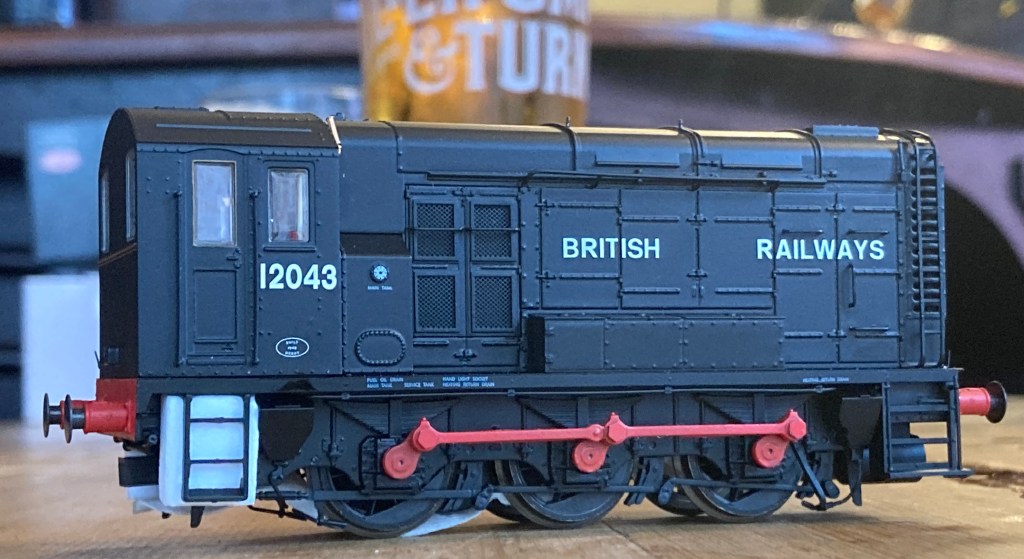
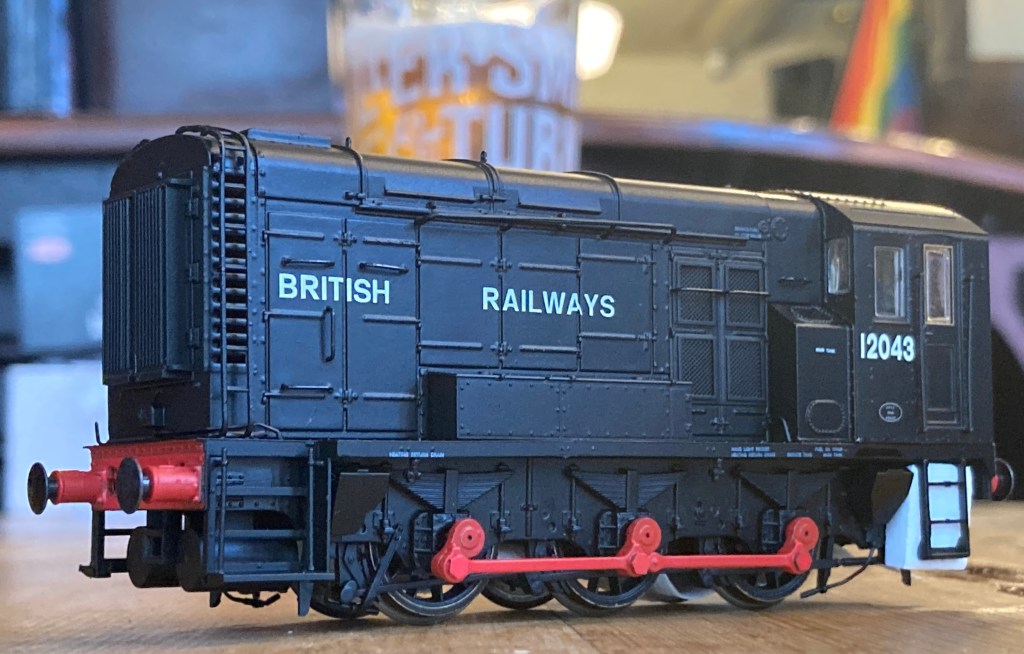
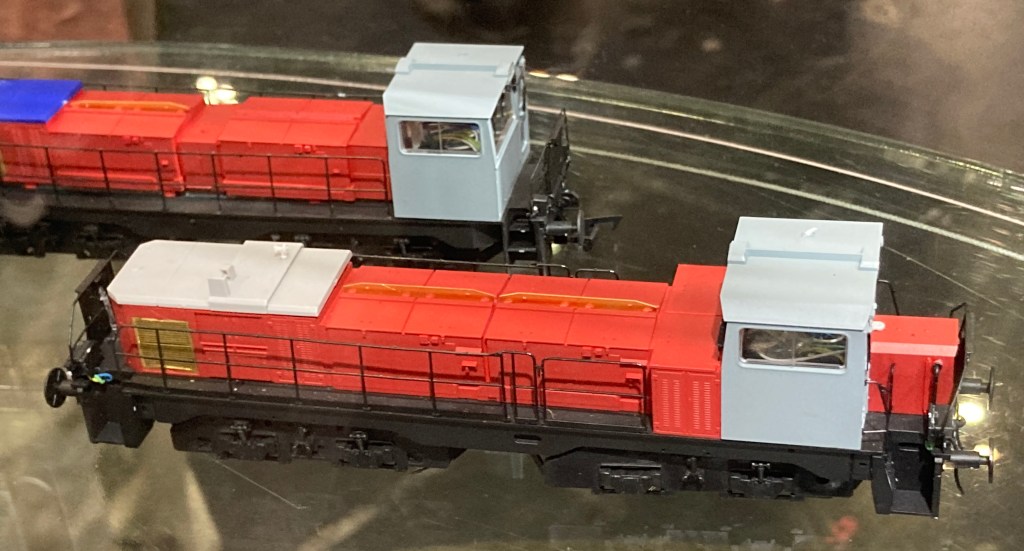
The OO class 11 above, a Heljan and Model Rail collaboration is estimated to arrive very early 2024. I can see me falling for one, they look exceptional. Frustratingly the 48DS below also looks beguiling, I’ve always said ‘nah’ to 7mm, but….
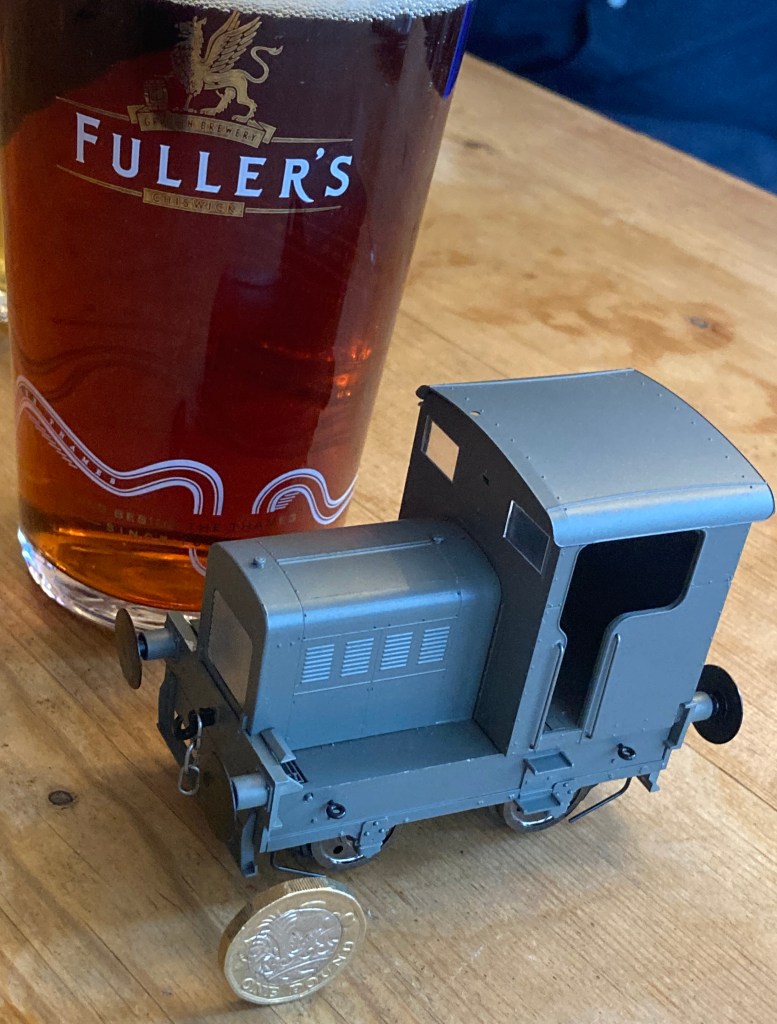
And for the record, it’s not the beer talking!
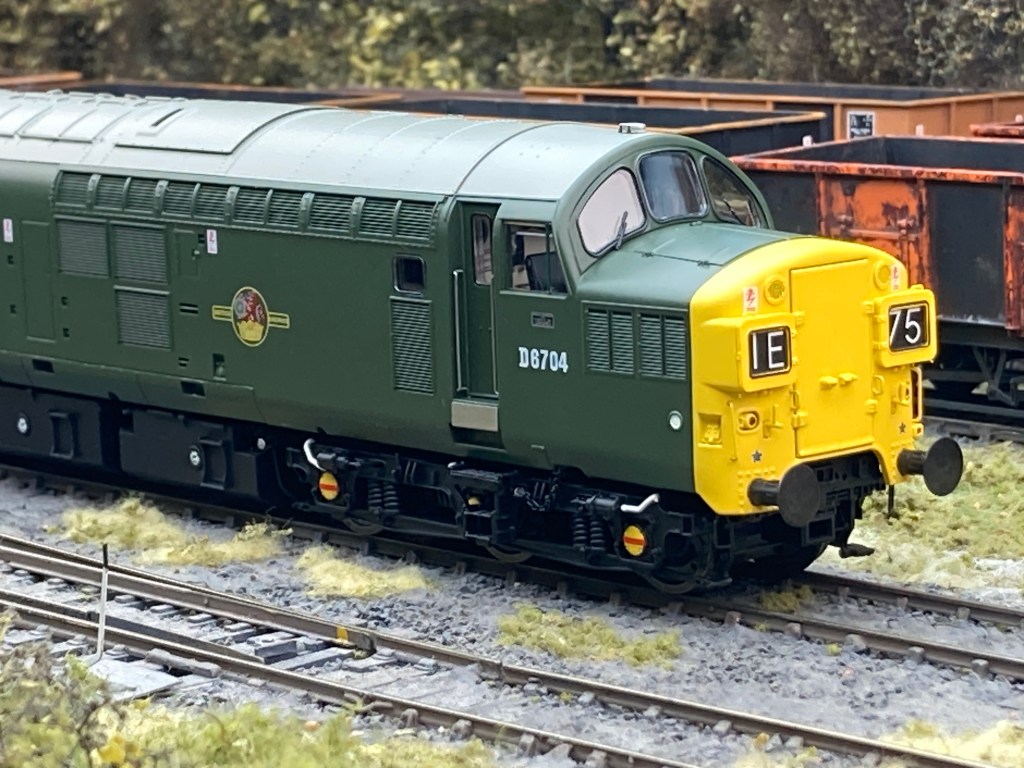
My first thoughts on the Accurascale class 37. Shot almost in real time apart from changing camera position, what you see is what I got, so no preparation as such apart from having the box ready to open. I did that as no one wants to watch a bloke struggling with plastic and cardboard wrapping, you can find your own videos for that. They’re probably out there…
Overall an impressive model. Weight, finish and finesse of details are the elements that immediately were apparent. The running was literally straight out of the box on DC, and very quiet and controllable. There were two small components that were loose in the box which are going to be easily fixed. I think like it’s more recent livery versions it’ll be well received, and bodes well for the class 31 to come.

Well it’s one of those Fridays. A quick bit of modelling before heading out of the corral, what could possibly go wrong? Well, the above basically, that’s what could go wrong, and has.
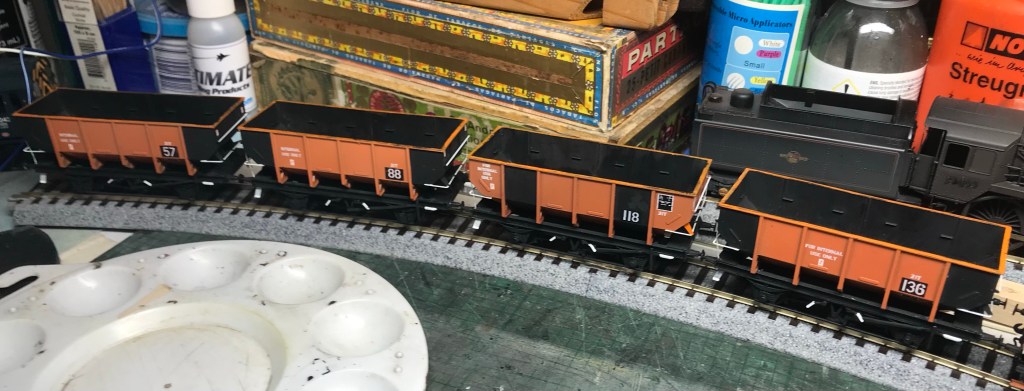
Having completed the painting and decal application for the four Parkside hoppers, this morning was to be a quick brush application of a matt varnish to seal the decals. Best laid plans and all that.
Like myself, I’m guessing a few of you will have paint that has erm… matured. So today started with digging out a tin of Humbrol enamel matt varnish.
Enamel, because I’m going to lay various weathering effects in different media over the top. All good so far.

Well the Humbrol enamel had separated with the Matt pigment elements forming that gel type consistency. So a good stir to break it up, followed by a blast of heat from a hairdryer gave me my initial starting point. I still wasn’t happy with it and used a paint shaker/vibrator to finally get the consistency needed.

That was then applied by brush, but the number decals were clearly affected by it, with the edges breaking away, see above…

I realised that brush application wasn’t going to work this time, so with time cracking on I dug out some Tamiya acrylic matt varnish which again seemed a bit gooey. Except I didn’t. I had picked up Tamiya Flat base, (didn’t read the label obvs, I’m male), and in my rush thought I’ll thin it significantly with water. This means I can put it on as a wash. Well that was just fine until it started to dry, and then the pennies started to drop.
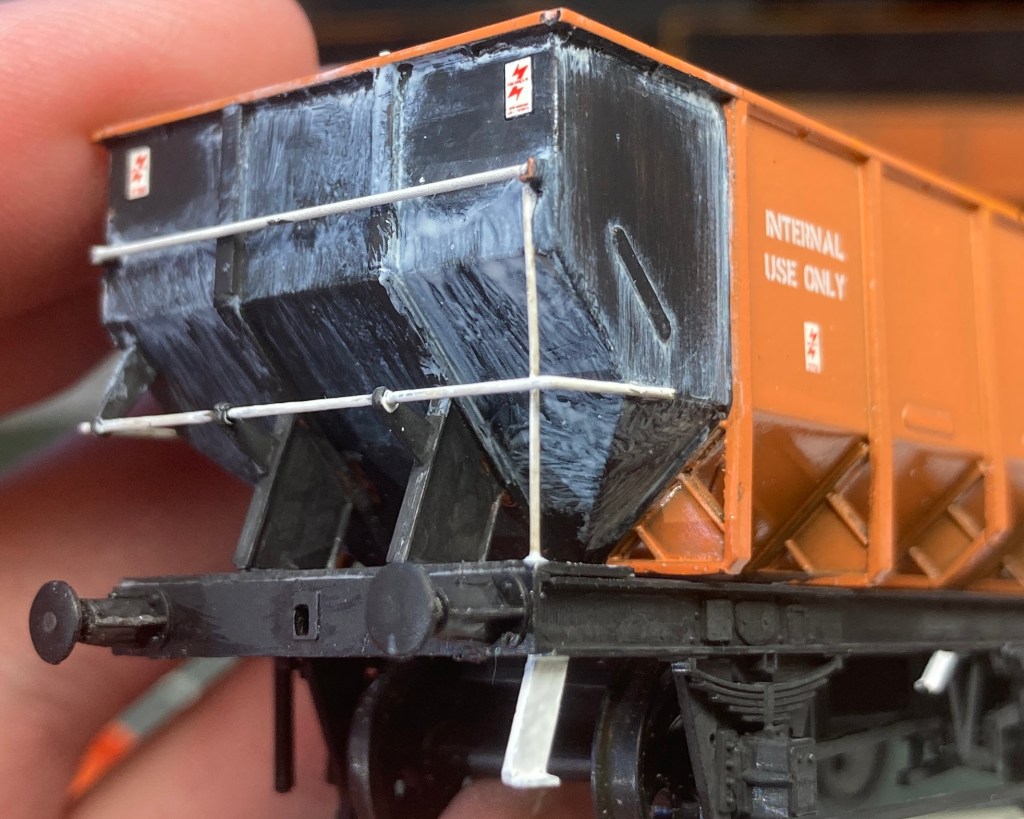
This, this is not looking good I think, it should be paler but not like smeared chalk. It starts to dry clear of course, but as it dries further the white opaqueness comes through, which is what’s occurring in front of me. This paint must have gone off really badly I think picking the jar up to look at it. And then the punchline, it’s not matt varnish, it’s literally all about the base!

The first thing I did was to get back onto the worked areas with plain water, which has reduced the effect quite dramatically, but still far from ideal.
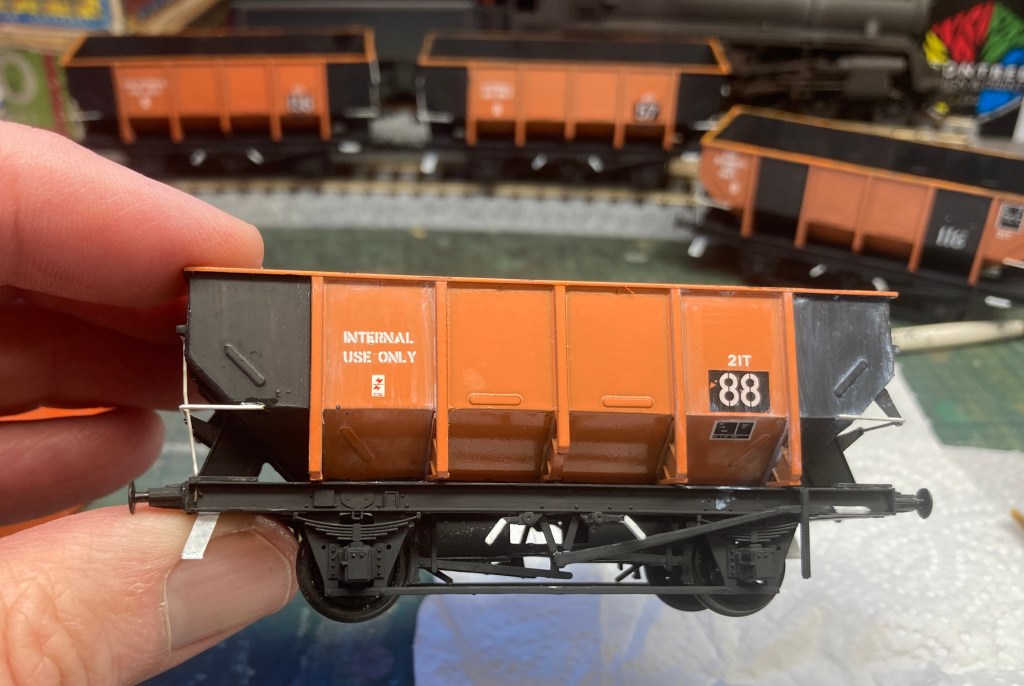
So this is where we are now, two wagons were treated before it all went south, so I’ve been really lucky in not getting caught out doing all of them. Next step I’ll run some darker panel washes into the right angle joints and we should be back on track.
The late Roy Jackson often mentioned he thought the mark of a modeller was how and if, they recovered from making a cock up of something. Well Captain Cock Up certainly visited me today and hopefully he’s now left the building.
Note to self; Today’s lesson, read what it says on the tin.
 Albion Yard
You must be logged in to post a comment.