MSE 4mm Signals (Ready to use)

Model Signal Engineering
4mm Steel Tube LMS/BR ‘Home’ Signal

In the early 1930’s the LMS was finding good quality timber for signal construction expensive and difficult to source. One of the alternatives chosen was steel tube, this subsequently became very common, lasting into BR days as a standard design and beyond, with some examples still in use today. There have been few ready to use signals available to modellers, those that have been available have tended to be very basic models, arguably toys, or expensive hand built bespoke signals. Model Signal Engineering (MSE) will be known to some readers as providers of scale signal components allowing a modeller to build individual signals, just like the real railway. Using those same scale components MSE has entered the market with ready to use signals. Their range is starting with four prototype signals, two in 4mm scale and two in 7mm scale, so, what do you get for your money?

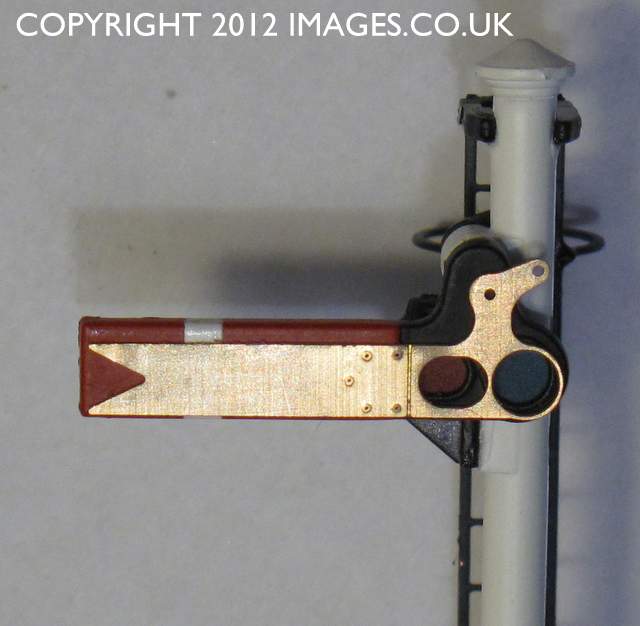
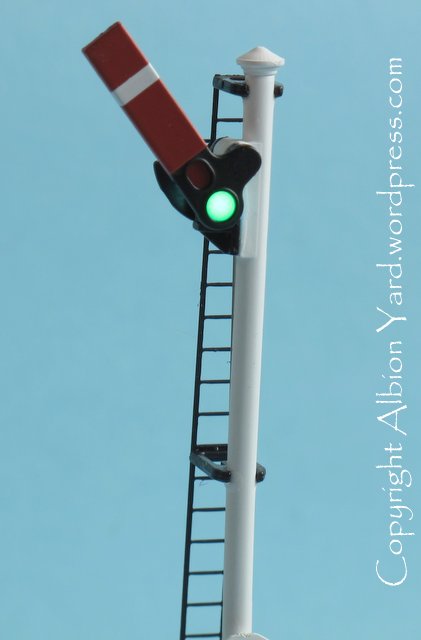
The first signal released in this new range features an all metal construction working LMS/BR standard 20ft single post home signal in 4mm scale. The initial impressions are very favourable. Using etched components for the ladder stays, ladder, safety loop (ladder bow), signal arm and balance levers, the model captures the delicate structure of this simple signal.

The signal is self supporting, the tube and ladder being fixed to the base giving extra rigidity. The balance lever and signal arm are connected by 0.3mm brass wire which allows a smooth movement from the ‘ON’ to ‘OFF’ positions. The operating wire has a mid-point fixing on the tube behind the diamond plate helping keep the wire taught. There is enough resistance in the wire movement allowing the signal arm to stay at any position, this proving useful for those who wish to use them as static models. The cranks at the base of the tube for connecting cabling are featured, however they are cosmetic being fixed in position. The fixing of an operating mechanism is left to the purchaser to decide, the end of the balance lever being drilled for a 0.3mm actuating wire to the mechanism of choice. MSE can provide advice and electrical or manual solutions to operate and install the signals.

This signal has a Rule 55 exemption diamond plate fitted to the front of the pole. This indicates to a train crew that the trains position at the signal is automatically protected by track circuiting. The diamond is at the correct height of 12ft, for the majority of installations, the painted black band surrounding it also conforming to LMS/BR specifications

Painting follows LMS/BR Midland region practice, and the signal has an acceptable satin finish to it. The arm has clear spectacle plates and these are coloured with red and blue lenses as appropriate. Signal faces are clearly decorated with sharp, clean colour breaks between the red and white, this is repeated on the rear of the signal in white and black. The post is in white with the ladder and its stays in black. The base is a matt middle grey colour with a large enough footprint to help installation and integration into the layout scenery.

So is it value for money? At first glance the price may seem high, but using high quality components, hand built, its a good model for the price of a ready to run coach. The type chosen is a common signal and is suitable for the LMS from the 1930’s through British Rail, and up to the present day. Undoubtedly yes, and with one of Dapols freshly arrived signals on the workbench, they’ll make an interesting comparison.

The initial range is as follows
S4MH1 4mm Scale LMS/BR(M) Tubular Post Home Signal
S4SH1 4mm Scale SR 27ft Lattice Post Home Signal
S7MH1 7mm Scale LMS/BR(M) Tubular Post Home Signal
S7WH1 7mm Scale GWR 20ft Wooden Post Lower Quadrant Home Signal

http://www.wizardmodels.co.uk/FrameSetShop.php?DM=wizabout

Posted in Airfix, Branch Line, British Rail, Canon G10, Chris Nevard, DCC, Eastern Region, Exhibition, hobbies, Hornby, Layout, LMS, LNER, Midland Region, Model Railroad, Model Railway, Model Railway Journal, Modelling, OO Gauge, review, Scottish Region, Southern Region, Uncategorized, Western Region | Tagged , , , , , , , , , , , | Leave a comment

The Olympic Torch 28th June 2012

28th JUNE 2012


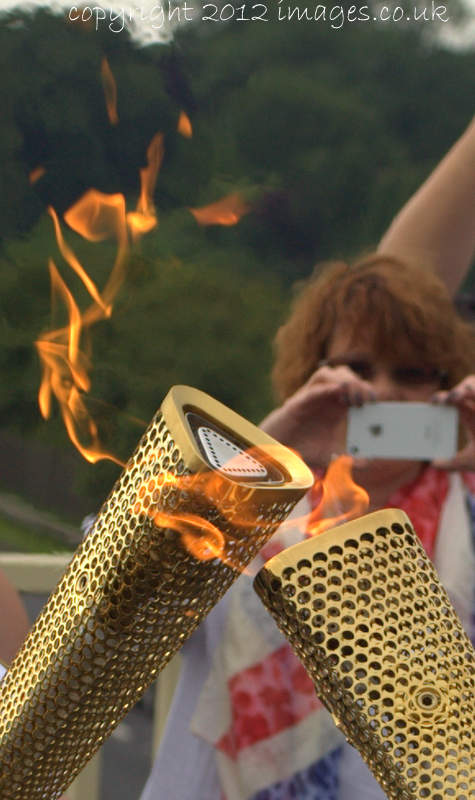
Taking a bit of time out of toy trains this morning I’ve been following people running about carrying sticks of fire.

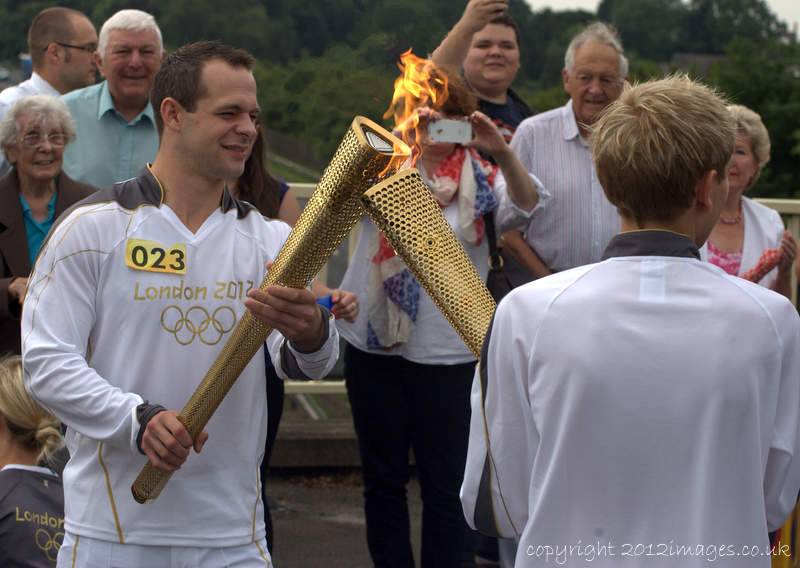
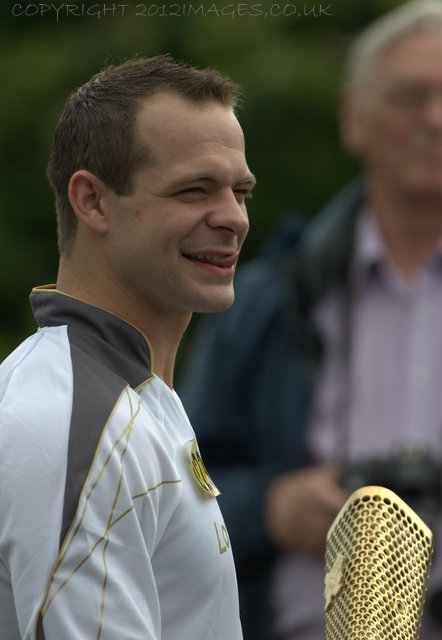
Ben Gibbons, lights the Olympic Torch for Jason Hazard (023) above the A1 in Tuxford, Nottinghamshire

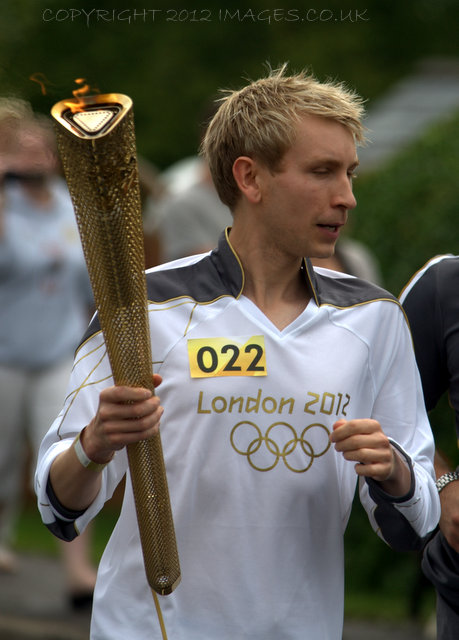
Ben Gibbons


Ben’s nomination story
Ben is a quiet reserved lad, but inspirational in everyway, I feel he would be a excellent candidate for carrying the Olympic torch through Lincoln in 2012. Tragically Ben`s younger brother had a brain haemorrhage on New Years Day 2008, and sadly passed away on the 4th January. Ben never left his side, reading and talking to him. Ben had not just lost his brother but also his best friend. They supported one another in every aspect of life. Adam was a real sportsman, achieving in many sports and was at Lincoln University studying Sport when tragedy struck. A charity was set up in Adam`s memory to raise money to help local youngsters to reach their potential in sport. This is what Adam wanted to do so Ben was determined to fulfil Adam`s wishes. He knew Adam would have been excited about the Olympics and it was his intention to be there helping somehow. Many events for the charity Ben organises, never complaining. He ran the 10k for him wearing his brother`s photograph on his back. He organises an annual football tournament in Cherry Willingham, which is a huge success with many of Adam`s friends there, and last year cycled from John`O Groats to Lands End with 3 friends. He spends many hours dealing with applications. Ben does not receive anything for doing this and certainly would not want to. While Ben is busy with all this, he holds down a full time job with young children with additional needs and studies at Bishop Grosseteste to become a teacher.

Jason Hazard


Jason’s nomination story
My little brother Jason, displays a unyielding commitment to his community every day! He has been a police constable now for just over two years and his dedication to his work and the community is inspirational! He received a comendation for the successful recovery of a gentleman’s life before he had even passed his probationary period!! There is no job too big or too small for Jason and he often works past his shift to ensure that a thorough job has been done! He even cut his first holiday in 2 years short to come back to work! All of this he juggles with his role within the RAF Auxiliaries, which he dedicates much of his spare time too. On top of all this, the boy regularly participates in runs for charity and has recently completed the three peaks challenege! I believe that this would be a great honour for Jason and I can’t think of anyone that deserves it more!

Posted in 2012, canon, Canon G10, Exhibition, hobbies, humour, library, life, London 2012, Olympic flame, Olympic Torch, Photography, sport | Tagged , , , , , , , , , | Leave a comment

The Impressionists ..

These are the latest vehicles for Albion Yard, two kits that have been sitting around for a while. One thing I regularly do is make a short cut to achieve an improved visual appearance, whilst not getting bogged down with too much detail or work. If it can be seen, I’ll try and improve it within reason, these are two such examples.

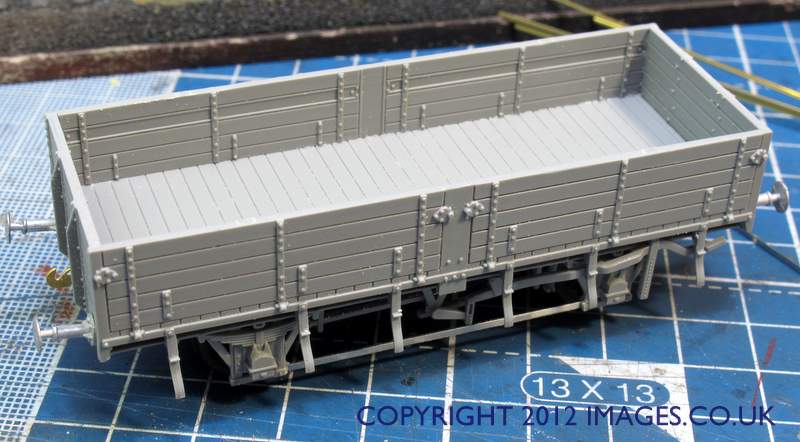
Original plastic tie bars

The first a Chivers Southern ballast wagon, seen above and below is a really nice kit, almost shake the box and it falls together. There are two minor things which I feel let it down, one there is no weight supplied with the kit, which I think would be good if provided for beginners in particular. I get round the weight issue using adhesive car wheel balancing weights. It means you get all your wagons close to a standard weight and the attachment is really easy, peel off the backing and you’re done.

The second item (and it’s not just this kit thats affected), is the very overscale tie bars. For a plastic kit I can see that moulding these will be difficult to get a thin strong bar out of a mould. What I’ve done is simply cut them off and replace them with nickel silver strip, and it makes a real improvement very quickly.

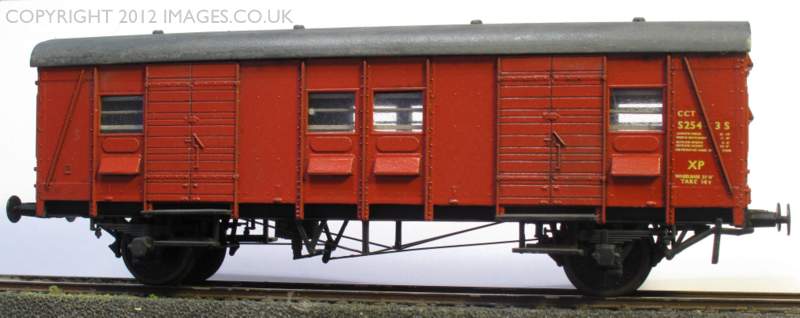
The next vehicle is a Southern Ply sided CCT by Parkside. Its one of their older kits and I must admit I was a bit in two minds to build it or move it on. Well I’m very pleased that I decided to keep it, and invest some time improving it.

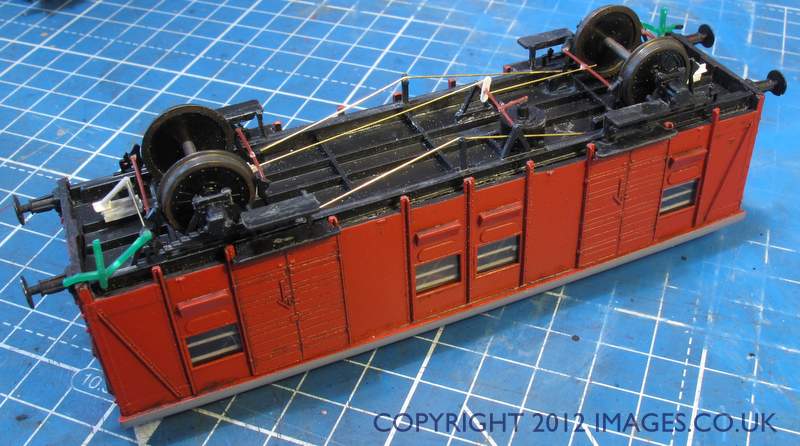
Impressionist brake gear

One of the challenges of using kits today is making them ‘work’ amongst the better quality ready to run models. This is particularly true of older kits in some of the ranges. The key thing that stood out for me on this van was the chassis looked very bare underneath. When viewing Albion Yard, the viewpoint is almost eyelevel, so missing brake gear does show up, particularly if other vehicles have it. I used Paul Bartletts site (see below) to get an idea of how the brake gear mechanism would appear. I then used scraps of wire and plasticard seen above to make a representation of the equipment. Once painted the basic nature of the detailing disappears, and is less noticeable when the vehicle is on the layout.

Decals by CCT Transfers, Paint by Halfords, Couplings and Pipes to add.

So there’s two short cuts for you to give an impression of much finer detail, than there actually is. The van chassis has the greater visual impact and is well worth doing, as it doesn’t look out of place next to current RTR products. If you’re interested in things ‘Southern’, Graham Muspratt’s blog is well worth a look, the link is at the bottom of the page.

Kit PC47
http://www.parksidedundas.co.uk/acatalog/00_GAUGE_4MM_SECTION.html
RC448 Tunny & RC449 Ling
http://www.slimrails.co.uk/index00gauge.html

Paul Bartlett’s Wagon Images
http://paulbartlett.zenfolio.com/

Graham Muz’s blog
http://grahammuz.com/2012/06/10/talking-stock-11-a-40-ton-load-of-ballast-sr-dia-1774-hoppers/

Posted in Airfix, Bachmann, Branch Line, brassmasters, British Rail, Canon G10, Chris Nevard, decals, Eastern Region, hobbies, Hornby, Layout, LMS, LNER, Midland Region, Model Railroad, Model Railway, Model Railway Journal, Modelling, OO Gauge, paint, Scottish Region, Southern Region, Uncategorized, waterslide, Western Region | Tagged , , , , , , , , , , | 2 Comments

Bank Holiday Workings

Re-allocated BR/WR ‘Toad’

This bank holiday gave me a few opportunities to do some extra work for Albion Yard. One of the things I want to do is to establish the layout in the Forest of Dean with some more visual clues. The Toad above is one of those ideas. It was a standard Bachmann release that had been fitted with Shawplans laserglaze kit EEFG-GW(B)20tB. Whilst looking through the transfers I have in stock I found a set of the Modelmasters BR station signage set. I figured that if I cut up several names re-arranging the letters I could make ‘Cinderford’, so that’s I did. Isopropyl alchohol will remove many of Bachmann models’ printed lettering without damaging the paint underneath. The original wording for ‘Stourbridge’ was removed and 45 minutes or so spent cutting and alligning the station names of Romford/Doncaster/Norwich to make ‘Cinderford’. The allignment isn’t brilliant, but in real life there are photos of lettering thats a bit ‘Friday afternoon/Monday morning’, and when its weathered it’ll be less apparent. The rest of the markings I left untouched, and if you’re wondering what R.U. means its ‘Restricted Use’. This theoretically ensures the van doesn’t travel too far from its home yard and works back there in due course. The next van will be re-allocated to Lydney, when I have a spare half hour or so. And now I keep looking at the lamp irons, they’ll probably be next …

Parkside PC84

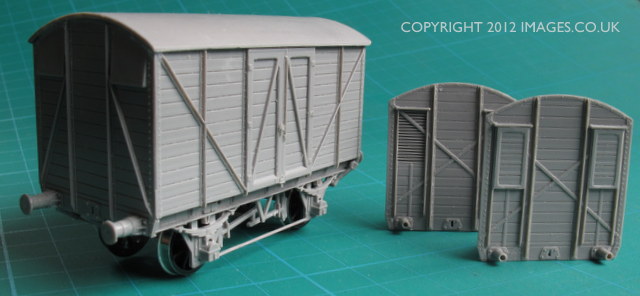
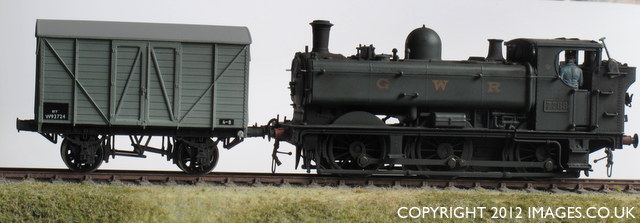
Parkside 4mm PC84 GWR V12/V14/V16 ‘Mink’

At Railex I picked up a couple of the new GWR Mink van for Parkside. Its a simple kit and to their latest standard, which as you can see puts it comfortably within the quality we have come to expect of contemporary models. Three main variations can be built, the most visible difference being the van ends, the three types illustrated here are all included in the kit. Built from 1907 and lasting to the 60’s there a good coverage of popular eras, with fitted or unfitted options to select.

7788 and Parksides latest 4mm GWR Mink PC84

Having put this together the bug had caught, and on the desk at the moment are several other wagon kits including a ply sided southern CCT with Dave Frank’s LMS cast buffers.

http://www.parksidedundas.co.uk/
http://shawplan.wordpress.com/

Hmmm, lamp irons, yeh!, they’ll make a huge difference, just a couple of minutes each.

But, then I’ll have to do all the other BR brake vans then, nah! not worth it.

But they look so much better and only take a couple of minutes … choices, choices …

Posted in Airfix, Bachmann, Branch Line, Canon G10, Chris Nevard, decals, Eastern Region, Forest of Dean, Great Western, Hornby, Kalmbach, Layout, LMS, Midland Region, Model Railroad, Model Railway, Model Railway Journal, Modelling, OO Gauge, paint, review, Scottish Region, Southern Region, Wales, waterslide, Welsh Marches, Western Region | Tagged , , , , , , , , , , , , | Leave a comment

The Curse of Albion Yard …

Railex 2012 Review ‘The Curse of Albion Yard’

The weekend potentially started with very bad news, and nearly ended that way too! Wednesday was a day I was looking forward to finalising a few details and getting the train set fully packed. It was a brilliant plan but circumvented by not being able to find the shed keys. Normally this wouldn’t be a huge issue and a routine search of the premises ensued, to find … nothing at all. Well I turned the house inside out, doubly frustrated in knowing that I was the last person to have them on Tuesday evening. It’s the old story, only one set of keys, you always mean to get replacements cut, (still haven’t), and never get round to it. Realising that to call David and say ‘I can’t come, I can’t get in the shed’ would be even less well received than ‘The dog ate my homework’, I called a few Locksmiths. If the keys didn’t turn up by Thurday morning it was going to be an M&S expense type of entry and all down to my own efforts. I really didn’t need to be told they’d send a bloke out before giving me a rough idea on how muchthey’d stitch me up for either. I eventually told one of the more persistent sales people that I didn’t need a site survey, I knew where the chuffing shed was, it was only the keys I’d lost. Wednesday evening the keys turned up, they’d had a day at school in the youngest gingham clad mavericks school bag. At our place getting kids to school is in a similar league as cat herding,( http://norvenmunky.wordpress.com/2008/09/26/pretty-vacant/ ) and whilst loudly discussing departure timing, the keys had fallen into her schoolbag from the sideboard.

New hedgerow added Thursday morning

Well Thursday allowed me to change more stuff around on the train set, it’s what I do, sorry, but the change gave a significant improvement to the layouts appearance. It was then get everything packed away and attend to last minute tasks like buying water, and confirming the van was sorted and then off to work. Breaking it down allowed me a bit of time to mess around using the layout as a photo set again and get some interesting images too.  Friday was a leisurely trip down and the set up went well, particularly for a train set that doesn’t leave home. Because I don’t have specific packing cases one actually had to be made to hold the trees, this worked really well and meant that on both trips the trees arrived undamaged. The Railex team were as ever very helpful (third time for me) at both ends and during the show. We were in a sort of bloggers corner where most of the layouts have an online presence and are 4mm scale. http://nevardmedia.blogspot.co.uk/ http://bronhebog.blogspot.co.uk/

http://www.emgauge70s.co.uk/layout_canada.html http://www.rmweb.co.uk/community/index.php?/topic/12234-diesels-in-the-duchy-aka-st-blazey-dcc-em/

Set up went well and Mr Cheeseplant dropped by and expressed surprise when he saw how high the base boards were. It’s easy telling someone how high something is, but it really falls into place when you see it first hand. I did think I’d get some flack through the show for the height of the boards, but they seemed to be appreciated by those that viewed the layout. Over the course of the weekend five people that I saw actually tape measured the height and valances, there may have been more when I wasn’t ‘front of house’.

Albion Yard at home

We had plenty of positive comments and I’d like to extend my own and my teams (Al, Ian and Pete) thanks for those for exhibitors they make the show very rewarding. Even if you’re one of those who just stood and took the time to look, thank you. Operating from the front was different. It gave us plenty of opportunity to chat with the viewers with very little disruption to the flow of the layout. I met two people whom over the years have inspired me both modelling and otherwise, there’s a saying ‘Don’t meet your heroes’, but both these guys were really pleasant and spent a good amount of time talking about modelling and art.  Next door we had Chris Nevard with  Brewhouse Quay, and we swapped a couple of locos over the weekend with even an S&D 7F finding its way across the Severn http://www.flickr.com/photos/nevardmedia/7281633136/in/photostream/

So to end with a few thank you notes,

Al Ian and Pete for playing for the team, and the help

David Lane and RDMRC for taking a punt on the layout, it being first time out, not having seen it

Craig for the Pannier and Bernie for the decals, Phil for the loan of his Class 22, Chris N.,  and the other operators and traders whom all made it a show to remember for all the right reasons

The visitors for the comments and encouragement, including those that mentioned reading the blog

And the closing sting in the tail in ‘The Curse of Albion Yard’? When I got home (130 miles),  and unloaded the van I felt I should make a mental note,  to paraphrase Mr M. Caine (actor);

’ Next time, make sure the bloody doors are closed’.

Posted in Airfix, Bachmann, Branch Line, brassmasters, British Rail, Canon G10, Chris Nevard, decals, Eastern Region, Exhibition, Forest of Dean, Great Western, hobbies, Hornby, humour, Ian Futers, Industrial, Kalmbach, Layout, life, LMS, LNER, Midland Region, Model Railroad, Model Railway, Model Railway Journal, Modelling, OO Gauge, Photography, Railex, Scottish Region, Southern Region, Uncategorized, waterslide, Western Region | Tagged , , , , , , , , , , , , , | 2 Comments

Railex Thank You

Just a quick line to say thank you to those that dropped by and said hello, and passed comments about the layout to myself and my team over the weekend. Al, Ian, Pete and myself enjoyed the show, the company and the hospitality and geniality of the organisers and public. I’ll add more in the next day or two, todays been a bit of a ‘loud’ one at work, resulting in lots of exciting paperwork to fill in, and nice ladies from the ministry to talk to, so I’m going to go and play trains and relaaaaaax.

Thank you again!

Posted in 3f, Airfix, Bachmann, Branch Line, brassmasters, British Rail, Canon G10, Chris Nevard, decals, Eastern Region, Exhibition, Forest of Dean, Great Western, hobbies, Hornby, Kalmbach, Layout, LMS, LNER, Midland Region, Model Railroad, Model Railway, Modelling, OO Gauge, Photography, Railex, Scottish Region, Southern Region, Uncategorized, Welsh Marches, Western Region | Tagged , , , , , , , , , , , , | 2 Comments

Heavyweights creep in …

In reality, highly unlikely, but I like it. It also takes the layout back to its roots as an occaisional photo set.

Posted in Airfix, Bachmann, Branch Line, British Rail, canon, Canon G10, Chris Nevard, Eastern Region, Exhibition, Forest of Dean, Great Western, hobbies, Hornby, Kalmbach, Layout, library, life, LMS, LNER, Midland Region, Model Railroad, Model Railway, Model Railway Journal, Modelling, OO Gauge, Photography, Railex, research, Scottish Region, Southern Region, Wales, Western Region | Tagged , , , , , , , , , , , , , , | 2 Comments

FCUK (16 Tons of French Connection in the Forest)

One of the noticeable things in Forest of Dean images is the variety of apparently similar mineral wagons. I have a good few of the Bachmann varieties which have taken precedence gradually over the Airfix mineral wagon kit of the past. Spread amongst these are a few non standard types, one of which you can see as work in progress above.
So, why ‘French?’ A very simplified history is that these types were imported from France, as well as ‘home built’. The original design being Ministry of War Transport requirement and sent out after D-Day to assist in re-establishing the damaged rail network in Europe. After the war many were repatriated and some were built specifically for domestic use. This wagon will be completed for Railex as I want to be able to have a suitable mix of types available to make visually interesting trains without resorting to a cliche. There’s a bit more work to be done on the underframe yet and decals will come from Cambridge Custom Transfers. The finished wagon project is destined for a book which I’m working on with a good friend, more of that in the future.

I try to keep reasonably close to the prototype mix so based on photos the majority are ‘Standard’ Dia 108 or derivatives with a mix of BR grey and faded PO wagon liveries, MOT slope sided minerals and the ‘suicide’ door wagon above. I’m not sure how widespread the nickname was, I’ve heard it used a few times, but the logic is un-escapable. The only doors on this wagon are the cupboard side doors. Who’d want to be standing in front opening them if the wagon were full of coal?

If my past is anything to go by, that’d be the apprentices job …

For ‘wagony’ stuff theres some useful protoype and modelling information at

http://paulbartlett.zenfolio.com/brsncfmineral
http://www.cctrans.freeserve.co.uk/
http://www.railex.org.uk/

Posted in Airfix, Bachmann, book, Branch Line, British Rail, Canon G10, Chris Nevard, decals, Eastern Region, Exhibition, Forest of Dean, Great Western, hobbies, Hornby, Kalmbach, Layout, LMS, Midland Region, Model Railroad, Model Railway, Model Railway Journal, Narrow Gauge, Nevard, OO Gauge, Railex, research, Scottish Region, Southern Region, Uncategorized, Wales, waterslide, Welsh Marches, Western Region | Tagged , , , , , , , , , , | Leave a comment

Railex Preparations Vol III

First Test Train

Today the layout was put up for the first time in six months, and I’m pleased to report that apart from dirty track, there have been no problems with the layouts running. A few people have asked what is the track plan? Well as a picture speaks a thousand words, here it is in the assembly stage.

Track layout looking from fiddle yard.

This plan is based on Iain Rices ‘Cornfield Street’ with one or two changes by myself. The scenic break between the fiddle yard and main board is at the foot of the image. When set up this is marked by a line of structures that act as a view block. The backscene wraps around the right hand side of the layout as you look at this shot, and the ‘bare’ boards still allow me to mess around moving buildings. Other tasks worked on today were more trees being completed, and just sitting back and playing trains for once! In the previous post I mentioned I’d add details on the fire irons on the locomotives, well I’ve added them to the 15 minute heroes page as well as here. Many prototype images show a set of Fire Iron tools in the tender, on the rear tool brackets as per the Pannier illustrated, or lying along the top of water tanks on locomotives like the 45/55XX or 41/51/61xx Praries.


This is the raw etch, tools are well defined and they are well positioned in the fret to cut out.

Using a very fine wet and dry paper I gently rub both sides of the etch in preparation for the next bit which will save some offort when painting.

The etch is dipped into a blackening solution for a few seconds, I probably leave it in for ten or so and having rubbed them with wet and dry previously, there is plenty for the ‘black’ to get hold of. You can actually see it change color as the process occurs.

The blackening process can be stopped by immersing the etch in water. WHen its dry the etch will be a black colour and there is a matt residue left on the surface. This will come off with a wipe of tissue.

The tools can then be cut from the etch, I use a pair of sharpened nail scissors for this job. In real life the tools got pretty knocked about and didn’t stay nice and straight for long, so all of mine show a bit of lifes journey in their shape. You don’t need to put all the tools on, its often that you’ll find a picture with just one or two of items on board an engine, there are plenty of reference pictures in books which show variations you can model. You can use the same technique when replacing lamp irons too, and 247 as well as others do different types which you can fit.

247 Developments Fire Irons

http://247developments.co.uk/

Posted in 3f, Airfix, Bachmann, Branch Line, brassmasters, Canon G10, Chris Nevard, Eastern Region, Exhibition, Forest of Dean, Great Western, hobbies, Hornby, Kalmbach, Layout, life, LMS, LNER, Midland Region, Model Railroad, Model Railway Journal, Modelling, OO Gauge, Scottish Region, Southern Region, Uncategorized, Wales, Welsh Marches, Western Region | Tagged , , , , , , , , , , , | 7 Comments

All the same, but different …

All the same, but different …

One of the key features in setting a scene for a model railway is in choosing what stock and locomotives you run. Do this right and you can enhance the overall appearance of your train set. When Albion Yard was more generic in its era and location, I ran items, more specifically locomotives, that would have been unlikely to be seen together. I didn’t have really unusual mixes, but a pannier followed by a standard class 4 2-6-0 and then a class 17 in retrospect didn’t feel right. They didn’t appear on the layout at the same time, but on following trains as the layout is operated on the ‘one engine in steam’ principal. Something was bugging me that something wasn’t right hence the stagnation alluded to in the first post of the blog. https://albionyard.wordpress.com/2010/06/02/hello-world/

Coming to the realisation that the layout needed a focus the Forest of Dean location was chosen, see post link below and this  has lead to a tightening up of what I run on the layout. I still use it as a test track occaisionally but the real use is now just BR/WR types and traffic. https://albionyard.wordpress.com/2011/06/13/albion-yard-cinderford-glos/


So there’s been considerably less of the above movements, for example its known that the 350HP 08 variants were tried in the Forest of Dean but for various reasons weren’t considered a success, possibly a lack of speed contributing to it, and Class 14’s were used before their withdrawl as the Forest Railways succumbed to closure. There is one Class 14 in the fleet together with a low tank small prarie, and they will appear in the operating sequence. Heres the fleet including the ‘first reserve’ an Ivatt 2-6-0 which were found in the Gloucester area.

And if you’re wondering the 77XX in GWR livery is appropriate for the Forest of Dean in the 1950’s, it does need some pretty heavy weathering to finish it off though.

So what do I mean by all the same but different?, well the Forest of Dean area was served by a few common locomotive types, and the Pannier was one of them. I’ve used the Bachmann model which is a good starting point, and with a friend am hoping to produce some components for it that will improve it further. For the time being though I’ve rung the changes by changing numbers and adding different detail variations on them, the most noticeable are the cab vent and door modifications. By opening some of them more light gets thrown into the cabs, but it makes the locomotive look different, particularly when you have two of the same cab style and livery next to each other. Study photos carefully too, these will show you operating variations, for example the high cab locomotives often appear running with the rear cab doors open, I’ve yet to find a low cab variant on the open line with the rear cab doors open, so you can make an assumption that there was a good reason for this, perhaps something as simple as it was more draughty than a high cab, allowed them to fill the bunker with more coal, or that coal spillage into the cab was more of an issue with low cab types rather than the high cab Panniers.

Bunker doors open, Archer rivet decals and plasticard door, cab roof vent open, aluminiun sheet roof vent.

Whatever the reason it meant that I have modelled the high cab variants with more doors open than the low cabs reflecting the images taken at the time in the Forest area. Other easy mods for these are replacing the bunker lamp irons with etched sets and adding the fire irons, they make a huge difference too.

Fire and lamp iron replacements

The fire and lamp iron replacements have come from 247 Developments, as have most of the GWR numberplates I’ve used. In the next few days I’ll add a ‘fifteen minute hero’ post on how to use the fire irons.

http://247developments.co.uk/

http://www.railex.org.uk/railex2012v.html

Posted in 3f, Bachmann, Branch Line, Chris Nevard, DCC, dcc sound, decals, Eastern Region, Exhibition, Forest of Dean, Great Western, hobbies, Hornby, Layout, LMS, LNER, Midland Region, Model Railroad, Model Railway, Model Railway Journal, Modelling, OO Gauge, paint, research, Scottish Region, Southern Region, Uncategorized, Wales, waterslide, Welsh Marches, Western Region | Tagged , , , , , , , , , , , | Leave a comment