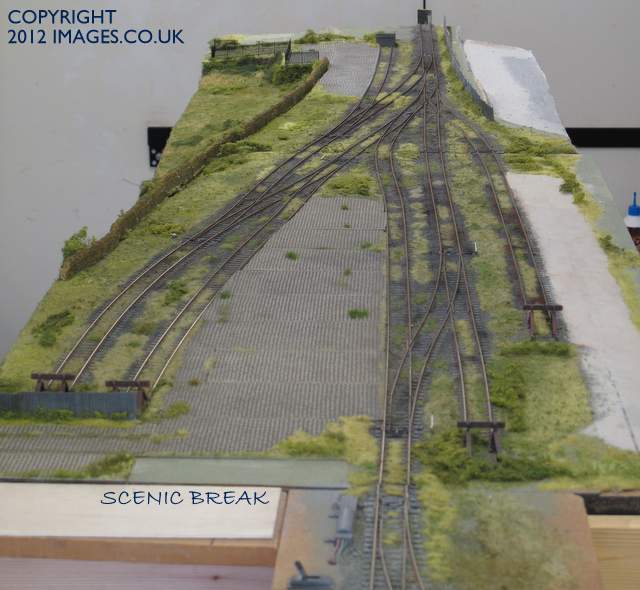
Recently I visited the York model railway exhibition, it’s usually a good one and one or two layouts really catch my eye. This year I was immediately taken back to early days of the blog and those Yahoo groups before forums and Facebook took off. Above is an overview of the bare Albion Yard baseboards, which had developed out of a desire to build an Iain Rice plan, ‘Cornfield Street’. As such the track plan is immediately familiar to me when I see it.
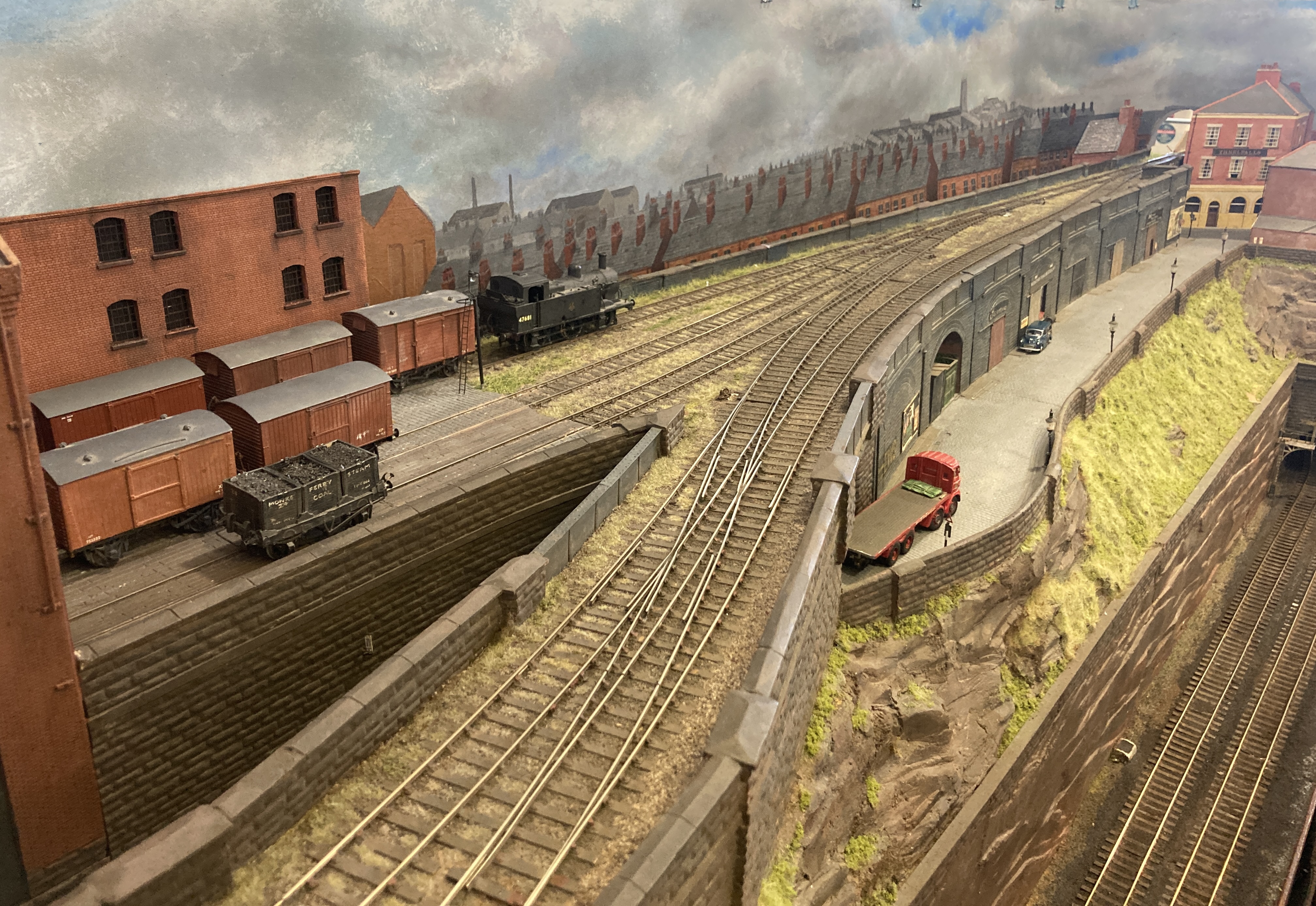
Swan Street Goods EM Gauge
Well at York I was immediately taken back to reading MORRIL, Iain’s article and plan and my attempt to get the plan working. This was because I was standing in front of Swan Street Goods (above), an EM rendition of the plan that is an almost exact replication of Iain’s concept.
Albion Yard, The Start
With best intentions I’d started the same way to replicate Iain’s plan as far as possible with Peco Code 75 track, the 3-way point that had recently been introduced being the fire starter to get the project going.
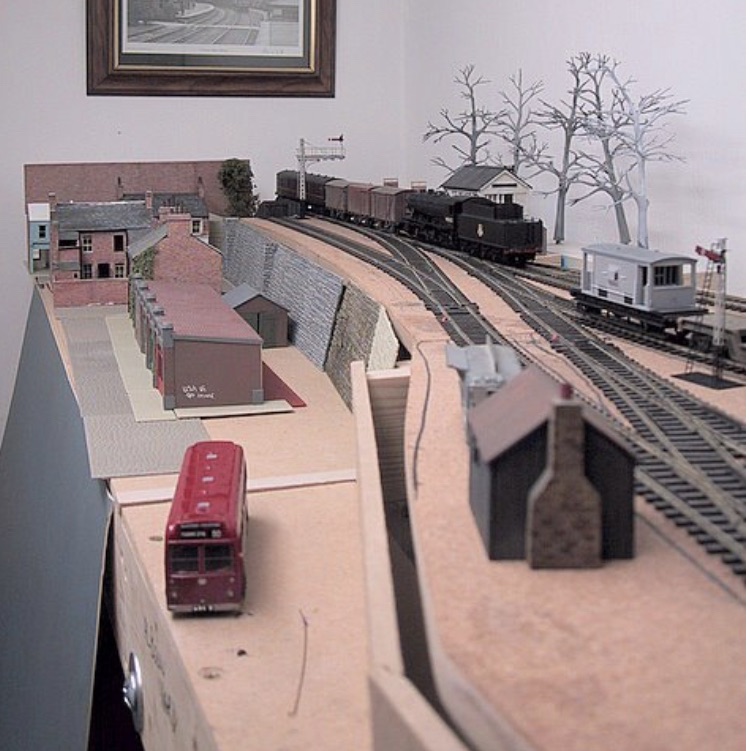
Swan Street EM
I’d kept as close as possible to the plan, but this is where using ready to lay track can be a disadvantage. Whilst I was able to replicate the plan, the ‘flow’ wasn’t there as the points whilst excellent quality have the restrictions of them being either left or right handed. I’d also used 9mm MDF for the track bed. That’s not a problem as such, it forms the track base for all my layouts so far. The issue was the thickness, and while I wanted to keep to Iain’s plan with two layers, the depth and point motor position wouldn’t allow that.
Swan Street EM
I’d also mirrored the plan, and that too had lost something in translation, I’d done that to accommodate it in its home of the time. The depth of the constructed boards and the track base thickness precluded me from having the lower level in place, so the overall impact of the original design was lost early on. This was particularly apparent in the section above, for me there was literally no clearance for the road vehicles that worked, so that went too! Ultimately I had something that wasn’t really like what it was supposed to be or I’d hoped it to be! There was one side benefit though, with this transformation I was no longer constrained by the original project concept, hence Albion Yard became a photo set, with different buildings and careful management of sightlines, I was able to disguise its origin and the fact that it had a pretty small footprint, the scenic section only being 8ft x 2ft.
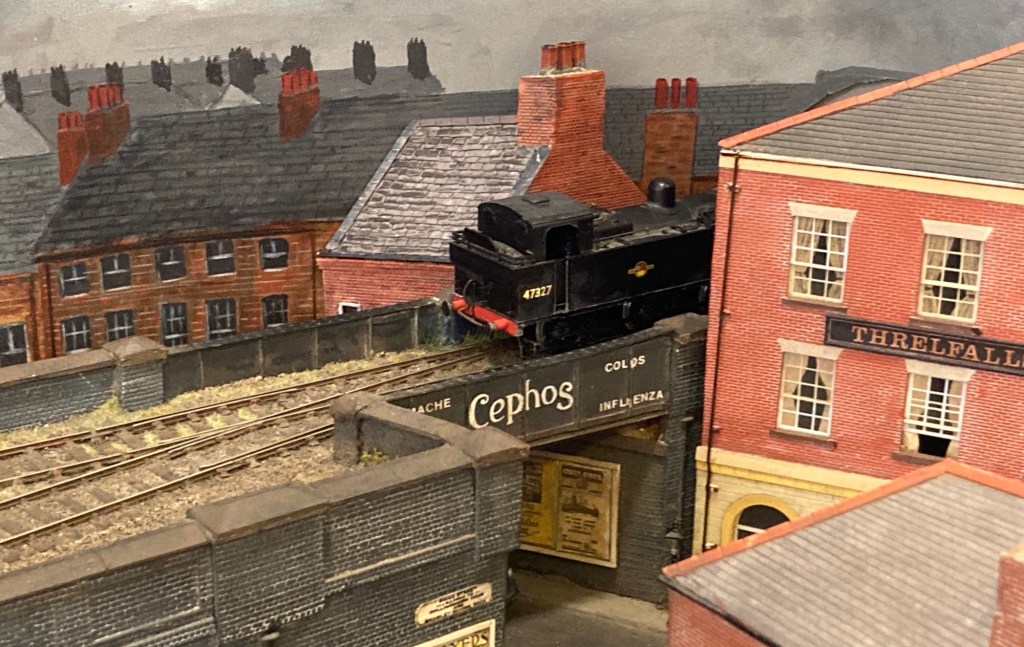
Shelfie 3 WIP, Lower Mill Street
Above, is another return to try and scratch that urban itch. True to form though, it’s nothing like the original concept…..
Below is a Facebook post from the Hobby Industry Coalition, a group of North American hobby companies whom in the main supply ‘US’ outline products for their market.
The US Tariffs are recognised above, as a potential threat to the North American model railroad hobby the longer the Chinese Import tariffs remain in place.
This is from Craig Fuller CEO at Freightwaves
The beloved hobby of model railroading, a cornerstone of American culture for generations, faces an existential threat. As the toy and hobby industry grapples with potential new tariffs, small and mid-sized businesses find themselves on the brink of collapse. The proposed up to 145% tariff increase could spell doom for an entire sector, reducing it from a vibrant niche to a relic of the past.
At the heart of this crisis lies the unique economic structure of the model train industry. Unlike mass-market products, model trains operate on razor-thin margins, typically 15-20%. The industry relies heavily on pre-selling, with 95% of products sold months before arrival. This leaves no room for sudden price adjustments when shipments arrive, making the proposed tariff increase catastrophic.
The nature of model train production further compounds the problem. These are not mass-produced items but highly specialized, low-volume products. The costs of tooling and engineering are spread across small production runs, meaning there’s no economy of scale to offset the tariff’s impact. Whether a company produces 2,000 or 10,000 units, the fixed costs remain high, making any significant tariff increase devastating to the pricing structure.
Some might suggest moving production domestically, but this solution is neither economically viable nor logistically feasible. Labor and compliance costs in the U.S. are 5-10 times higher than in Asia. More critically, the specialized infrastructure required for model train production—including tooling, mold-making, and specialty die-casting—no longer exists in the United States. Decades of outsourcing have left the country without the plants, parts, or trained labor to match the precision and efficiency of Asian manufacturers.
It’s crucial to understand that these tariffs miss their intended target. Model trains and similar hobby products are not subject to dumping or unfair subsidies, nor do they pose a threat to national security. These legacy products, deeply embedded in American culture, were previously distinguished by the Section 301 exclusion process, but its removal now lumps them with mass-market imports that operate on much larger volumes and margins.
The consequences of this tariff threat are already unfolding. Inventory is frozen, orders for future seasons are being canceled, and production lines have ground to a halt. Small importers find themselves unable to clear containers or finance future shipments. Retailers are not receiving pre-ordered stock, and entire product lines are being shelved indefinitely.
If this tariff increase stands, it won’t just lead to temporary price hikes. It threatens to eradicate a uniquely American subculture, leading to permanent closures and the disappearance of generational brands that have been fixtures in the hobby for decades.
The modelrailroad industry isn’t seeking a bailout or special treatment. Rather, it’s calling for the reinstatement of the Section 301 exclusion process—a targeted tool that recognizes the economic scale, cultural significance, and trade harmlessness of this industry. Without such recognition and action, a cherished piece of American life may soon vanish, taking with it not just businesses and jobs, but a rich tradition of creativity, craftsmanship, and community.
As one industry insider poignantly stated, “If this stands, it’s not a temporary price hike—it’s the end of a uniquely American subculture.” The clock is ticking, and without intervention, the model railroad industry may indeed face its final stop.
The US RTR industry is very similar to ours, whilst we consider the brands we see on the shelves as manufacturers, for the most part they are comissioners, and no disrespect is given to them for that business practice. For us in the UK we need to go back to the 1980’s where we saw the first examples, Mainline and Airfix with Hong Kong produced models that we welcomed with open arms. The quality of their products compared to old Triang tooling releases, or even the contemporary Hornby releases of the time was significant.
Well, in parallel across the pond a similar revolution was taking place. The US hobby was familiar with high quality products from the far east, the expensive pinnacle of their RTR were Japanese and Korean brass models, which are still well regarded today. However like the UK, at street level the importing and production of mass produced models at attractive prices had a similar impact, and you’d see latest releases at knock down prices.
Simply put the Chinese factories were able to produce better, more affordable RTR models than the home industries, and production for our and North American ‘manufacturers’, moved offshore. Over the past years there have been comments to bring it home from voices who appear to have no commercial sense. And cutting to the chase can’t understand that even at UK national adult minimum wages of £12.25/hr (2025), assembly of highly detailed and intricate models will be unviable. Thats without all the backup of a factory, premises, machines for tooling and injection moulding, and paying the toolmakers and designers whose skillset would demand higher wages for their efforts.
So where does US tariffs potentially affect us? Well short term if the American market stagnates with companies holding off new production, then those slots will possible be available for the UK market manufacturers. This could mean faster deliveries of announced products, and also completely new products. Selfishly for the UK modellers this may be super news, but only if ‘we’ continue to buy new releases. Is our hobbies commercial appetite sufficient to sustain a flood of new products? Going back to the bring it home mouth breathers, whom already cry that our toy trains are too expensive, its safe to say that they aren’t going to support either an increase of new, expensive, Chinese manufactured imports, let alone more expensive UK made models flying the Union Jack.
Retailers on both sides of the pond will have their challenges too, regardless of if they’re a one man band or superstore. In the US there may be a dearth of products on the shelves, no product to sell no income, or if its doubled in price, a much smaller customer base. Here, if we aren’t going to buy this windfall of new products, then the retailers will have bulging shelves and no stock going out of the door in sufficient volume…
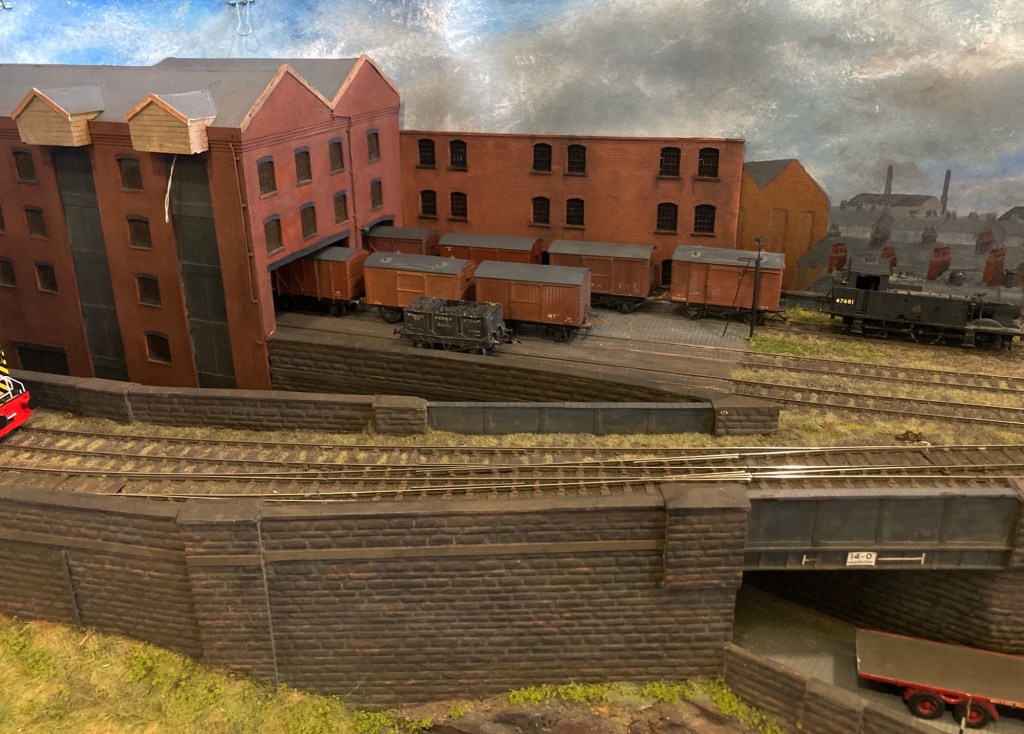
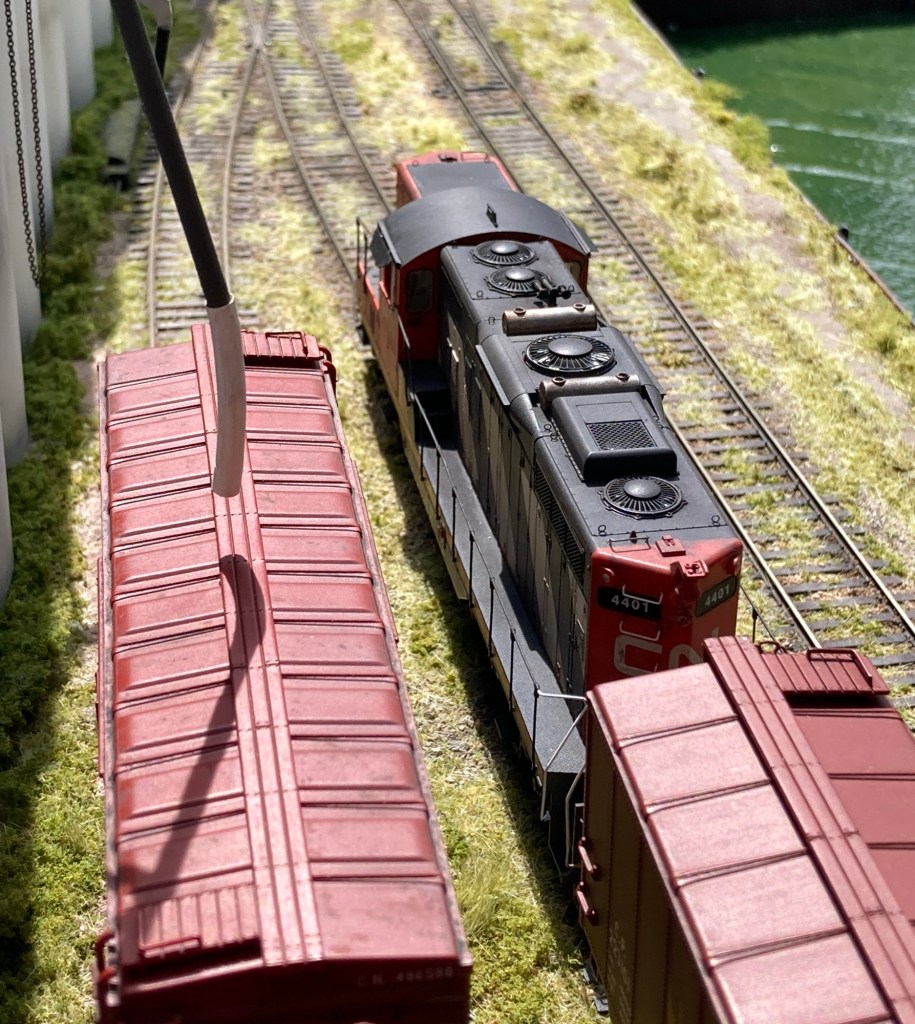
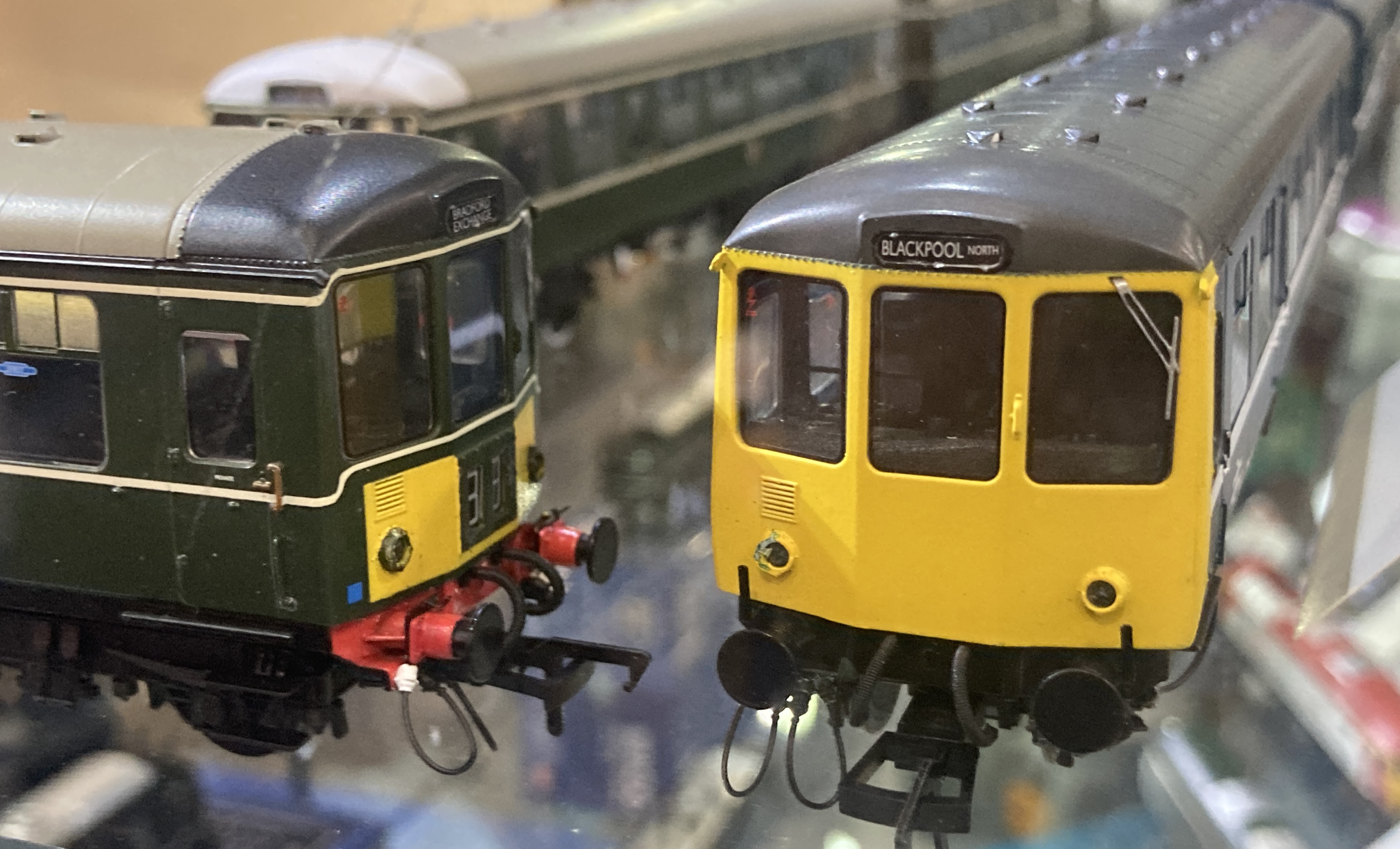
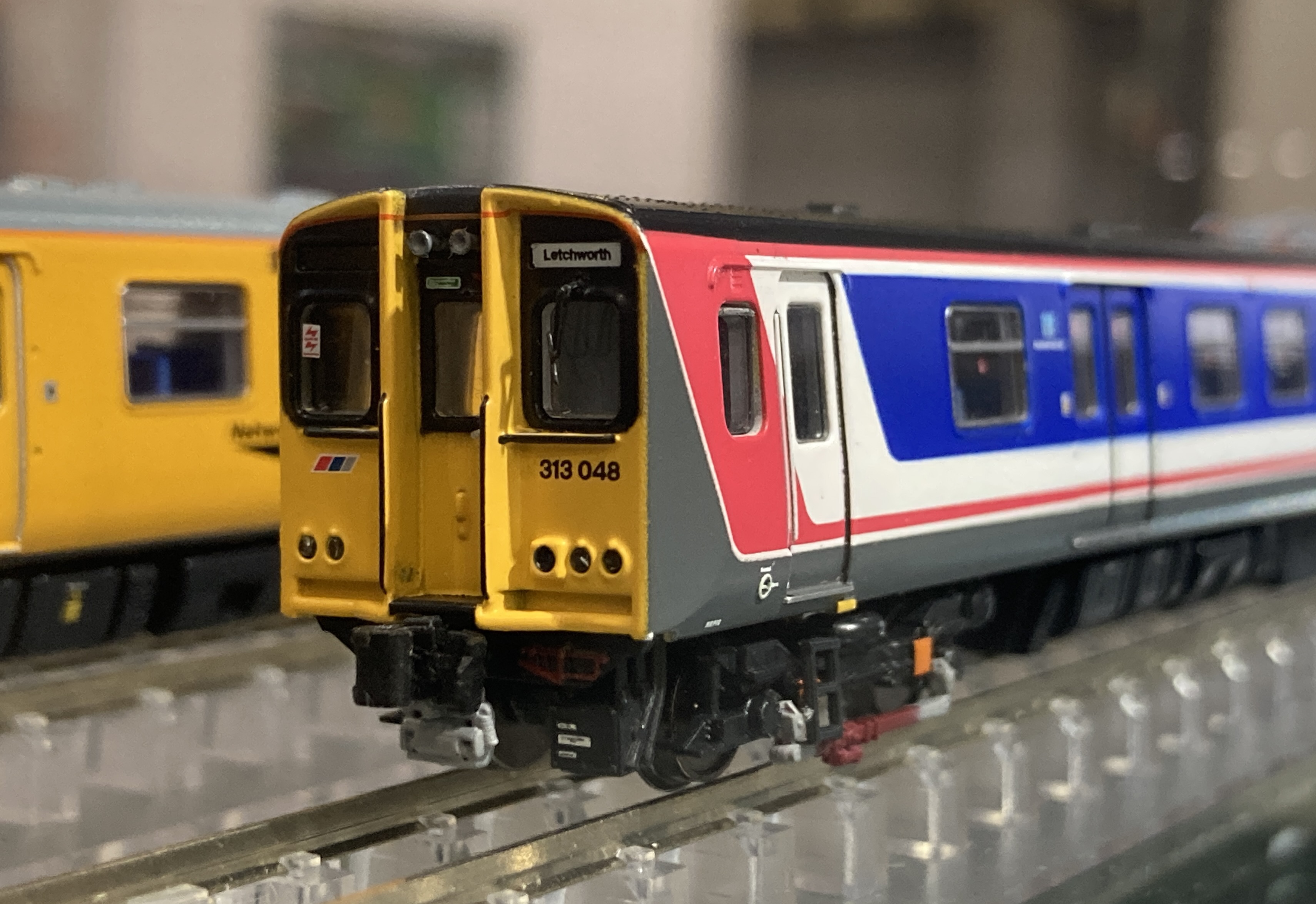
The above thoughts are just my own musings, there is no connection with any of my friends who work within it. The images chosen are at random, varying in scale and manufacturer, they all however are Chinese manufactured, and taken on exhibition trade stands.
One thing is for sure, the hobby isn’t going to die, but it will adapt to a new world.
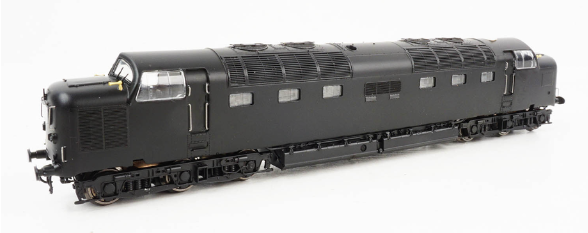
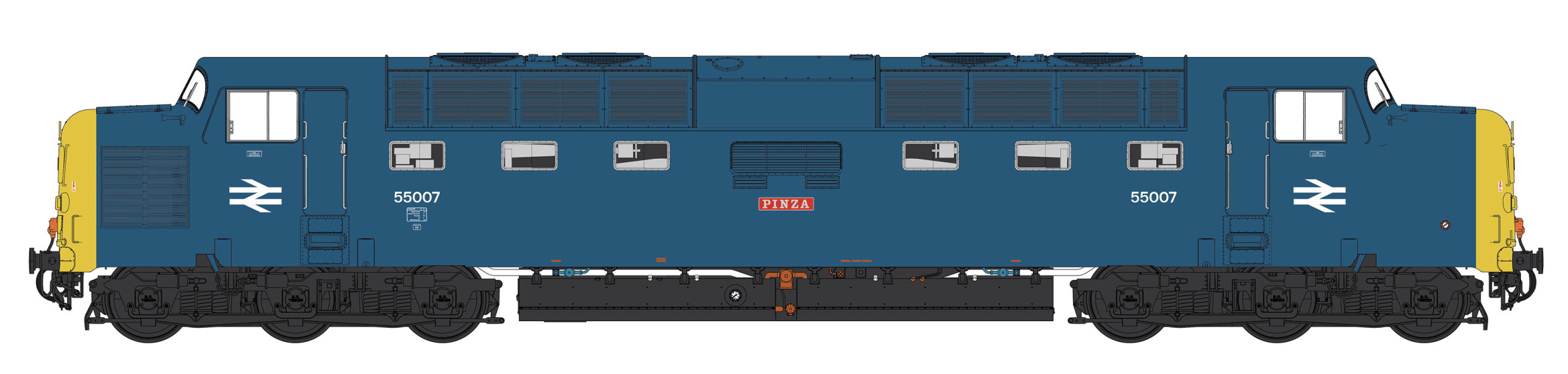
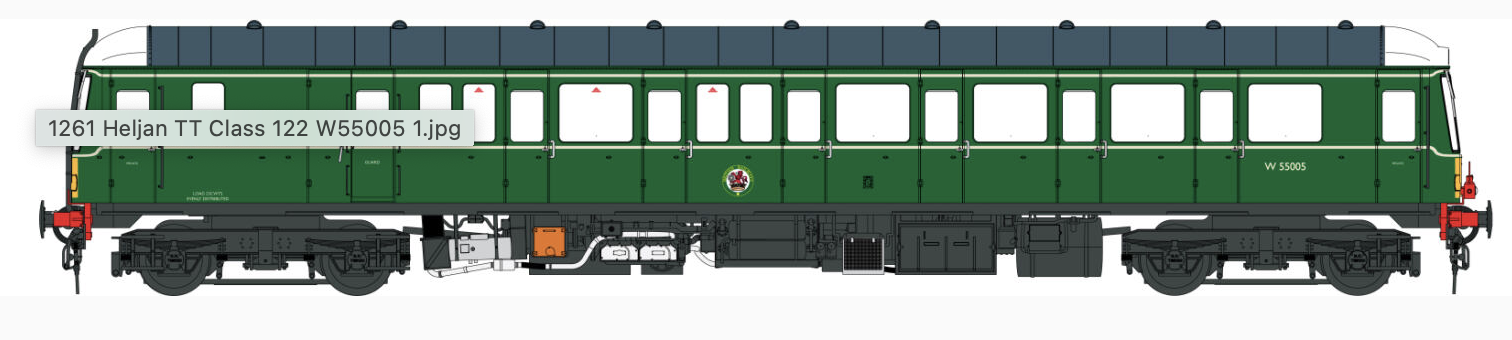
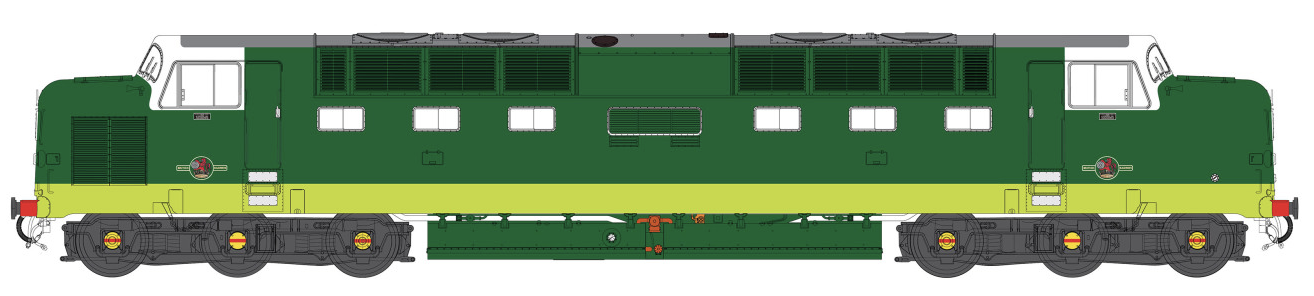
After sensibly deciding not to duplicate a Class 31 at the introduction of the TT120 scale a couple of years ago, and sit and watch if ‘we’ bought into it, Heljan have now definitely entered the scale! The Deltic, an iconic east coast racehorse matches Hornby’s A3 and A4 for the collectors and modellers making east coast based projects. It was always a favourite class with the enthusiasts, and with them being no less popular in preservation they are still seen and heard today, giving that crossover to the contemporary era. The 122, well thats bread and butter wide ranging suburban or branch line passenger traffic. The 122 is on my list already! Both are provided with a good range of era specific liveries covering the longevity of the class, and hopefully these will tempt more modellers and manufacturers into the scale!
HELJAN’s first British TT 1:120 models will depict two British Railways classics – the ever-popular Gloucester RCWClass 122 diesel railcar and the legendary Class 55 ‘Deltic’. First to arrive will be the Class 122 ‘Bubble Car’ in Q1 2026, followed quickly by the ‘Deltic’ in Q2 2026.
The first running samples of the Class 122 and Class 55 make their debut at Key Model World Live on April 26/27, where they will be running on Chris Hobbs’ ‘Camelot’ layout as part of the HELJAN display. Better known as YouTube’s ‘Peachy TT120’, Chris will be on hand over the weekend to discuss all matters TT!
HELJAN UK Representative, Ben Jones, said: “We’re very excited to be moving into TT 1:120 scale, which we believe has huge potential. Our first two models have been chosen to complement products that are already available from other suppliers, helping to build a broad and cohesive range of models that will attract even more new modellers to this superb scale.”
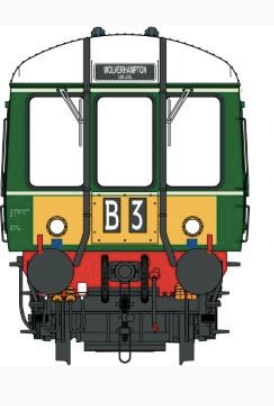
Six Class 122 liveries and four classic Class 55 liveries will be available via HELJAN stockists on release (see below). All items are available to pre-order now.
Even better news is that we are also working with Rails of Sheffield to deliver no fewer than SIX limited edition TT 1:120 ‘Deltics’ celebrating all of the surviving Class 55s in various post-BR guises (see below) – a stunning collection that will appeal to ‘Deltic’ fanatics and TT layout builders alike. They will be joined by an exclusive BR Green Class 122 in early condition, ideal for use with BR steam locomotives and early diesels.
High Level Specification
While the Class 55 will be an ideal companion for Mk1/Mk2d coaches, Pullman Cars, Gresley A3/A4 ‘Pacifics’ and HSTs already available, the Class 122 is designed to offer something new in this scale – a perfect starting point for TT newcomers. It’s a complete train in a single vehicle, suitable for everything from branch line micro-layouts to busy main line stations. Featuring outstanding detail and all the working functions you’d expect from a new ‘OO’ model, the Class 122 opens up enormous opportunities for British ‘TT’ modelling.
Starting with a blank canvas in a new scale allows us set a high level of standard specification across all products, which includes high-quality mechanisms with small but powerful motors, new generation E24 compact DCC decoder interface, allowing up to 32 digital functions (dependent on decoder), factory fitted speakers, authentic lighting functions and superb attention to detail throughout. In addition, the Class 55 will be the first HELJAN TT 1:120 model to feature two ‘Power Pack’ capacitors to ensure smooth and uninterrupted performance when you need it. ‘Power Packs’ will be a standard feature on future TT 1:120 releases.
Other standard features include…
Detachable TT standard couplings
Factory Fitted Speakers
Authentic Lighting Functions
Separately Switchable Headcode Panel and Tail Lights (Class 55)
Authentic Detail Variations According to Period/Livery
The Class 55s will be offered with a wide range of authentic detail variations already seen on the latest HELJAN O gauge models. These will include cast or fabricated bogies, glazed or plated headcode panels and cab quarterlights, vacuum brake/steam heat and dual brake/dual heat versions, single or twin wipers and more. All models will be offered DCC Ready with an easy-to-access E24 decoder interface. Decoration will be the icing on the cake for these outstanding models, featuring a wealth of authentic detail across a wide range of attractive and popular liveries.
HELJAN TT 1:120 CLASS 122 – BATCH 1GENERAL RELEASE
#1261 BR Green Class 122 M55005 (Small Yellow Panels) DCC READY
Destinations: Wolverhampton/Birmingham
#1262 BR Green Class 122 W55003 (Small Yellow Panels) DCC READY
Destinations: Liskeard/Looe
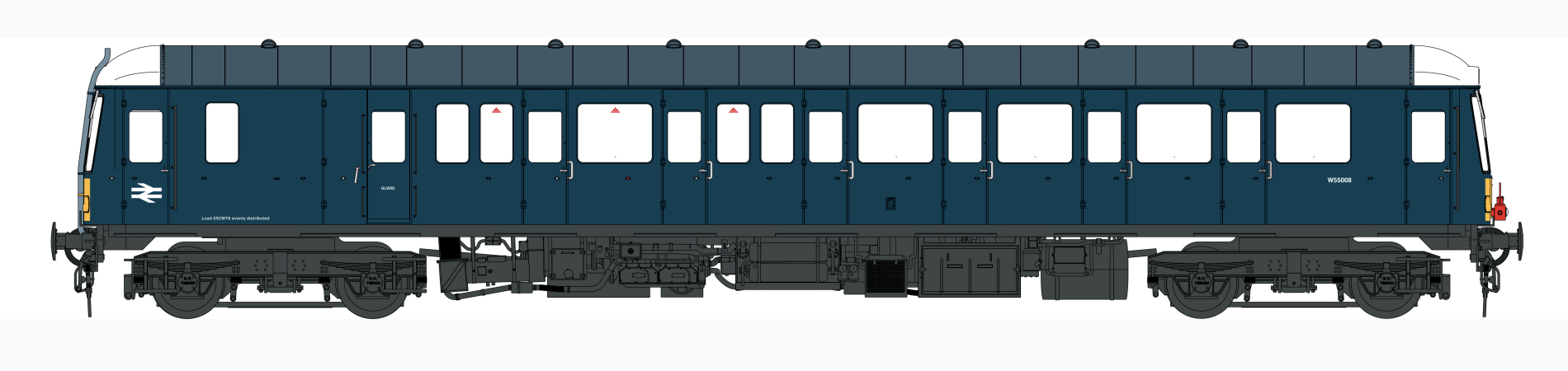
#1263 BR Blue Class 122 W55008 (Small Yellow Panels) DCC READY
Destinations: Stourbridge Junction/ Stourbridge Town
#1264 BR Blue Class 122 Sc55011 (Full Yellow Ends) DCC READY
Destinations: Inverness/Aberdeen
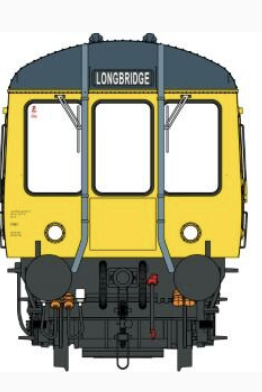
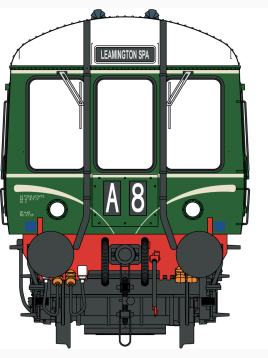
#1265 BR Blue/Grey Class 122 M55009 DCC READY
Destinations: Longbridge/Leamington Spa
#1266 Regional Railways Class 122 55012 DCC READY
Destinations: Newquay/Par
HELJAN TT 1:120 CLASS 55 ‘DELTIC’ – BATCH 1 GENERAL RELEASE
(Livery Artwork is not final and included as a basic reference)
#5552 BR Blue Class 55 55012 Crepello (White Cab Windows) DCC READY
RAILS OF SHEFFIELD EXCLUSIVE TT MODELS
#1260 BR Green Class 122 W55000 (Speed Whiskers) DCC READY – EXCLUSIVE TO RAILS OF SHEFFIELD
Destinations: Leamington Spa/Stratford-on-Avon
#5544 BR Green D9009 Alycidon (Small Yellow Panels) DCC READY – EXCLUSIVE TO RAILS OF SHEFFIELD
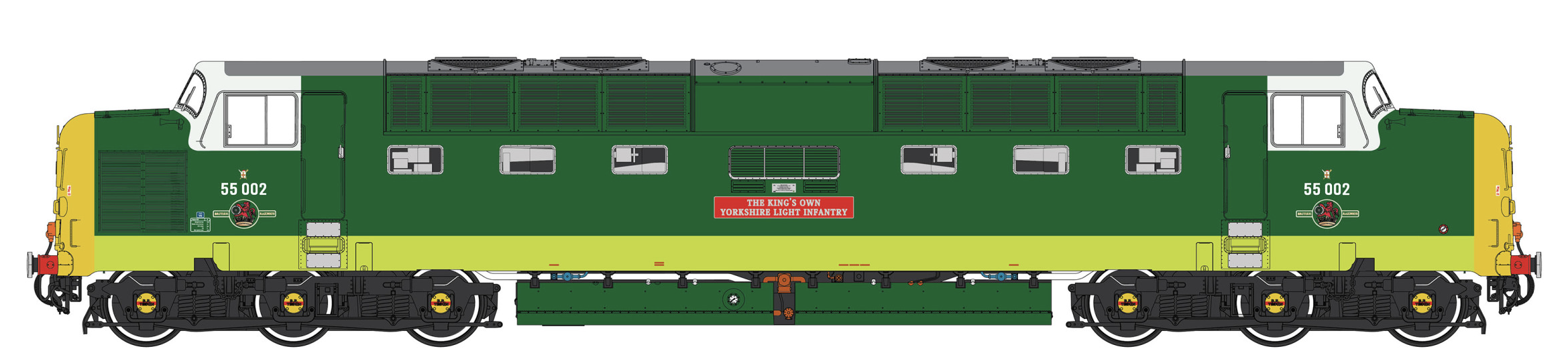
#5553 BR Green 55002 Kings Own Yorkshire Light Infantry (Full Yellow Ends) DCC READY – EXCLUSIVE TO RAILS OF SHEFFIELD
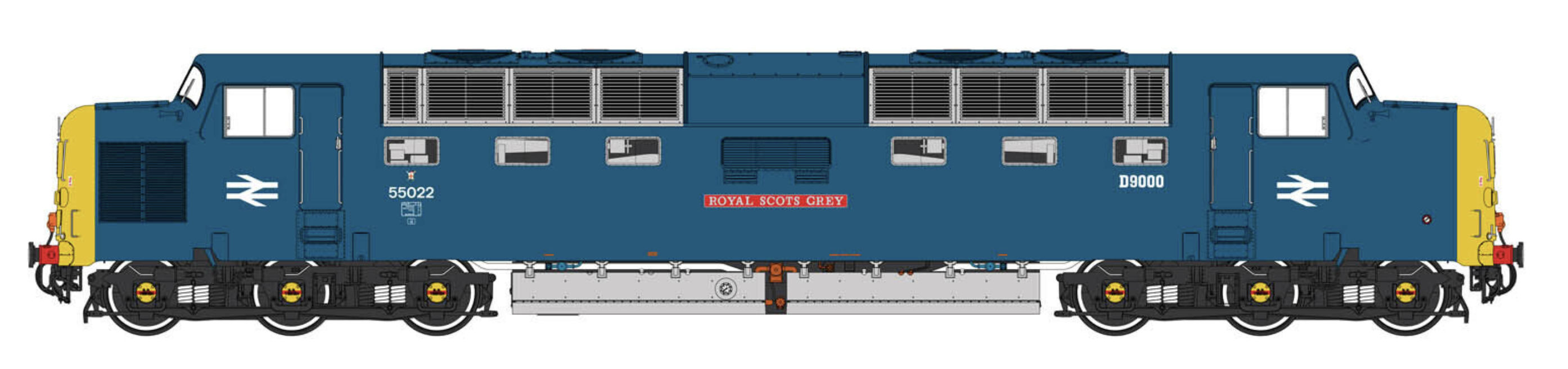
#5554 BR Blue 55022/D9000 Royal Scots Grey (Silver Grilles/Fuel Tanks) DCC READY – EXCLUSIVE TO RAILS OF SHEFFIELD
#5557 BR Green D9015 Tulyar (2025 Condition) DCC READY – EXCLUSIVE TO RAILS OF SHEFFIELD
#5558 BR Green D9016 Gordon Highlander (Full Yellow Ends) DCC READY – EXCLUSIVE TO RAILS OF SHEFFIELD
#5559 BR Blue 55019 Royal Highland FusilierDCC READY – EXCLUSIVE TO RAILS OF SHEFFIELD
Suggested Retail Price (SRP) for all Class 122s and Class 55s is £189.99 each for advance orders placed before December 1st 2025, after which the SRP will rise to £199.99. Delivery of these exciting additions to our range is expected in Q1/Q2 2026.
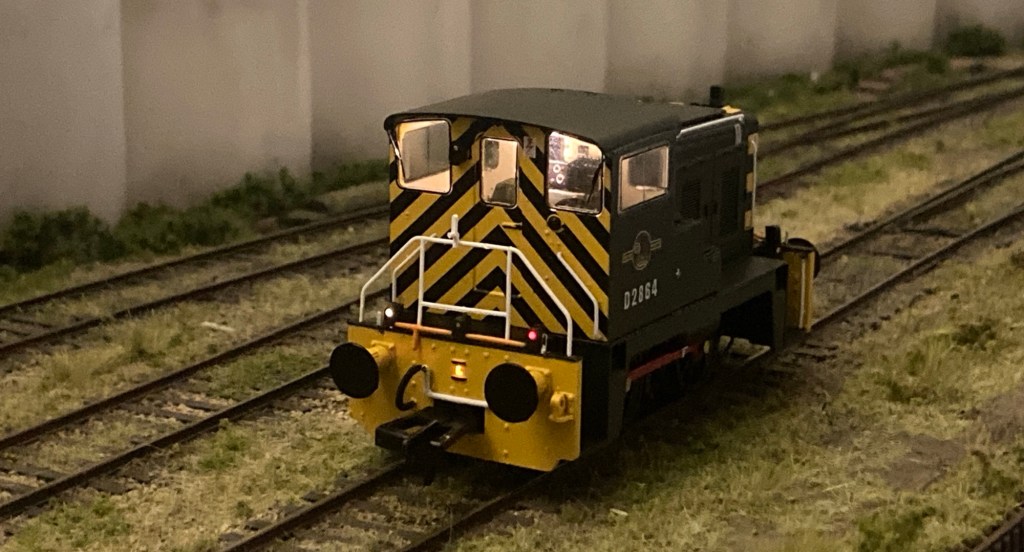
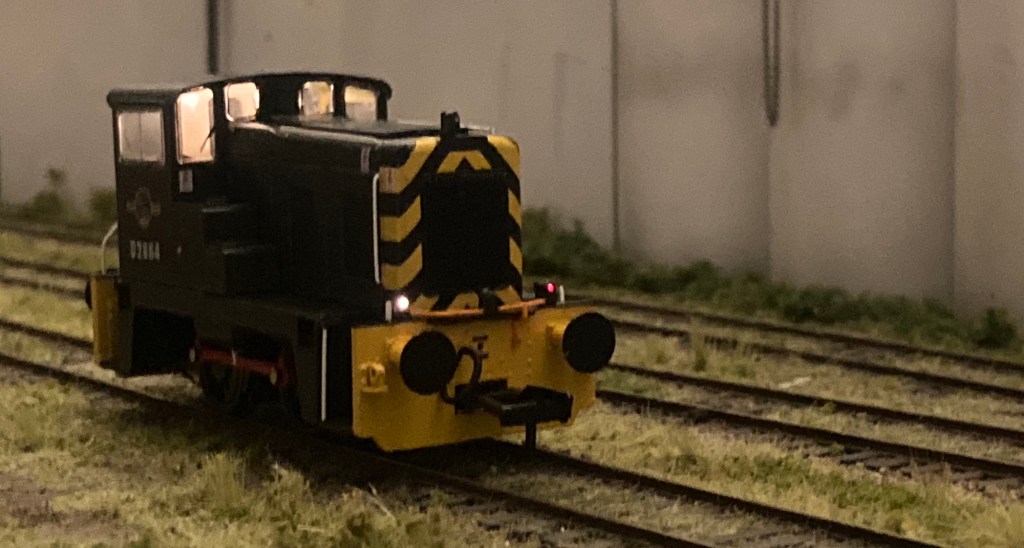
Heljan have a good record of producing interesting OO gauge diesel shunters and the 02 production sample seen here seamlessly fits into that range. The 02’s were made by the Yorkshire Engine Company of Sheffield as a batch of twenty for British Rail between1960 and 1961 based on an existing design, around another fifty or so were built specifically for industrial use. The BR locomotives were allocated to Midland Region and spent most of their lives in the industrial Northwest in the Liverpool and Manchester area.
Heljan Class 02
The model in for review is Catalogue number 2841 DCC ready, OO gauge. The basic specification include Next18 decoder interface, and interior and external lighting. The model weighs in at 122 grammes which is excellent of such a compact model. There is provision for DCC sound included too, with a speaker already fitted. Note that this being a pre-production model within the handbook there is a speaker mounting location identified on the underside of the cab roof. The packaging is the familiar sturdy carton, and internal foam surround with the model held inside a vacuum form ‘ice cube’ type cradle. No components had come loose in transit. Also included is a detail pack which includes etched maker name plate, 3 link couplings, and buffer beam blanking plates. Cab lighting in DC is switchable using a magnetic wand (also included). The instruction handbook is the familiar Heljan leaflet style showing how to remove the body, a parts diagram and historical outline of the class. as mentioned above the instructions suggest fitting an Iphone type speaker in the cab roof, however the speaker is fitted within the chassis, and only requires an appropriate sound chip. In an interesting move Heljan are simultaneously making this prototype in O gauge too which I feel will do well in that market too, both these types will be well suited to the small layout genre.
Heljan OO gauge BR Class 02
First impression often counts for me, and the Heljan 02 hits the mark immediately and doesn’t disappoint. It immediately looks in proportion, edges are well defined and thin, particularly the cab roof edges and the color is a good opaque satin finish. Detail fittings are all correctly fitted and square and no evidence of excess glue around them. There are no paint blemishes and the detail printing is legible and clear. The wheel tyre faces are painted black giving the wheels a pleasing uniformity, the brass crankpins do stand out a little but a touch of red paint will easily resolve that small inconsistency. The prototype over its many years of service remained pretty much unchanged. For the livery as supplied it appears that Heljan have all the variations correct on this model and cross checking my available drawing (OPC Pictorial Record of the Diesel Shunter), the dimensions are correct too. Barrow Hill Roundhouse assisted Heljan with their 02 for data collation and research.
Heljan OO gauge BR Class 02
The weight of the model is immediately apparent, dropping it on the scale it records a healthy 122 grammes. The running plate and chassis are primarily metal castings with the bonnet and cab plastic. The body has some handrails and door openers moulded in place, but the main bonnet top and rear cab and platform handrails are separate components. The gentle slope of the bonnet profile is well captured. Window glazing is particularly good with individual panes rather than the often seen prismatic mouldings, or as Heljan have done in the past a transparent overpainted cab. Blackened very fine etched windscreen wipers are fitted giving a very effective appearance to the cab. Interior details are visible and individually painted, removing the body will allow access to fit a crew if so desired.
Heljan OO gauge BR Class 02 cab detail
For me the cab glazing is excellent overall but on this sample the frames of the cab side windows had some clear sections. However this is really nit picking and a fine brush with paint will easily resolve that, and far better than it being painted too heavily. At the cab end of the locomotive there are handrails fitted to the rear platform. The model will need a some careful handling around these delicate but distinctive railings. The packaging is designed to give adequate clearance for them. Individual handrails and lamp irons are fitted too with illuminated lamps on the top of the running plate. Individual filler hatches are separate components as are the buffer beam lifting rings.
Heljan OO gauge BR Class 02
Bufferbeam detail is good with vacuum pipes fitted and non sprung buffers, included in the detail pack are three link couplings. I’d like to have seen sprung buffers however the practicality of fitting them with the prototypes buffer beam and step configuration makes that impractical. One of the buffers on the rear platform of this sample is slightly misaligned, but is liveable with.
Body Removal
Heljan OO gauge BR Class 02
Body removal is straightforward with just three screws required to remove the body for chip fitting or any maintenance. There are two screw underneath the fuel tanks accessed from underneath. The top bonnet lamp hides the third fixing. This is an interference fit that presses into a moulded recess hiding a screw underneath. It’s a component that will need careful handling as it is a very small component.
Bonnet fixing screw locationStandard Next 18 DCC fitting
Cab lighting is controlled by either the supplied magnetic wand or by DCC functions. The DCC fitting is a Next18 configuration. For testing I used a Dapol Imperium 2 six function decoder. This was an easy fix and gave good plug and play results with no fine tuning of functions required, the controller used was an NCE powercab.
The lighting functions are straightforward, cab and/or shunting lights can be selected in DCC. In DC mode just the cab is illuminated, and this can be switched off with the magnetic wand.
Chassis
The split of the body and the chassis is a logical and straightforward one. The body clips onto the running plate and there are no gaps. If fitting a stay alive there may be some challenges fitting one under the bonnet, due to the lack of space. The cab area is open so that may provide an easy option to fit any stay alive required.
So having made good impression straight out of the box the first thing I do is try it on a test track or rollers using a Gaugemaster Combi controller. The chassis runs very quietly and smoothly, and is of rigid construction. The motor is a coreless type with a fitted flywheel driving onto the rear axle. The drive mechanism is hidden and doesn’t intrude into the cab area, another example of the discrete small motor mechanisms we see in today’s models.
The metal chassis block is of split chassis construction with pickup collection through phosphor bronze axle bearings. There is some lateral movement on the axles and the brake shoes are in line with the wheel treads. I’ve not disassembled the chassis to assess EM/P4 capability, but there appears to be sufficient clearance behind the chassis air tanks, brake shoes will require adjusting. The gear train is only fitted to the rear driving axle. For me this is a sound decision as there’s no binding or cogging with this chassis on the gradients with or without loads. The phosphor bronze pickup collars are very effective for this split chassis design. The test track used has a good deal of uneven track and poor joints which usually find any weak spot with a traditional pick up strip bearing on wheel treads or tyres, this model was not troubled by any of the track it was tested on.
Weighing in at 122 grammes there’s good weight for reasonable length trains for such a compact model. I test any RTR releases by using a simple 3 degree slope using Woodland Scenics preformed inclines under my test track, which uses Peco Code 75 Bullhead track. This isn’t fixed down so effectively represents ‘poorly’ laid track. The model under test pulled and pushed from standing starts 325 grammes, using my test wagon and car weights. However, putting four Bachmann MK1 BG’s together weighing 500grammes it started those with some slipping, so there’s a very creditable performance for such a diminutive locomotive. Its good performance has been consistent on five different track types. With Peco Cd75 Streamline in both flat bottom and Bullhead types, and Peco set track there were no issues apart from occasionally stopping on the Bullhead large radius V crossing. Using it on Kato uni track points and Micro engineering points the locomotive does stop on the V crossings. I must emphasis that this isn’t a problem with Heljan’s 02, this is due to the length of the ‘dead’ sections of these V crossings on this type of track, combined with the short wheelbase. Both types of track are uncommon in UK hobby use. The wheelbase vs ‘dead frog’ crossings compare to Pecket/Sentinel/Hawthorn Leslie models from other manufacturers, they all experience similar ‘problems’. The solution to this is primarily to have electrically live point crossings and good track laying, especially if using such short wheelbase locomotives. If using DCC a ‘stay alive’ will minimise any stalling too.
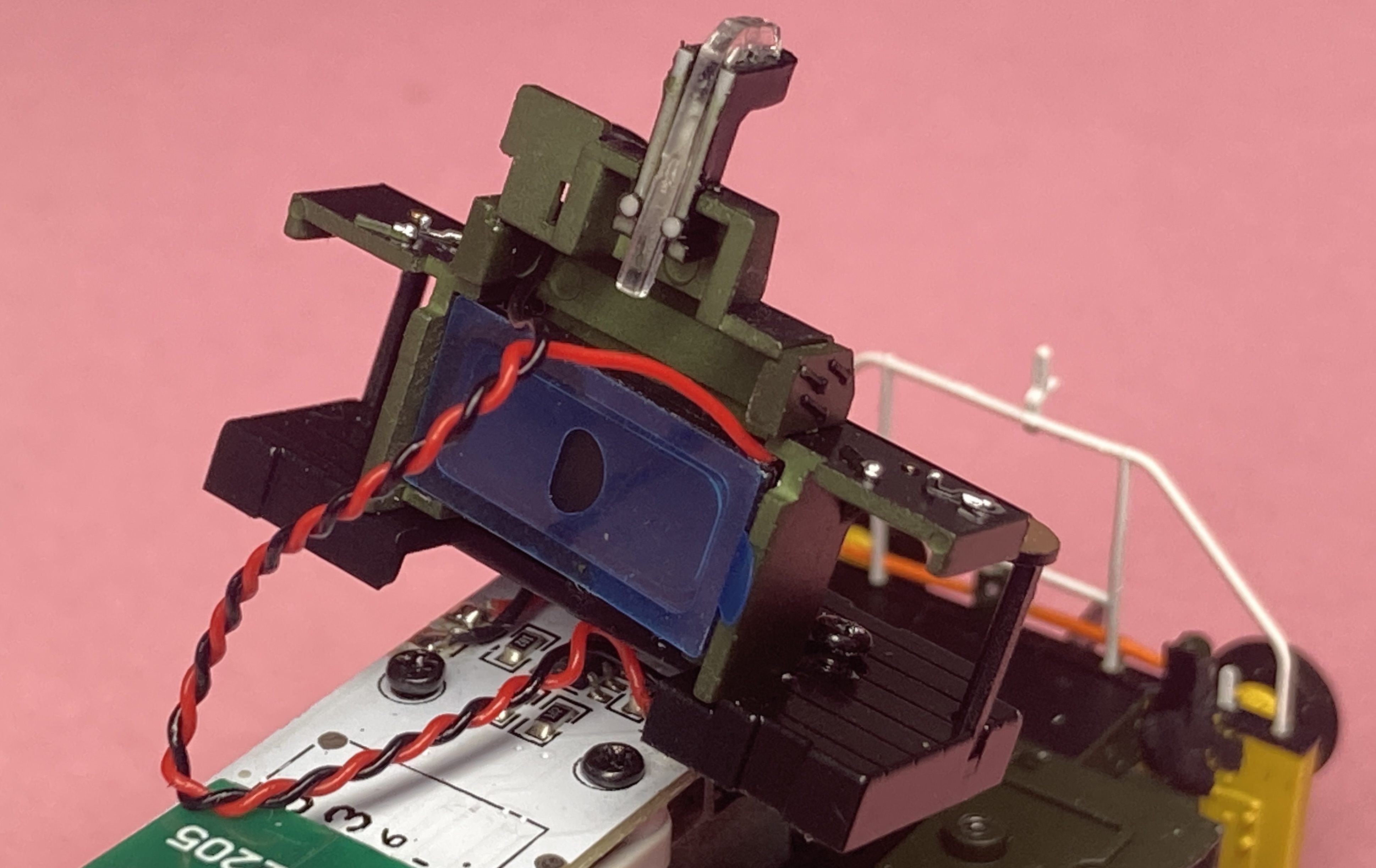
DCC speaker fitting Heljan 02
As mentioned in the introduction the model tested is a final engineering sample. The instructions make mention of the user fitting a sound speaker into the cab roof. However there is a fitted speaker included, the instruction pamphlet predating this final production modification. It’s an Iphone type speaker and is very ingeniously fitted behind the drivers console as shown above, so you don’t need to buy one with the locomotive if sound is your thing. Being the follow on shunter release after the Model Rail limited edition Class 11, the 02 keeps the same standards and possibly with the sublime running qualities for a rigid chassis 0-4-0, exceeds them. The opportunities for D&E based micro layouts abound with this release particularly with its longevity in industrial use, and I think it’s likely to be popular in both scales.
Heljan LHS, Craftsman RHS
Overall then, a very competent and pleasing representation of the 02, to a high standard of finish and detail. The price at £170 in spring 2025 I feel is reasonable for a model of this quality, if you were to locate either of the DJH or Craftsman kits the cost is unlikely to be significantly cheaper, for a product thats not as good, obviously bearing in mind both kits are of early 1980’s vintage. Having built the Craftsman kit, (on the right, above) I much prefer the Heljan version. You often see comments that having ‘made’ something, a kit for example, that the kit build outranks the RTR product because someone has made it. For me that isn’t a factor, this Heljan model is well worth the outlay, and if you want a shunter that packs a punch as well as looks good, this model is well worth considering.
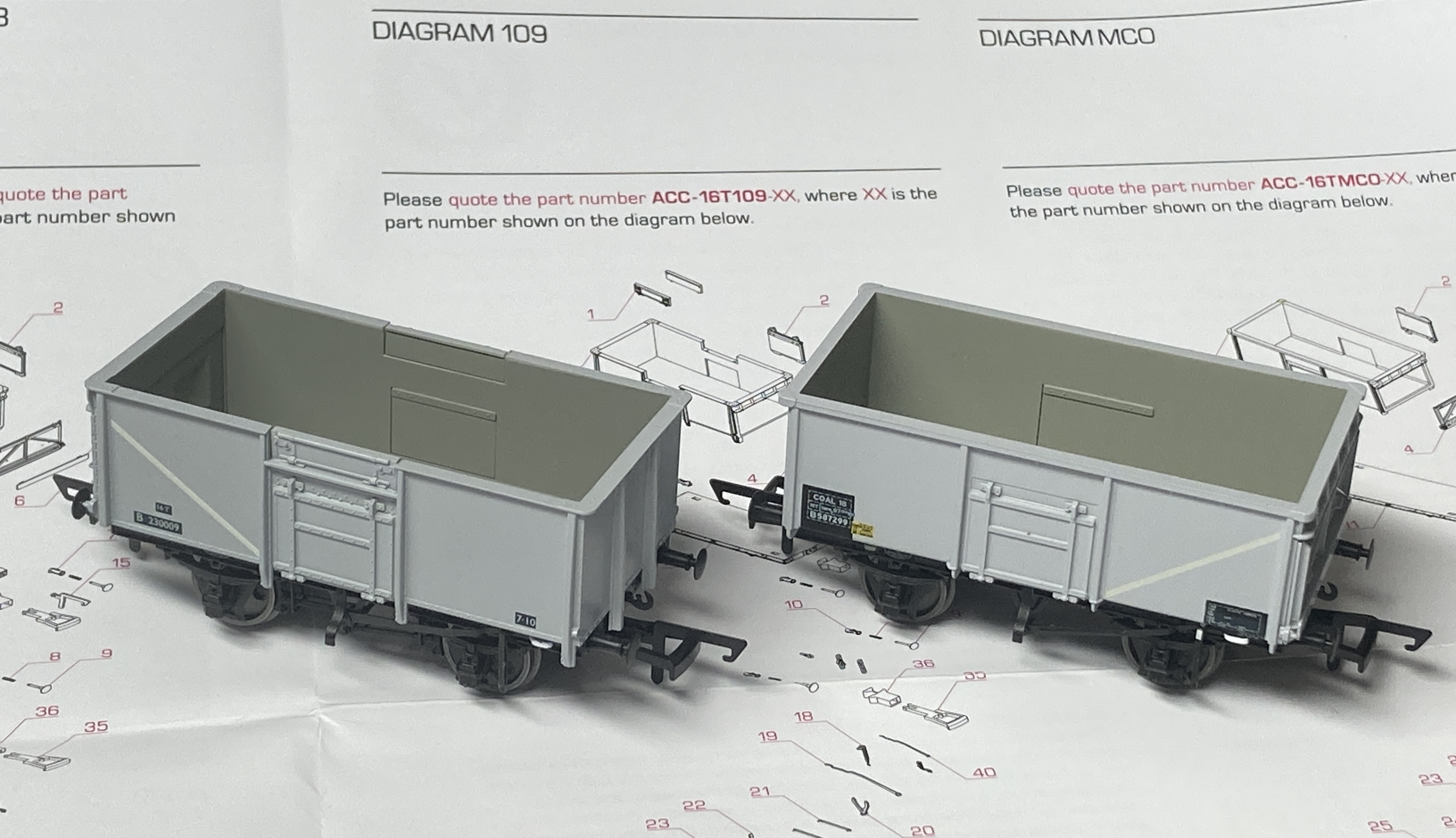
Into the man cave this past week or two Accurascale’s 16Ton minerals have rattled across the doorstep. Two varieties have arrived a set of Diagram 108 re-body, and a set of Diagram 109 riveted body vehicles.
Accurascale ACC1062 1/108 Re-Bodied 16T Mineral WagonAccurascale ACC1049 1/109 16T Mineral Wagon
They are packaged in the Accurascale house style of a classy sturdy carton and vacuum formed trays, both sets of mine had no faulty or loose components. Within the carton is an information leaflet and spare sets of couplings including three link chains. As with all the previous Accurascale releases that have arrived the immediate appearance and feel is one of quality.
In Accurascales information leaflet for these 16 Ton mineral wagons they pose the tollowing thought: Mundane? Certainly. Boring? Possibly? But thats the thing when an object becomes familiar, its demise is not noted until it has gone.. I can relate to that, I used to commute into Kings Cross every day, how I wish I’d taken more pictures of the 313’s 312’s and 317’s and just the infrastructure that now is long gone. That very much sums up this prototype, with 221,123 examples built they were everywhere. Look at an image of a British Rail era goods siding from the late 1950’s through to the late 1970’s there’s a good chance a 16T mineral will be in the mix. The packs ACC1049 J, and ACC1062 O I’ve got in the man cave are different to those we have seen supplied in ready to run format previously. The well regarded Bachmann model, introduced in the early 2000’s has always represented a welded construction wagon, the most common body type produced under diagram 1/108. The wagons here represent the diagram 1/108 rebodied wagon and the 1/109 design which was a riveted construction, and neither have been available before in 4mm scale ready to run models.
Doing the old school thing of taking a measuring stick to the models they match published data in the books illustrated above. The appearance is excellent for both types they capture the look of these wagons very well. The diagram 109 is not quite as good as the rebody version due to an error that was unfortunately not sighted with the EP’s, but a bit more on that later, stuff happens!
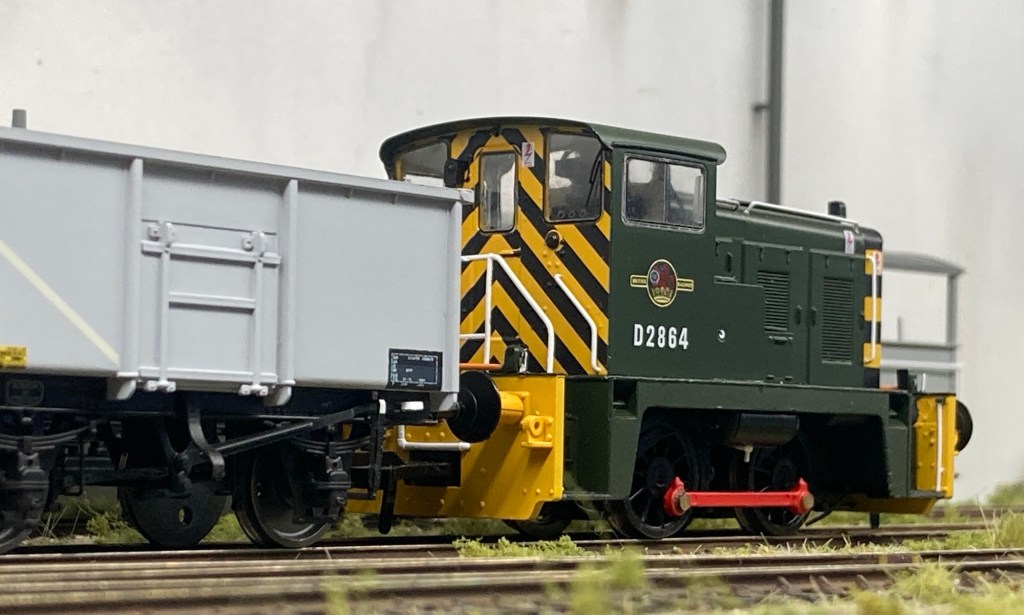
It’s probably a good time to tip a nod of acknowledgment to the venerable Bachmann 16 Ton mineral wagon (above), that has served us so well since the early 2000’s, a brilliant development at the time, immediately knocking back the over length wheelbase and relatively coarse models of the era, and rapidly selling quickly with each production run. Unsurprisingly there were comments regarding prototype wagon duplication when Accurascale announced the 16T mineral family, was it worth it? Well here’s a spoiler, in a word yes, but there’s no need to throw the Bachmann varieties out, they’re still worth holding onto. Anyway, 3,2,1, we’re back in the room.
ChassisConstruction
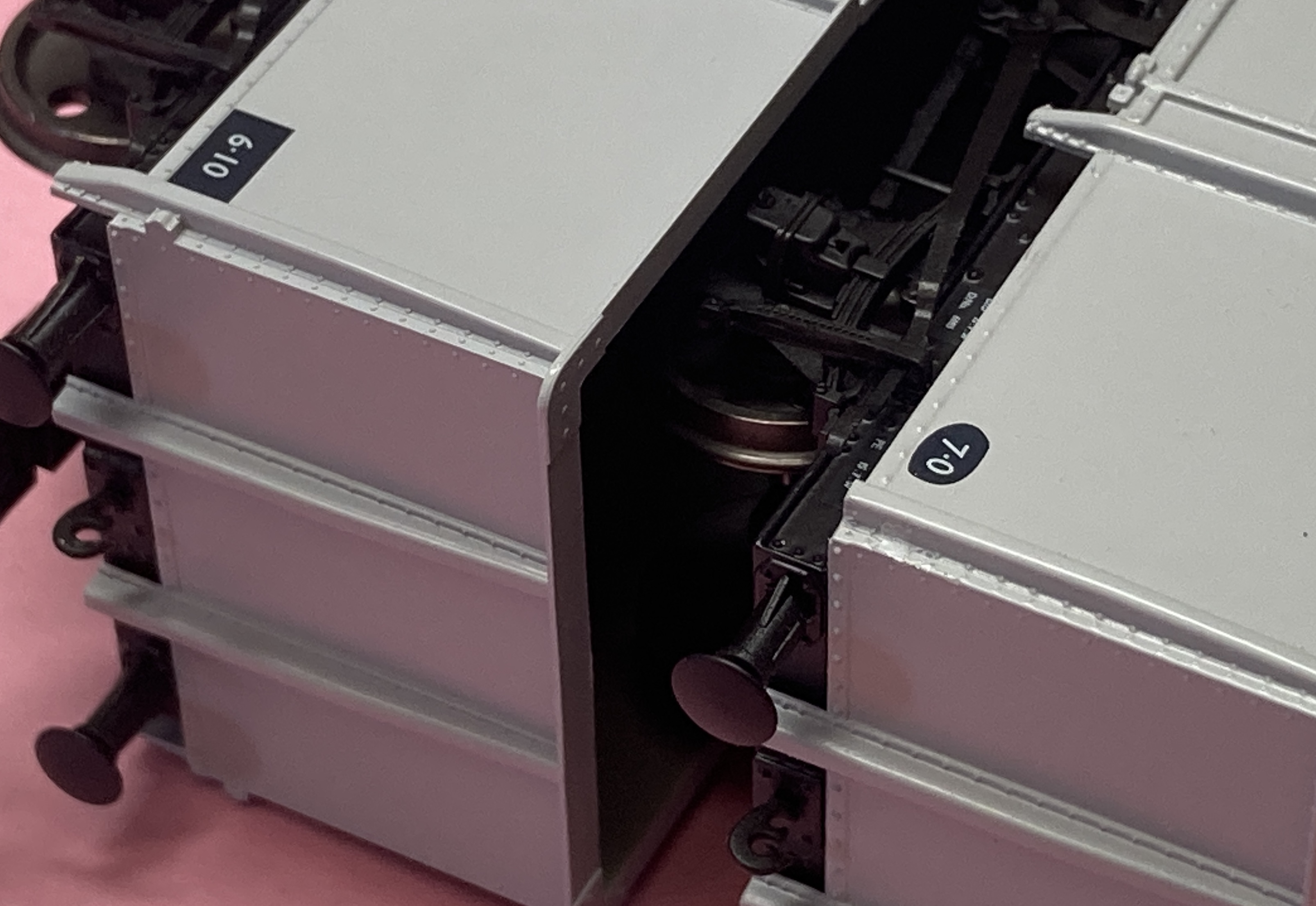
The model is quite different in its construction to other ‘simple’ open RTR wagons. It differs principally in the chassis is metal and in this first tranche of releases looks to be specific to the unfitted versions. There are many separate detail and functional pieces to these wagons with roughly 40 or so components to each wagon varying on body and door type, roughly double the number in a Bachmann version. As the chassis is a casting, there is good evenly distributed weight across the chassis. This chassis is common to both types under review here.
NEM coupling pockets sit in an integral chassis mount which is hidden behind the wheels from most viewing distances. if you use three links and want an unobstructed view between the wheel end on or at oblique angles this will need to be removed with a saw. For the moment for me, they are unobtrusive enough to leave in situ.
One of the features of these wagons is that there are extra couplings supplied with a socket extender. If you need to run with RTR tension lock couplings and want a bit of extra distance between the wagons the replacement couplings and extender are a simple plug and play fitting. Three link couplings are also supplied which easily slot into the hooks on the chassis, ideally for me this means no extra costs in buying chain links!
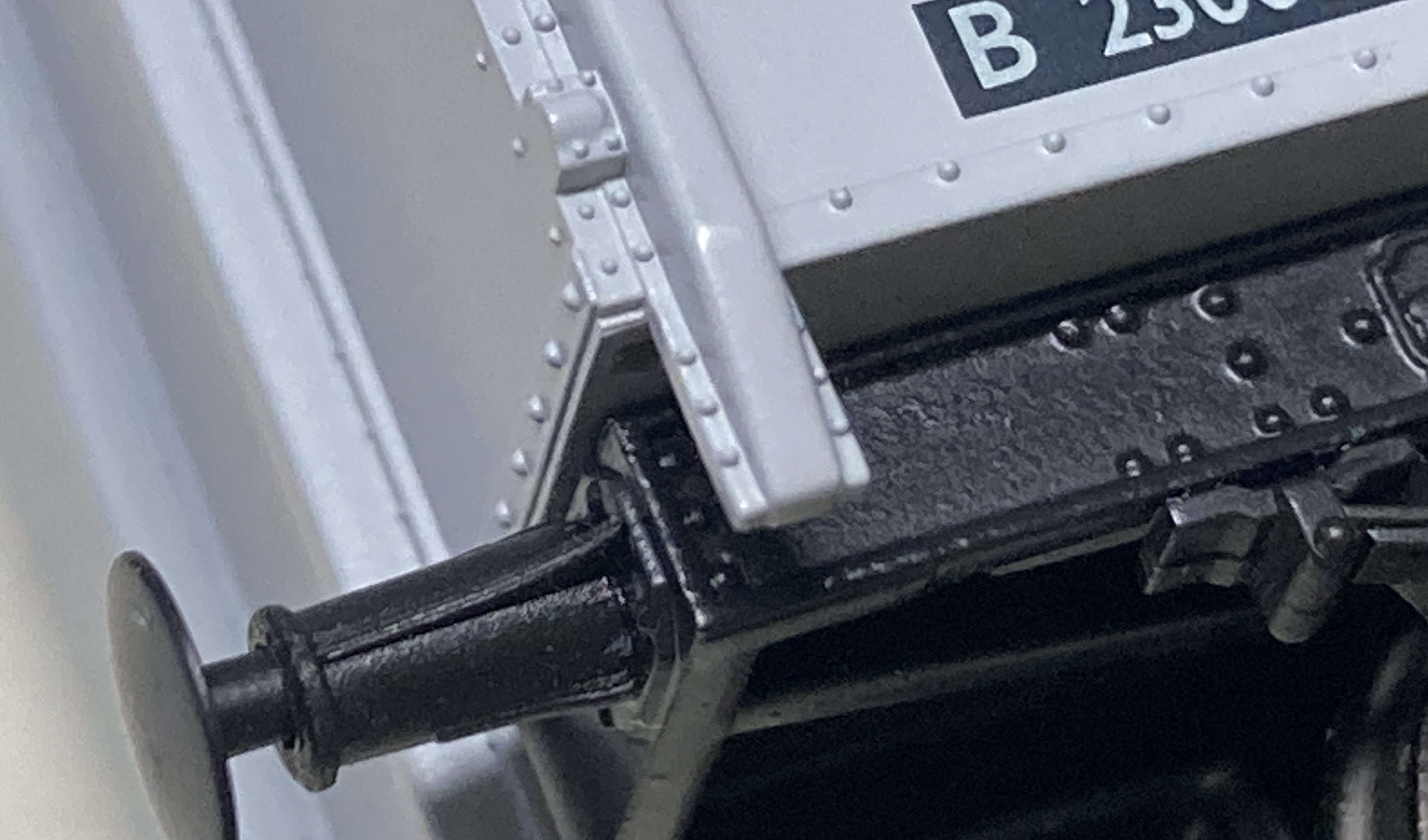
The outer ends ends of the chassis headstocks are part of the body mouldings (similar to Bachmann’s), and this allows the variations in headstocks to be included in the body moulding. Buffers are functional and very softly sprung. Varying types will be represented across the range, for these types on the desk the correct 1’6″ spindle RCH design is fitted.
All of the iron work which we previously have associated with solid mouldings on RTR wagons on these chassis’ are on another level with these wagons. Starting with the brake levers, these are incredibly fine plastic, fitting through the equally fine brake lever guards.
Two different brake levers are in evidence for the types on reviewing both exhibit the correct cam mechanism at the V hanger.
The push rods are separate bars including the adjustment pin location holes at the inner ends, and are enclosed by open push rod stirrups. Those features have previously only been seen on modified RTR, kit or scratch built vehicles. W irons are separate plastic fittings including brass pinpoint bearings, the W iron thickness is very thin giving a real look of plate steel. This gives excellent free running qualities. The axle box is integral with the W iron so undoubtedly there will be variations on the theme as the range expands..
The brake shoes have a very close tolerance to the wheel tread, the wheel profiles are RP25-110 and look far better than many others available. These wagons have been tested through Peco Cd75 Bullhead, streamline and Kato uni track with no problems at all, back to back measurements varied between 14.32mm and 14.47mm across the six wagons.
Looking at the W irons there is a peculiar look to the springs, giving the appearance of three leaves whereas the prototype has six. This isn’t particularly noticeable for me but does detract slightly from the rest of the brilliant under frame.
The closed end headstock needs the same work however this is more noticeable so 4mm U shaped plastic channel, once both in place they need painting black to match the rest of the under frame.
Dia 1/108 Rebody
Both the 108 and 109 diagram bodies are well moulded and meet published dimensions The top rails are a bit wide, but no doubt this is to ensure the shape is retained once moulded. The end door is a welded type door as appropriate and includes separate wire hand grab rails.
Diagram 108 above, Diagram 109 with top flap door below
The rebody version is an example of the very subtle differences that could be seen across the fleet. The new bodies had no top door flap, and a curved tumblehome at the bottom of the sides. This curve was introduced to help prevent corrosion at the bottom edges of these wagons.
Bottom curved sides Diagram 108 re-body
This curve is quite visible as the side doesn’t have that crisp lower edge that the earlier versions have, and despite it being perhaps a couple of inches radius in real life it’s quite easy to see and hasn’t been reflected in an RTR model previously.
Diagram 1/109 Rivetted construction
Accurascale’s dia 1/109 represents the base forms of the common or garden British Rail standard mineral wagon, there were roughly 25,000 built so whilst as not as common as the dia 1/108 they were not uncommon.
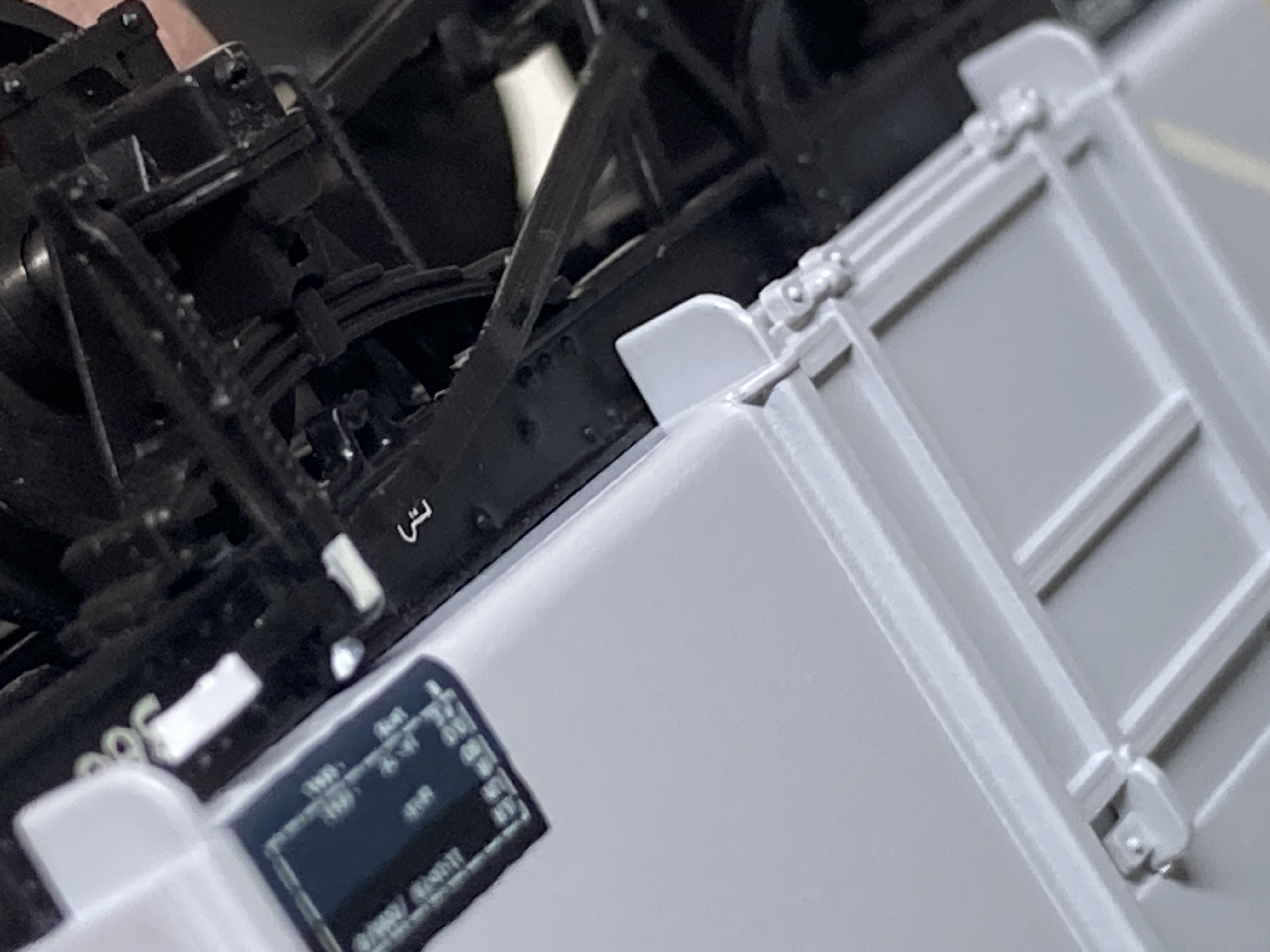
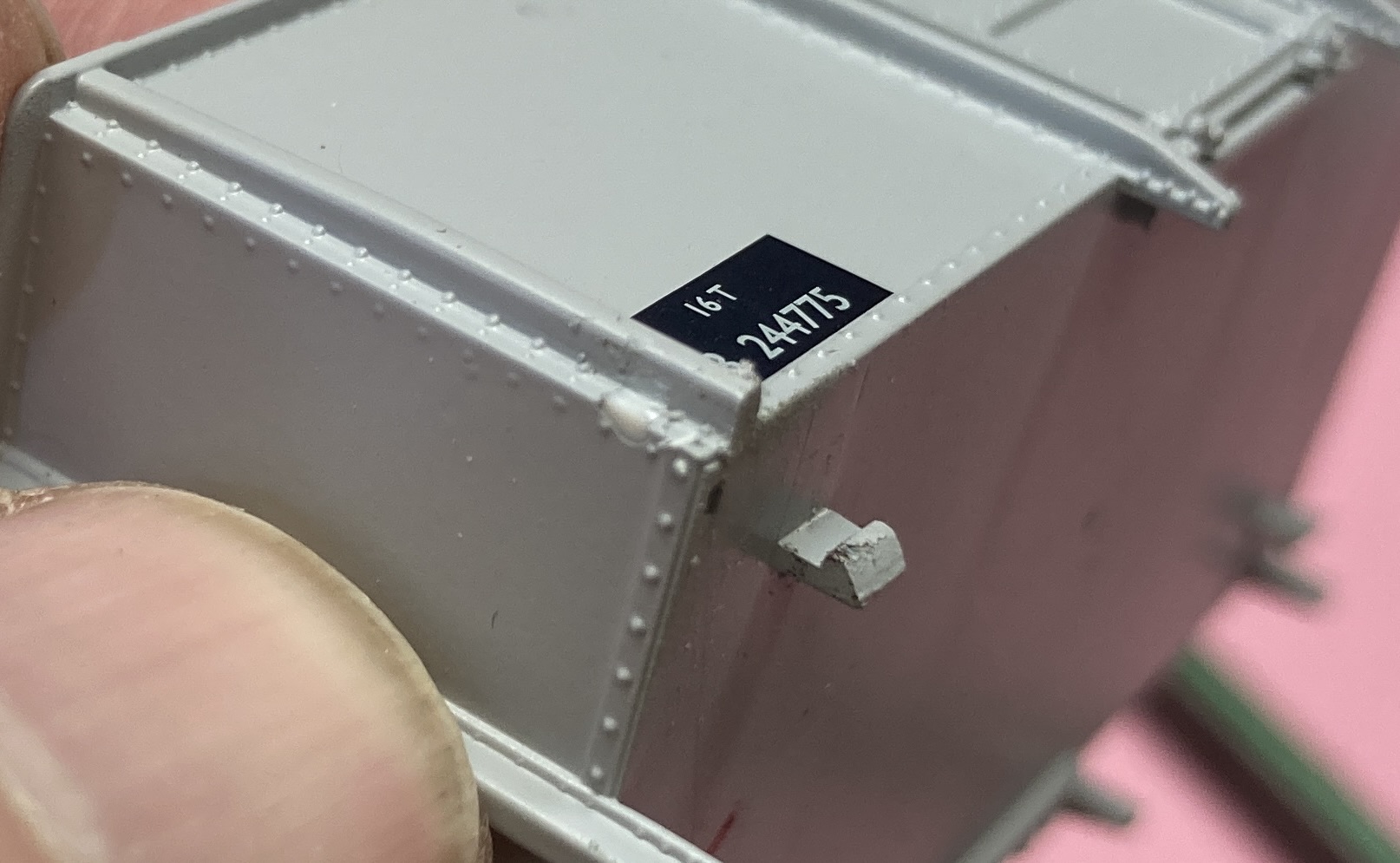
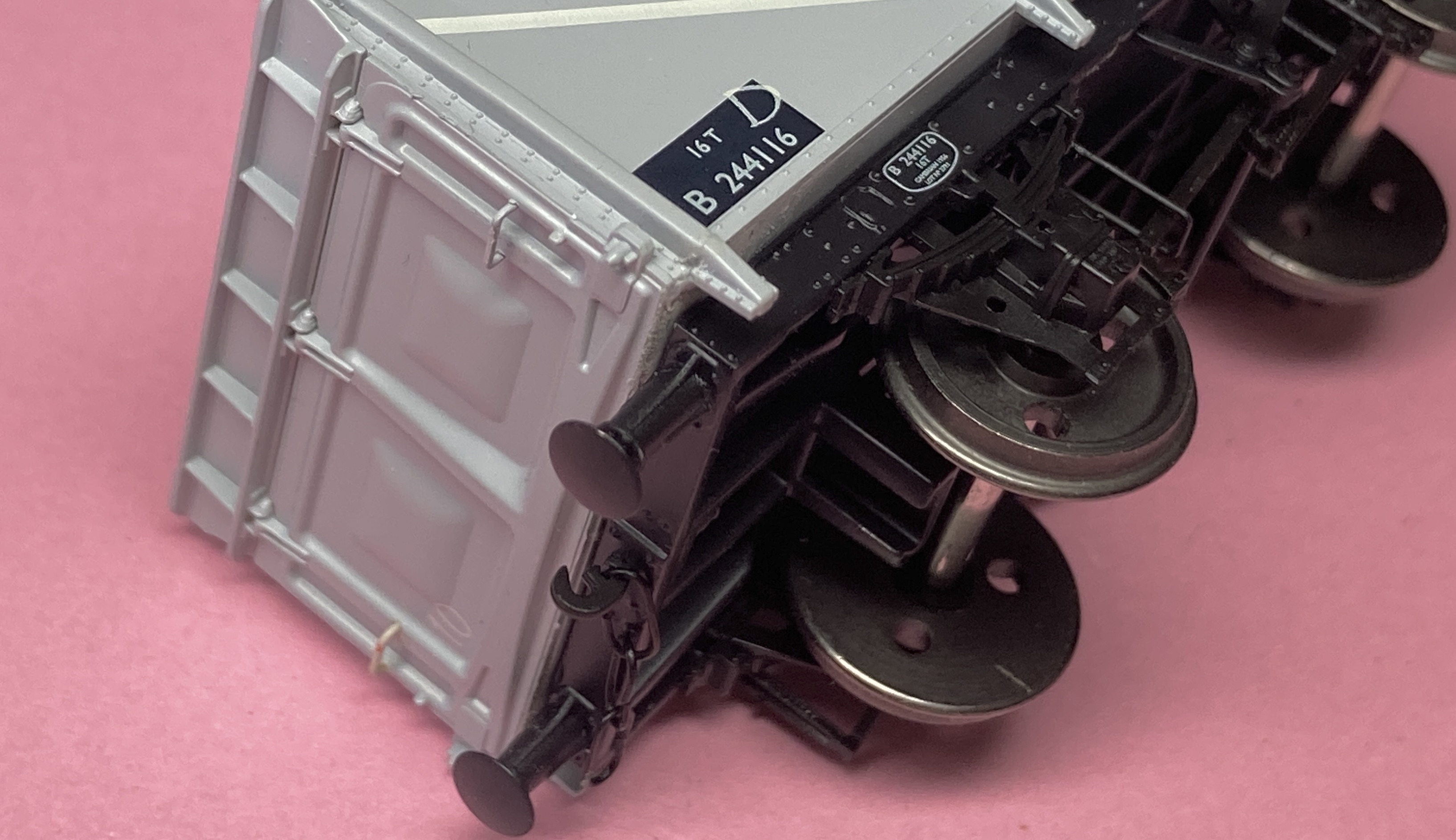
Whilst checking against references and simultaneously with comments on RMweb I noted an error on the body moulding of the 1/109. It appears that in the design and production process the end stanchions were swapped and unfortunately made it through to production. The fix for this error is easy and will be covered further down. The rest of the body is excellent the riveted construction is well captured with the steps and rivet heads subtly moulded and will undoubtedly ‘pop’ with weathering.
The Easy Fix
So to look at the stanchions and fix them is literally a ten minute job. At the door end the stantion is too short, and part of the door closing pin mechanism is missing, as seen below. The top picture shows the door end. The side stanchion of the wagon should extend below the body to the base of the sole bar, and there should be the housing for the door closing mechanism. This can be seen on the lower image which shows the opposite end of the wagon, where the stanchion has been transposed.
The chassis is held in place by four clips at each corner of the wagon. Gently press on these and the chassis releases from the body as a single assembly.
Wagon body base clipsCut through extended stanchion
The stanchion can be cut off with a knife or as I have done with a razor saw. The razor saw held flat against the base of the wagon will give a flat cut, the knife can leave an angle. Make sure you retain this removed section as it’ll be refined at the door end.
The three steps above show the modifications to the closed end of the wagon. The extra section of the door mechanism is cut away and the area is touched in later when detail painting. At the door end the section of stanchion is simply aligned with the existing stanchion and glued in place.
Thin CA glue works best as it also acts as a filler
I use thin viscosity cyanoacrylate type glue, this gives a fast drying time but also acts as a filler for any gap. The headstocks also need extending and with the door end I just use a small section of plastic strip. This is aligned to the end of the headstock and again fixed with CA glue. Ive not bothered with filling the section for the door mechanism, as the area will be weathered in due course.
Before headstock modificationHeadstock extension door end4mm U section channelBefore modification left hand model, after right hand modelBefore modification left hand model, after right hand model
The joint is easily masked with a coast of paint. To match this Accurascale colour I’ve mixed two Vallejo colours, 071.050 light grey and 071.119 White Grey. This gives an almost invisible join close up and certainly works at a normal viewing distance.
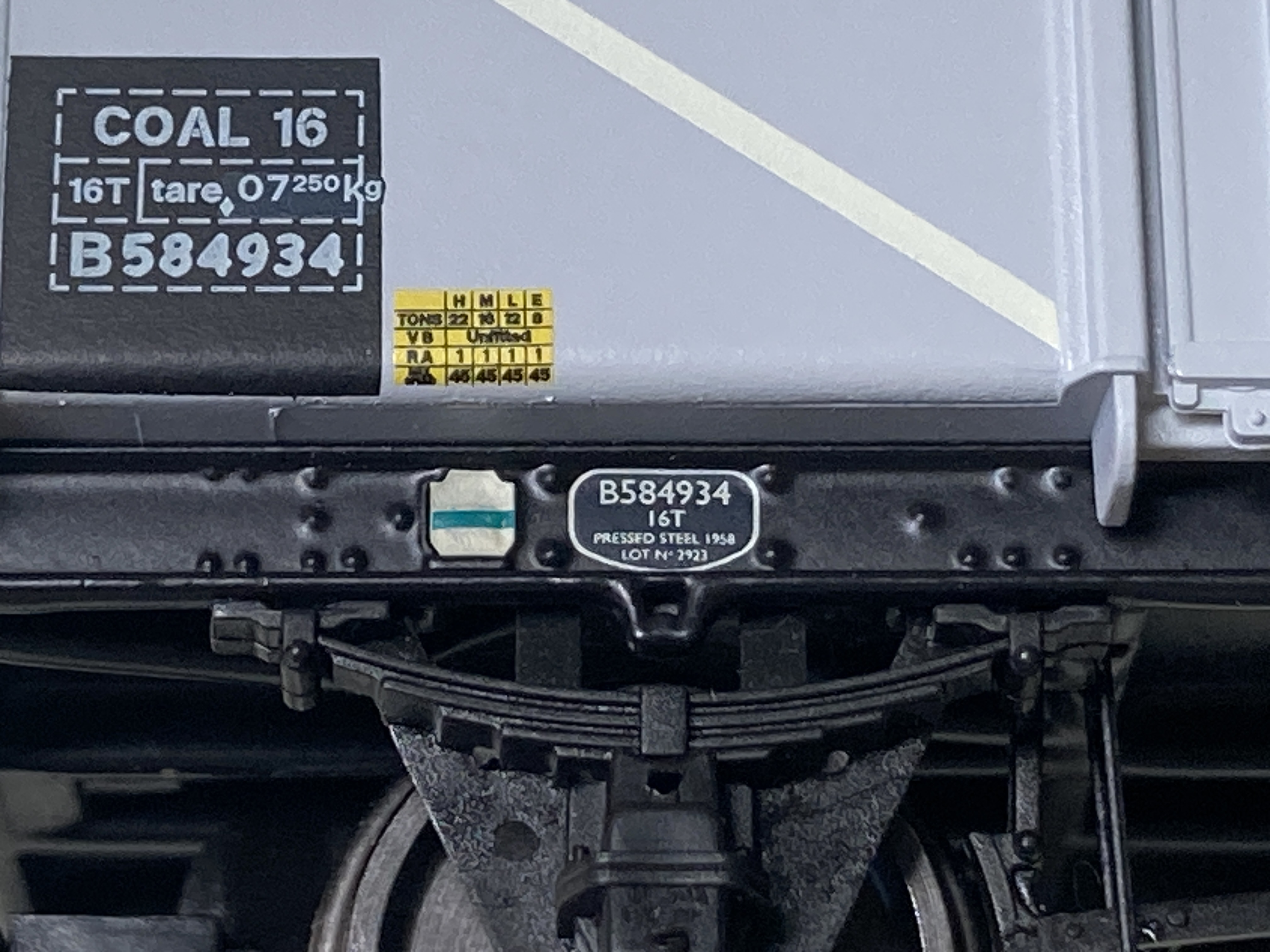
The liveries are well applied, the paint is opaque and doesn’t mask any of the fine detail of these wagons. Markings are also crisp and the numbering of the bodies matches those of the under frames. This includes the makers plate with the correct wagon builder legible for each respective number and the 108 has representations of wagon labels within the wagon label clips.
These wagons are sold in packs of three, at time of release at just under £75.00 per pack. For me this is very good value, they are without question the best representation in RTR format of the 16T mineral wagon. These are a ‘duplication’ in some respects of the excellent Bachmann wagon that has served us so well these past twenty years or so. However as with the two types reviewed here there are types we’ve not seen released before, and with real improvements at a competitive price. Regarding the tooling error it is very unfortunate, but with ten to fifteen minutes this error can be resolved. Accurascale are aware of it and have mentioned that any new run of the 1/109 the matter will be looked at, to assess if the moulds can be revised economically and technically to resolve the issue.
I’d argue that these aren’t boring wagons at all, They are excellent reproductions of one of the most common types of standard wagon. I have mixed them with Bachmann versions and the two different manufacturers complement each other really well. Does that mean that the improvements aren’t visible? Well no it doesn’t, but that reflects well on the older model which we know is very good. The thing for me is that if I now want to expand my 16T mineral wagon fleet, these will be the ‘go to’ source. As supplied they have everything I want, quality and just the three link chain supplied makes the difference for me, I don’t have to do anything with them, just enjoy them straight out of the box. Roughly a quarter of a million of these 16T mineral wagons of various diagrams were built by British Rail and its sub contractors. Will Accurascale end up selling a similar number!
A final thought occurs, these fit into the Accurascale “Powering Britain” range, with more steam types coming on line in their range how long before we see an earlier wooden body RCH type mineral to this standard? One that I hope is in their target sights…
A recent publication that immediately found its way to my book case is:
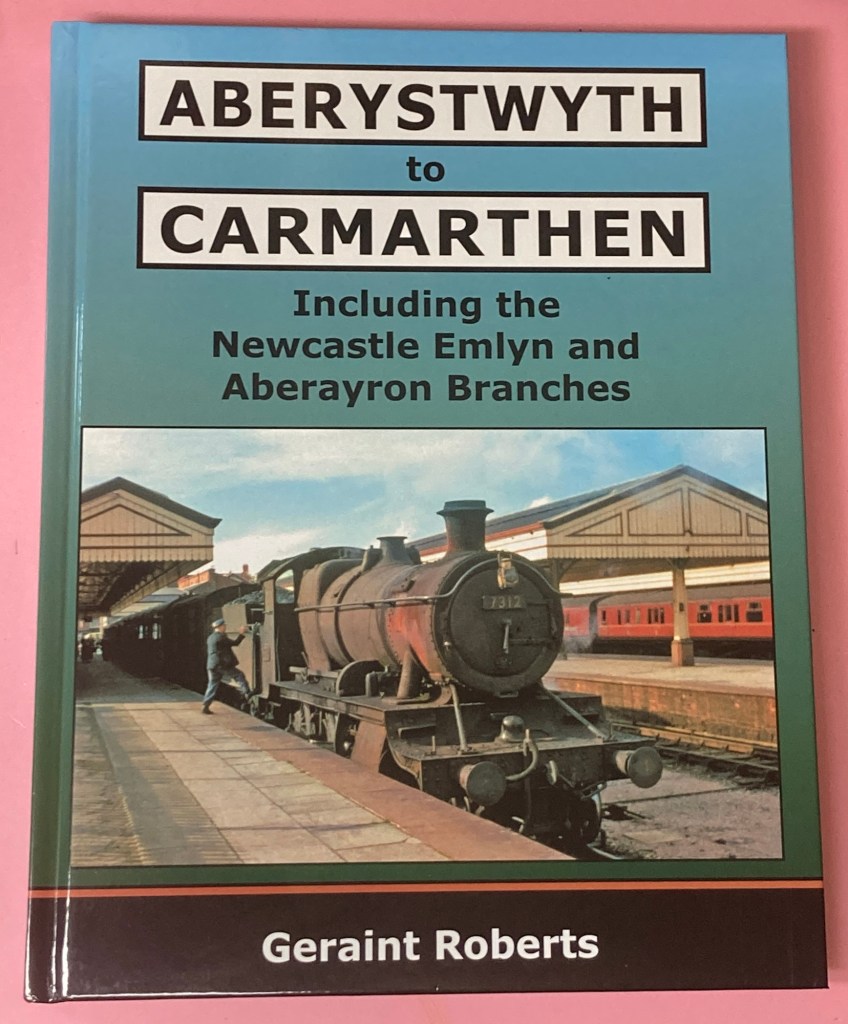
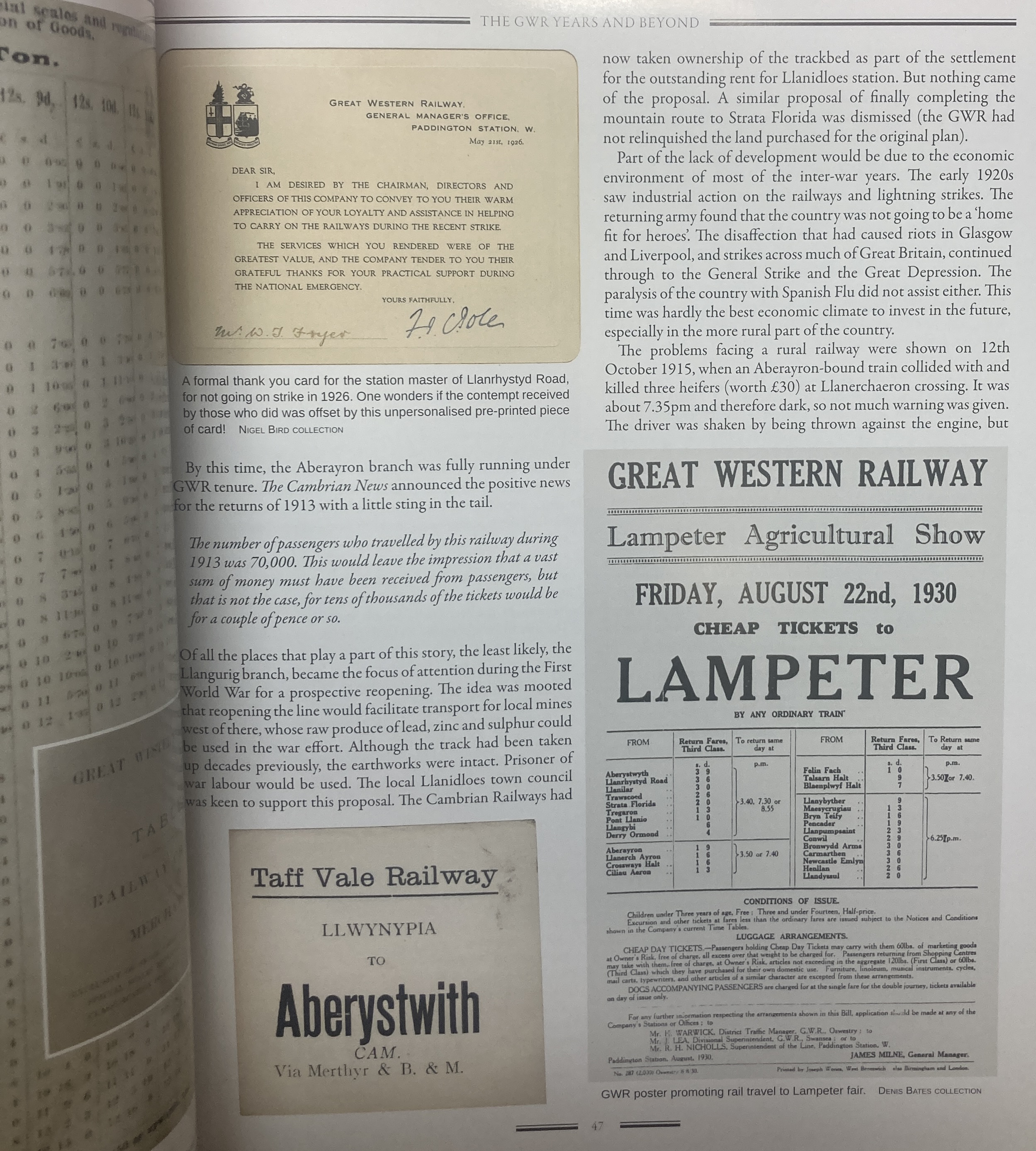
Aberystwyth to Carmarthen by Geraint Roberts. Published by the Lightmoor Press it weighs in with 304 pages and a price tag of £40.00. Put like that it sounds expensive, but if you’ve got other books Lightmoor like the Forest of Dean or Gloucestershire books this one wont disappoint. This area of the Cambrian Mountains and foothills of Wales has long held a place for me. As a young child family holidays were taken staying in Llandovery and then travelling around the area by car, four of us in a cramped Mini Traveller visiting locations such as the Abbey at Strata Florida, and seeing the construction of LLyn Brianne Dam.
Geraint Roberts isn’t a name familiar to railway enthusiasts. This is the first non fiction book by the author and covers the route from Aberystwyth to Carmarthen in West Wales. Within, it also covers the Newcastle Emlyn and Aberayron branch lines, both of which branch off (unsurprisingly) from this route.
A mix of three original companies that developed this line are covered in the first part of the book with their history, plans and hopes that this route would bring significant commercial benefits to the south west Cambrian region. As with many other railway projects across the uk this never came to pass. This section includes images of timetables and opening ceremonies, and continues into the Great Western era with subsequent closure under British Rail. The page layout in this first section to me is ok but doesn’t fire my imagination, however thats not to detract from the content which is interesting and well written.
The next section covers operating the line and includes images of early motive power, but this isn’t in the style of a Wild Swan type of coverage. Timetables for some sections are included in the earlier section. There isn’t a great deal of data regarding stock etc either but this is not for me a big issue, other similar volumes are no different in this respect.
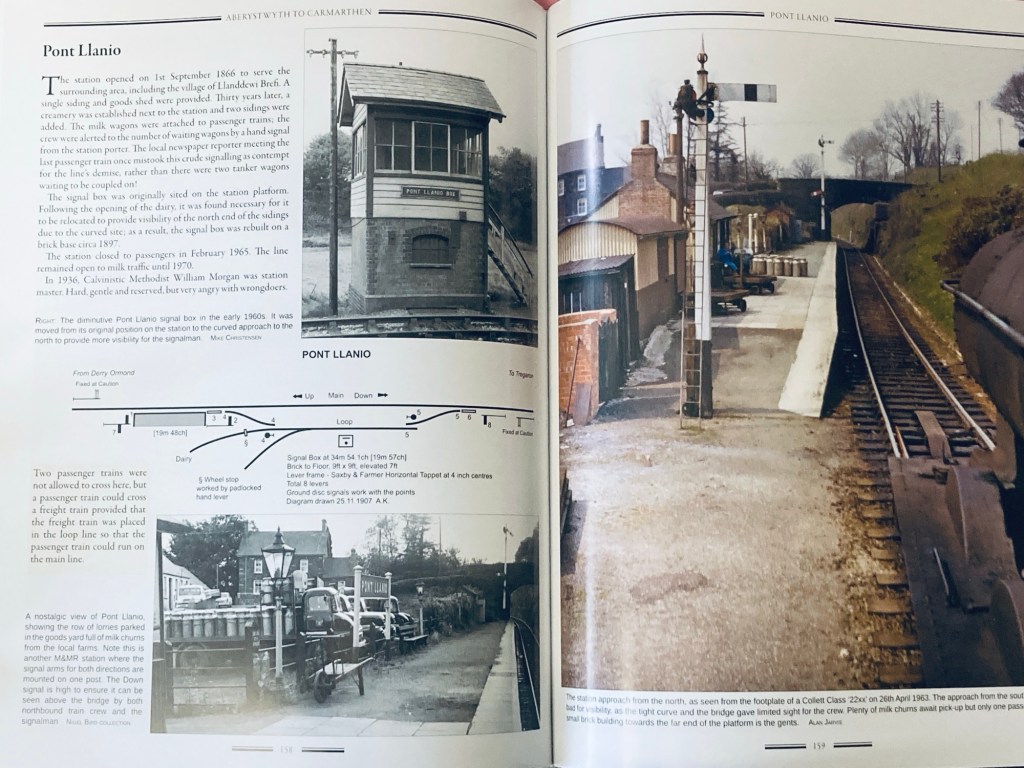
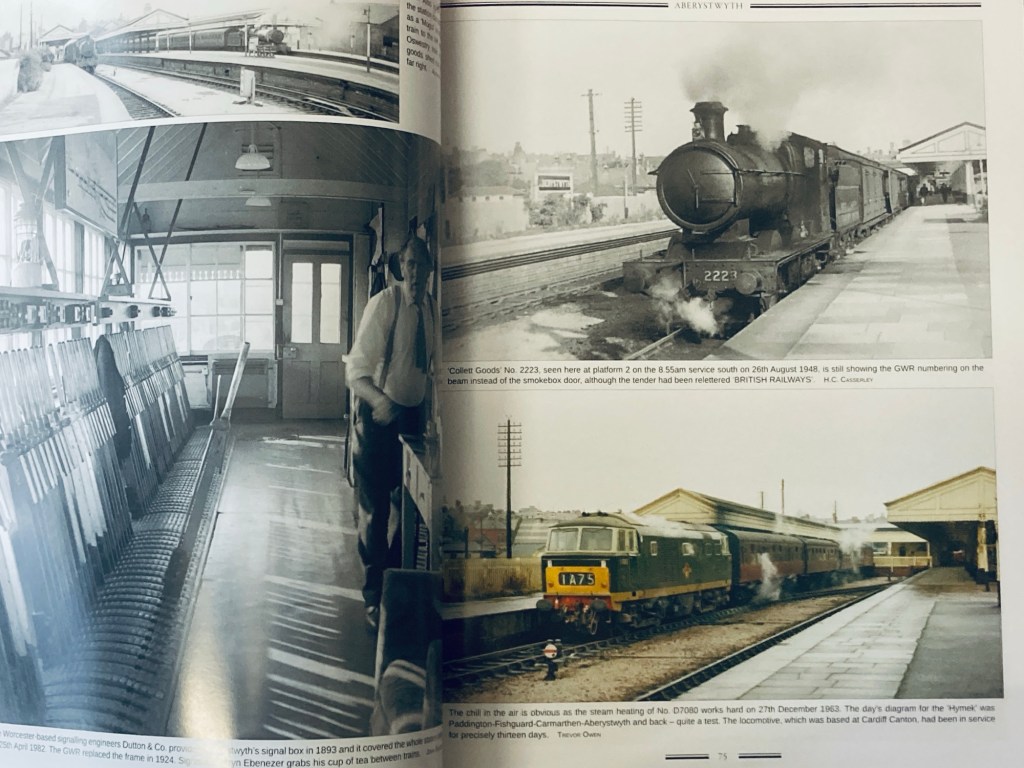
The best part of the book for me is the core section which looks briefly at each individual station and halt, with images primarily from the British Rail Steam era. The line is covered north to south and the images include station buildings and infrastructure both with and without trains. Most are good quality, but it must be remembered that this route was very much out of the way, and there isn’t anything like the coverage more popular and easier to access cross country routes of the day had. The mix of the images outlined above is excellent with both monochrome and colour images included. Also in this section are signal box track diagrams which are useful for anyone modelling the line. Whilst many of the locations have been covered in the OPC Great Western Stations volumes, this single book covers them with greater detail and variety of images. The Aberayron and Newcastle Emlyn branches have their own chapters at the rear of the volume. Following the style of the core of the book the branches are dealt with station by station and all appear to be previously unpublished which for me adds enormously to the value and practicality of this book.
If you’re modelling the steam era and this route is of interest to you, this book is probably a must have for a comprehensive and affordable coverage of the line. If your interest is biased towards the end of its life with Hymeks and 37’s on milk trains then theres not much included. For me this book is an excellent single source of reference.
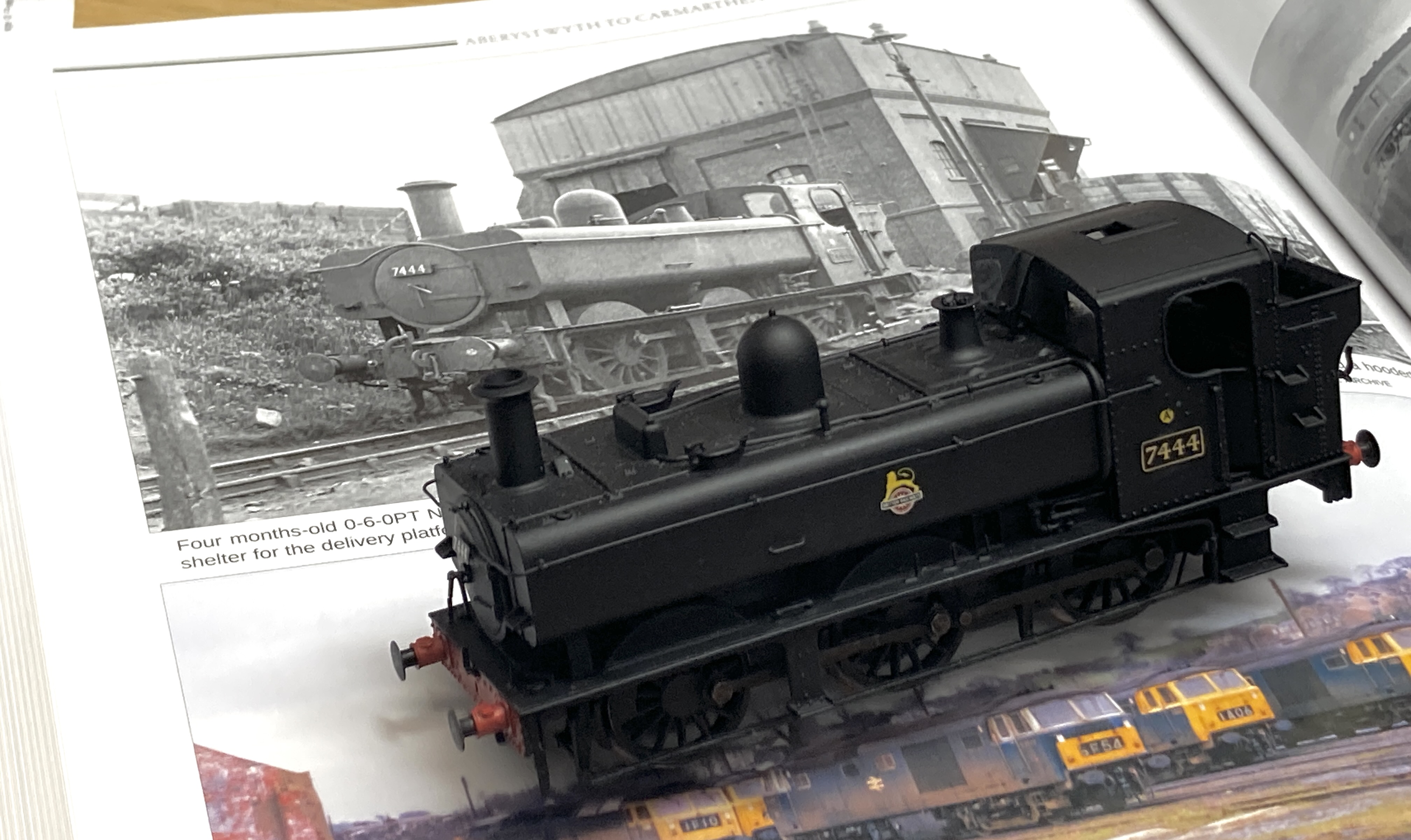
Within the images theres so much information in terms of locomotives and rolling stock that used the lines in the BR steam era. I found a surprise too in that one of the common engines on the line I’ve already modelled! Whats really nice is so few of the images are standard platform 3/4 views, there’s much of the environment included, emphasising the beauty and rural nature of the Cambrian foothills the line passed though. It being the authors first non fiction and specific railway book it’s a commendable effort. It’s a book I’ll cherish, and if you have an interest in the line, do take a look at it, it’ll probably end up in your library too.





































 Albion Yard
You must be logged in to post a comment.