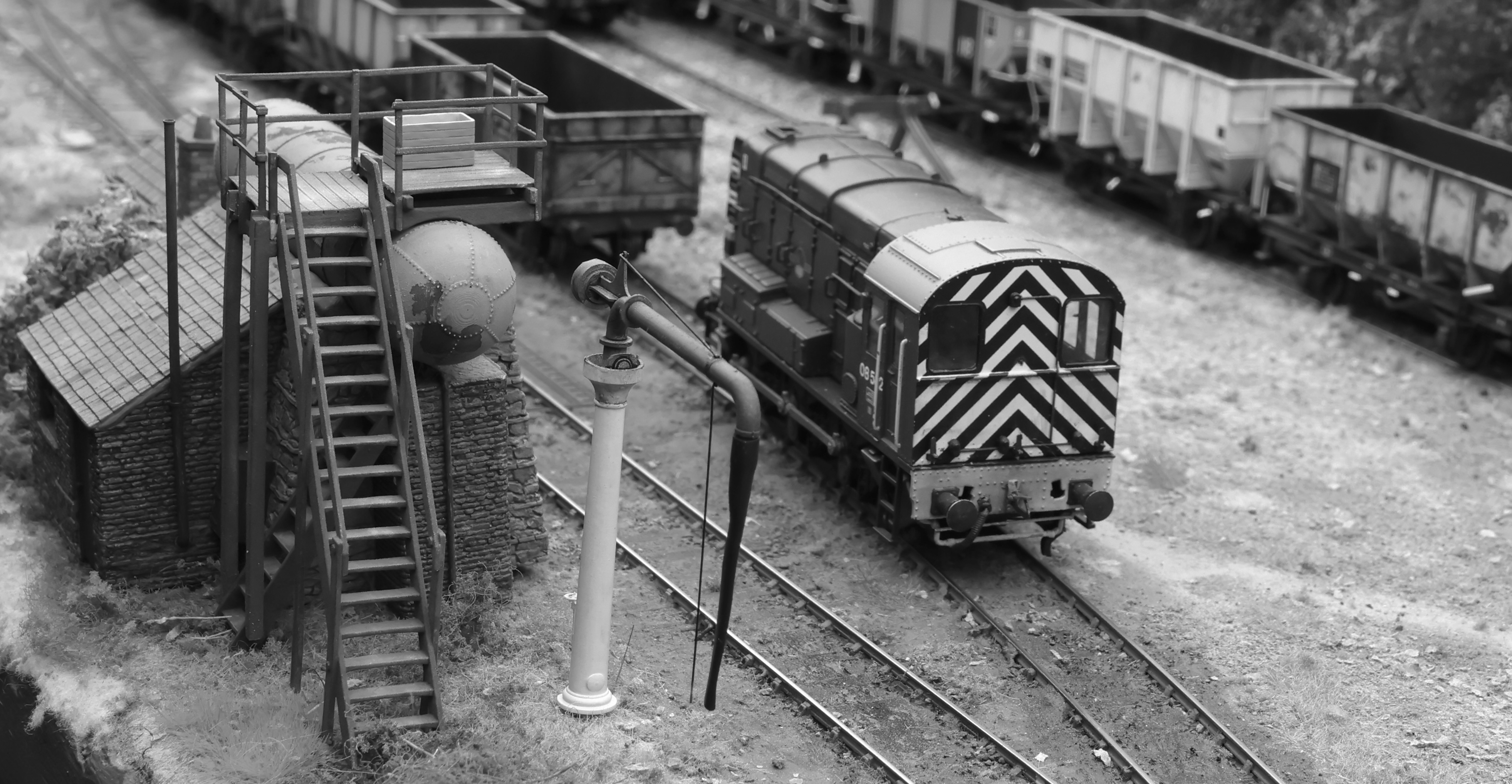
This time next Saturday I’ll hopefully be anticipating a cool one, it being the NEC model railway show hosted by Warners Publications. I’ll be taking Shelfie 2 there, Guyzance disposal point, and I’m thinking its only its fourth exhibition appearance, it having been to the Define show, Larkrail and Railex. Thats not really a surprise as I’m not a regular exhibitor, work life often taking weekends up.
Shelfie 2 Guyzance
This week will be concentrating on ensuring the layout is functioning and from Monday, checking that all the support equipment is packed, the tools and any spares required. Stock wheel cleaning will be a priority too, and coupling adjustments, ensuring as best I can to have a trouble free weekend, making it enjoyable for viewers and operators. There’s no new items of note for shelfie2, though it’s tempting to set an Accurascale 31 up with Dinghams to see how it performs.
Accurascale 31 on Shelfie2
When I say that I’m referring to the couplings, not the Accurascale model, which is the equal of anything else I have in terms of running qualities. As I write this and looking at the image above I’m thinking thats a good idea, I do like having something different at shows and this modified 31 fits the bill, It does need a bit of weathering though to drop into its 1968 guise effectively. What happens after next week for Shelfie2? I’m not sure, its had a life of modifications and I like the idea of turning the viewing aspect 180 degrees, it does literally look better from the other side. Much of that depends on how well it performs and if I want to keep exhibiting it. I have been looking at different elements of the layout scenery and may try a bit of enhanced forced perspective again, we’ll see.
The roster is primarily Bachmann 08’s and a Heljan Class 11, the wagons 21t hoppers and loco’s all configured so we can do hands free operation. That bit is really satisfying and does capture the viewers imagination especially as its analogue rather than DCC. Shopping list? As always there’s bound to be something that catches the eye, one of the benefits of the show is that there’s plenty of varied trade there, and this year I’ll be interested in what’s new in TT120, and in particular the EFE class 313 which is likely to be a bit of a catnip model for me having spent years commuting on the GN stock!
If you’re there, do drop by and say hello, thanks for reading!
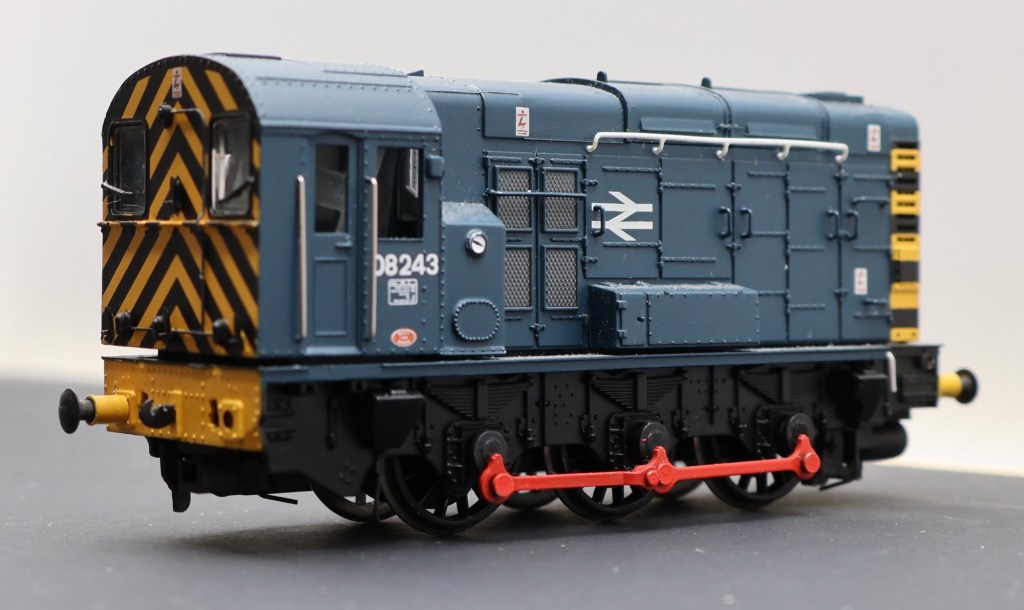
This, ^^ this ^^ is how it started. A chance find on Facebook, advertised fairly as damaged and a poor runner. I wasn’t looking for one but the price vs condition made me think this is worth a punt.
Split buffer beam
The images here show what arrived, an early release 08 with missing steps, a broken buffer beam, no glazing, one set of brake rods missing, badly fitting body, some handrails broken and poor running. In particular it was reversed from normal polarity. That last nugget was the clue that should have lit a spark, but it didn’t..
Steps broken, glazing missing
These things are pretty basic models (no offence Bachmann), so the first tasking would be to get it apart and see what I’ve bought. I already know it’s got some screws missing (as do I), as the cab isn’t sitting flush therefore at least one is missing. Looking closely at it there’s a reason the body doesn’t sit flush and thats because there’s a wire trapped under the left hand exhauster boxes, a further clue someones been inside. Also, that little annoying little wire conduit, (the one you forget to remove), that runs around the bottom front of the bonnet, thats broken too.
I still think its value for money though, none of the above are game changers, they can all be easily addressed. Another Brucie bonus is in the spares box are a few Bachmann 08 running plates given to me by a good friend of the blog. Even before getting it apart the replacement and refurbishment list is generating in the back of my mind. If the running plate is knackered then swap it out with the ‘new’ one, thats a quick fix apart from the repaint required, all I’ve got is BR green or rail freight grey. However, the idea of a repaired run down 08 is appealing, make the broken beam look like prototype damage with a new buffer fitted, perhaps still in primer. If it’s an industrial loco the functionality takes precedence over looking pretty. The windows aren’t an issue, the excellent Shawplan laser glaze will resolve that and really make the cab sing, as will a Modelu driver figure. They’ll disguise the half depth cab. Couplings? not yet decided, probably Dinghams, the steps? well Bachmann’s excellent spares section has provided those, they’d be a PITA to make and if the motor is on its last legs, I’ll head there for that too. Coupling rods, they’re the original style, in the past I’ve used Brassmaster rods and Markits crankpins, and this may well be a route I’ll take again, if I’ve got the crankpins in stock. Gibson pins are an option but much more work.
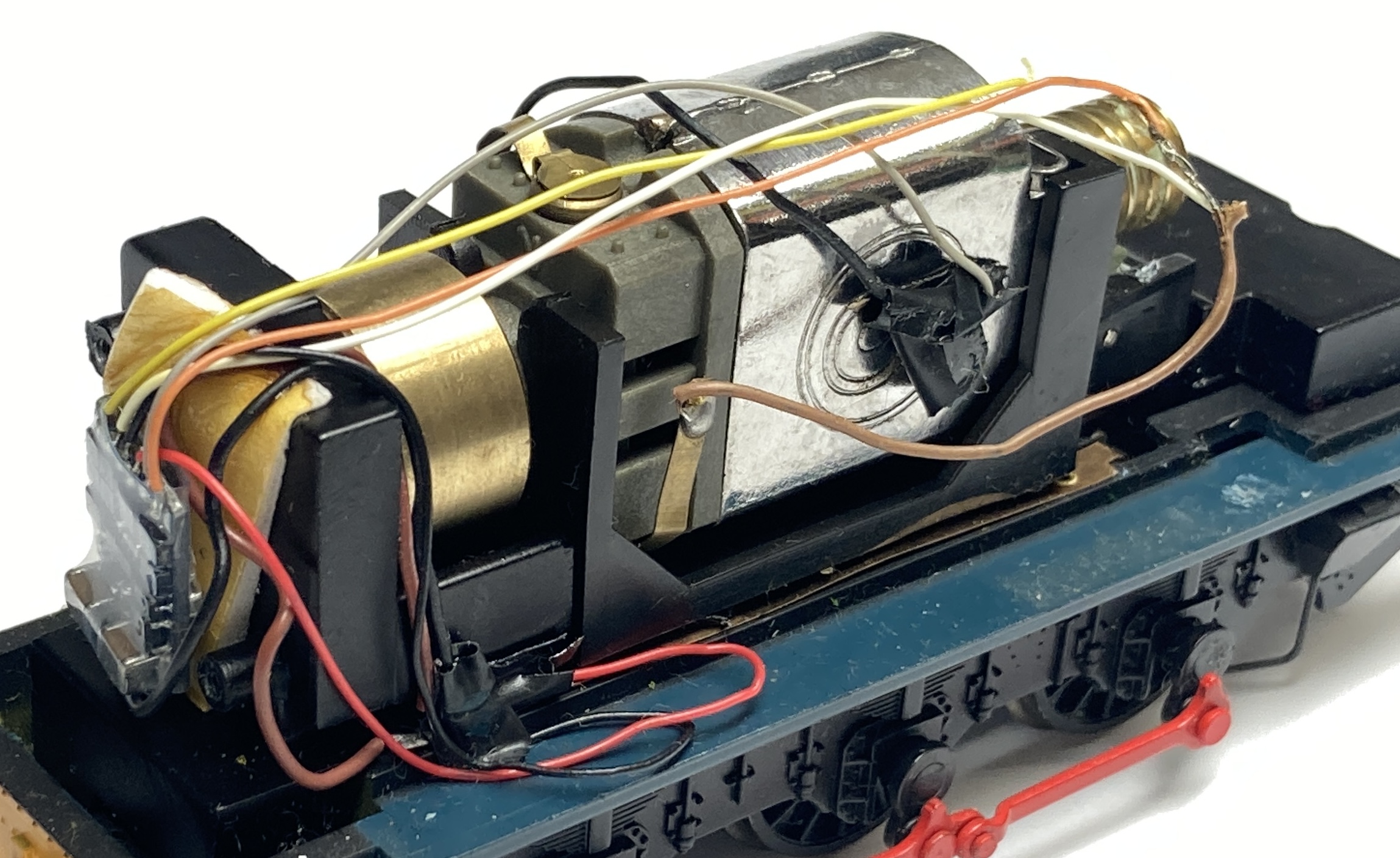
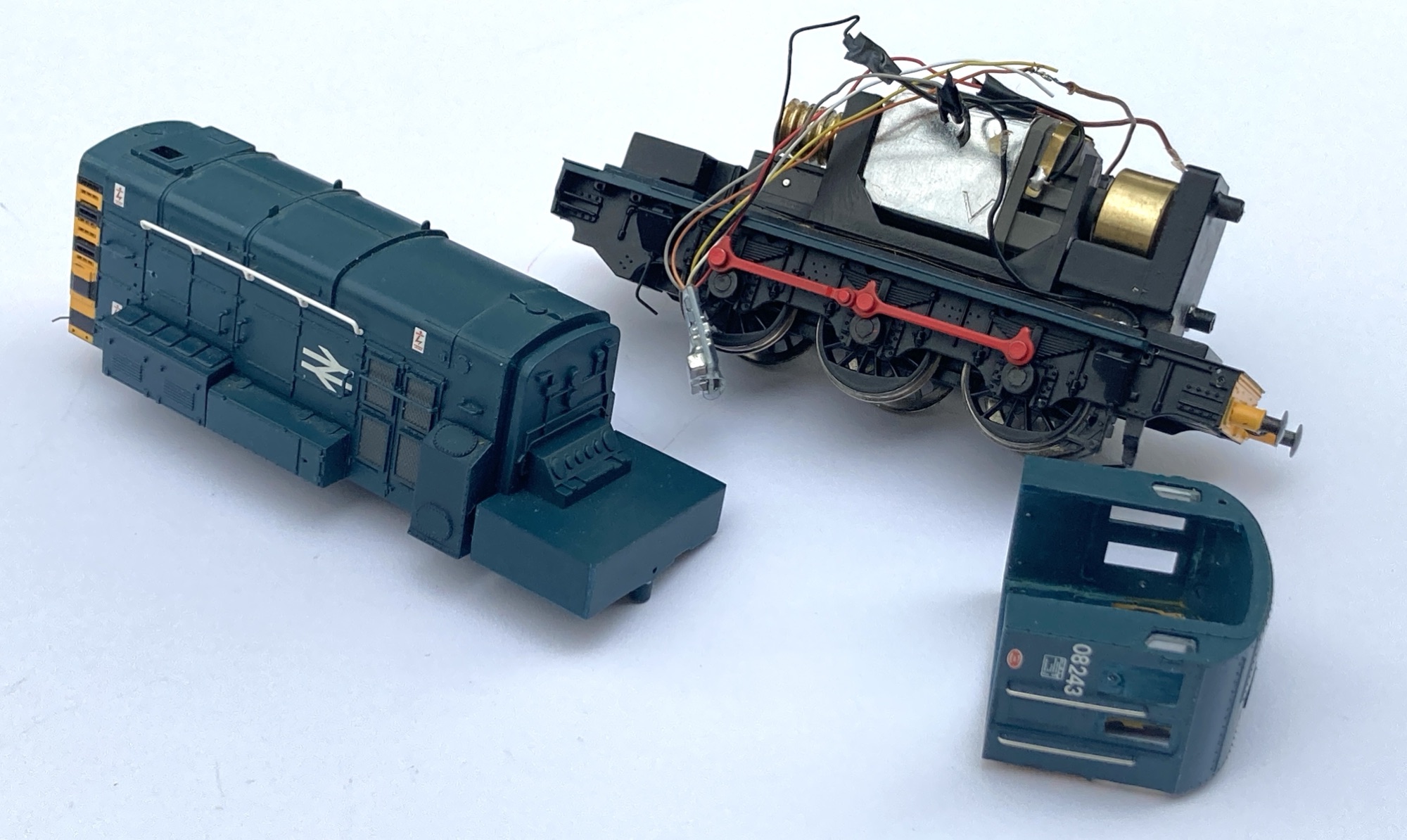
So getting the body off the penny drops as to why it’s running in ‘reverse’ convention. Sitting on a pad stuck to the front of the chassis weight is a decoder. An even better result as I can now run this as DCC without buying a chip. I’ve tried it in DC and it works so it will almost certainly run better with DCC applied. The decoder is clearly functioning if it weren’t the loco wouldn’t move in DC mode, remember that clue I missed? Well I don’t know if it’s a convention, or was, but in the past I’ve seen DCC fitted model running ‘Back to front’ when retro fitted with chips and used on DC systems.
Probably a personal fitting thing rather than a convention, but there ya go. Obvious thing then, put it on DCC and test it. I tried a couple of times messing about with variations of the loco number, but then reprogrammed it to 3. And it worked, I had a rough running DCC 08.
Top bearing pickups, note the black dirt
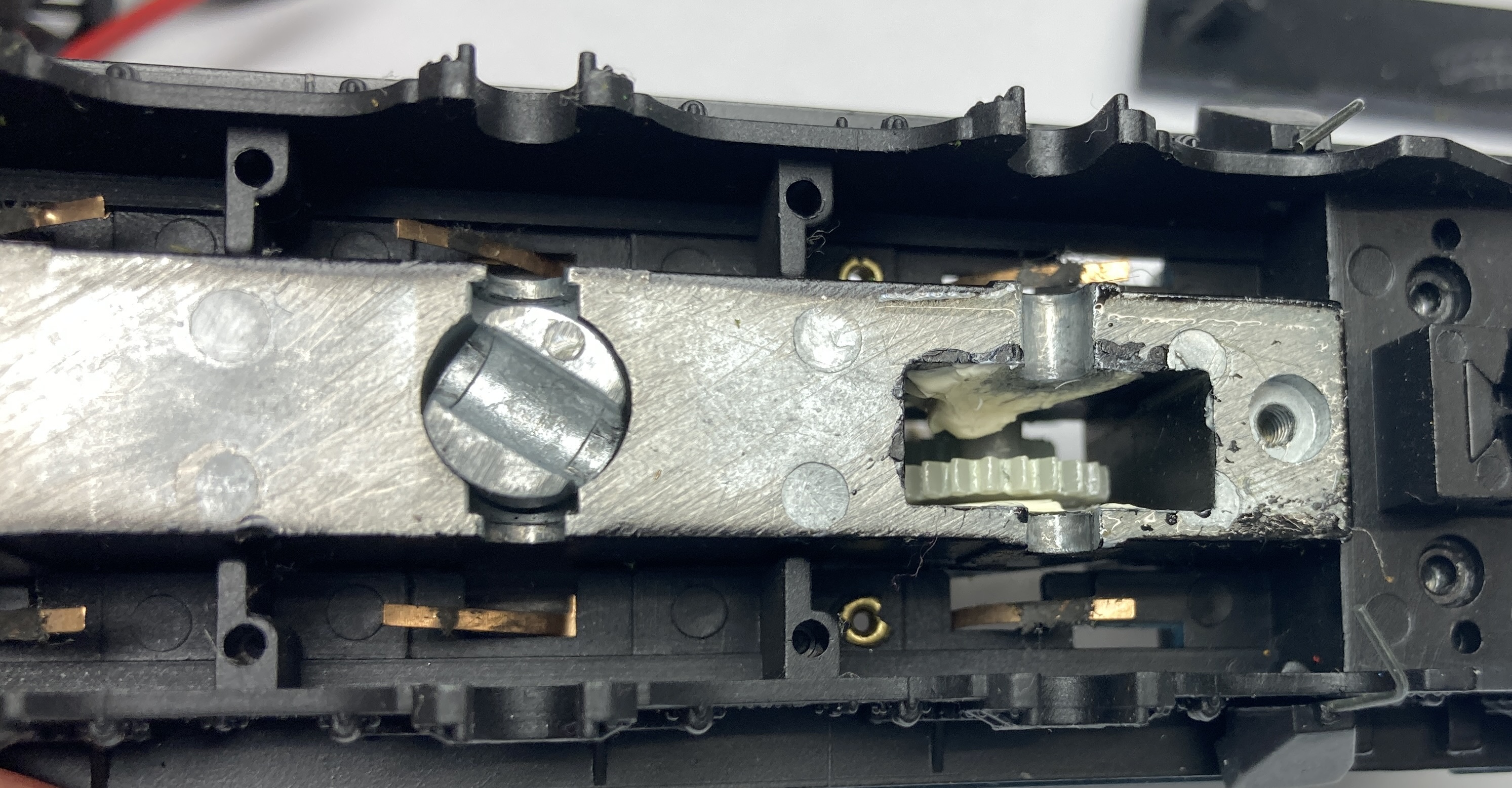
Before getting into the cosmetics I sort the running out, pointless having a shed queen. The first thing was looking at the drive train and removing some of the white grease that is typical of early noughts Bachmann lubrication. then upside down and a Peco wheel cleaner applied to get the obvious accumulated dirt off the treads, this thing might have twenty years worth on it. It did give an immediate improvement on the running, and the next thing was to clean the pick ups too.
More pick up filth and grease
This is a Mk1 chassis with tread bearing pickups and as I thought, those too had twenty years of shite clinging on for dear life. Revell paintaclean on a cotton bud very quickly removed that. It should do, it’s basically MEK so be extremely careful if you do the same. The later chassis had revised pickups bearing on the rear of the wheels and increasing the reliability of them. With regular cleaning of track and the original pick ups these 08’s run really well. Does it still run rough? No, but it does run slowly, and that could be a variety of issues but not worth digging through immediately. The wiring loom, well that looks awful there might be issues due to poor soldering, or it may well be the decoder has been ‘tuned’ to give slow running.
For the moment though I have a working DCC 08, looking at it, for the time involved, a leisurely hour or so for a full strip down and tidying the loom will be a good base level for future work. And that all it takes for this initial part of the makeover. The chassis is straight forward to disassemble remove the wheels first and then the running plate. To ensure I’d got a good starting point I removed the motor, and then the motor housing to get the gear train cleaned.
You often hear from some internet ‘experts’ that the grease solidifies and sets like concrete etc etc. I must be buying the wrong trains because not one of the models I’ve had over the years from all the key UK RTR players have ever had that problem. I don’t doubt some on rare occasions do gum up, it does remind of one model many years ago brought into the shop at Kings Cross in that condition. Tony Dyer got it all cleaned up and working, and when returning the model asked what the grease was. Margarine was the answer! Even this one, twenty plus years old, obviously having never been really cleaned the white grease was still, erm, grease like. There wasn’t much of it so I removed it and the chassis as I type now is running on bachrus rollers. It’s still not fast, but that isn’t really a problem, to see if its the motor that is the problem I may remove the decoder and just let it run plain vanilla DC, that will tell me if the issue is with the motor. The gear train runs smoothly and the motor revolves freely. Even if it stays as is on DC that won’t be a problem it can stay a slow runner as thats all thats required.
When I say slow I’m just comparing it to my other Bachmann 08’s, they’re faster. but it really isn’t an issue. So thats the first steps in this makeover completed, no doubt if I were putting this on Facebook to sell I’d advertise it as ‘serviced’ which seems to be a thing. A ‘serviced’ toy train, I do wonder what that actually means….
Anyway, I can now look at the fun bits, the body and detailing and fine tune the running for me, at a later date. So thats how it started, just another Bachmann 08..
When TT120 was announced it caught my attention. A scale between N and OO/HO appeals to me particularly if the quality of products are good. My plan for a Forest of Dean system layout is one that at the moment is planned, or assumed to be built in OO, because that’s the best scale to get locomotives and stock easily, and I’ve been working towards it for a few years now. N wasn’t really considered, the Dapol panniers have been a bit hit and miss for running qualities, and until British Finescale started their point kits in N with code 40 rail, the track wasn’t of great appearance either.
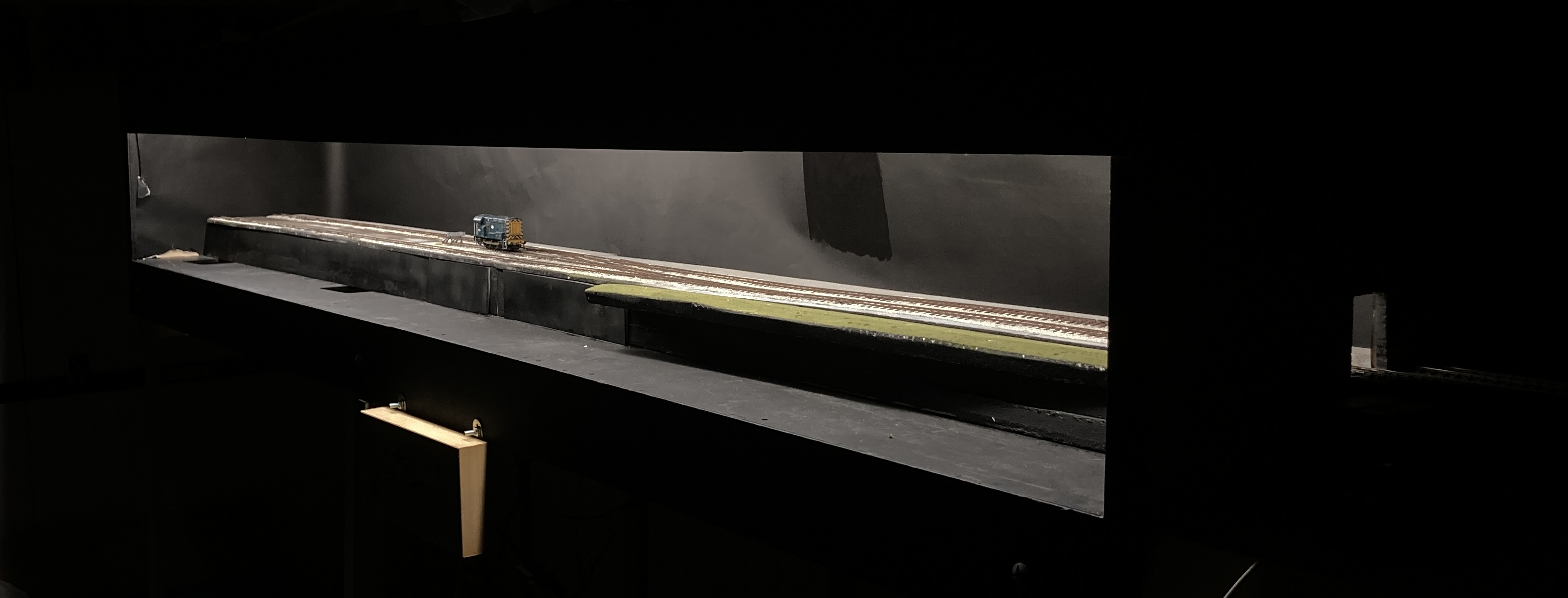
So here’s another Shelfie, TT120 and based on an idea for Snowdonia North Wales, or out onto the Llyn peninsula. No idea what number this one will be, are we in double figures yet? The ‘problem’ with TT120 at the moment is a lack of ‘stuff’ to build a layout with. Had the scale started with a Pannier 9ft private owners and a brake van, I’d have been in, big time. It hasn’t though. The good thing however is the Peco Streamline track that has been introduced.
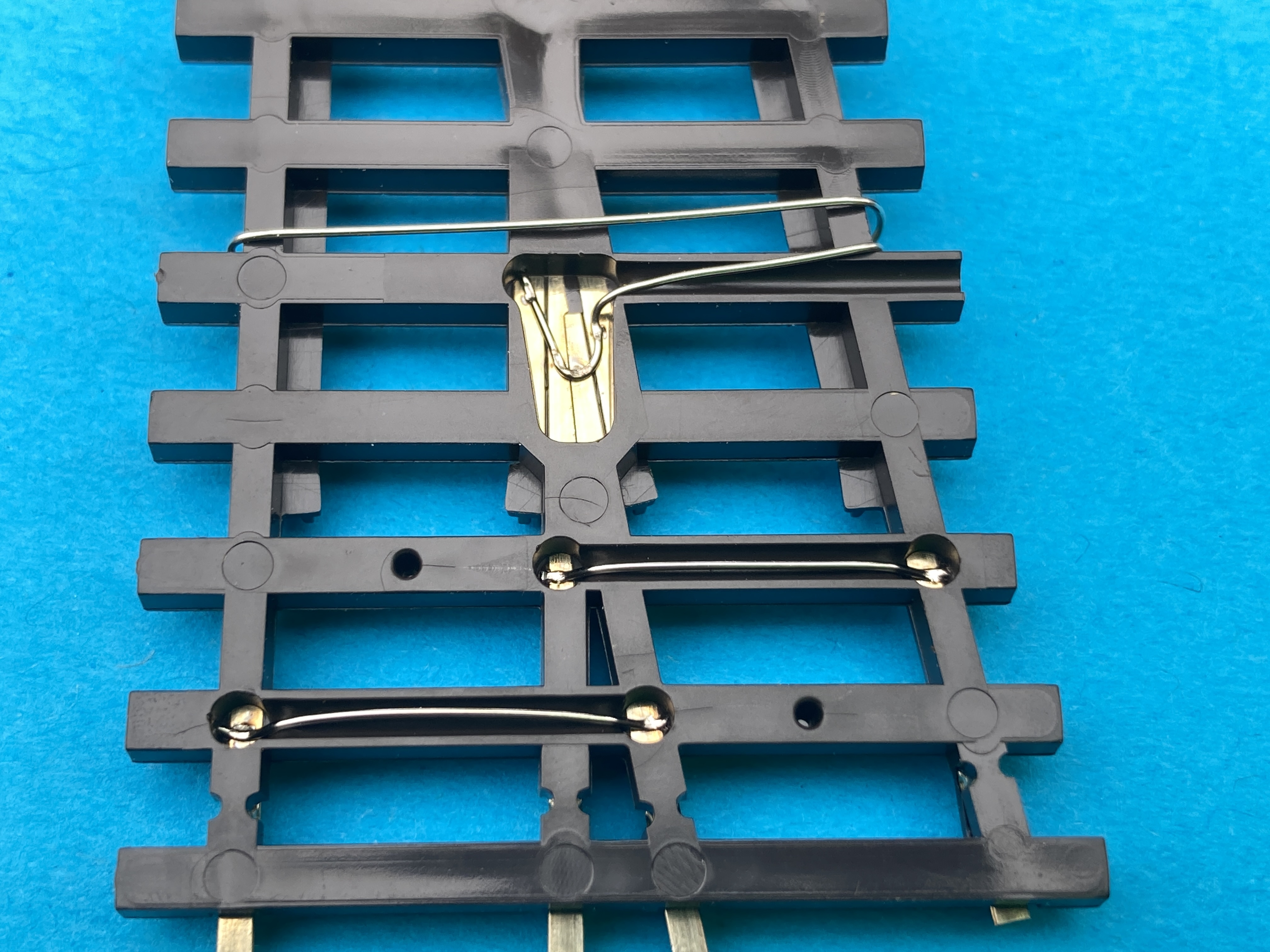
Peco Medium Radius TT120 points
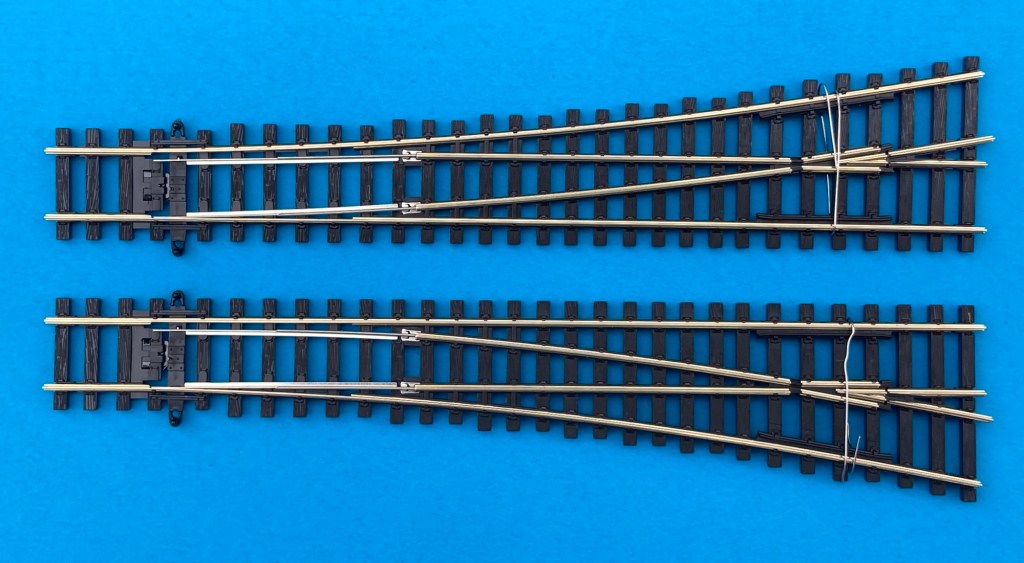
Being quick off the mark Peco introduced set track and streamline ranges, I’ve not seen the set track but the Streamline is excellent with one issue. The plastic base on the track almost needs a gas cutter to cut it, its model railways cryptonite. The points are of the unifrog design with nickel silver rail, and jointed rather than one piece switch rails. It would have been nice for the blades to be one piece but possibly with this being a ‘new’ scale Peco took the tried and trusted route.
The build quality is up to Peco’s excellent standard and reliability, there are no surprises with them, the switch having an over centre spring so after throwing them manually, they are held firm against the stock rails.
Peco UnifrogPeco TT120 Unifrog
The unifrog crossing has neatly welded wires, and the V crossing being inert hasn’t given any issues with consistent slow running with a Hornby 08. Obviously a shorter wheelbase locomotive might require the crossing to be live, it’ll be interesting to see how the Hornby Terriers fare.
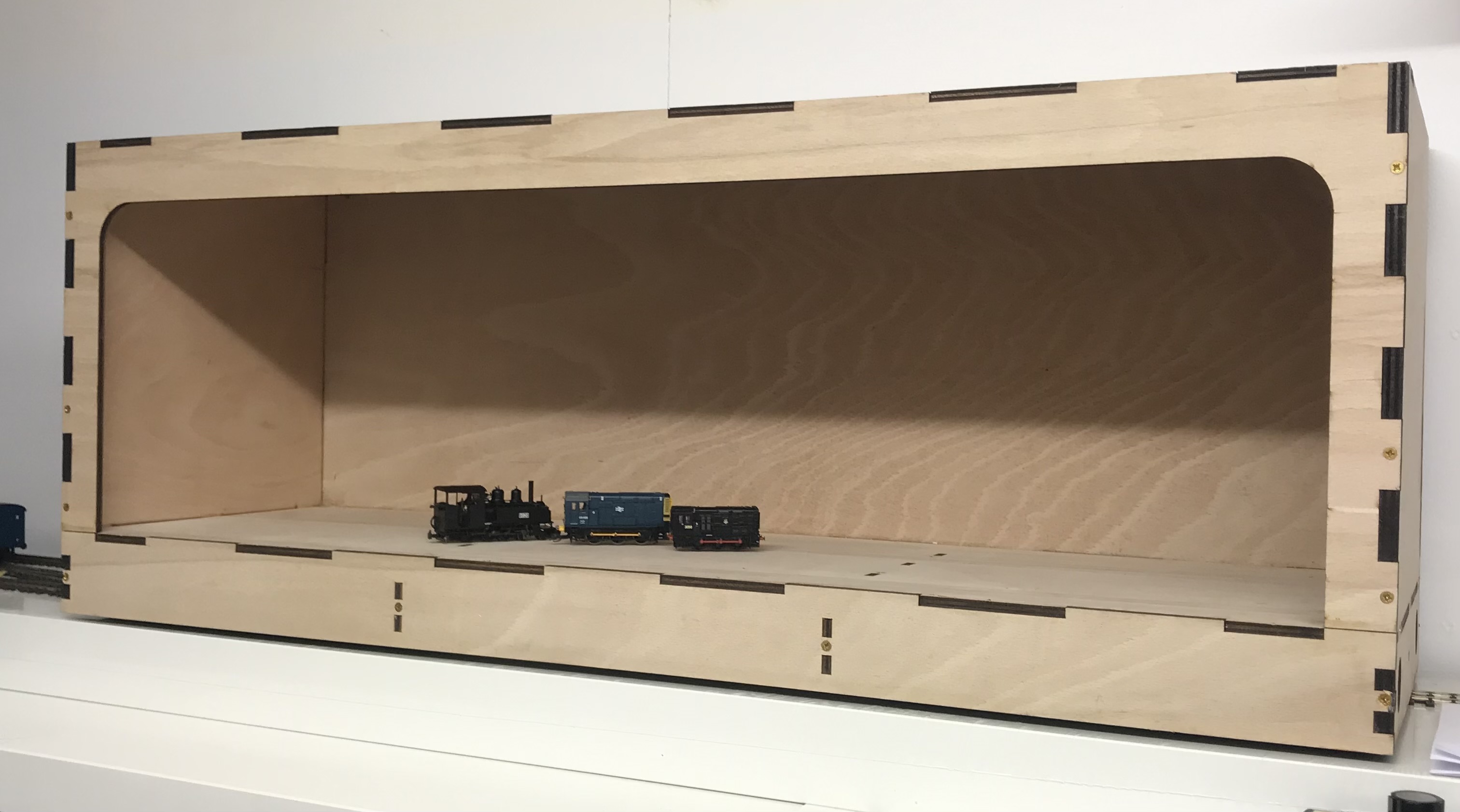
Tim Horn Photoplank
At Railex Tim Horn had one of his demo boards for sale and one found its way past the till and into the back of the car, and not for the first time. I must be standing too close or something…
So once home the planning started. I’d bought it on a flyer, knowing I’d find a good use for it, and three scales were under consideration, N, TT120 and OO/009. I pushed around my N gauge 08 some wagons and a couple of points from British Finetrax, but nothing grabbed the imagination vibe.
Light Railway Trial
I’d revisited a long lost 009 Muse, Snailbeach, and pushed around some 009 and buildings to no avail, no spark of ignition.
OO Shelfie Trial
I tried OO in it too, but there wasn’t enough twitching of the trigger finger to make it work, the design lacked something . Flipping through Facebook a picture came up which has subsequently eluded me finding it again, one of the most frustrating aspects of Facebook. But that image was the element that was missing, it was like Goldilocks and the three bears, for the volume of space N gauge wasn’t right, neither was 009/ OO, but TT120 was just right.
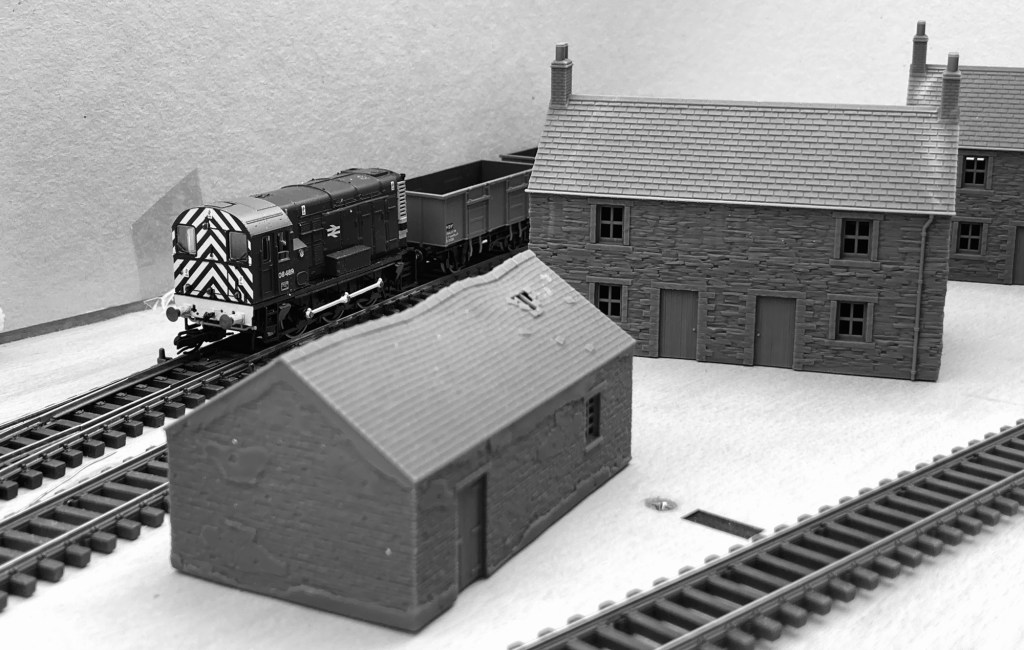
The design could be worked to retain the nuances of the original image, the physical properties of TT120, the 08’s and mineral wagons will work for this project, which is essentially a test piece.
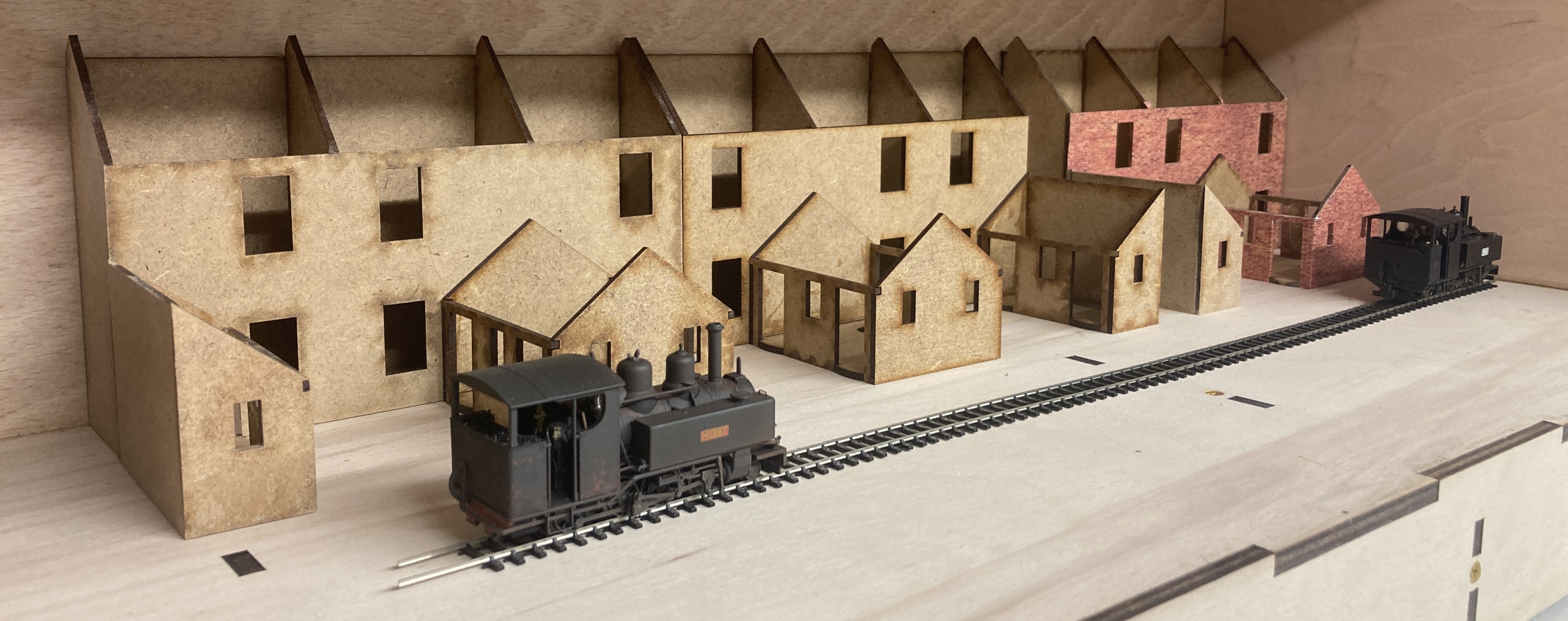
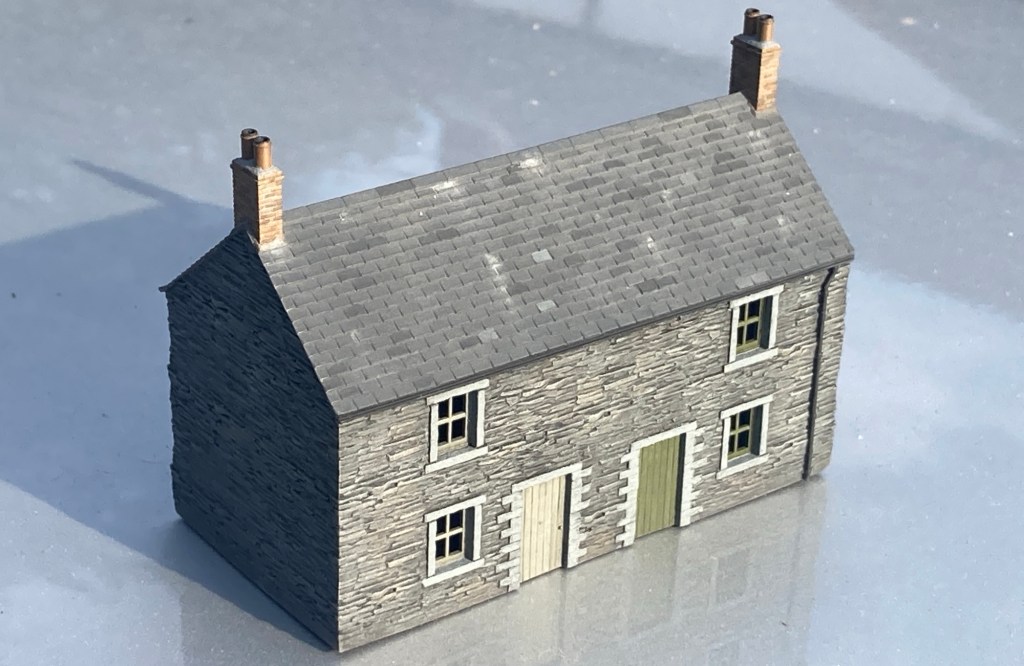
Ms models TT120 slate cottages
I then found MS Models and their exquisite 3D printed buildings, that’s one of mine painted above, and bought a couple to try. That was the trigger pull moment.
MS Models Workshop
From them arriving in the mancave, track is formed, cut and painted ready for first fix. New point motors arrived, soon to be followed by switching gear, and then cutting the structure and backscene to allow trains to run on and off scene.
So from an impulse purchase of the board, pushing a few trains around, and the arrival of the fire starter buildings, this test project has gained traction quickly. It’ll be a relatively quick one too and an opportunity to try TT120 with a small layout, finescale mindset.
The only problem is, if it works like it may well do, and Hornby’s promised Pannier arrives, Peco’s 16t minerals, and the manufacturer who hasn’t yet officially announced the standard 20T brake van all turn up, do I change scale for the Forest of Dean project….
That’s the thing with making stuff, it opens up tons of opportunities!
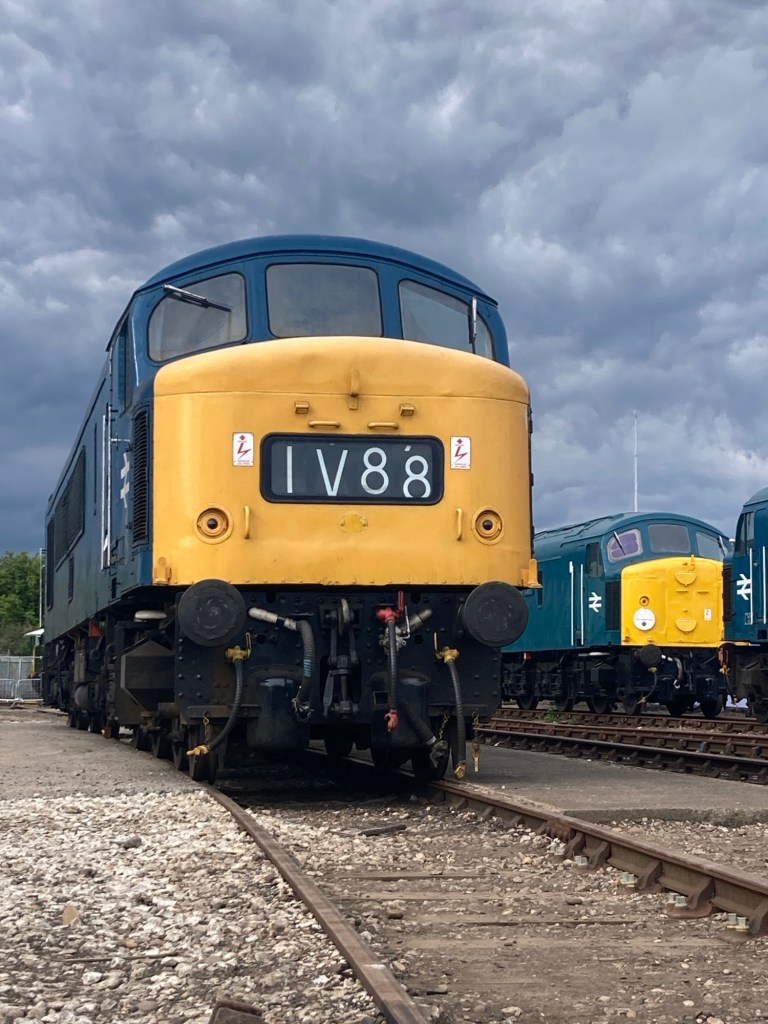
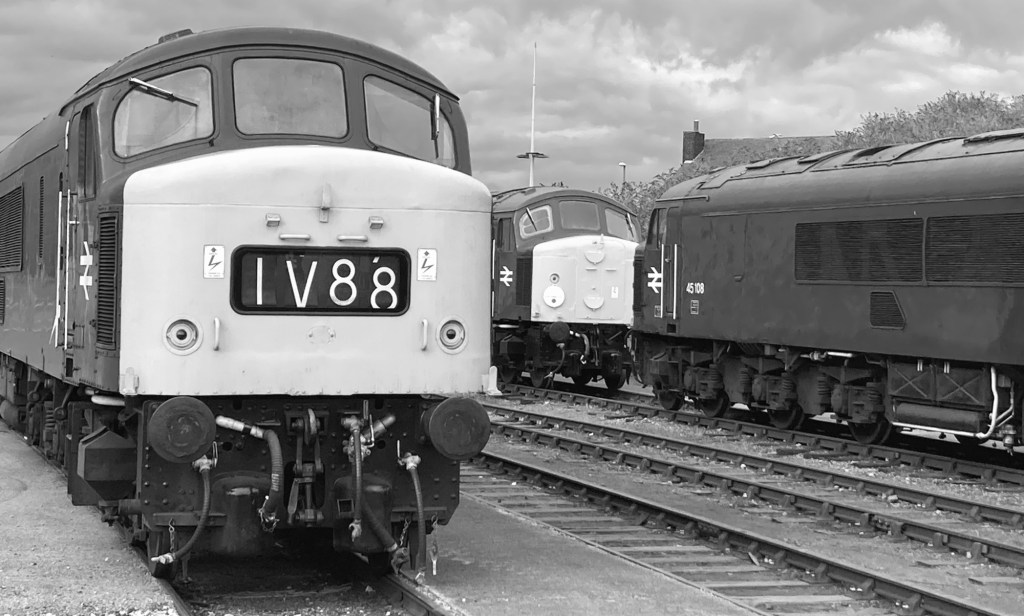
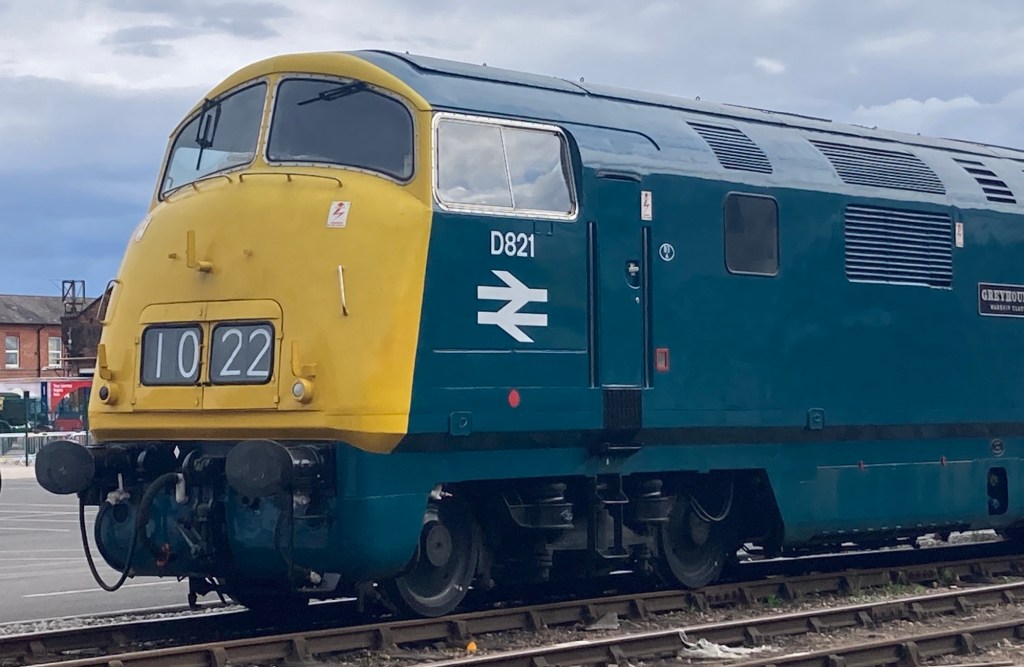
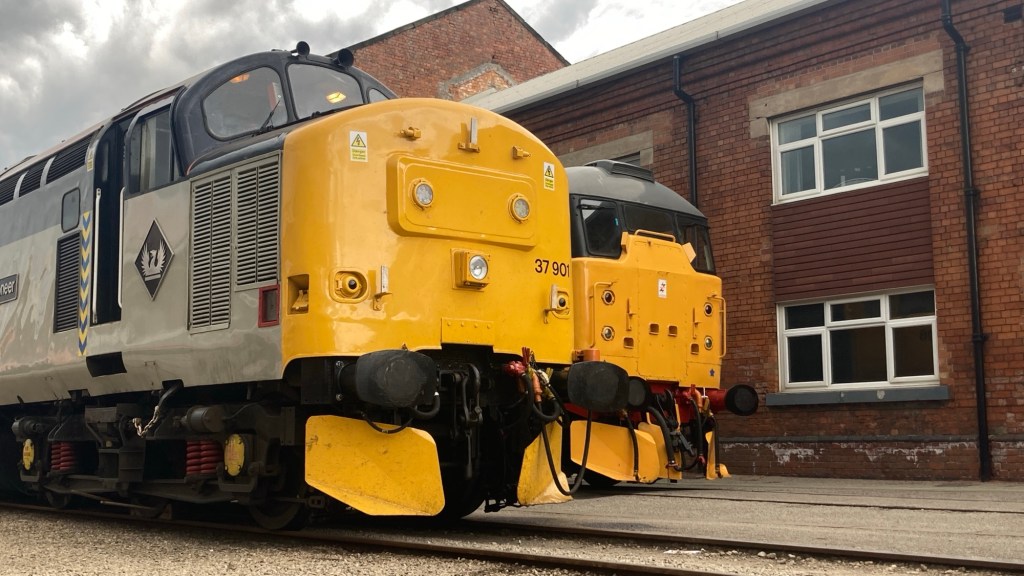
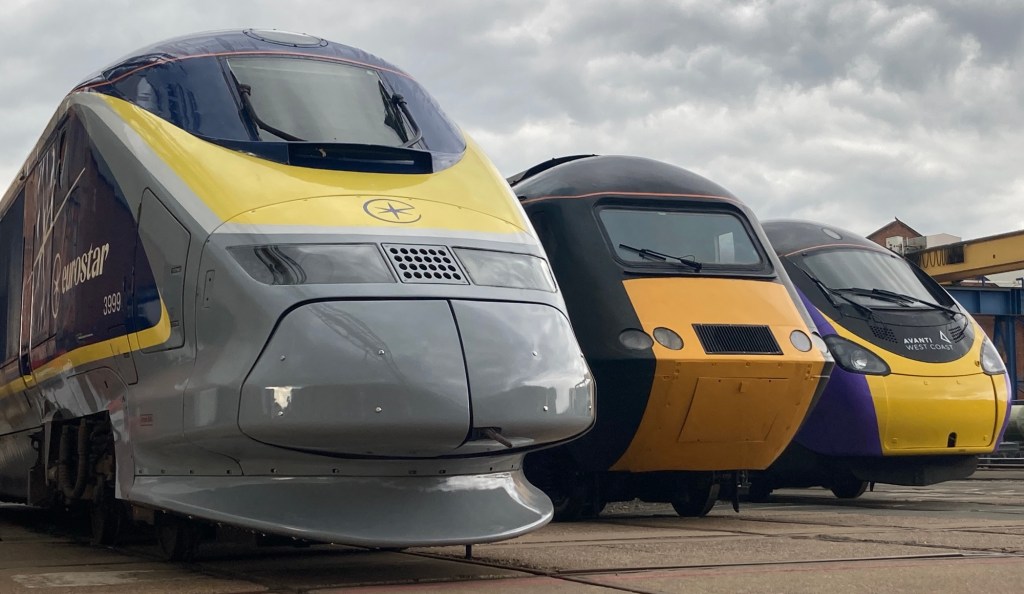
This weekend I’m helping out on a friends trade stand at the greatest gathering in Derby. These rail open days and events really aren’t my thing, but having the opportunity to wander round some classic British first generation traction has been a pleasant surprise.
Back to the Future
The opportunity to wander amongst the locomotives, with some of them idling really brought back some memories of the 70’s and 80’s. Some of those were regrets too. Seeing stock like class 313’s, now gone, and realising again the missed opportunities of taking pictures which I should have done,brought home that gap that I missed.
Thirty Somethings
Tomorrow’s another day, and I’ll be fortunate enough to be there amongst friends just enjoying the craic! I’ll take a camera this time…
Here’s a thing, often in the UK there’s a lot of emphasis on being in a model railway club or society for all the benefits and experience you can gain. At the moment I’m only a member of one society, I’ve not been a conventional club member for twenty plus years. Quite a few of my close associates are the same. If I take one of my layouts to a show it’s very common to be asked what club are you from?, and I’m not sure why there’s an assumption that a layout or team is from a club.
Shelfie 1
It may be part historical that UK exhibitions traditionally have been organised by clubs, therefore if exhibiting you’re probably a club layout or personal layout with a show team made up from club members, as thats the convention. I left club membership after the last one I’d joined closed more than a few years back, but realistically the writing was on the wall before that, as I found for me there wasn’t a great deal of benefit of actually being a member. Now thats not to say that clubs are’t excellent places to learn skills, techniques and immerse yourself in the hobby, they are, especially if you’re new to the game. For me however the independent route works.
Simon George’s Heaton Lodge Junction
Independence works for a good number of my friends too, regardless of whether they are making a small layout or like Simon’s monster Heaton Lodge junction. What works for me is the freedom of not being constrained by a ‘requirement’ to build something that works in a club context, I can swap from scale to scale, era to era etc as and when I desire. Thats a good thing the way I work because it gives me the opportunity to do multiple projects, and also contribute to other external projects too.
An area where the indy route has benefits for me, is in trying new techniques. Above you can see some of the trials I did with AK Interactive acrylic gels to get the right water effect I desired for a river side scene on Shelfie 4. This went through many iterations before I settled on the finish I preferred. I think that process in a club environment would be quite tricky, particularly if spread out over several weeks or in this case with the number of trials I did, it would have been months in a club ‘once a week’ context.
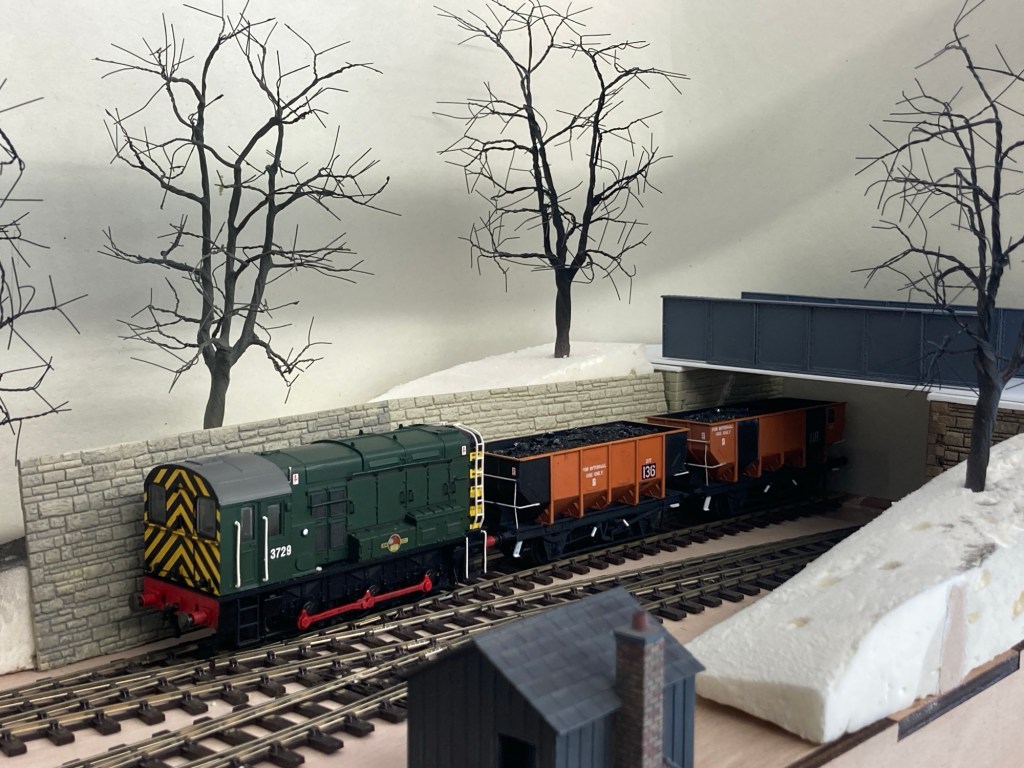
Shelfie 2 ‘Guyzance’
Independence also allows me to change direction on a project, it’s all on me, time, costs and frustration. Shelfie 2 above had a significant variation in its gestation, at one stage being a southern region 3rd rail terminus, now its complete as a Northumbrian coal disposal point. Where independence really helps me is in the thought processes behind some of the design concepts I have had. This is very apparent on Shelfie 3, Lower Mill Street.
Shelfie 3 ‘Lower Mill Street’
This is one that hasn’t worked and is in the process of revision, potentially to a completely new presentation. I’ve got a provisional booking next year already so I’ll need to act on this in the foreseeable future. What has been good is pushing the display potential which I have in mind, and it’s really only the type of build you can do for yourself, there’d be too many WTF questions in a club environment! I’ve still learnt from it though, even if what I want isn’t going to work in the current context. So changes are coming and are likely to involve the concept on, and in, a different scale.




















You must be logged in to post a comment.