Oxford Seven

20160323-114429-42269701.jpg

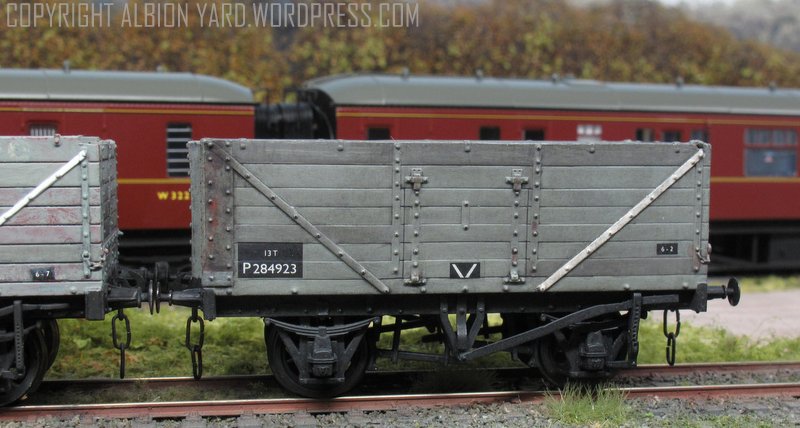
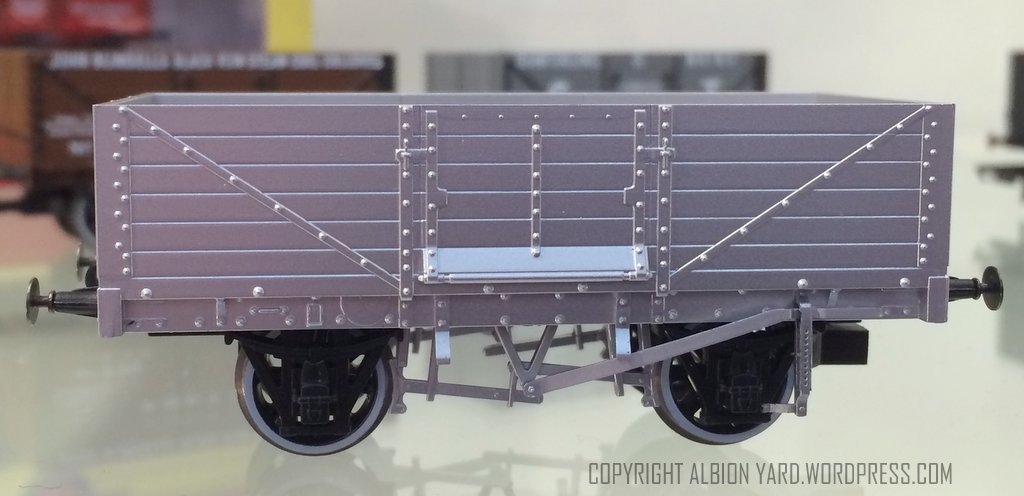
This week I’ve been modifying some of the Oxford Rail seven plank wagons. Whilst not perfect they are a good starting point for me to do British Rail era wagons towards the end of their lives.

20160323-114719-42439887.jpg

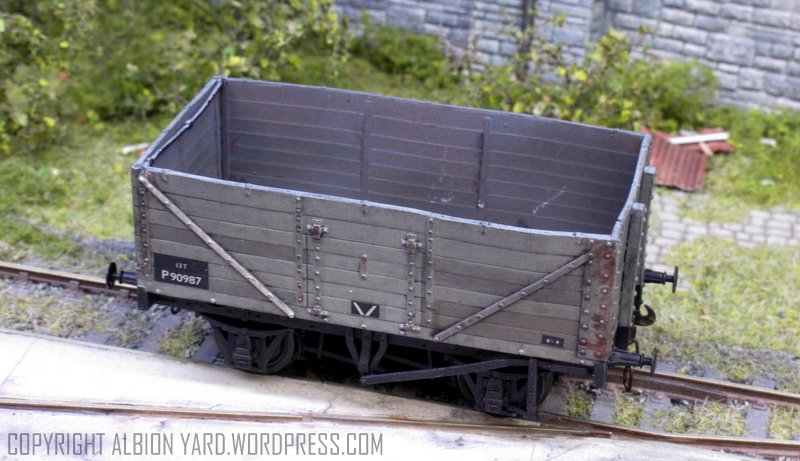
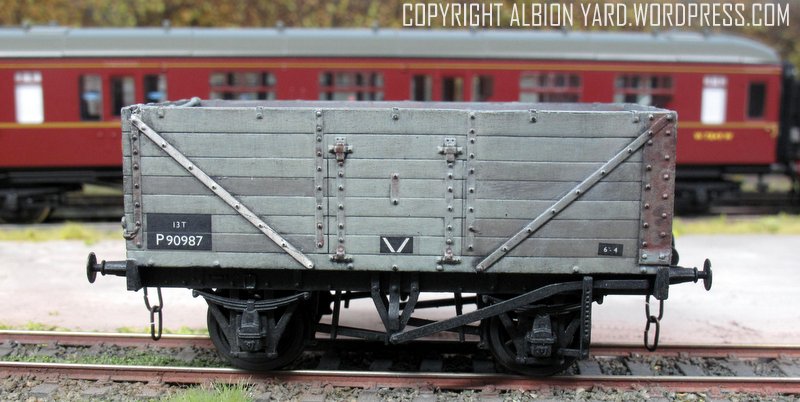
As a quick list they’ll get new wheels, new buffers and detail variations around the doors and ends. The patch repair at the bottom of the corner plates are being removed on all examples, and rivets replaced or added to strapping with Archers decals. I’m going to do maybe four or five of them, and they’ll be a quick addition to the fleet, and relatively cheap too. Once complete with new wheelsets, buffers transfers and couplings these are probably going to be in the order of £15 outlay, so still a bit cheaper than a new Bachmann PO currently listing at around the same price.

20160323-115213-42733063.jpg

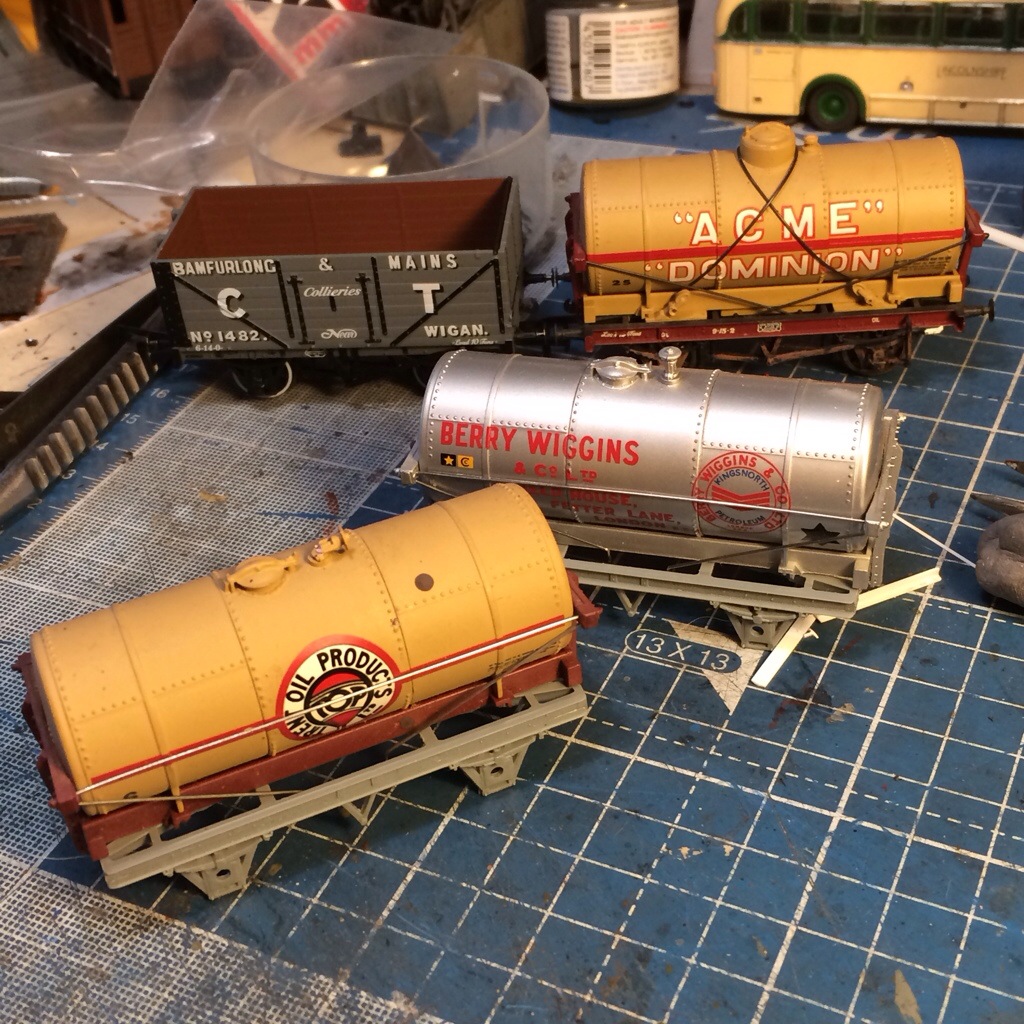
After these I’m grafting Cambrian Models steel underframe chassis’ to some older Bachmann oil tanks, the early results of those look very promising too.

20160323-115940-43180170.jpg

More soon :0)

_B6O4719.CR2

Posted in Bachmann, blog, British Rail, DCC, dcc sound, decals, Eastern Region, Forest of Dean, Great Western, hobbies, Hornby, Layout, LMS, LNER, media, Midland Region, Model Railroad, Model Railway, Model Railway Journal, modeling, Modelling, Nevard, OO Gauge, Oxford rail, research, social media, Southern Region, toy train, toytrainset, train set, Western Region | Tagged , , , , , , , , , , , | 5 Comments

Nine, is the magic number!

Nine, is the magic number! That’s what the layout has taught me this week.

Shelfie

Shelfie

This is because I’m still working out what I want from a bigger multi location scheme, version 1, seen below. Since this early draft (not to scale), and starting to get my head round Anyrail ( anyrail.com ) I’ve looked long and hard at the section from Eastern United/Ruspidge to Whimsey on the plan here.

Severn and Dean Concept V1

Severn and Dean Concept V1

In reality the next interesting section was Bilson Junction, (bilson jnc ), and it’s this which is now really intriguing me in trying to integrate it into the system. On the plan it needs to fit between Eastern United and Whimsey. I already know the Whimsey/Acorn Patch section won’t work as shown so that will change too. Bilson is a long linear section where there were a good variety of interesting moves, and rakes of coal wagons for Northern United Colliery were held. Also the route to Whimsey and Cinderford also split here, and if I assume Lightmoor Colliery remained open I have five routes of traffic available to me. Clearly I have to selectively compress the section which is more difficult with a linear route than a shorter wider section. This where the layout came into it’s own (again). Being able to set the layout up and play trains and look at them on a scenic section, sometimes helps me imagine what the potential of an idea may hold. Bilson needs some significant linear compression, but needs to retain the linearity to capture the location. One option is to give it a gentle curve and I think that’s pretty much a given in my space available for 4mm scale.

Oxford Rail Private Owner Wagon OR76M7W005

Oxford Rail Private Owner Wagon
OR76M7W005

What I did was try out different train lengths of sixteen and thirteen ton mineral wagons including a brake van. One move to Northern United Colliery involves pushing the whole train rather than pulling it. As it moves it will snake out of the yard and I wanted to see if I could work out the minimum number of vehicles required to get that visual impact. One of the elements of Albion Yard that really works is looking along the layout, the wrap round backscene really helping in this respect of concentrating the viewpoints. Well, I got the answer, its nine. Ten is better, and eight definitely too short, the nine wagon train length being just over one metre long. Now at Bilson I could have four or five trains on location at any one time, the same number also works for Eastern United screen sidings, and potentially the fiddle yard too. Nine isn’t a massive number when having to sort the trains in the fiddle yard, and it looks long enough for a reasonable rake of wagons. On a two metre scenic section the layout demonstrated its just right for being a ‘long’ train without overpowering the scene. It does mean that I’ll need a good few mineral wagons, and apart from buying Bachmann RTR and kits such as Airfix, Parkside and Cambrian for my steel minerals, I need a few more wooden bodies too. One of the options I’m trying out is the Oxford Rail seven plank private owner wagon.

Oxford Rail PO wagon OR76MW7003

Oxford Rail PO wagon
OR76MW7003

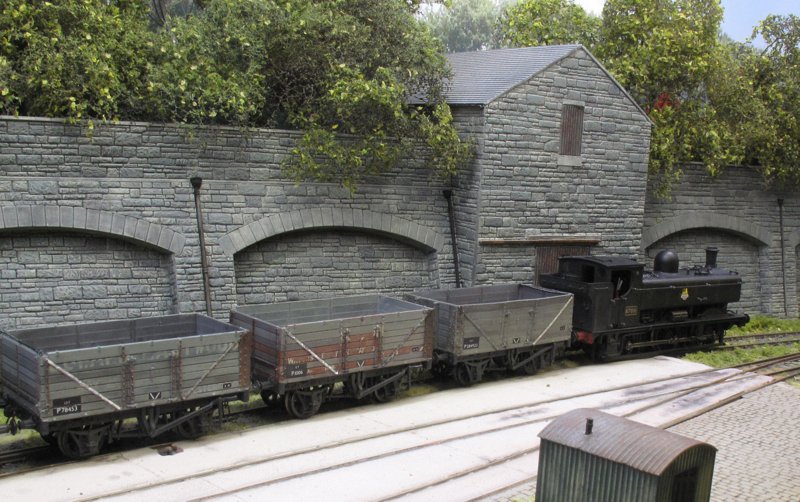
Firstly its not perfect, but I think that for my requirements it’ll work with a number of items changed in a makeover. The heading picture shows the first wagon which has had nothing more than a repaint and initial weathering. Its the wagon behind the engine. Visually it fits in well with the other stock I have, but with a few items that stand out on a closer look. I’ve already found it takes paint well, the old printing comes off easily, and you can bow the side out to replicate load damage far easier than with other manufacturers I’ve tried so far.

Oxford Rail PO Wagon OR76MW7001

Oxford Rail PO Wagon
OR76MW7001

I’m doing a more detailed makeover that will involve changing the buffers, (the existing ones are too spindly) and some work around both ends. Essential on these is changing the wheels, the originals are pretty heavy duty! Alan Gibson wheels drop straight in, a friend looked at it and suggested there’s a little too much end float on the axles (26mm supplied), and I tend to agree with him. It’ll be interesting to see if that is borne out over time, currently the running qualities are on a par with the other wagons I have, both RTR and kit built. With a relatively small amount of work and at low cost I think it’ll be easy to add a few of these to the fleet to ring the changes and not look out of place. For this one I’ve used Modelmaster transfers, I don’t bother with matching the numbers either side for this type of wagon, so long as it looks ok to me, it’ll do. Watching Roy Jacksons ‘Retford’ has taught me with large groups of wagons the numbering doesn’t stand out, unless they are in a different location to the norm or are different typefaces.

Bachmann Pannier 32-202

Bachmann Pannier
32-202

Bachmann Pannier 32-202

Bachmann Pannier
32-202

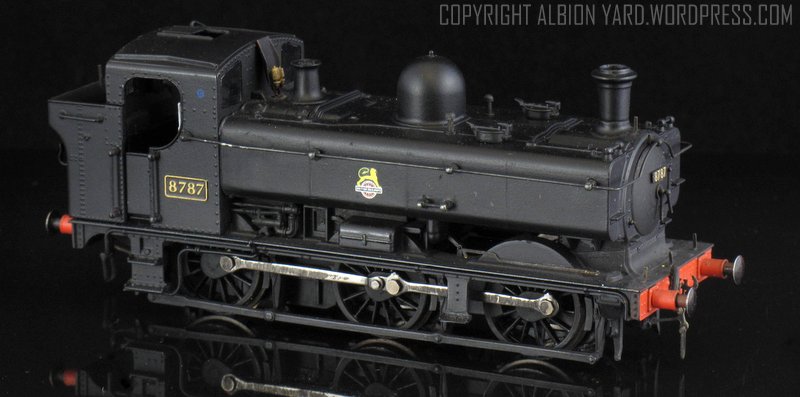
As part of the Severn and Dean project I also need to have sufficient locomotives to operate the railway, rather than the layout. To do this over the years I’ve picked up locomotives along the way when one came up at the right price. They are, apart from a few, all pre-owned keeping the costs down. The engine portrait above of 8787 is one of them, seen in the late 50’s on the Severn and Wye section in the forest, and like the wagons it too is modified. They aren’t big changes, just subtle ones like cab vents opened, glazing and lamp irons replaced, all engines being based on specific Forest locomotives. Trevor Marshall (no relation) covers this idea relating to similar freight cars on his blog here themodelrailwayshow.com  Like all the blogs linked on the right hand side, Trevor’s is well worth dipping into with a few minutes to spare!

_B6O4719.CR2


Posted in Airfix, Bachmann, blog, British Rail, DCC, dcc sound, Eastern Region, Forest of Dean, Great Western, history, hobbies, Hornby, Layout, LMS, LNER, magazine, media, Midland Region, Model Railroad, Model Railway, Model Railway Journal, modeling, Modelling, Nevard, OO Gauge, oxford, research, Scottish Region, social media, Southern Region, toy train, toytrainset, train set, Uncategorized, Western Region | Tagged , , , , , , , , , , , , , , , , , | 2 Comments

Hornby Collett Coaches, (Are we nearly there yet?)

Hornby R4688 Collett Corridor Composite (RH)

Hornby R4688
Collett Corridor Composite (RH)

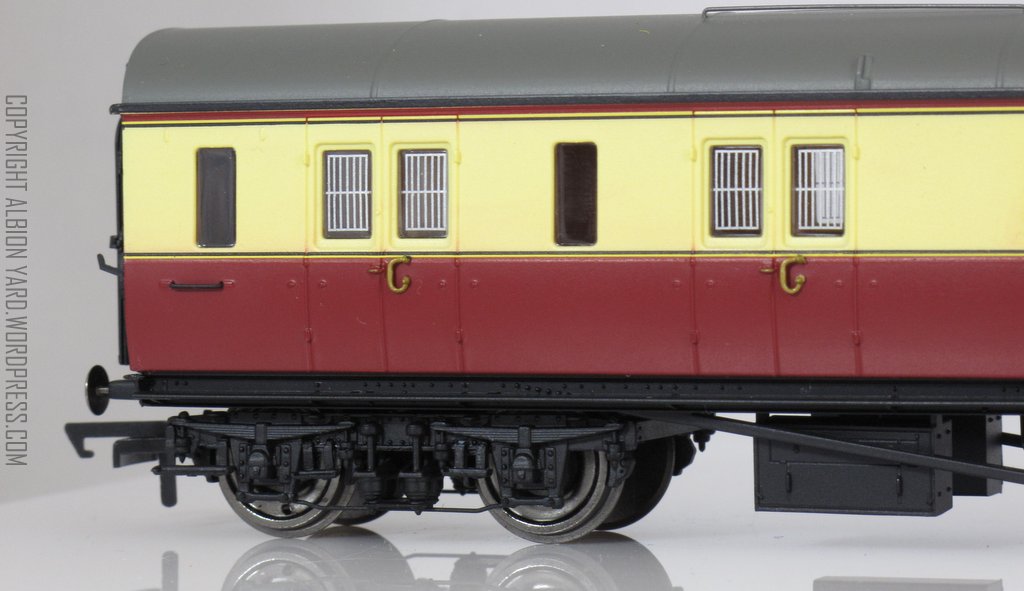
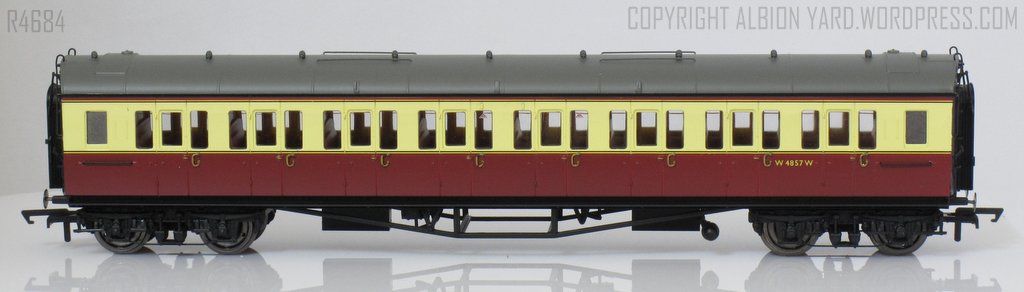
Well Hornby’s Collett coaches are here, and there’s very little point in doing a review as such of them. Basically Hornby have got these three right when checked against data within both Russell and Lewis coaching stock books, and pictures in various books and magazines. The buffer heads may be a touch undersize and they have the correct rectangular shanks of the prototype. (Thanks Chris T for pointing out my earlier cock up!). The whole appearance of these coaches is very pleasing leaving very little to do in the makeover department, paint finish and markings are excellent quality too. I’ve already started on the Brake 3rd and will put up some picture later of the extra detailing I’m adding, it’s really simple stuff like brake pull rodding anm dynamo wiring and belts. Part of the Hawksworth makeover will involve adding Masokits corridor connections as used by Gerry Beale in MRJ216 which really brings out the coach ends. They should also be suitable for the Colletts, and if practical I may change these to further improve the coaches.

Hornby R4686 Collett Brake 3rd (LH)

Hornby R4686
Collett Brake 3rd (LH)

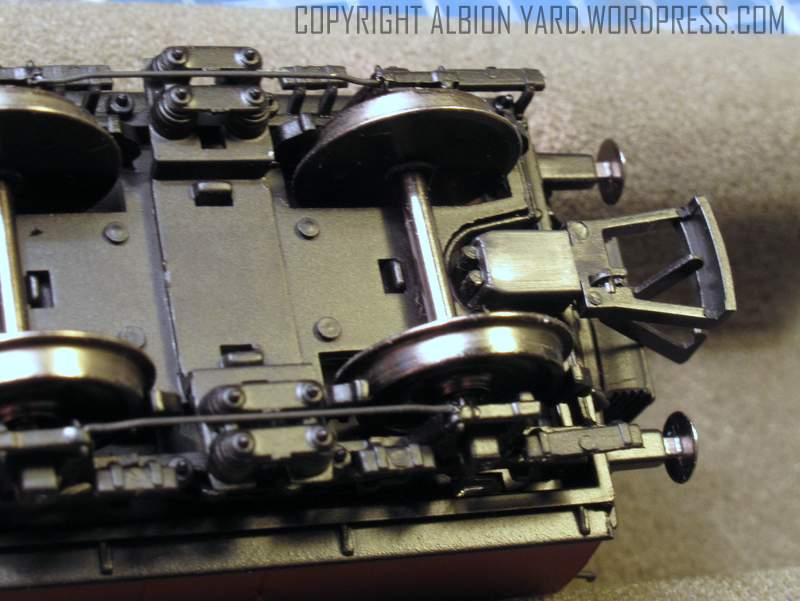
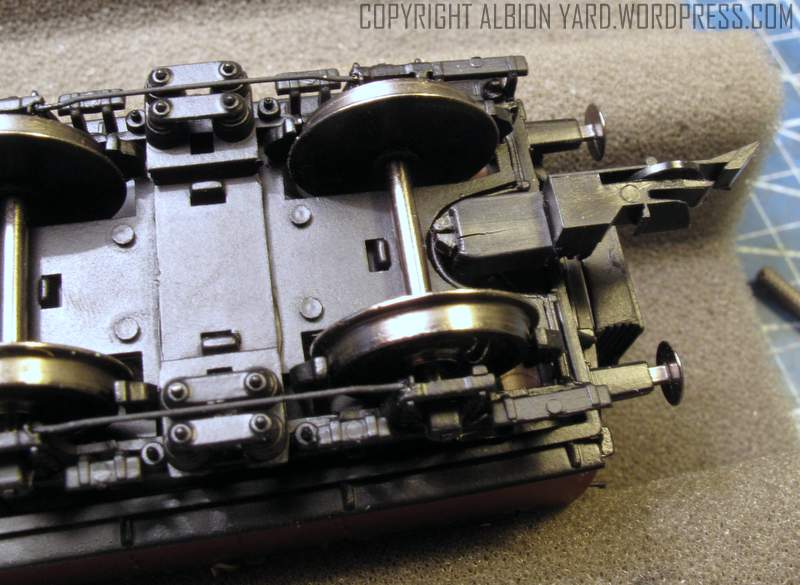
The short wheel base bogies are outstanding the tie bars in particular having the right ‘weight’ to them visually and the brake shoes in line with the OO wheelsets. The only downside I’ve found with these coaches is the NEM socket which may be a bit on the tight side. The original couplings are a very tight fit, the replacement close coupling units are, (on my samples), so tight the NEM socket is showing signs of splitting.

IMG_4741

IMG_4740

To see higher quality copies, please double click any of the pictures. The following images show all three versions I’ve received, for the batch number collectors out there they are:
R4684 TAL05-PO10000170 R4684-51-078
R4688 TAL05-PO10000170 R4688-51-078
R4686 TAL05-PO10000170 R4686-49-078

R4688 Collett Corridor Composite (RH)

Hornby R4688 Collett Corridor Composite (RH)

Hornby R4688
Collett Corridor Composite (RH)

R4684 Collett Corridor 3rd

Hornby R4684 Collett Corridor 3rd

Hornby R4684
Collett Corridor 3rd

Hornby R4684 Collett Corridor 3rd

Hornby R4684
Collett Corridor 3rd

R4686 Collett Corridor Brake 3rd (LH)

Hornby R4686 Collett Corridor Brake 3rd (LH)

Hornby R4686
Collett Corridor
Brake 3rd (LH)

Hornby R4686 Collett Corridor Brake 3rd (LH)

Hornby R4686
Collett Corridor
Brake 3rd (LH)

Hornby R4686 Collett Brake 3rd (LH)

Hornby R4686
Collett Brake 3rd (LH)

So what’s this ‘Are we nearly there yet?’ My project layout/s are  hopefully to build a system of locations based on Forest of Dean prototypes. My chosen era is the late 1950’s and into the 1960’s. During this period there were large changes underway on the British railway scene, with British Railways(BR) standard design rolling stock displacing large amounts of pre-group and grouping railway company equipment. Historically, and into BR times this meant that what was previously front line coaching stock often went to secondary services when replaced by new items. Geoff Forster has touched on this in his Penhydd and Llangunllo blogs,  http://thechroniclesofpenhydd  and similar factors affected the railways of the Forest of Dean, often with identical rolling stock. The arrival of the Colletts has meant that I have been able to almost complete my coaching stock requirements for the layout scheme, these three vehicles having been downgraded to secondary line useage. I’ll have very few coaches overall, these three Colletts, and three Autotrailers, including the Dingo Ugly A44 will make the backbone of the service. To supplement them there are two B Sets and a Hawksworth Brake Composite, and an AC Railcar which will fill in on trials. Whilst the coaching stock is now complete, coming close behind are the locomotive requirements. With 57xx and 64xx variety Panniers on draught, whats left will be nice to have’s. Ideally a suitable 16XX pannier will come available, the NuCast kit was a bit grim, but theres talk of it being reworked with a new etched chassis by South East Finecast, if this comes to pass I’ll certainly give them consideration. Wagon Rolling stock still has a way to go, the biggest deficit being 16t mineral wagons. I have a good number of 12/13t wooden minerals and have an Oxford Rail version on the bench at the moment being abused, more on that later!

With the bulk of the motive power and rolling stock requirements for the ‘Severn and Dean’ met or being within reach, I find myself at that weird point where new releases by RTR manufacturers will be less relevant for me as I get deeper into the Forest!

_B6O4719.CR2

Posted in DCC, dcc sound, Great Western, hobbies, Hornby, Layout, LMS, LNER, media, Midland Region, Model Railroad, Model Railway, Model Railway Journal, modeling, Modelling, Nevard, OO Gauge, review, social media, Southern Region, toy train, train set, Uncategorized, Western Region | Tagged , , , , , , , , , , , , , , | 2 Comments

Throwback Thursday Flying Scotsman

Flying Scotsman 60103

Flying Scotsman 60103

This is a real throwback for me, I can remember as a kid my father taking me to see Flying Scotsman come through Welwyn North one cold frosty Saturday morning. Today after a long and controversial overhaul the locomotive is back on the mainline, running late today due to muppetry further south with people getting on the line to watch the train pass, idiocy clearly not just restricted to the interweb!

I was surprised to see the electrical power connection to the rails so clearly visible, I’d have thought they’d have disguised it in the ballast better …

_B6O4719.CR2

Posted in 2016, 60103, canon, Eastern Region, flying scotsman, history, life, LNER, media, Photography, throwback thursday, travel | Tagged , , , , , , , | Leave a comment

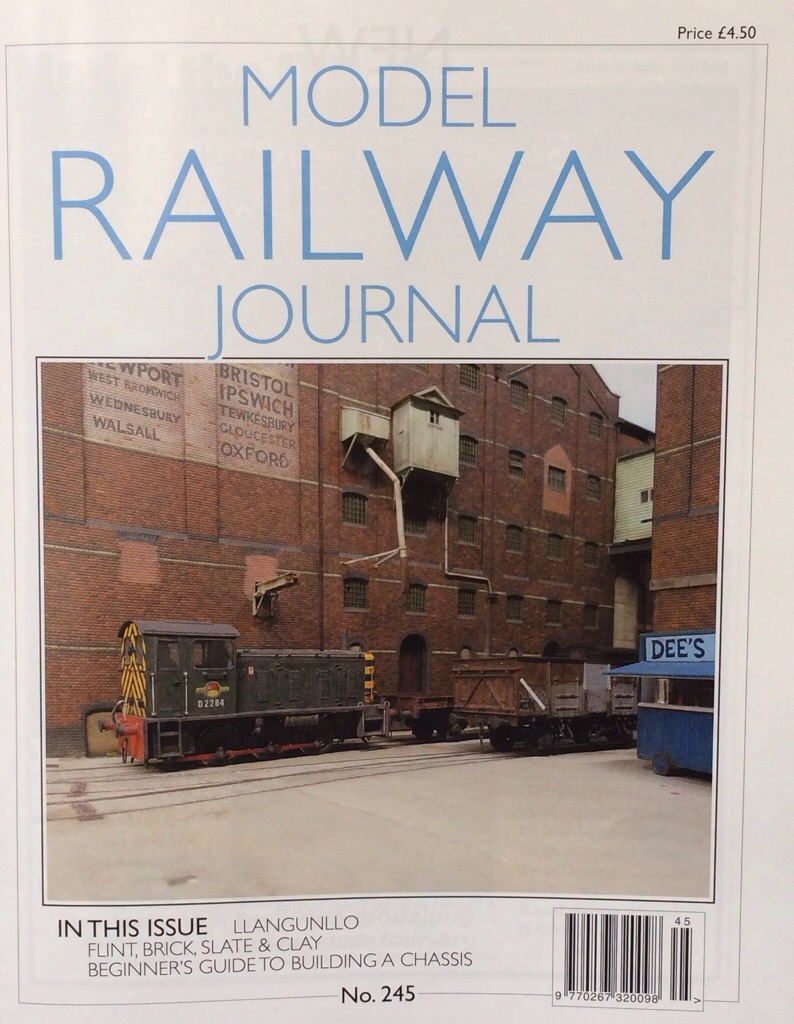
MRJ 245

20160220-121439-44079540.jpg

A shameless plug for my favourite magazine MRJ. This issue sees Geoff Forsters Llangunllo featured, regular readers may well have seen the links to Geoffs work on the blogroll on the right, if not follow either of these links
http://radnorailways.blogspot.co.uk/?m=1
http://thechroniclesofpenhydd.blogspot.co.uk/?m=1

The warehouses of Pete Johnson’s Canada Street are also featured and his work is often featured on EM gauge 70’s another really good website of authentic and interesting modelling.
http://www.emgauge70s.co.uk

Gordon Gravett looks at building materials working on his latest 7mm project, and Barry Norman starts building a 7mm chassis with techniques that cross over into other scales. It’s rare that there’s a poor issue of MRJ, and this one is definitely a good one. If you get time have a look though the other blogs and web pages featured on the blogroll, they’re all there primarily for one reason, they’re good!

N.B. No internet experts were harmed whilst preparing this entry.

_B6O4719.CR2

Posted in blog, blogger, blogging, Exhibition, hobbies, Hornby, Kalmbach, Layout, life, magazine, media, Model Railroad, Model Railway, Model Railway Journal, modeling, Modelling, n gauge, Nevard, OO Gauge, review, social media, toy train, toytrainset, train set, Welsh Marches, Western Region | 5 Comments

Pannier Throwback Thursday

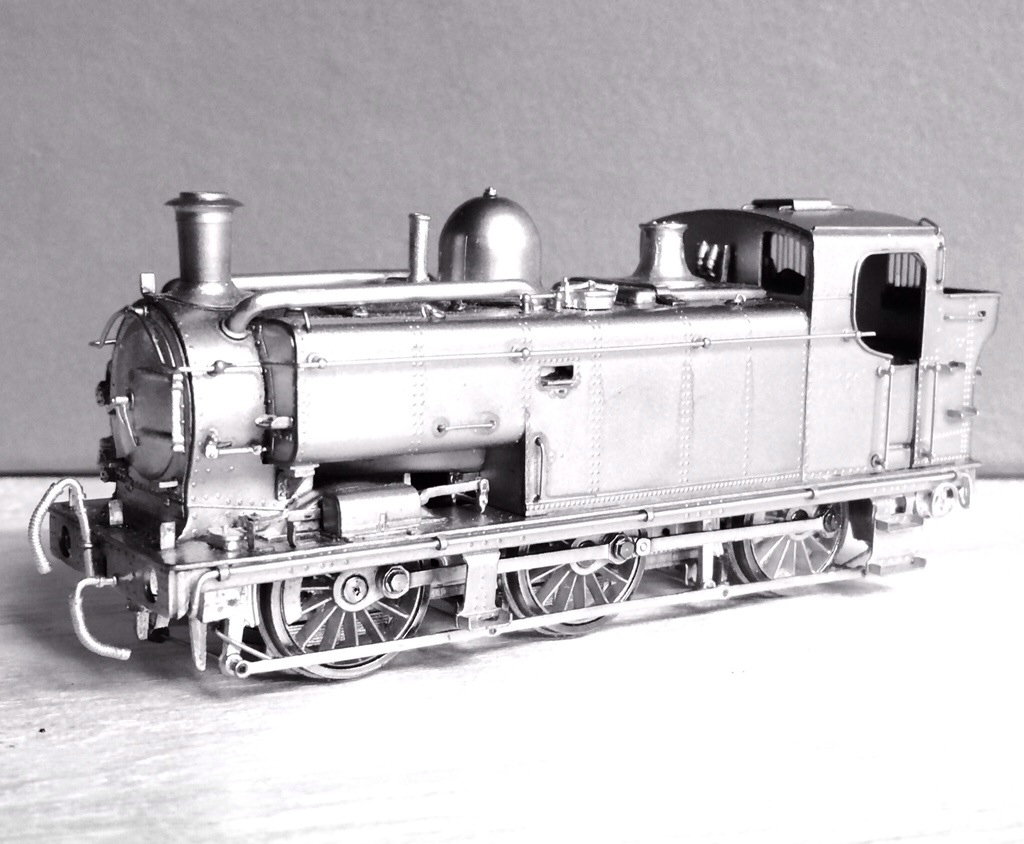
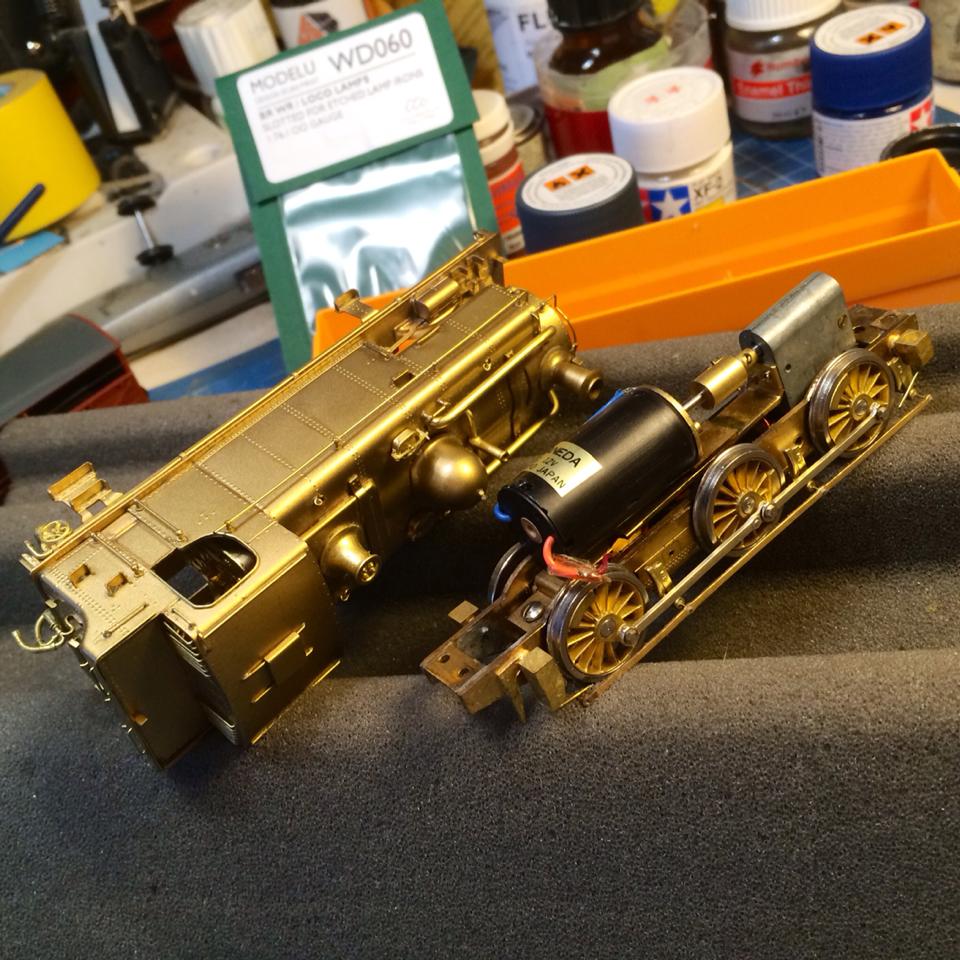
Samhongsa 97xx

Samhongsa 97xx

This week I’ve had the opportunity to spend time servicing my brass 97XX. This is a Samhongsa RTR model from the mid 1980’s and are in the real (not ebay) sense of the word ‘rare’. Korean and Japanese brass models were at the time the pinnacle of RTR models, and cost what for then were significant amounts of money, even now they’d be seen as expensive. In the mid 80’s the prices were around the £150 mark, compared to todays pricing that puts them in the £500 region.

I came by this one from a tip off from Adrian Swain who commented on line that there were a few locomotives coming up in an auction close to him. I found the auction house and made an online bid, as my bid went in the online link broke at the auction house end, so I didn’t know what was happening at their end. Fortunately after five nerve wracking minutes or so the link came back, they’d paused the auction and I was back in business. There appeared to be only one other bidder who lost interest quite quickly. I got it for a song, and couldn’t believe my luck when my number came up as winning bid. At the same time one had been on ebay for quite a while at a far higher price, I tried but was unable to get that one.

When my 97 arrived I was really pleased with its condition, the only downside being the box lid wasn’t correct and it had no buffers. Neither of those are problems for me, perhaps they were for the other bidders. In due course buffers will be fitted, and I’ll almost certainly paint it BR black it only represents two of the class due to there being no topfeed on the boiler. Some of the detail, cab internals in particular, are a bit crude, the cab is sealed its all solder construction so there’s little that can be done without major surgery.

Samhongsa Pannier

Samhongsa Pannier

The locomotive clearly hadn’t been run much, and I suspect not for a good few years. Initially the running was quite poor, any oils had dried out and little grease was on show around the sealed gearbox. Drive is from a substantial can motor via a cardan shaft and universal joint to a gearbox driving to the front axle. The shaft drive mechanism is quite crude, the universal joint being held in place with lock wire, which does give it a bit of float. The drive assembly is a very clever design, the motor sits on a pivot at the rear of the chassis, driving to the front axle. All the axles sit in sprung hornblocks so the chassis has fully sprung suspension. The Hornblocks sit in vertical cutouts with a simple spring from the top of the hornblock to the chassis cutout, all these had dried up too so using 0,4mm brass wire I applied oil to the bearings and cut out slides .I let them sit for a good few minutes for the oil to work its way around the joints before gently flexing them getting them moving again.

Samhongsa Pannier Gearbox

Samhongsa Pannier Gearbox

The vertical element of the gearbox had dried too, by taking the base plate off and then undoing the side plates allowed access to drop oil into the mechanisms re-seal them and in effect run the locomotive in. As I mentioned there was no real evidence of the model ever having been worked to any degree previously, I think a good number of these were showcase models as this one appears to have been. The electrical pickup is from sprung plungers on the back of some of the wheels, a deft touch of WD40 cleaned and lubricated them whilst the chassis had the oil ‘soaking’ the dry joints. I use Bachrus rollers for running in engines and within 15 minute or so this locomotive had lost all of the dry and jerky movements of an old mechanism and is now running really smoothly and quietly. It does occasionally stall on some of my layout trackwork, I think theres two elements to that, its still running in, and the pickups are only on two of the axles on one side. It may be worth adding some brass wipres into the mix there, and the drive shaft is long enough to put a flywheel on the motor shaft. These should help resolve any final running issues. It was interesting to look at how far advanced this model was for its time, and today we still don’t have such sprung chassis available in RTR models of this nature, definitely ahead of its time, even for a thirty year throwback!

_B6O4719.CR2

Posted in blog, Great Western, history, hobbies, Hornby, Layout, Midland Region, Model Railroad, Model Railway, Model Railway Journal, modeling, Modelling, Nevard, OO Gauge, samhongsa, throwback thursday, toy train, toytrainset, train set, Uncategorized, Western Region | Tagged , , , , , , , , , , , | 1 Comment

2016 British Toy Fair

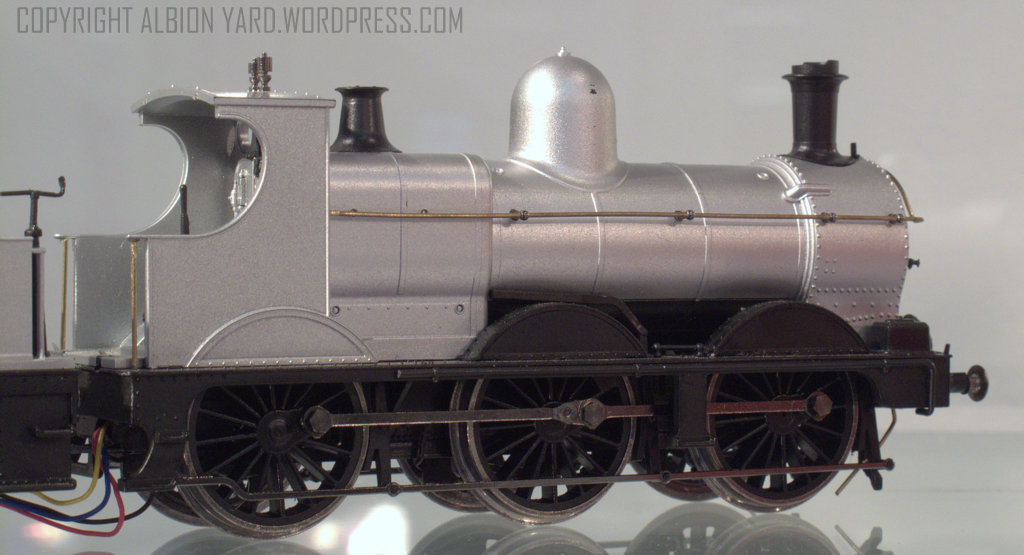
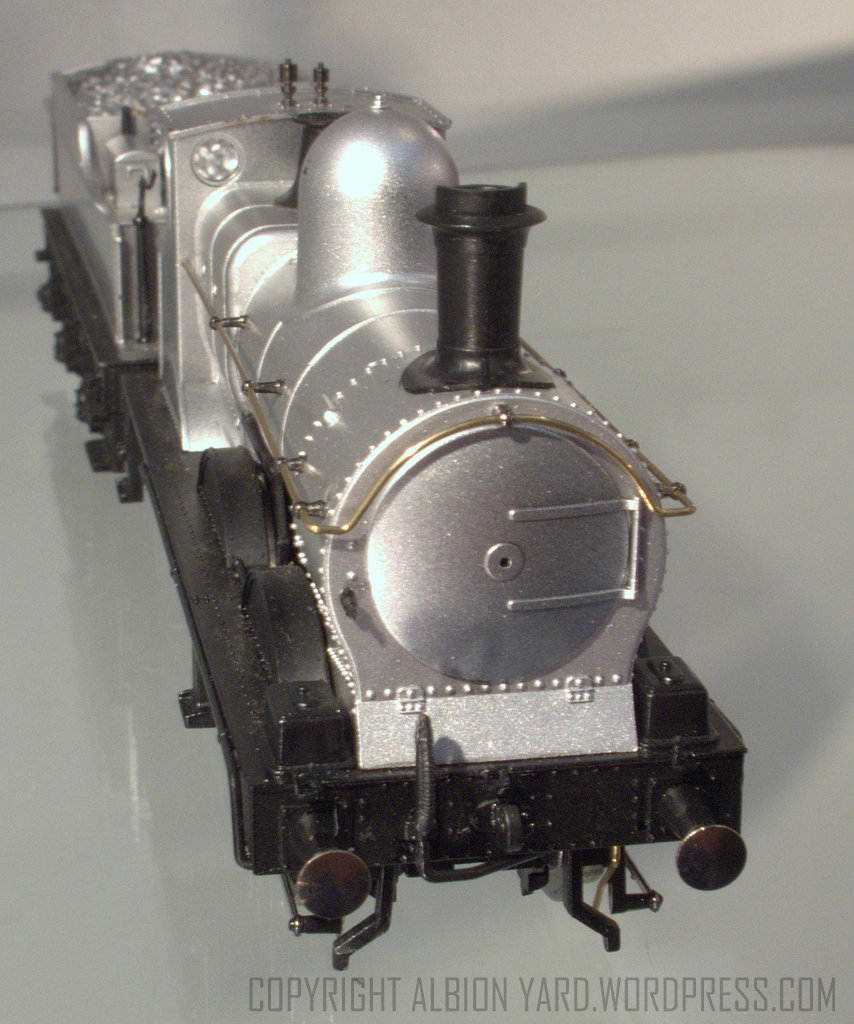
Oxford Rail Dean Goods OR76DG001  OR76DG002  OR76DG003

Oxford Rail Dean Goods
OR76DG001 OR76DG002 OR76DG003

A week ago I had the pleasure of visiting the London Toy Fair at Olympia courtesy of Oxford Rail. It was an interesting visit, very much the ‘trade’ show rather than the exhibitions we frequent. What was very apparent and clearly reflecting the importance of the event and the outlook of the exhibitors, was the clean well lit appearance of all the stands from all sectors of the ‘toy’ industry. For me the interesting companies were Oxford Rail, Hornby/Airfix and any other items that could cross over into railway modelling related interests, of these, Revell, the plastic kit company had a couple of pieces that ticked the box. Also for me of interest for both professional and business reasons was the number of radio control quad copters and similar flying machines that are making inroads into the ‘toy’ market.

Due to work commitments a late arrival meant I had limited time to spend at the event. Oxford Rail had announced for the Toy fair a new locomotive, the GWR Dean Goods, four new steam era wagons, and BR Mk3 coaches. New liveries were also announced for the Adams Radial, and the first test shots for the chassis and main body components of the Janus 0-6-0 industrial diesel were available to view.

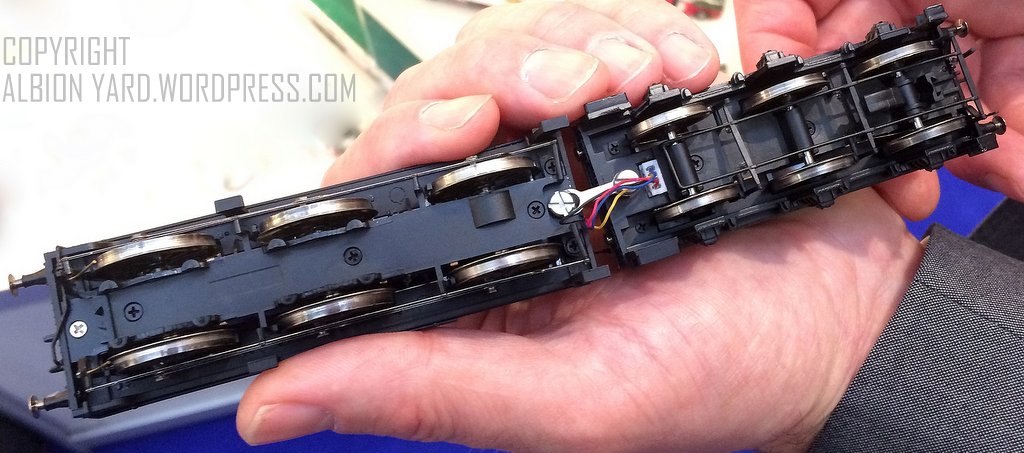
Oxford Dean Goods OR76DG001  OR76DG002  OR76DG003

Oxford Dean Goods
OR76DG001 OR76DG002 OR76DG003

The Dean Goods immediately looks good the proportions and finesse of the mouldings capturing the appearance from memory of the prototype very well. The sample here is one of the advanced engineering prototypes (EP), and had been subject to a couple of days intense examination at the toyfair. The following notes are based on a quick overview of the model and a few iphone snaps! Double click any of the images for larger! The superstructure of the locomotive and tender is plastic, with the running plate and lower boiler section cast metal. The weight of the model when handling it seemed appropriate if that makes sense, it certainly didn’t feel too light at one end of the scale and wasn’t made from depleted uranium at the other. On this Belpaire firebox version there are separate mouldings for the chimney, lamp irons, regulator, whistles, safety valve, rear cab springs and reversing lever. Handrails are metal with the EP’s main handrail knobs level rather than slightly angled. The prototype handrail fixings aren’t as prominent for being mounted on a radial from boiler centre as the J15 has, if left as is, once painted, my feeling is that it won’t be too noticeable.

Oxford Dean Goods OR76DG001  OR76DG002  OR76DG003

Oxford Dean Goods
OR76DG001 OR76DG002 OR76DG003

The footing of the flare at the bottom of the chimney looks a little large, but this may be an optical illusion caused by the high contrast between black chimney and silver body. Smokebox front captures the face of the locomotive with a steam lance fitting, and separate smokebox door dart. It’s not clear if there’s a separate fitting for a BR smokebox plate, or if its a separate slide tool which includes it. The split between the body and chassis looks like there’s potential for round top boiler version in the future. There’s good daylight underneath the boiler, with reversing rod and footplate handrails also included.

Oxford Dean Goods OR76DG001  OR76DG002  OR76DG003

Oxford Dean Goods
OR76DG001 OR76DG002 OR76DG003

The chassis drives to the rear axle, this looks like it could be a similar drive train to Hornby’s J15, the front of the motor and gear train not being visible. The motor is a skew wound five pole I didn’t get to see how much clearance there was for wider gauges on the loco chassis but the tender looks relatively easy to convert. One of the big visual impacts of the EP was the chassis, the brake pull rods being flat metal strip rather than plastic, and the wheels look well proportioned and profiled with smaller flanges than the earlier Adams Radial. The tender to locomotive connection has the appearance of being adjustable for close spacing, with a metal fall plate. The coal load is fixed and the space underneath is utilised for the DCC mounting. Currently, (toy fair week), there’s no sound hole provision for DCC sound, but I mentioned that an aperture of some kind may be useful for those who wish to add sound. Overall the Dean Goods looks a good step forward from their Adams Radial, which in fairness to it isn’t bad for a first locomotive. If you didn’t know which manufacturer was responsible for it, you’d easily place it in the Hornby/Bachmann brace of manufacturers, that I feel is a considerable achievement just based on its appearance.

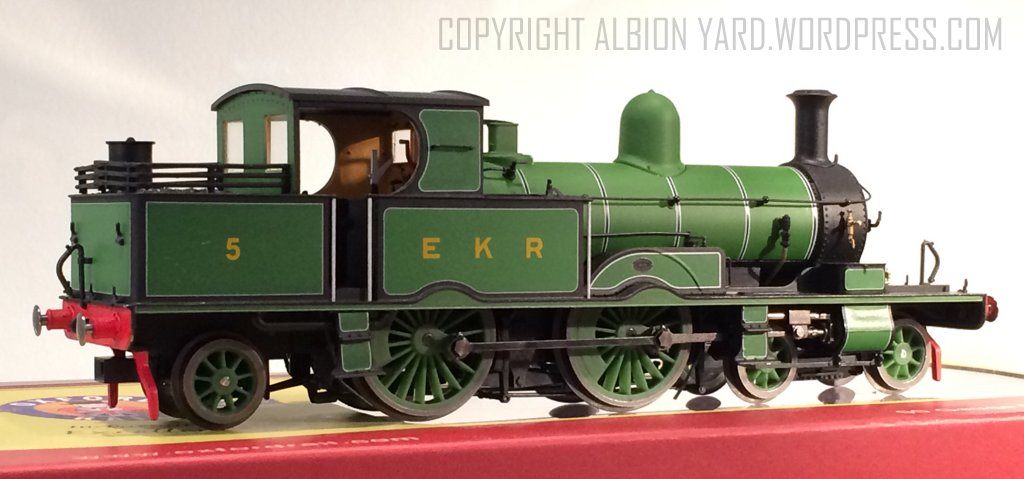
Oxford Rail Adams Radial OR76AR001 OR76AR002 OR76AR003 OR76AR004  OR76AR005 OR76AR006

Oxford Rail Adams Radial
OR76AR001 OR76AR002 OR76AR003 OR76AR004 OR76AR005 OR76AR006

There are a couple of new liveries for the Adams Radial, and the handrails are now supplied blackened which has made a massive visual difference to the BR Black version in particular. A few engineering tweaks have been made to the chassis to improve performance. I managed a look at the Hornby Adams Radial which shows a very different design for the Radial truck. On the Oxford model the rear axle is rigid, Hornby have gone for a cast rear bogie in effect which has lateral movement guided by a radiused channel with no noticeable fore and aft movement, and a limited amount of vertical play too. The split between chassis and radial bogie is well engineered and almost impossible to detect, the Hornby front bogie is very similar to Oxford’s but with a small cut away at the top giving clearance for Vacuum pipes and a little more ‘toe up’ than the original Oxford offering. Detail and paint on both Hornby and Oxford models was very good, both types scoring well for me on the windows which show very little refraction from the edges.

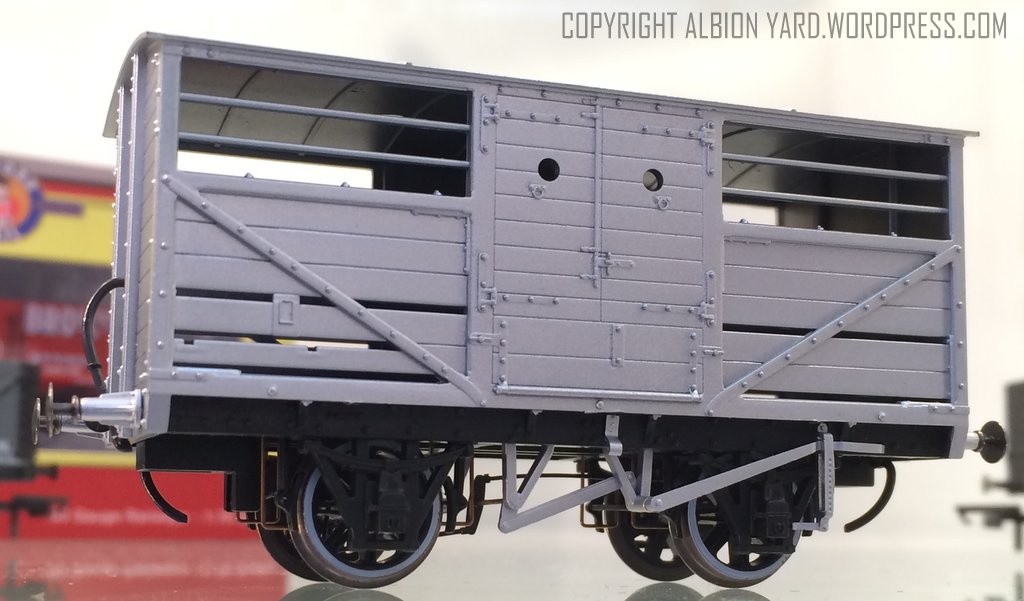
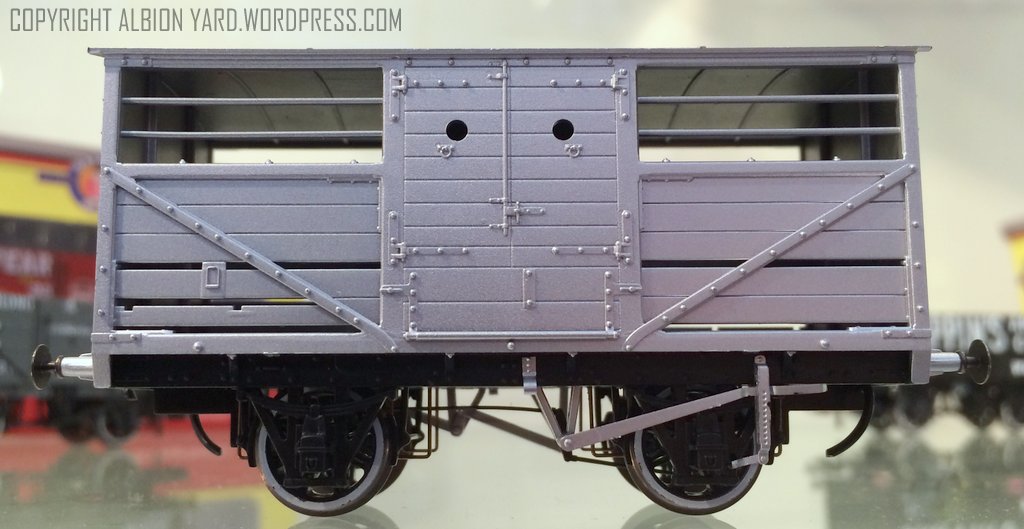
Four wagons were announced at the fair, three new toolings with a North Eastern/Scotland area applicability. The fourth wagon announcement were further liveries of their 7 plank RCH private owner. The cattle wagon and 6 plank are good country wide choices, the four plank being more restricted in its travels and is closely associated with ‘the north’. Another interesting development was the announcement of weathered versions in the offing too, no samples were available to show the weathering style Oxford will use.
NE/LNER/BR Cattle wagon

NE Cattle wagon OR76CAT001 OR76CAT002

NE Cattle wagon
OR76CAT001 OR76CAT002

NE Cattle Wagon OR76CAT001 OR76CAT002

NE Cattle Wagon OR76CAT001 OR76CAT002

NE/LNER/BR 6 plank open

NE 6 Plank Open OR76MW6001 OR76MW6002

NE 6 Plank Open
OR76MW6001 OR76MW6002

NB/LNER/Private Owner 4 plank

Oxford Rail North British 4 Plank OR76MW4001  OR76MW4002  OR76MW4003 OR76MW4004

Oxford Rail North British 4 Plank
OR76MW4001
OR76MW4002
OR76MW4003 OR76MW4004

BR Mk3 coaches are in the line up too no specific liveries/variants were announced and no samples or test shots were to hand, I got the strong impression that the development of the range will be market led, i.e. the most popular liveries/versions requested may take a priority. Oxford mention they have a joined up approach to the development of their product range, and demonstrated a suitable Vegas poker face when asked about the MK3 stock and what else could be in the planning motive power wise.

The Oxford/Golden Valley Janus industrial 0-6-0 diesel shunter initial mould shots were available. On quick inspection they looked good with a degree of finesse about them that should please the market. One of the elements being looked at is a DCC sound configuration, and these early stages suggest a design likely to include a ‘sugar cube’ speaker specific sound installation. There was no confirmation if that was to be an option off the shelf, or an after market fitting.

Collett Bow Ended Stock R4684 R4685 R4686 R4787 R4688

Collett Bow Ended Stock
R4684 R4685 R4686 R4787 R4688

An even briefer visit to Hornby was also of note. A brief discussion outlined that Hornby recognise that new entrants need to be encouraged, with the realisation that the buying market as it stands is dominated by the 40+ age category, fine for today, but bluntly, a limited life expectancy. This appears to be one of the key drivers behind the Hornby Junior range, battery powered train sets. Not a product that I think most of the readers will be interested in but good news that Hornby are considering ‘future proofing’ the company. If it works for them they will build brand loyalty and interest from an early age. Even if the juniors take a sabbatical to chase ‘gurls/arse/drink’ etc, perhaps the ingrained red box loyalty will pay dividends for them in the long game. Airfix and Hornby are under the same umbrella these days, one of the interesting Airfix boxes on display was for a Steam locomotive working model. It’s clearly based on, or is a Q6, which would make sense if Hornby already has the data to hand. This kit fits in the Airfix range as a cutaway model, there already being an internal combustion engine and a high by pass jet turbine in the proposed range. Price will be approximately £30.00, and no tender included.

Airfix Engineer

Airfix Engineer

There was little in the ‘other manufacturers’ field to look at, of note though Revell had a stand there with their range of plastic construction kits. The one thing that really caught my eye was the 144th scale Flower Corvette. This has obvious applications for N/2mm scale modellers, and some interesting forced perspective opportunities for larger scales.

Flower Class Corvette 05132

Flower Class Corvette
05132

An interesting show then, and to cap it all a few days later at Nuremburg those dastardly chaps at Peco, upset the ‘OO proper track’ contingent.  Unbelievable!

Devon Company Makes Track Exclusive!  www.trackmanufacturermakestrackshock

http://www.oxfordrail.com/

http://www.hornby.com/uk-en/

http://www.airfix.com/us-en/

http://revell.com/

_B6O4719.CR2

Posted in 2016, Airfix, blog, DCC, dcc sound, Exhibition, hobbies, Hornby, iphone, media, Model Railroad, Model Railway, Model Railway Journal, modeling, OO Gauge, oxford, research, revell, review, social media, toy fair, toy train, toytrainset, Uncategorized | 19 Comments

PC87 Parkside LMS Dia 1661 Cattle Wagon Review (4mm Scale)

PC87 Parkside LMS Cattle wagon

PC87 Parkside LMS Cattle wagon

Parkside PC87 4mm scale Cattle Wagon kit
LMS Dia 1661 £9.00

The Parkside kit represents Diagram 1661, an unfitted cattle wagon. The LMS built 2,050 of these wagons between 1923 and 1926. They lasted in use until the early 1960’s. The kit is supplied with Romford OO 3 hole disc wheels and brass hat bearings. Parkside on request will supply kits with Alan Gibson wheels in OO, EM or P4 at a small extra cost. Also included in the kit are coupling mounts compatible with contemporary Hornby and Bachmann tension lock couplings. Straight brass wire is included for railings and plastic microstrip for wagon side battens.

The kit is a straightforward build and can be completed within an evening. The main body is a simple box construction, all components fitting accurately and no filling or modifications required. All mouldings are clean and flash free. There are similarities with the O gauge range in the chassis construction, where the guard irons and axleboxes are separate from the solebar. However these presented no problems in assembly and the chassis builds up square and true. With the axleguards being separate the option for fitting suspension for those modellers working in the finer 4mm gauges will be easier. Brake gear is ‘independent’ on this diagram so take care when assembling this section of the kit, however the instructions give appropriate guidance here, and for all other sections of the build. Images show underneath the drop door there is a bumper strip affixed to the solebar. This is not included in the kit, but on the buffer sprue there are bumper strips for a mineral wagon which could be easily adapted.
The most involved sections of the kit are the sides, including bars for the open section. Straight wire is included to be cut to length and there are marked fixing points for them. For this review the bars were held in place with superglue, with extra work they could be fixed with drilled holes and right angle bends at the bar ends. The sides of the wagons have a diagonal strap which is supplied as thin microstrip. In the images I have for the prototype, the top corners of these fix on to a square block which does not appear on this kit, though if required could be easily made from plasticard section. The diagonal section is provided for using microstrip, however my wagons get handled frequently and this microstrip was replaced with phosphor bronze strip for extra strength. The roof fits accurately and the partition section for the inside of the wagon needs to be fitted prior to fitting the roof. No strapping is provided for the roof detailing however the section not used for the side diagonal will be suitable for this task. The roofs on images show a variety of strapping placements and number of straps, I copied one version with four straps as can be seen on the review image/s.

PC87 Parkside LMS Cattle Wagon

PC87 Parkside LMS Cattle Wagon


Painting and livery details cover LMS and BR/MR unfitted wagons and no transfers are supplied. Overall a very easy and accurate kit to build, its well worth considering if your era covers 1920 through to the 1960’s. Whilst the kit represents a fitted version, it will make the basis of through piped, and fitted versions, giving access to further variants of the LMS cattle wagon fleet if the modeller so desires.

_B6O4719.CR2

Posted in Branch Line, British Rail, hobbies, Hornby, Layout, LMS, Midland Region, Model Railroad, Model Railway, Model Railway Journal, modeling, Modelling, Nevard, OO Gauge, research, review, Scottish Region, toy train, toytrainset, train set, Uncategorized | Tagged , , , , , , , , , , , , | 1 Comment

Wordless Wednesday Modelu

20160127-143922-52762884.jpg

Home

Posted in blog, Forest of Dean, hobbies, Hornby, media, Midland Region, Model Railroad, Model Railway, modeling, Modelling, Modelu, Nevard, OO Gauge, social media, toy train, toytrainset, train set, Western Region, wordless wednesday | Tagged | Leave a comment

R3325 Hornby J50 Review

R3325 Hornby J50 (R3324 R3326)

R3325 Hornby J50
(R3324 R3326)

Announced in December 2014 and delivered December 2015, the OO gauge, 4mm scale, J50 from Hornby has arrived. The example reviewed here is the early BR Crest J50/4 catalogue number R3325. Packaged in the typical outer sleeve and cardboard inner box, the model arrived with no damage. The locomotive sits in a vacuum moulded plastic tray with outer sleeve, also included is the detailing pack and NEM pockets and tension lock couplings, The detail kit comprises brake pull rods, which when fitted don’t foul the carrying tray!, and vacuum/steam heating pipes correct for the J50/4. It will be down to the purchaser to fit the couplings and NEM sockets, unusual, for a small tank engine. How the section of the modelling community that seems to require models to be designed for those who wear boxing gloves react, remains to be seen.

R3325 Hornby J50 (R3324 R3326)

R3325 Hornby J50
(R3324 R3326)

Straight from the box the first impressions are good, it’s certainly ‘big boned’, tipping the scales at 278 grams, I get the feeling empty coaching stock up Holloway bank will be well within its grasp. As mentioned, no bits had fallen off during shipping and the quality matt finish and printing of the emblem and numbers are all clear and legible. On DC the locomotive runs smoothly and very quietly, with no evidence of cogging or quartering problems. I’ve not done any DCC running with this model, (I rarely use it), but the DC running properties bode well for a DCC installation.

R3325 Hornby J50 (R3324 R3326)

R3325 Hornby J50
(R3324 R3326)

The model depicts one of the last batch of J50’s built. The locomotive was built at Gorton Works in Manchester in 1939, just before the Second World War. Several other batches were ‘on order’ in wartime but subsequently cancelled due to other suitable types becoming available. This locomotive 68987 (8987 & 585 under LNER numbering), falls into the classification of a J50/4. Built in May 1939 with Vacuum brakes and withdrawn in April 1962 the details as modelled by Hornby correctly reflect this variant of the J50. Easy to identify features of this sub class are the large bunker almost to roof height, fluted coupling rods, balance weights on the wheels, steam injectors ahead of cab foot steps, Ross pop safety valve on the higher boiler seating, a cut away under the smokebox for the valve chest covers and LNER Group Standard (sprung) buffers.

R3325 Hornby J50 (R3324 R3326)

R3325 Hornby J50
(R3324 R3326)

The detail additions on the model are all well fitted with a good deal of finesse to them, however there is a bit of a throwback to ‘design clever’ with the bunker lamp irons being moulded on in relief. For me that’s acceptable, being able to produce and fit neatly separate lamp irons would be a nightmare, and it at least gives us something to do! The front buffer beam has five lamp irons, which initially seems odd as they all face forward, however it is a configuration seen on the prototype. I’d be interested to know why some engines had this variation.

R3325 Hornby J50 R3324 R3326

R3325 Hornby J50
R3324 R3326

On this high bunker version the coal moulding can drop out easily, leaving a 5mm or so recess to a flat floor which looks a little odd (see above), I may open up the bunker as I do on my Pannier locomotives. There is a discrete but noticeable joint line at the front and rear of the cab level with the side tank top, this is likely to be the split to allow the different cab types of other variants of the class to be fitted. Internal cab detailing is good including the crew brake standard. The large front spectacle lenses are separate pieces, and commendably thin with little refraction due to edge thickness. With the prototype being pretty utilitarian there is little in the way of ‘fittings’ on the superstructure. The curved cab roof profile reflects the later LNER Group composite rolling stock gauge, the early batches had a different profile and interestingly weren’t subsequently modified.

R3325 Hornby J50  (R3324 R3326)

R3325 Hornby J50
(R3324 R3326)

The side tanks reflect the sloping front design to improve crew visibility. The handrails are blackened wire and good scale sized handrail knobs, including those against the mainframe, set inside the tank cutaway. The tank cutaway was a design feature to aid access to the locomotive motion for maintenance staff, there is a basic representation of part of the motion on top of the chassis, highlighted by daylight visible from underneath the boiler. Sandbox fillers are well formed and the actuating gear represented too, as indeed are the unusual profile sandboxes. The centre footplate steps wrap round these sandboxes and Hornby has represented them very well, the footstep thickness in fact are noticeably thin (across all the footplate steps), whilst still retaining reasonable handling strength. One problem I did have was that the sandpipes adjacent to the central steps are very fragile, one of mine breaking during handling. Once you have the body off make sure it’s supported and not resting on these pipes! However, for me it’s going to be a repair with a bit of brass wire! The face of the locomotive is captured well, the smokebox door including separate smokebox darts of a scale appearance and fine wire handrails. This version exhibits the cut away valvechest covers underneath the smokebox correct for this batch of locomotives. One detail missing is the lift ring holes in the top of each side of the mainframes, like the Sentinel lift rings this will be an easy job to drill out to improve the look. Boiler fittings are good overall, the chimney and dome look well shaped and in proportion. The cast iron stand for the Ross pop valves looks good but the valves themselves lack the crispness of the rest of the mouldings, like the injectors and whistle for example.

R3325 DCC Decoder Compartment

R3325 DCC Decoder Compartment

The assembly of the body and chassis is a simple three screw fitting and the body easily separates from the chassis. If fitting a DCC chip one side of the tanks has a removable section, held in by a cross head screw. Undo the screw, turn the body the right way up and the weight will fall out. If the body is upside down it doesn’t. Don’t ask. Its ten minutes of my life I won’t get back. The DCC socket is an 8-pin fitting and there may be room to fit a small chip without removal of the side tank weight. The instructions recommend the Hornby decoder R8249. Fitting a sound speaker and keeping it discrete may be a challenge in this model, the chassis includes a moulded weight which sits inside the bunker, so a sugar cube fitted into the cab may be a suitable option.

R3325 R3324 R3326 Hornby J50 Chassis

R3325 R3324 R3326
Hornby J50 Chassis

The chassis is powered by a five pole motor fitted to a flywheel with a vertical gear tower to the central axle. Assembly was very neat and no problems with clearances for wiring or looms.

R3325 R3324 R3326 Hornby J50 Chassis

R3325 R3324 R3326
Hornby J50 Chassis

R3325 R3324 R3326 Hornby J50 Chassis

R3325 R3324 R3326
Hornby J50 Chassis

Electrical pick up is through phosphor bronze wipers bearing on the back of all driving wheels. The driving wheels are correct diameter with the balance weights correctly placed slightly proud of the rims themselves, and a nice flare from the boss to the rim on the spokes.

R3325 Hornby J50 R3324 R3326

R3325 Hornby J50
R3324 R3326

Clearance looks a little restricted for EM/P4 wheelsets, particularly around the wheel splashers for a drop in replacement, but there’s nothing in either body or chassis design that looks like it’ll cause major problems for the wide boys.

So another good, timely release from Hornby. On the mark with the dimensions, overall shape, finish and performance. The one thing I’ve not mentioned is the price, late 2015 at £80.00, that for me, is pretty good value for money. There’s no doubt that prices are going up in the ready to run sector, but on the strength of this and other similar releases like the Bachmann 64xx, ‘we’ are still getting value for money.

Hornby J50 R3325 BR Early Crest ‘68987’
R3325-47-078
LOT01-P91812

J50 service sheet.hornby.com

_B6O4719.CR2

Posted in blog, DCC, dcc sound, Eastern Region, hobbies, Hornby, Layout, LNER, magazine, media, Midland Region, Model Railroad, Model Railway, Model Railway Journal, modeling, Modelling, Nevard, OO Gauge, r3324, R3325, r3326, research, review, Scottish Region, shopping, social media, toy train, toytrainset, train set, Uncategorized | Tagged , , , , , , , , , , , , , , , , | 6 Comments