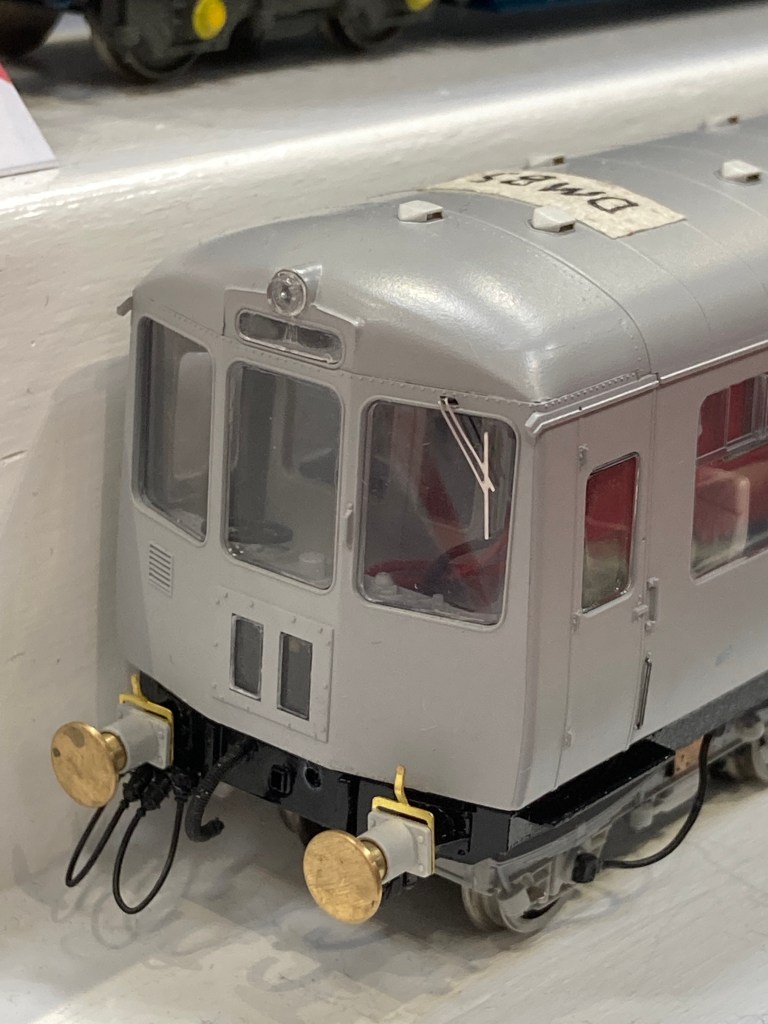
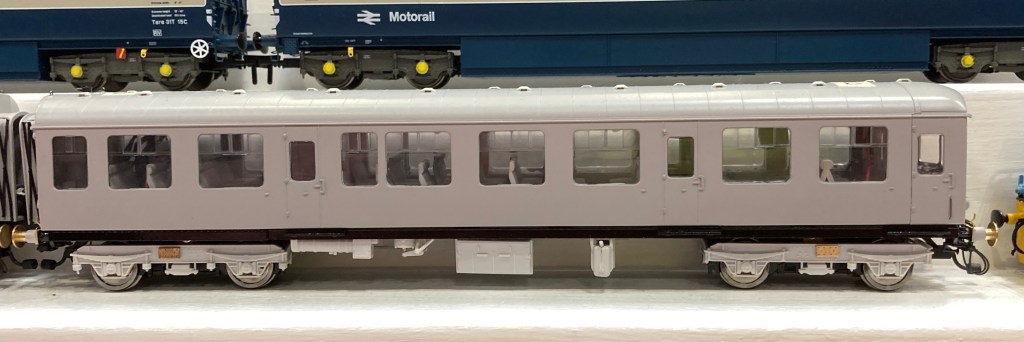
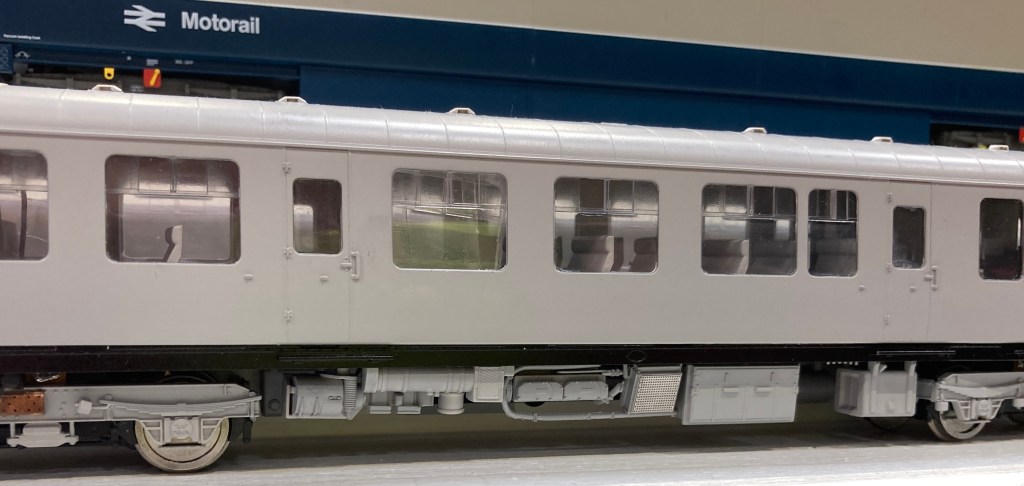
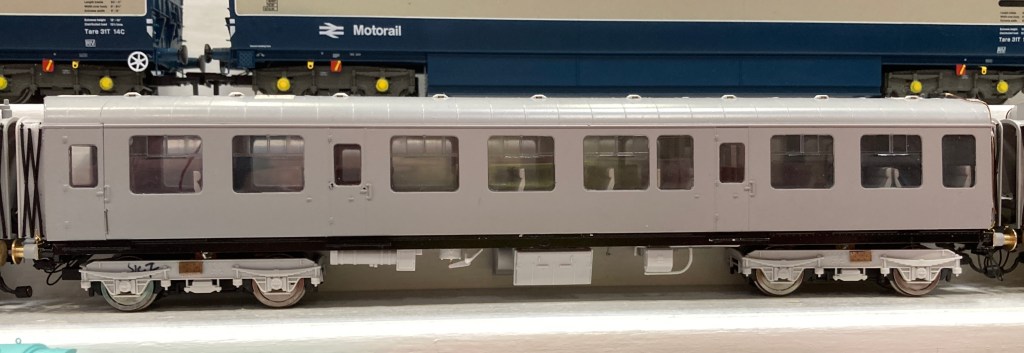
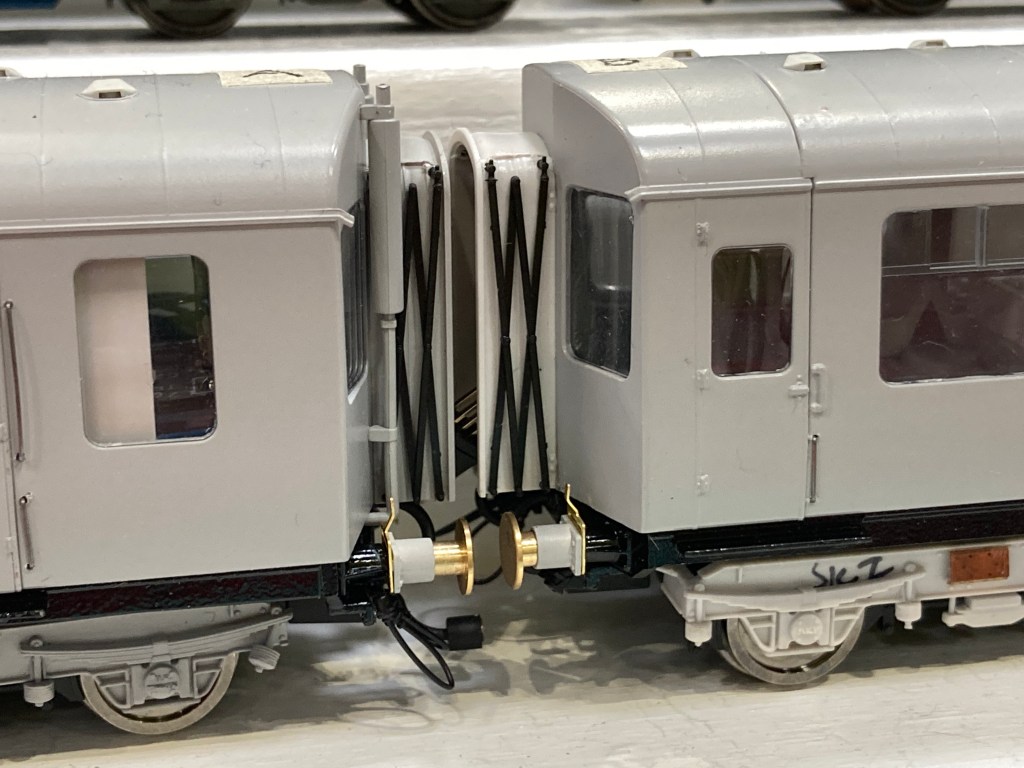
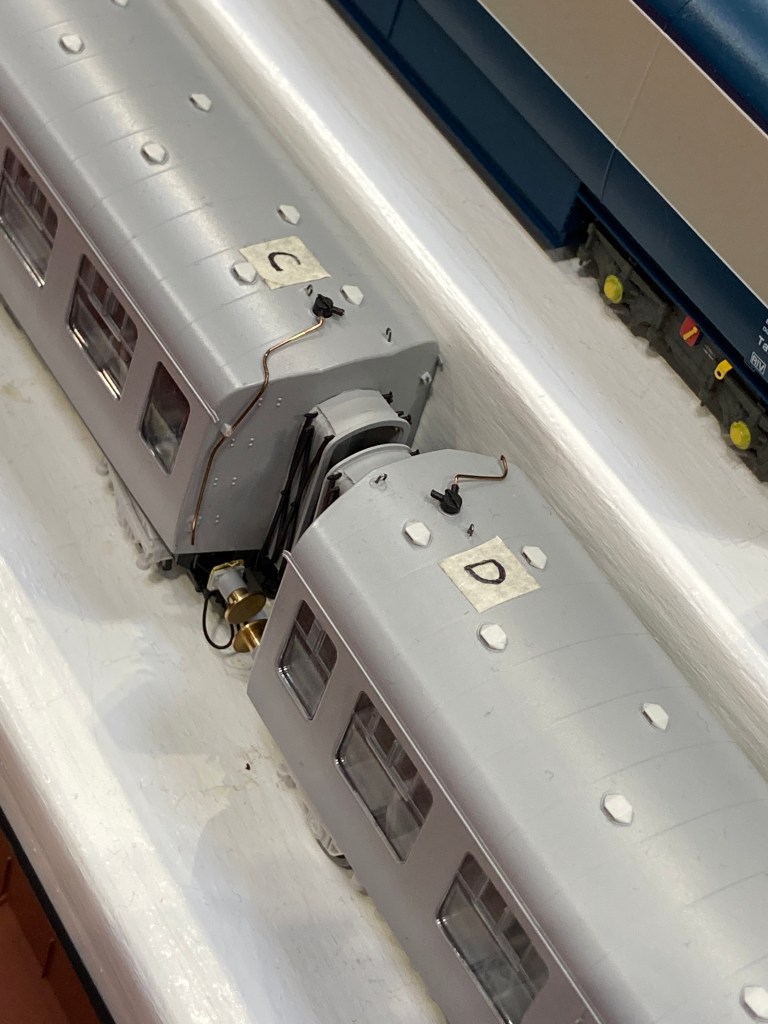
Warley for me was a full day of just catching up with people face to face, after around two years. Here’s a selection of the Heljan products on show. I’m particularly taken with the class 104.
Heljan OO Class 104Heljan OO Class 104Heljan OO Class 104 Heljan OO Class 104Heljan OO Class 104Heljan OO Class 104Heljan O Gauge Class 58Heljan O Gauge class 58
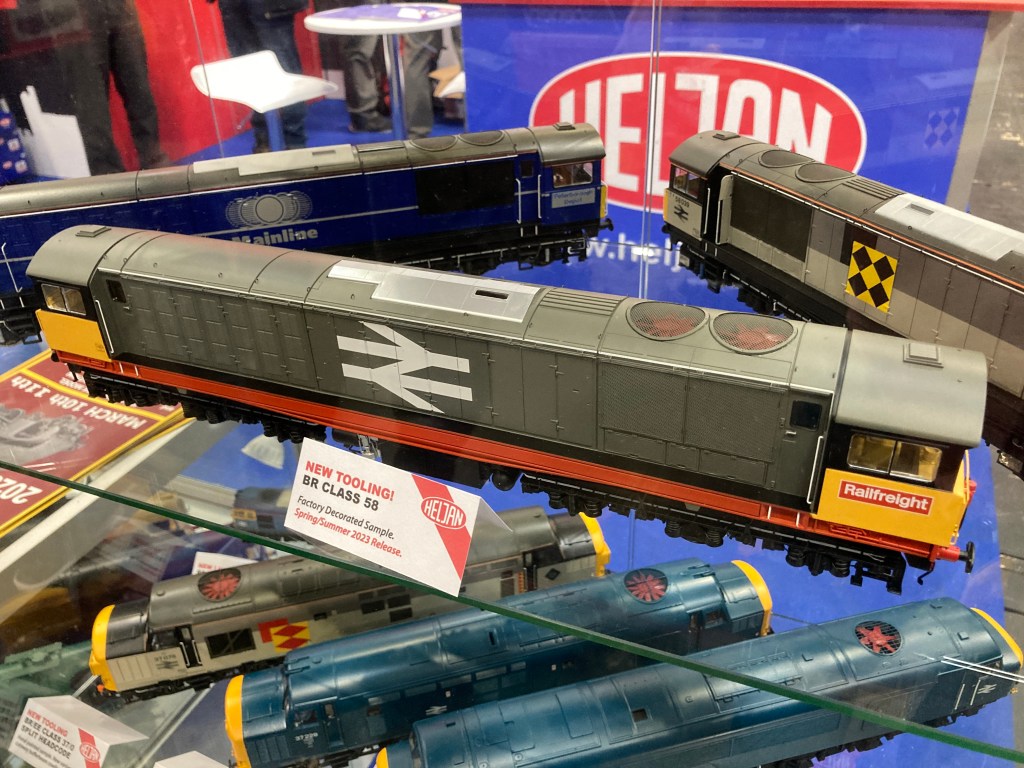
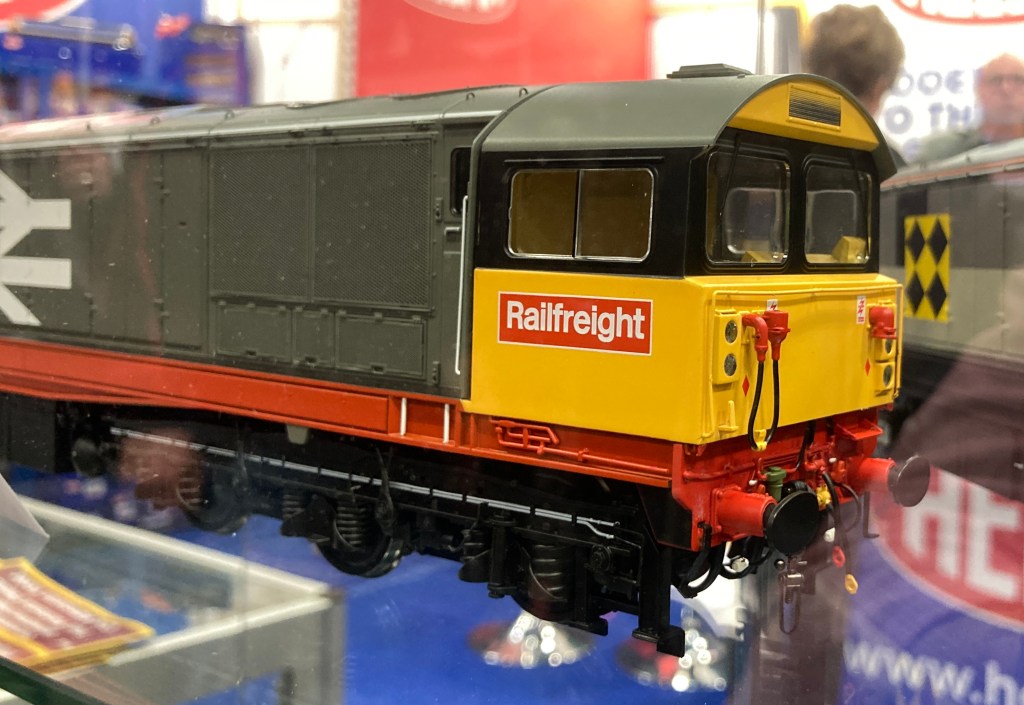
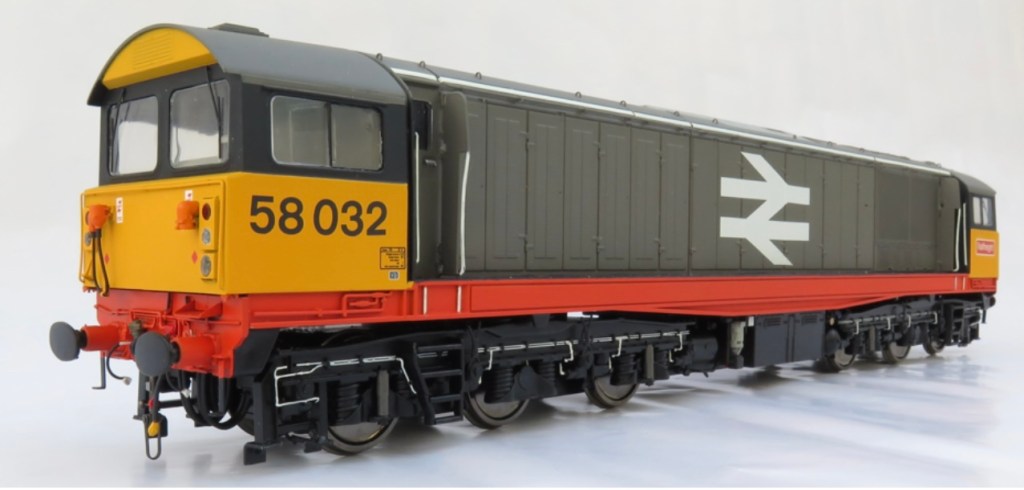
The class 58 wasn’t a type I regularly saw on the southern end of the east coast main line, but the EP here certainly captures for me the look and mass of the type.
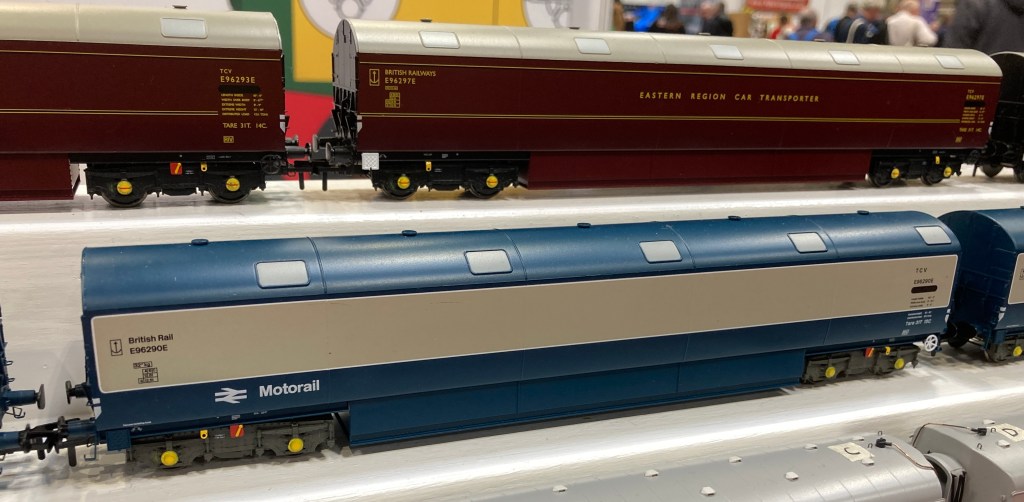
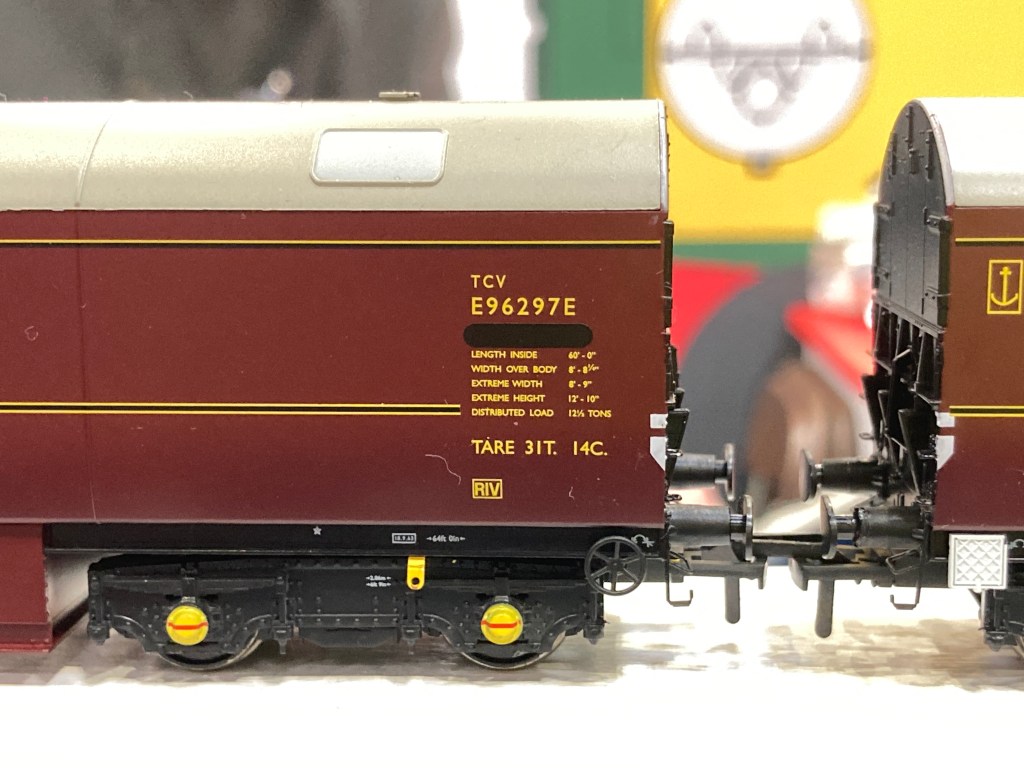
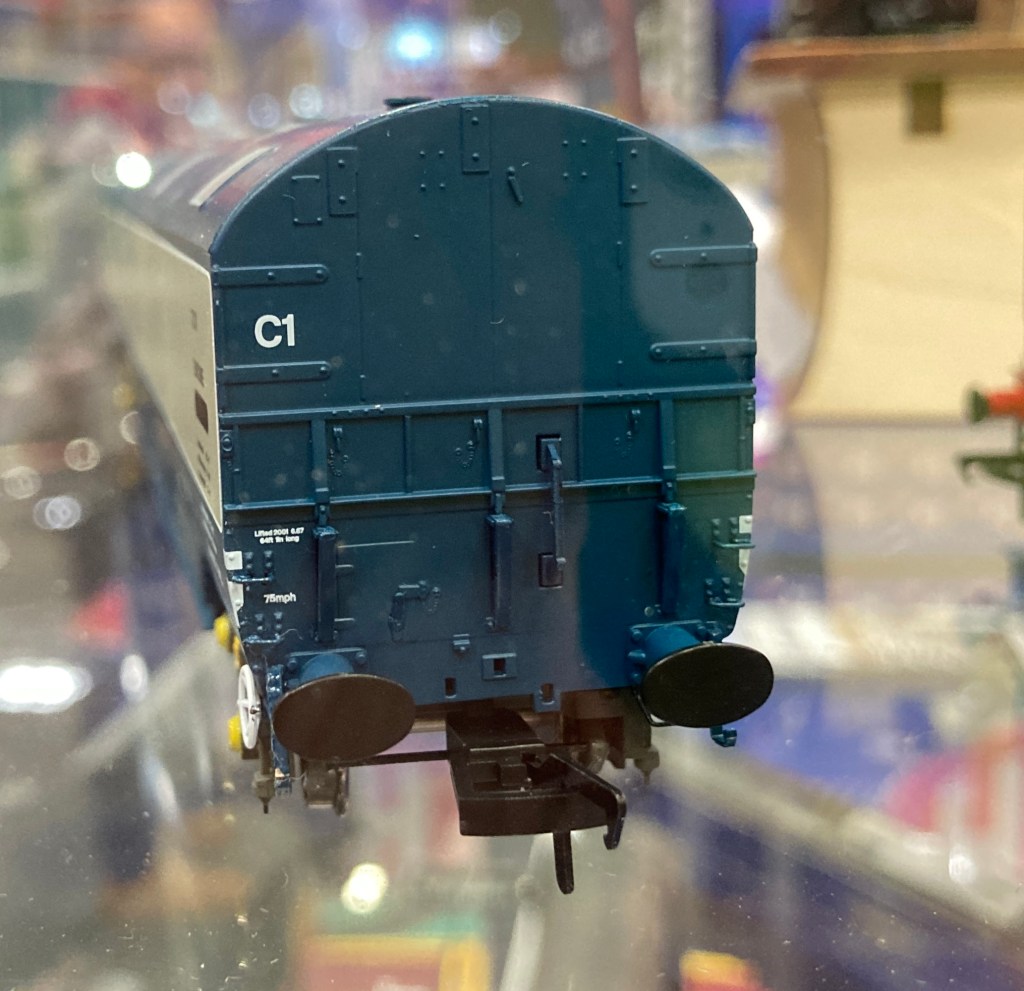
Heljan OO Newton Chambers car carrier
These I recall clearly, frequently sitting in the parcels bay on the west side of Kings cross accompanied by either GUV’s or Mk1 BG’s. Modelling Kings Cross in the D&E BR blue era is getting easier! Going into wish list mode how cool would 313’s and 312’s be with them.
Heljan OO Newton Chambers car carrierHeljan OO Newton Chambers car carrierHeljan OO Newton Chambers car carrier
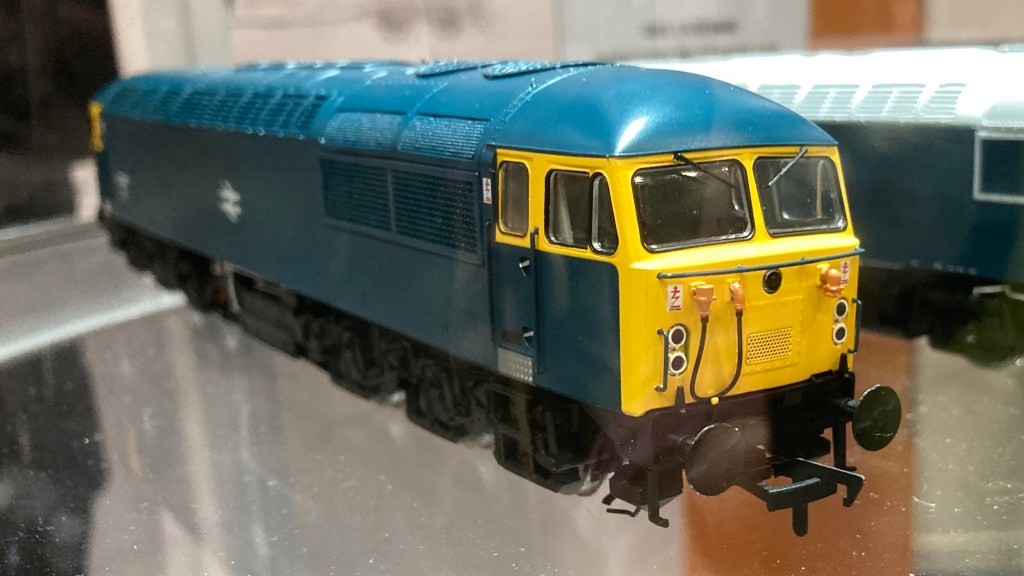
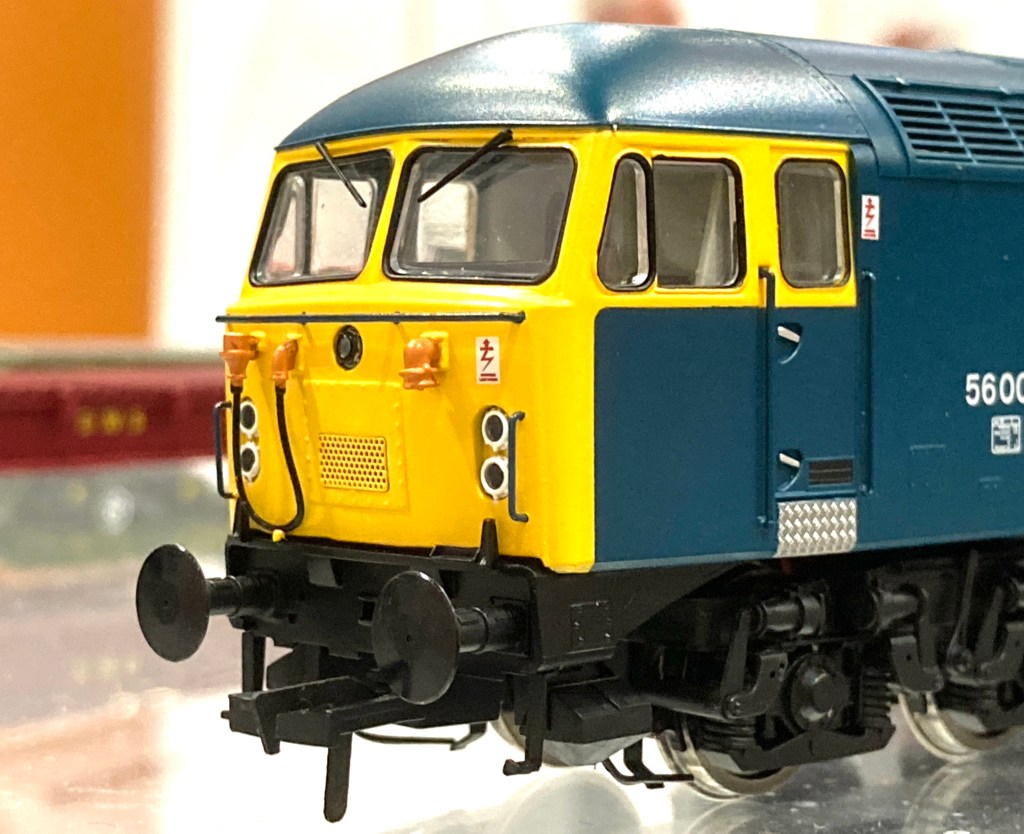
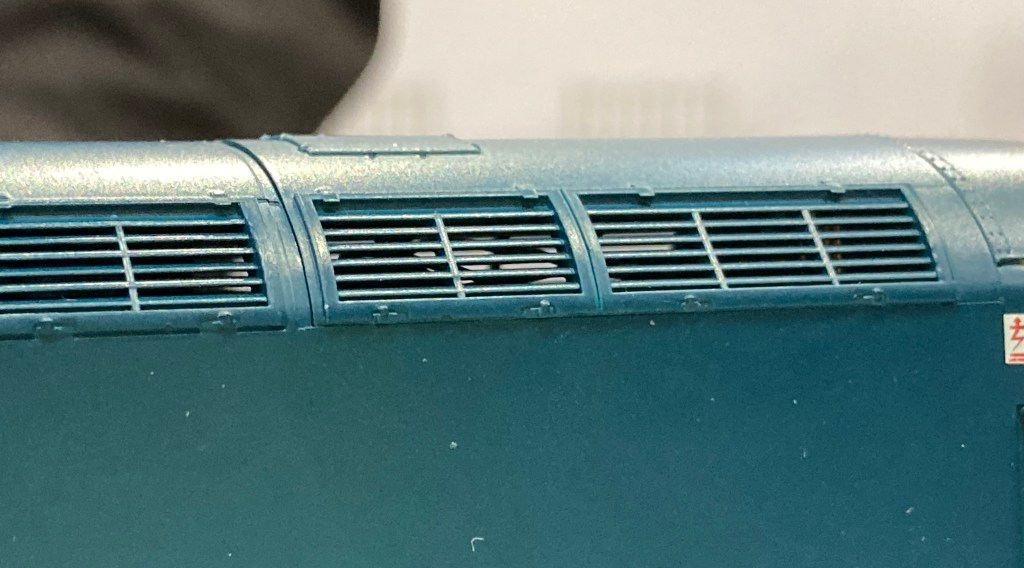
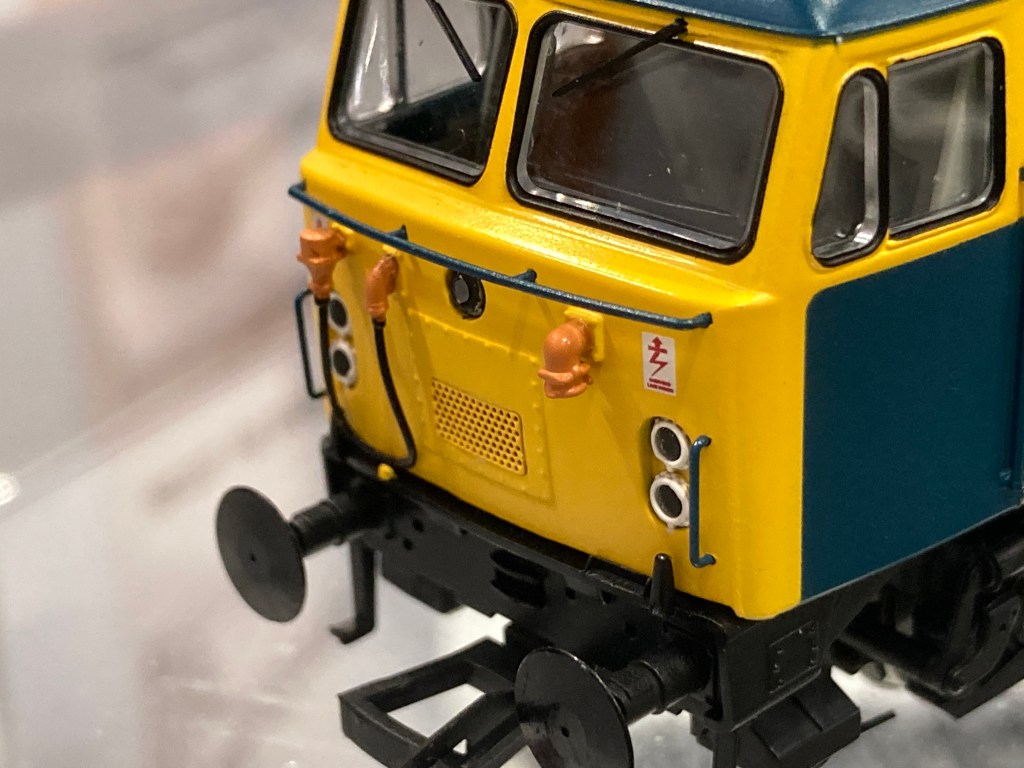
Here at Warley for the first time in two years. A good vibe around the place and well attended. Getting into BR blue the EP from Cavalex is really looking good. Easy chip access, and exquisite detailing being of note, including the roof louvres being open.
Walk past Cavalex 56Cavalex OO class 56
The footsteps and kick plates showing excellent attention they detail.
Easy access via magnetic roof panel Cavalex class 56
The face is I think particularly good with the windows and cab profile looking the part. The open shoulder louvres are very apparent when viewed side on, it’s this sort of capture that I think will make this a very popular model. The finesse of them stands apart from other earlier models that have tried to replicate similar features.
High-quality ‘O’ Gauge powder tank wagons for cement and chemical traffic to be released in 2023.
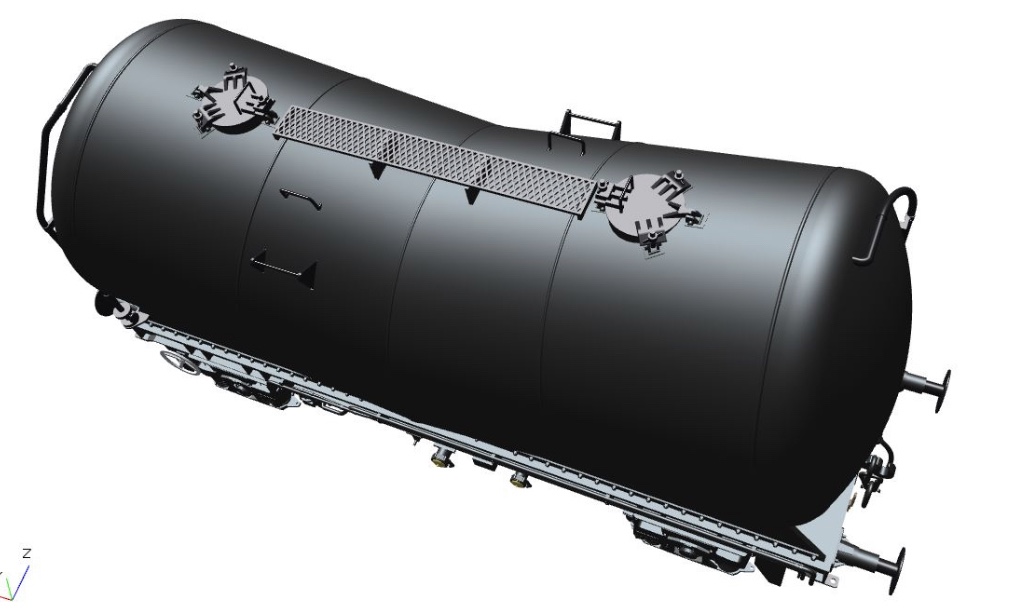
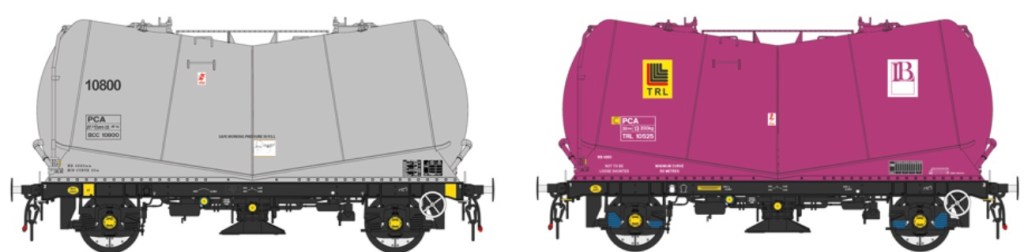
One of four exciting announcements from HELJAN this weekend at the Warley National Model Railway Exhibition is an all-new PCA powder tank wagon for O gauge. These superb new models are being produced exclusively for Realism Redefined, the retail arm of ‘Britain’s Biggest Model Railway’.
Realism Redefined O Gauge PCA Tank Wagon
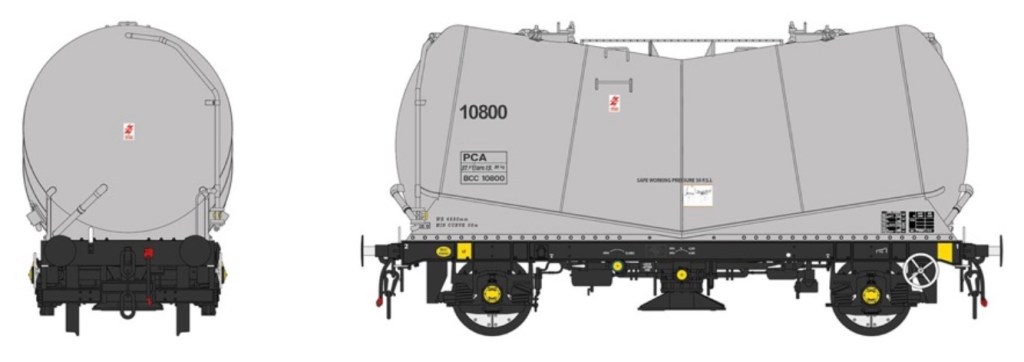
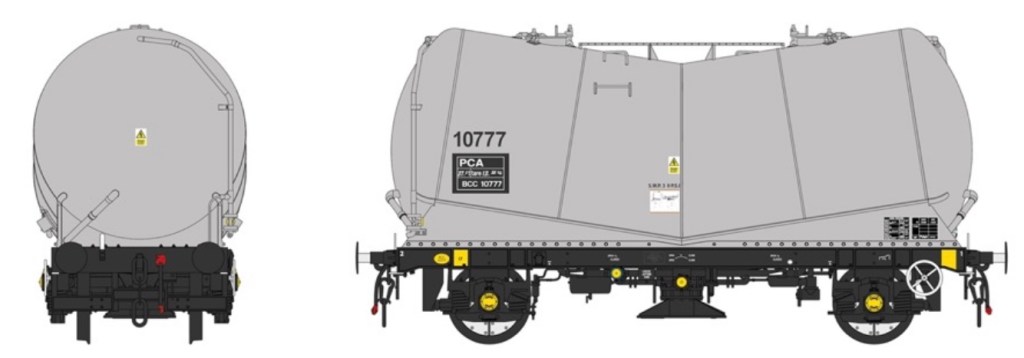
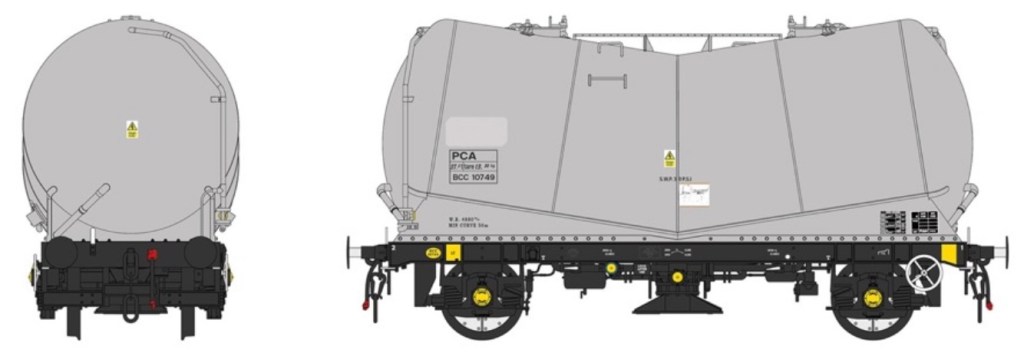
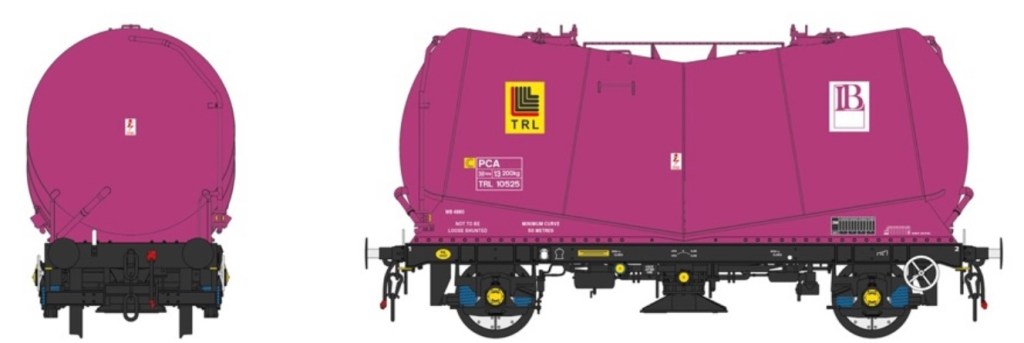
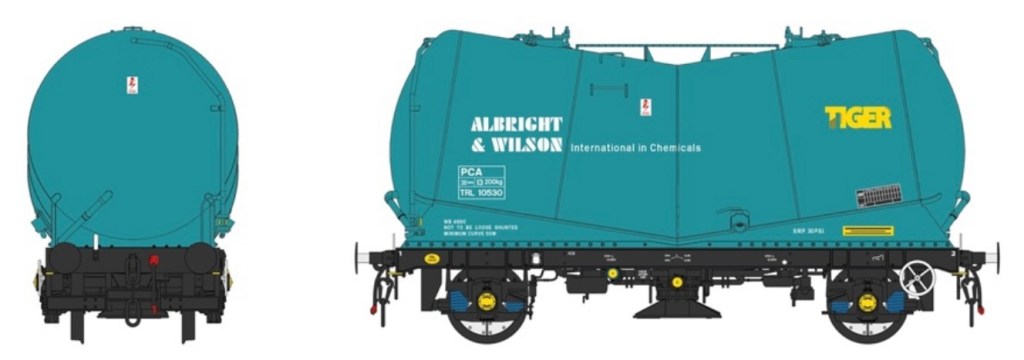
Featuring compensated axles, sprung buffers and Instanter couplings, fine pipework and underframe detail, separately fitted walkways, the model is based on the depressed centre PCA tanks used for cement and chemical traffic since the 1980s. The first batch includes no fewer than 10 individually numbered and decorated cement wagons (see artwork below), allowing customers to assemble realistic ready-to-run block trains. Also in development are similar wagons in Lever Brothers/Tiger Rail and Albright & Wilson liveries for powdered chemical traffic – ideal for 1980s/90s Speedlink trains.
Realism Redefined O Gauge PCA
Priced at just £99 each, the PCAs represent excellent value for money and are expected to be extremely popular with ‘O’ gauge modellers. See www.realismredefined.co.uk for further information and advance orders.
CAD work and livery artwork is complete and we expect the first engineering prototype samples to arrive in the UK for review in early-2023. Look out for further updates on this much-requested O gauge wagon soon.
Realism Redefined PCA 1060
1060 BCC Grey PCA 10800 ERA 8/9
1061 BCC Grey PCA 10894 ERA 8/9
1062 BCC Grey PCA 10747 ERA 8/9
1063 BCC Grey PCA 10739 ERA 8/9
Realism Redefined PCA 1064
1064 BCC Grey PCA 10777 ERA 9
1065 BCC Grey PCA 10770 ERA 8/9
1066 BCC Grey 10762 ERA 8/9
Realism Redefined PCA 1067
1067 BCC Grey PCA 10749 ERA 9
1068 BCC Grey PCA 10738 ERA 8/9
1069 BCC Grey PCA 10888
Lever Bros O Gauge PCA
1078 Lever Bros/Tiger Rail Leasing PCA TRL10527 ERA 8
Visitors to the Warley National Model Railway Exhibition this weekend will be the first to see HELJAN’s new O gauge Class 58 – a surprise addition to our range of high-quality British outline diesel locomotives.
This all-new model has been produced in response to strong demand from O gauge modellers and provides an appropriate follow up to our hugely popular Class 56. Six liveries will be available on general release via HELJAN stockists (see below), with a further locomotive in Mainline Blue available from Gaugemaster stockists as part of the ‘Gaugemaster Collection’. Two more versions will be available exclusively from O gauge specialist Tower Models – see www.tower-models.com for more information.
Standard features will match the demanding requirements of today’s O gauge modeller, including a ‘plug-and-play’ DCC interface (ESU LokSound XL #58515 decoder required – not supplied), powered roof fans (independently controlled in DCC mode) LED lighting with independently switchable headlight, cab interior and tail light functions, provision for a DCC-activated smoke unit and a large speaker, sprung buffers/couplings, detailed cab interior and bogies and much more. Suggested Retail Price (SRP) is £729.00 or £749.00 for factory weathered models.
Tooling covers both ‘Phase 1’ and ‘Phase 2’ locomotives with numerous authentic detail variations on the bogies and cabs, including sandboxes with transparent covers on ‘Phase 2’ locomotives. All models will be supplied with three alternative sets of cab door handrails or etched metal baffle plates allowing locomotives to be tailored to specific liveries/timescales.
British Rail Engineering Ltd (BREL) built 50 Class 58s in 1983-87 to a modular design aimed at the export market. For much of their career they were based at Toton depot near Nottingham and deployed on merry-go-round coal trains between East Midlands collieries and power stations. In 1994, the fleet transferred to Mainline Freight and quickly expanded its range across the south-east of England and to a more diverse range of freight traffic. In 1996, the fleet was absorbed by EWS and although it was expected to form a key part of the company’s long-term plans, withdrawal took place between 1999 and 2002. EWS and its successors exported many ‘58s’ to France, Spain and the Netherlands for further use.
New locomotives and rolling stock for ‘OO’ and ‘O’ gauge joined by sought-after reruns of existing models.
O Gauge Class 58
Visitors to the Warley National Model Railway Exhibition this weekend will be the first to see HELJAN’s 2023 catalogue, containing a strong line-up of new and refreshed models for release in 2023/24.
OO Gauge class 86/2
Our 2023 UK outline catalogue goes on sale to the public at the NEC this weekend and will be available from HELJAN UK stockists from next week, priced at £3.50. Retailers can obtain copies for sale via Gaugemaster with immediate effect.
Headlining the new announcements are a Class 58 diesel in O gauge, a Class 86/2 AC electric in OO gauge and, for the first time as a ready-to-run model, the distinctive Newton Chambers TCV Car Transporter in OO.
Both the Class 58 and the TCVs are well advanced, with factory decorated samples already in the UK for review. The TCVs will arrive first, in Spring 2023, followed by the ‘58’ in mid-year and the Class 86/2s towards the end of 2023. See separate press releases for more information on these exciting all-new models.
A number of other new models make their debut in the 2023 HELJAN catalogue, including BR/NBL prototype diesel 10800 (due Spring 2023) and our retooled and upgraded OO Class 26. Having announced the new ‘26/1s’ with Far North Line twin headlights earlier this year, we can now confirm the identities and liveries for the remaining models in the initial batch of releases, including a special ‘tatty’ edition in Railfreight ‘Red Stripe’ for the Gaugemaster Collection. See listing below. Further versions covering the ‘Pilot Scheme’ Class 26/0s are currently in development and will be announced in 2023.
Also in the catalogue for the first time are the Southern Railway CCT/PMV vans and updated Class 45 diesels in O gauge announced earlier this year. Reruns and upgrades of existing products include the ‘OO’ Class 57 in several new liveries plus Class 20 and ‘Western’ diesels in O gauge.
Following the sellout success of our recently released OO Class 45 ‘Peak’, a second batch is now in preparation for release in 2023 featuring liveries and ‘specials’ not covered in the first batch. Further versions of the classic BR/Sulzer 1-Co-Co-1 family are currently in development and will be announced in 2023.
Not featured in the 2023 catalogue but also announced this weekend is an all-new PCA powder tank wagon for O gauge. These superb new models are being produced exclusively for Realism Redefined, the retail arm of ‘Britain’s Biggest Model Railway’.
Featuring compensated axles, sprung buffers and Instanter couplings, fine pipework and underframe detail, the model is based on the depressed centre PCA tanks used for cement and chemical traffic since the 1980s. The first batch includes no fewer than 10 individually numbered and decorated cement wagons, allowing customers to assemble a realistic ready-to-run block train. Also planned are similar wagons in Lever Brothers/Tiger Rail purple and Albright & Wilson green – ideal for 1980s/90s Speedlink trains. See http://www.realismredefined.co.uk for more information.
CAD work and livery artwork is complete and we expect the first engineering prototype samples to arrive in the UK for review in early-2023. Look out for further updates on this much-requested O gauge wagon soon.
‘OO’ GAUGE NEW ITEMS FOR 2023/24
BRCW/SULZER TYPE 2 – CLASS 26
2625: BR Blue 26039 (twin headlights)
2626: BR Blue 26032 (twin headlights) WEATHERED
2641: BR Green D5333 (small yellow panels)
2642: BR Green D5335 (full yellow ends)
2643: BR Blue 26023 (tablet catcher recess)
2644: BR Blue 26042 (dual braked)
2645: Railfreight Red Stripe 26038
2646: Civil Engineers Grey/Yellow 26026
GM4240501 Railfreight Red Stripe 26025 (tatty with Eastfield Terrier)
NEW LIVERIES FOR 2023! BR Derby/Sulzer Type 4 – Class 45
45102: BR Economy Green D63 Royal Inniskilling Fusilier (small yellow panel)
45103: BR Blue D50 The King’s Shropshire Light Infantry (small yellow panel)
45105: BR Blue 45032 (domino headcodes)
45301: BR Blue 45055 Royal Corps of Transport (red bufferbeams)
45303: BR Blue 97409 ‘Lytham St Annes’ (Tinsley painted names) WEATHERED
45400: BR Blue 45144 Royal Signals (black roof)
45401: BR Blue 45110 (white body stripe)
45503: BR Blue 45104 The Royal Warwickshire Fusiliers (orange cantrail stripe, black bonnet/cab, NSE flashes)
NEW LIVERIES FOR 2023! Class 57
5706: Virgin Trains 57302 Virgil Tracy WEATHERED
5707: Virgin Trains 57309 Brains
5708: First Great Western ‘Fag Packet’ Green 57603 Tintagel Castle
5710: GWR Green 57605 Totnes Castle
5711: GWR Lined Green 57604 Pendennis Castle
5712: West Coast Railways ‘Northern Belle’ 57601 Windsor Castle
5713: Network Rail Yellow 57312
NEW VERSION FOR 2023! BR Class 86/2 – Late-1970s onwards
GM4240304: BR ‘Rainhill 150’ Blue 86235 Novelty GAUGEMASTER COLLECTION^
8621: BR Rail Blue 86253 The Manchester Guardian^
8623: InterCity Executive 86204 City of Carlisle^
8630: InterCity Swift 86238 European Community^
8631: Virgin Trains 86240 Bishop Eric Treacy+
8633: Electric Blue 86259 Les Ross^
8634: EWS Red/Gold 86261 Rail Charter Partnership^
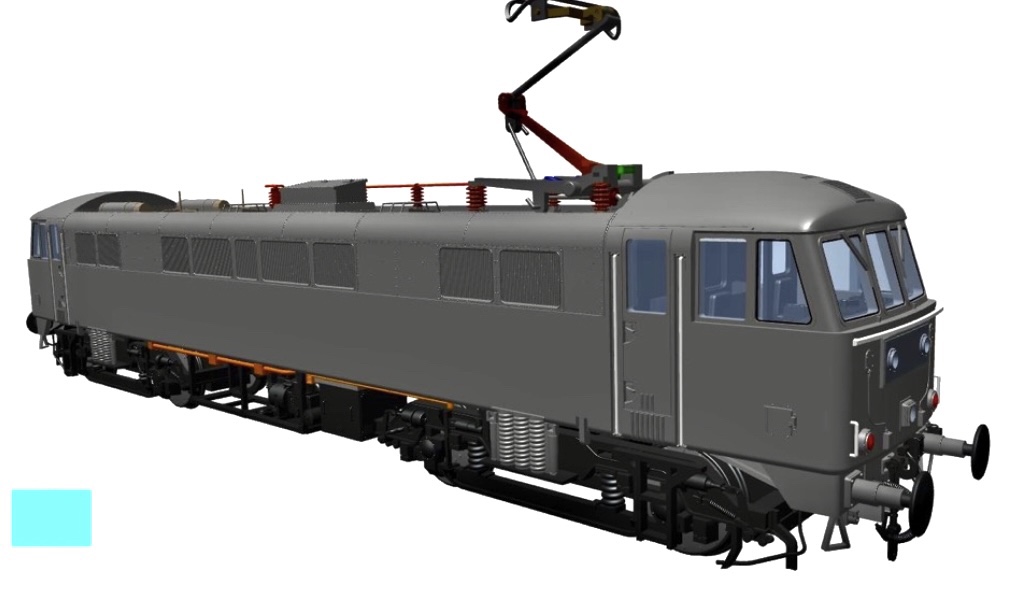
A third variant of our popular ‘OO’ gauge Class 86 is now in preparation for release in 2023. In response to public demand, the Class 86/2 will join the recent ‘AL6’ and Class 86/4 in the HELJAN range.
Two versions will depict the 100mph passenger/parcels ‘86s’ in late-1970s to mid-1980s guise prior to the addition of headlights/TDM cables and for the late-1980s onwards with high-intensity headlights and TDM cables. The latter will be available with either Faiveley or Brecknell-Willis pantographs. This all-new model has been produced in response to strong demand from OO gauge modellers of AC electrics and provides a perfect companion to our earlier Class 86s. Eight liveries will be available on general release via HELJAN stockists (see below), with a further special edition of 86235 Novelty in ‘Rainhill 150’ livery available from Gaugemaster stockists as part of the ‘Gaugemaster Collection’.
Suggested Retail Price (SRP) is £254.95. Standard features will match the demanding requirements of today’s OO gauge modeller, including a 21-pin DCC interface, LED lighting with independently switchable tail light function, provision for DCC sound, sprung buffers, highly detailed underframe and bogies and much more.
GM4240304 BR ‘Rainhill 150’ Blue 86235 Novelty GAUGEMASTER COLLECTION ERA 7
#8621 BR Blue 86253 The Manchester GuardianERA 7/8
#8623 InterCity Executive 86204 City of CarlisleERA 8
#8630 InterCity Swift 86238 European CommunityERA 8
#8631 Virgin Trains Red/Grey 86240 Bishop Eric TreacyERA 9
#8633 BR Electric Blue 86259 Les RossERA 9
#8634 EWS Red/Gold 86261 Rail Charter PartnershipERA 9
#8635 Colas Railfreight 86701 OrionERA 9
#8636 Anglia Railways 86260 ERA 9
Engineering prototypes are expected in the UK for review in early-2023. We hope to deliver the first batch of Class 86/2s in late-2023. Look out for further updates on all these new models here and on our Facebook page over the coming months!
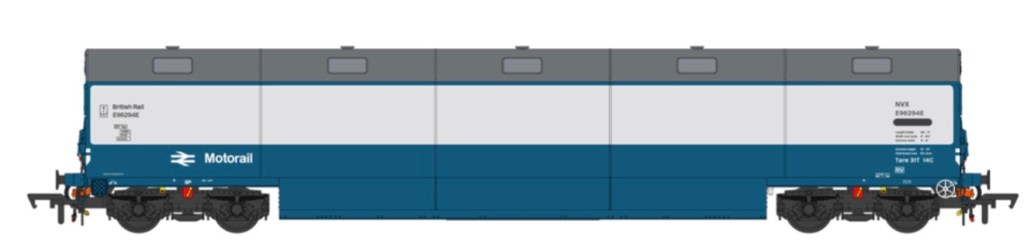
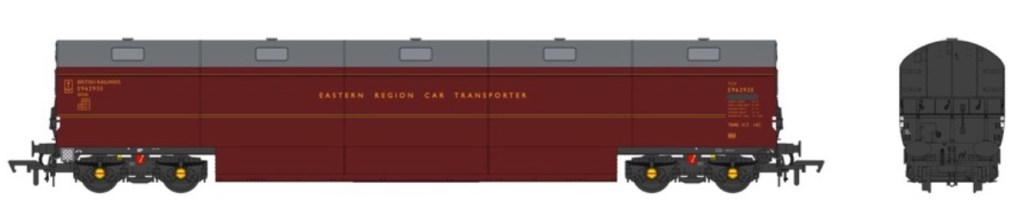
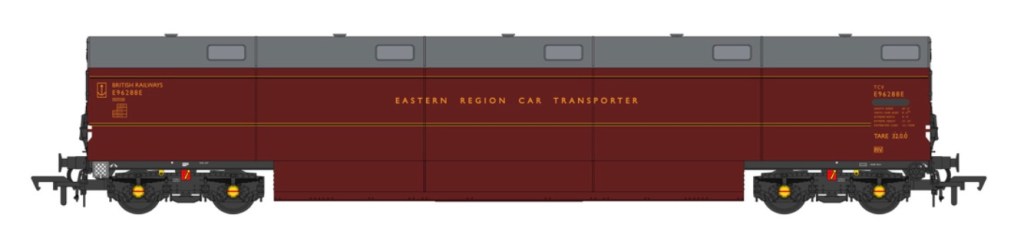
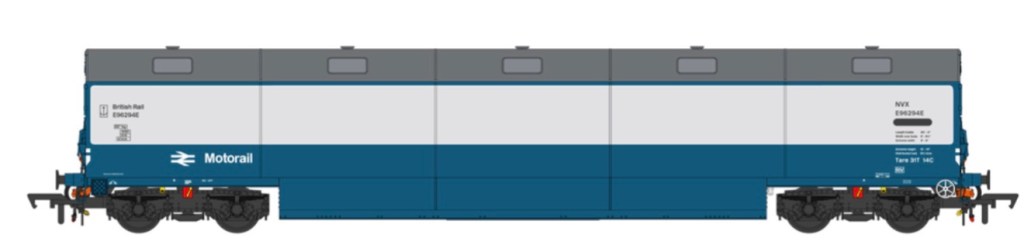
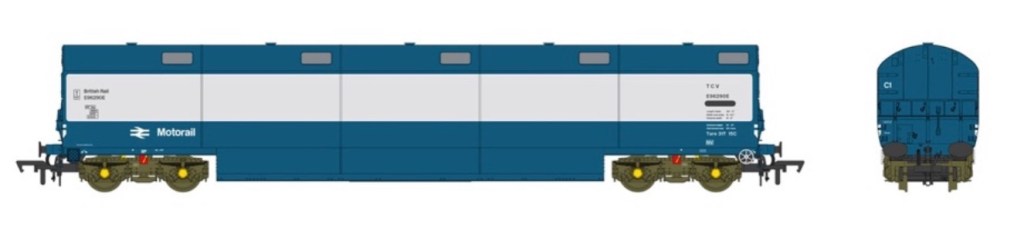
HELJAN’s range of high-quality ‘OO’ gauge rolling stock will expand in early-2023 with the release of six coach packs featuring the stylish double-deck car transporters built by Newton Chambers for BR Eastern Region in 1960/61. Visitors to the Warley National Model Railway Exhibition at the NEC this weekend will be the first to see factory-decorated samples of the new models.
BR Maroon Newton Chambers Car Carrier
Featuring a high specification and fine detail throughout, the vehicles will be offered in matching triple packs in BR Lined Maroon and BR ‘Motorail’ Blue/Grey covering their entire 25-year career. Close attention to detail means that vehicles will feature either the original or revised pattern of fibreglass roof lights plus vacuum brake/steam heat and dual brake/dual heating vehicles with the Electric Train Heat (ETH) and air brake equipment added to several car transporters towards the end of their life.
Fine details include separately fitted handbrake wheels, end door details, air pipes, etched train ferry lashing eyes, steam heat, vacuum brake and ETH equipment. NEM couplers and sprung buffers are fitted as standard. Suggested Retail Price (SRP) for the high-quality presentation packs is £229.00.
Heljan Car Transporter BR Maroon
Originally designated as TCVs, the vehicles later became NVV (vacuum braked) and NVX (dual braked) under BR’s TOPS computer system. Unusually, they featured a hydraulically operated central well capable of storing two cars as well as four cars on the upper deck – a 50% increase in capacity over more conventional car carrying vehicles of the time.
When introduced in the early-1960s, the TCV car transporters were used between London, York and Edinburgh in sets of five or six vehicles with a handful of BR maroon Mk1 coaches, hauled by ex-LNER ‘Pacifics’ and later BR green ‘Deltics’, Class 40s, 45s, 46s or 47s. From the late-1960s onwards, they were painted in BR blue/grey and started to venture further afield on ‘Motorail’ services from London and northern England to the West of England, being hauled by Class 45s, 46s, 47s and ‘Westerns’. However, they were closely associated with the East Coast Main Line throughout their career.
#9620 EASTERN REGION CAR TRANSPORTER PACK 1: BR Lined Maroon E96288/289/290E
#9621 EASTERN REGION CAR TRANSPORTER PACK 2: BR Lined Maroon E96286/293/297E
#9622 EASTERN REGION CAR TRANSPORTER PACK 3: BR Lined Maroon E96287/291/294E
Factory decorated prototypes are now in the UK for review and we expect production to start in early-2023 with the first batch of car transporters due in shops in Spring 2023. Look out for further updates on all these new models here and on our Facebook page over the coming months!
New into the man cave are a batch of N gauge wagons from Peco as part of a collection of new tooling. For many many years N gauge modellers have had a staple diet of Peco Wonderful Wagons, with tooling that was first cut as I recall in the late 1960’s or early 1970’s. Those wagons formed the bedrock of countless layouts and collections and at the time were excellent. More recently the tooling has shown its age, not so much in the wear and tear, but due to other manufacturers bringing a better looking and performing product to market.
The wagons come in small plastic clear boxes with a card insert and a moulded base to which the wagon is tightly held by a plastic clear strap. For retailers there’s a peg board tag attached which folds out of the way if not required. The base has placements for three different wagon wheelbases, so this possibly indicates other new tooling for the future. All of the packaging is recyclable, the boxes will be brilliant in the workshop for keeping bits and pieces for projects, or for carefully cutting for glazing for other models. Way back in time, playing Mr Benn the shopkeeper, we occasionally used to get asked to take products out of the packaging to let customers see them. With this strap fixing, which is also used on some of the 009 range, that isn’t possible. Not likely to be a big problem but worth bearing in mind if you get one out of the box, once the strap is cut, that’s it, it’s not going back on.
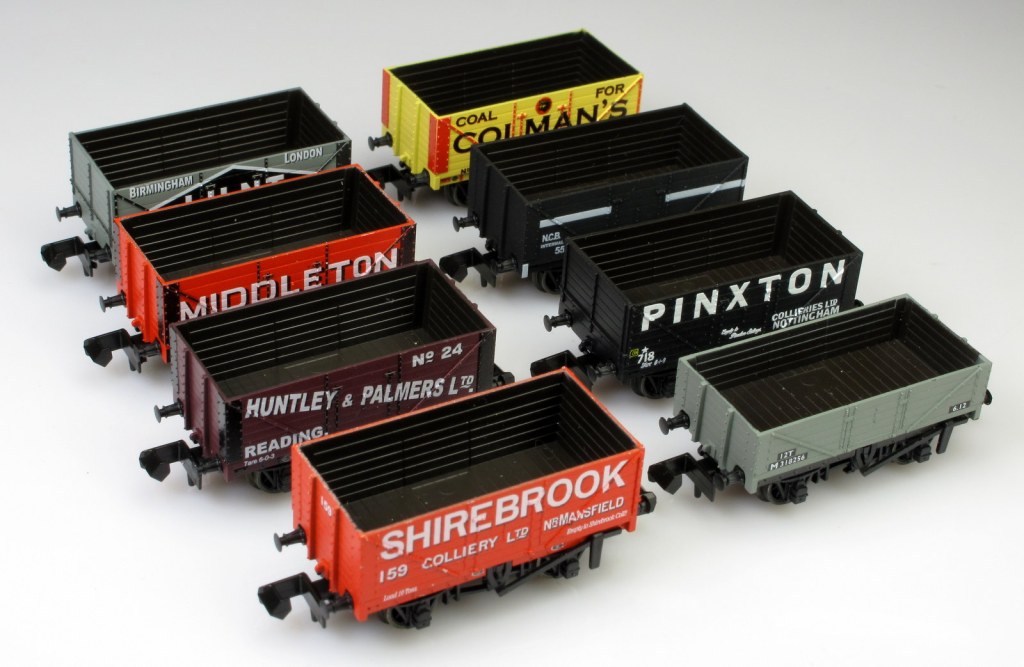
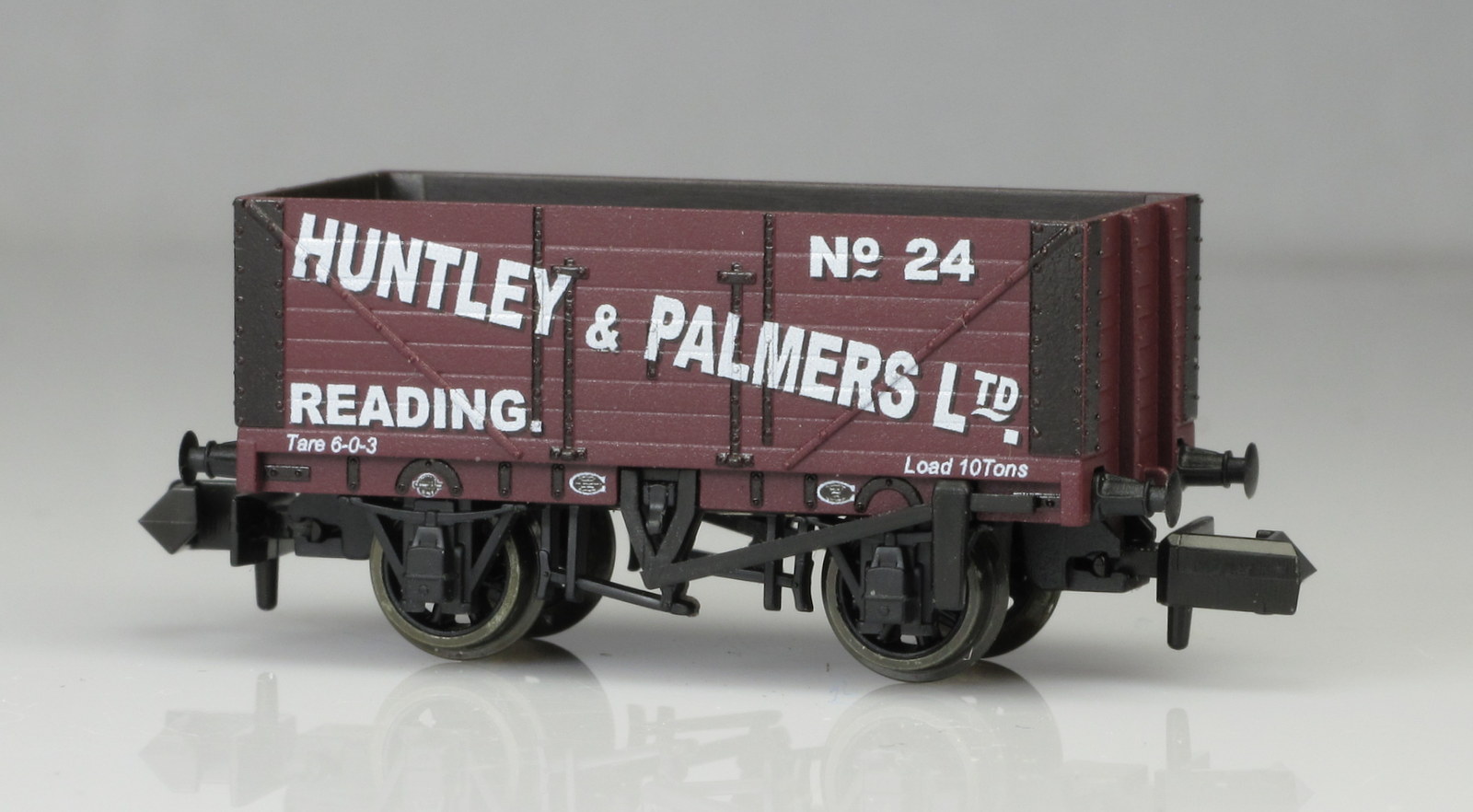
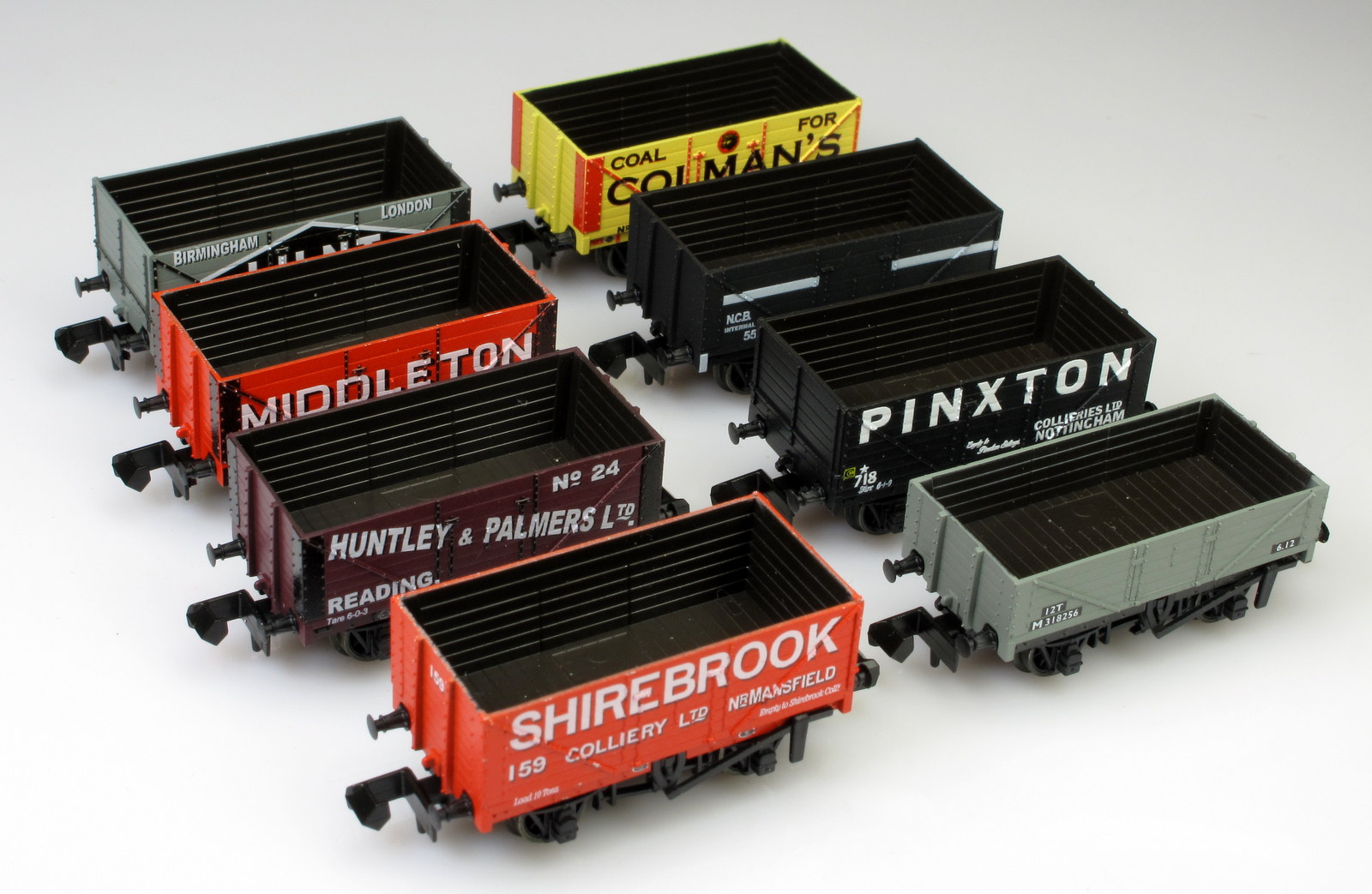
In the eight wagons sent there are three body varieties, two seven plank types and one five plank, these sit on one type of chassis, all new tooling. All three types represent RCH 1923 bodies and wooden chassis.The RCH standards were an agreed set of minimum standards, which allowed a high degree of commonality with the main railway companies as well as from independent builders such as the Gloucester Wagon and Carriage Works and Charles Roberts.
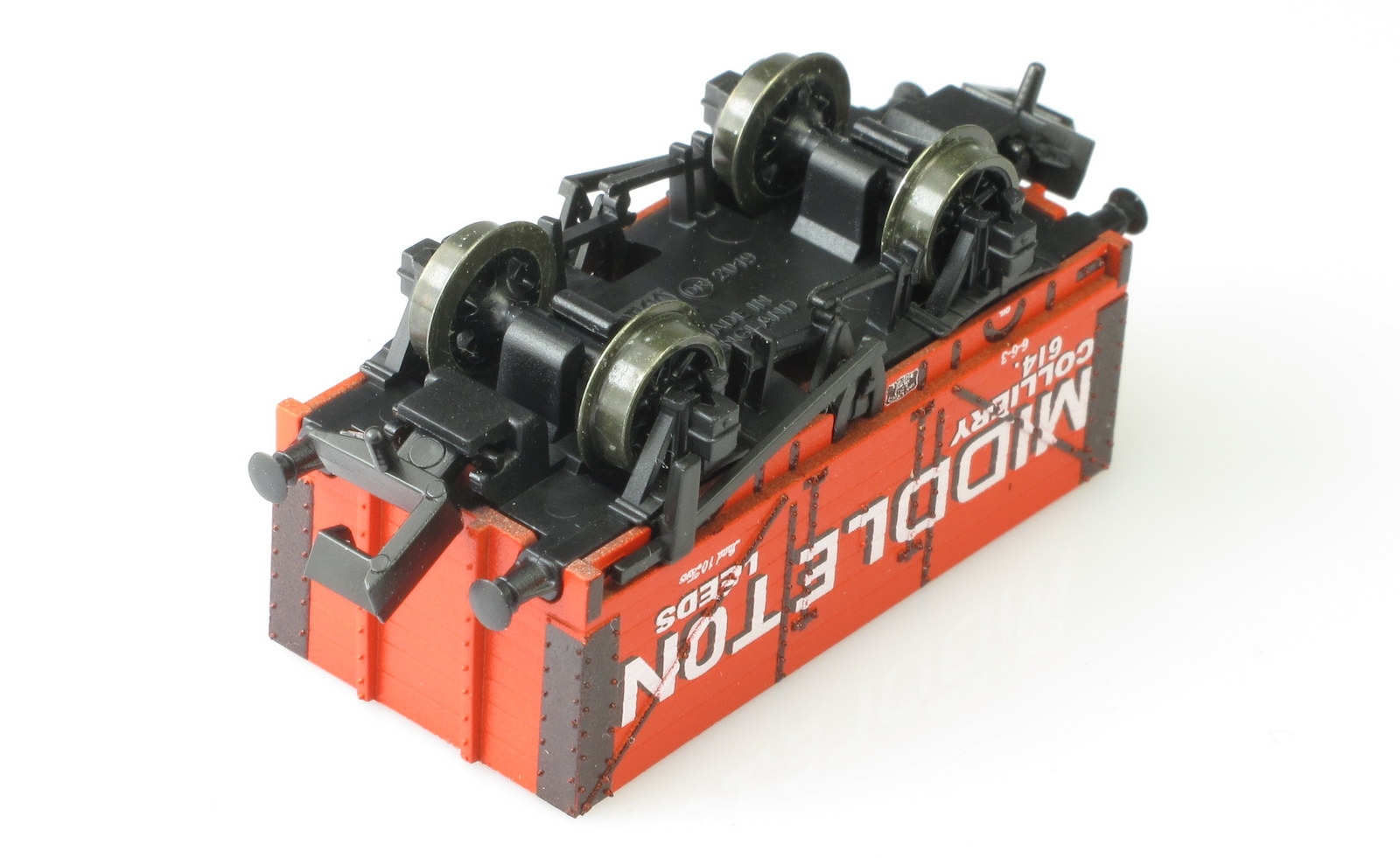
So underpinning these models is a new 9ft wooden chassis, which is a significant improvement over the previous Peco model. The earlier version of the under frame Peco used was in fact a 10ft wheelbase and as mentioned was introduced approximately fifty years ago. As such it is a product of its time, though the detail on it is pretty good. With a quick comparison the most obvious change is the revised and correct 9ft wheelbase on the new (2019) tooling. The wheels are metal tyred on pinpoint axles, and the axles are held in place by two lugs on the wagon centreline.
This is an interesting design point as the original design relied on the ends of the axles, as do contemporary Bachmann Farish wagons. This approach allows the axle and wheels to have a small amount of vertical movement, so whilst not suspension, it will undoubtedly assist with the ‘roadholding’ of this stock. All chassis’ of the review items were square sitting on a flat glass surface. The appearance of the wagons isn’t significantly compromised by this design feature. The early design brake gear was moulded in one piece so brake lever and V hanger were moulded in one piece and not quite in line with the wheel sets. The new chassis is far better in this respect with a separate brake lever allowing the brake shoes and push rods to be in line with the wheels, these are to the correct orientation reflecting wagons with bottom fitted doors. There is also a representation of the side door spring on the new chassis, missing from previous versions. The brake lever is separate however the lever guard where the ratchet sits, is not quite as refined as the Farish equivalent. W irons and springs are much better defined than on the original chassis with the correct type of oil axle box fitted. Also of note is the metal tyred eight spoke wheels of these new wagons. An immediate improvement over the plastic wheels of the past with their ability to collect dirt on wheel treads in particular. These new wheel sets should reduce that effect massively.
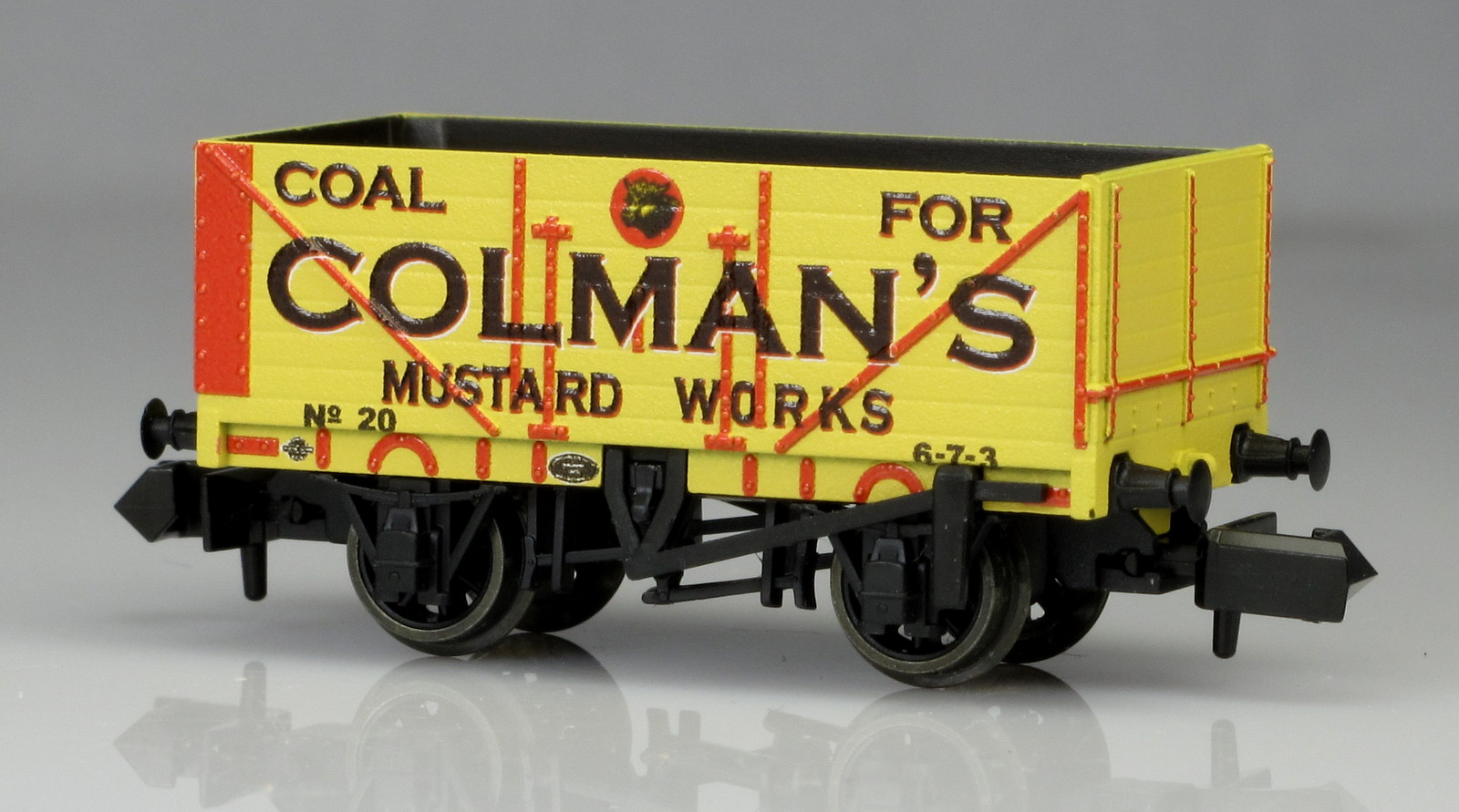
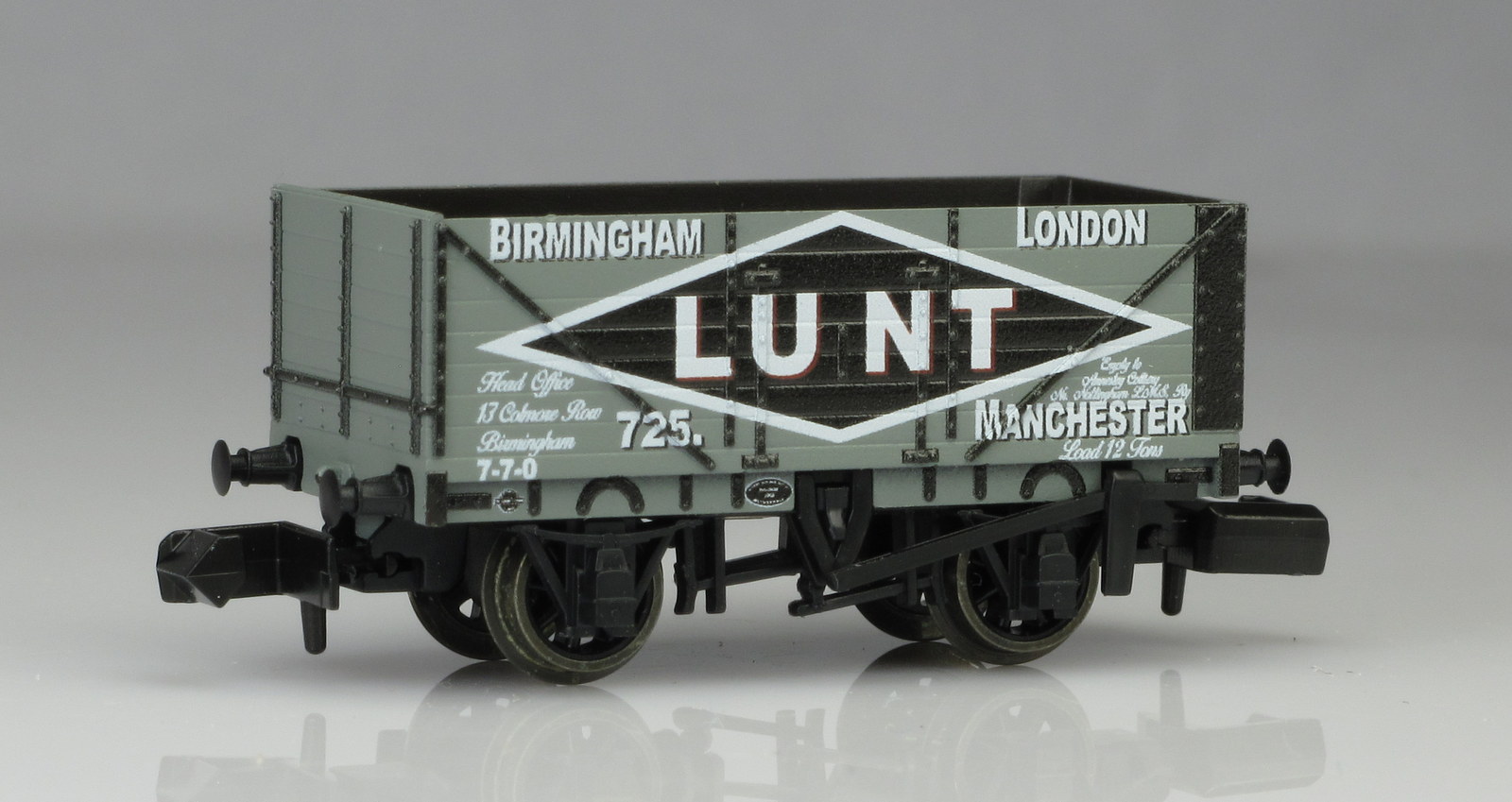
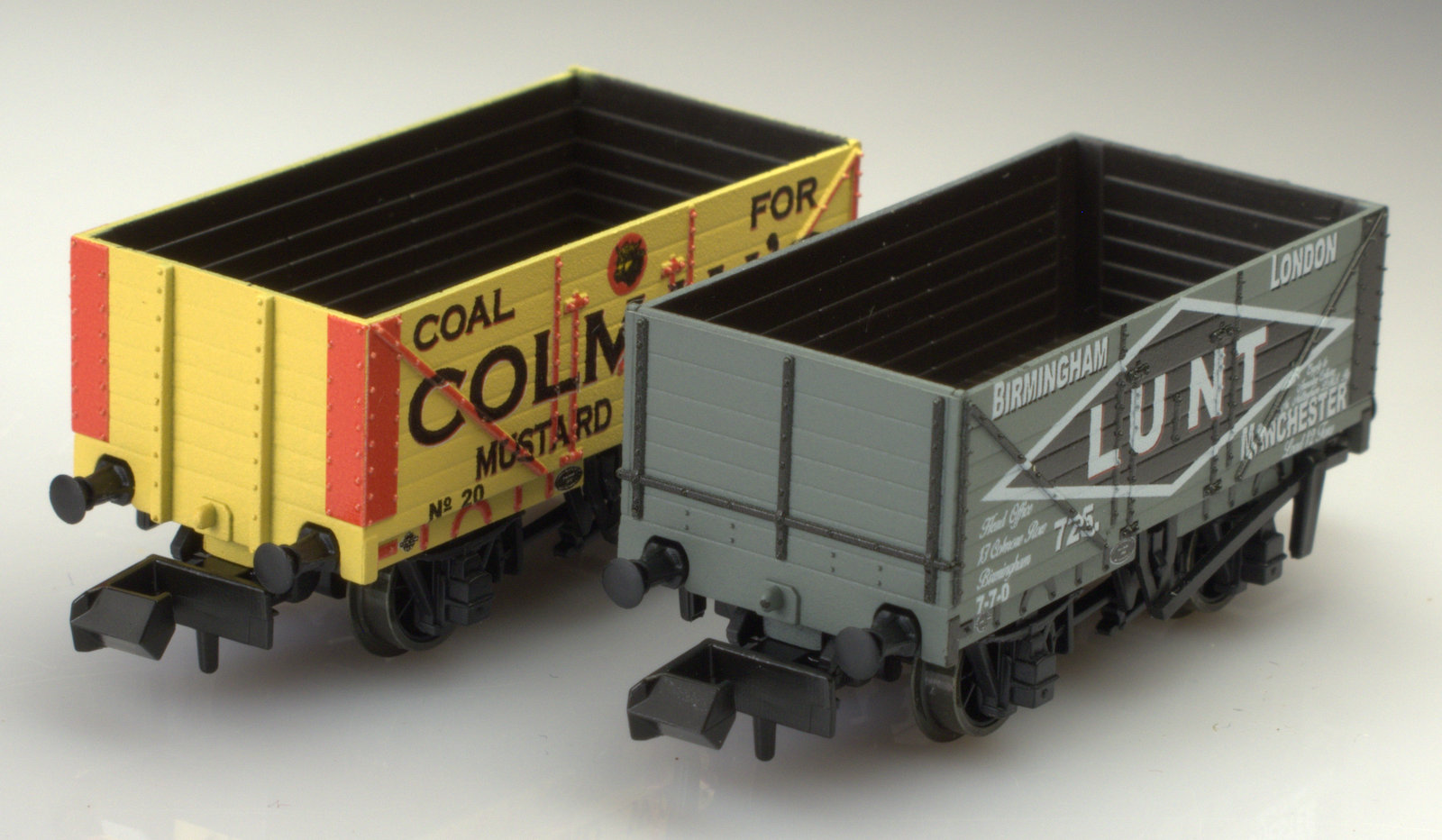
NR-7006P 9ft 7 Plank Open Wagon Colman’s Mustard (End Door)NR-7008P 9ft 7 Plank Open Wagon Lunt (End Door)
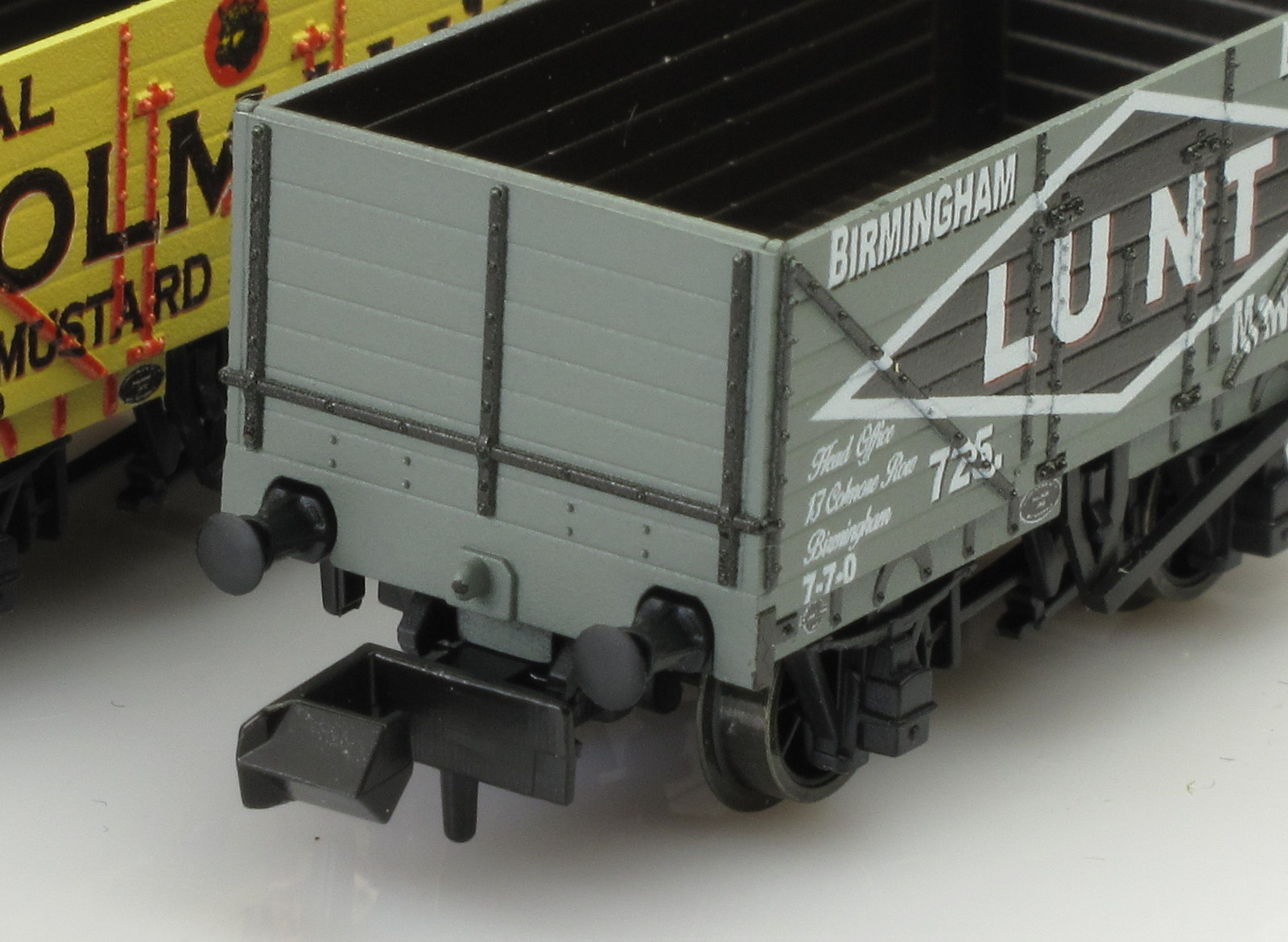
Side detail on the chassis is very good, with the iron work well represented. Where the chassis is painted on the prototype this is also coloured on the models, the Colman’s Mustard and ‘Lunt’ livery wagons being outstanding in this regard. Works plates where appropriate are printed and reflect the relevant shape and representative writing, Gloucester and Chas Roberts plates being notable on these samples. Buffers are well detailed having the correct proportions and ribbing to reflect RCH standard types. Couplings are the the traditional N gauge ELC type and they are fitted into an NEM335 coupling pocket, all sample examples worked well and reliably on test.
NR-7007 9ft 7 Plank Open Wagon Shirebrook (endNR-70099ft 7 Plank Open Wagon Middleton (side door)
The wagon body immediately strikes you as a quality moulding, all edges are crisp and well defined with clearly visible strapping and bolt head details. internally the drop doors are featured as are the inside of the side door. There is no internal strapping depicted, that’s not unusual, (across the scales) and I believe is required to allow the tooling to release the wagon body.
Peco N Gauge 7 Plank End Door Wagon
The end door variety is a type not released in the Peco N gauge range previously, and is a welcome addition to the body style available. End stantions on both end and side door variants are timber with the appropriate top taper. For both the end door and side door variants the wood stantion are correct for these private owner liveries, the T section metal end stantion generally identifies a railway company (big four) built wagon. The headstocks are the correct width, slightly wider than the wagon body, and have cut aways to allow the chassis moulding and buffers to fit the body.
Couplings are fitted to the chassis and there is no cut away or compromise on the headstock to allow vertical movement for them. Planks are well defined without there being a significant mould line with the top two planks reflecting a slightly deeper height than the lower five, this is included across the ends of both end and side door body styles. No top capping strips or clips are on these wagons, so they reflect a pre war, new wagon or one that hasn’t seen significant amount of wear and tear.
Side and end external ironwork is exceptional in the finesse for all the elements with bolt heads represented in a subtle fashion. The wagon sides are of particular merit as they are so thin, giving a really prototypical appearance. So often open`N gauge wagons have a very noticeable and unprototypical thickness to sides and ends, these are well ahead of the pack in that respect. None of the samples exhibited any inward bowing of the sides. One part not represented on the end door wagon is the top end door roller bar. I don’t mind that as its an easy part to fabricate with a piece of wire, and I think moulding it in place might have compromised the overall appearance.
NR-7005P 9ft 7 Plank Open Wagon NCB (End Door)
The liveries of these wagons is to the top quality we have become accustomed to from Peco over the years. Base colours of the wagons are opaque with no blocking of any strapping or plank detailing. The lettering and logo’s printing is clear, crisp and opaque too, especially the white over red of these samples. Of particular note is the shading extant on the Lunt, Shirebrook and Colmans Mustard examples.
These obviously require several passes to print and the depth of the print isn’t apparent, leaving underlying details clear of paint build up. On some of the wagons with painted corner plates, there is a sliver of the wagon base colour showing on the very apex of the right angles. Running a paint brush across that edge in a vertical motion would resolve that easily. Internally the wagons are unpainted with the satin black plastic base colour showing.
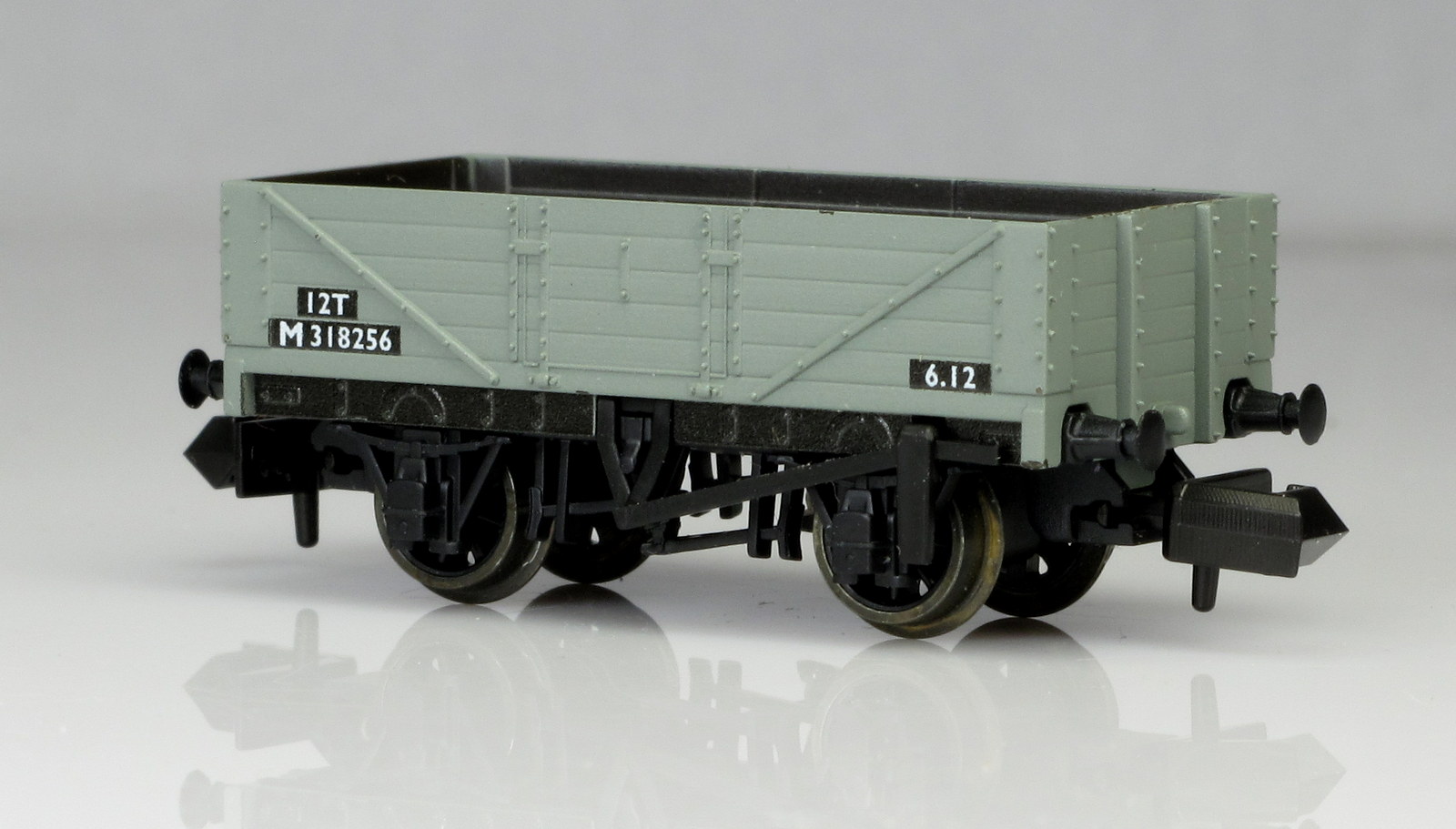
NR-5004B 9ft 5 Plank Open Wagon BR
The RCH 5 plank open, is like the 7 plank opens above fitted to the new Quality Line chassis, identical to those fitted to all other wagons discussed here, and details are as described above. The body is well proportioned and matches the overall dimensions for an RCH body. The overall tooling matches the standards of the 7 plank wagons earlier, the body correctly representing a standard five plank design with equal depth side planks. Again of note is the commendably thin sides and no inward bowing from mould release cooling. In British Rail unfitted grey livery the tare weight, wagon weight and running numbers are all clearly legible and opaque, on the correct black background. In terms of livery the headstocks should be black as per the chassis.
NR-7019P 9ft 5 Plank Open Wagon Pinxton (End Door)
In summary these wagons are an excellent and welcome release into the N gauge market, which sometimes is seen as the poorer relation in the hobby for new product releases. They’re well engineered finely detailed and exceptionally well finished. In an ideal world the brake lever and door spring could be finer and better defined, however its not beyond the possibility for someone to either 3D print a replacement or do a custom etch if you really want to make these ‘pop’. With each of the private owner wagons having crystal clear individual numbers I wonder if there’s a market for individually numbered three packs as we have seen from Farish in N gauge and other manufacturers in OO. With an N gauge colliery diorama/micro layout in the planning stage, I am really looking forward to using these and seeing what they scrub up like with some weathering, and perhaps a few details such as dropping a centre plank, to make a ‘London’ variety.
An overview of Planet Industrials Kerr Stuart ‘Victory’ class locomotive. The example I received had a couple of minor problems. The parcel having taken a few knocks the next18 DCC blanking plug had become dislodged, and one of the slide bars. Both were an easy fix, and despite those minor issues I really like the model. There will be a more traditional blog review later.


















You must be logged in to post a comment.