Model Rail 2012, Barrow Hill, Thank You!

Heavy Freight in the Forest

Thank you to everyone who popped by over the weekend, we had a really good time at an event that was well organised and was very different to other exhibitions we’ve been to over the years. In terms of visitors we did have a couple of specials that turned up. One, courtesy of Simon Kohler at Hornby, who was genuinely pleased and surprised to see an H&M ‘Walkabout’ on the layout, a brilliant DC controller even though its now thirty years old whilst still giving excellent control. The 72XX whilst too big for Albion Yard in reality, impressed us with its capturing the appearance of these large engines. This is one of the test samples and it had got quite a few a miles under its belt, it got a few extra feet on Albion Yard too! Whilst outside my field of interest seeing this superb model crawling across the layout has sort of pushed it onto the want’s list whereas previously it wasn’t on my radar at all!
http://www.hornby.com/

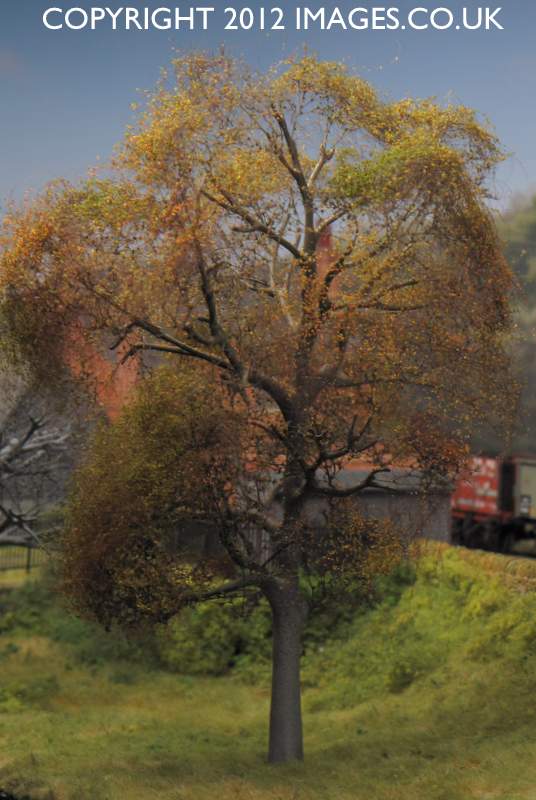
The overall appearance of the layout drew many nice comments over the weekend with the backscene and trees being two items of particular interest. We noticed again a good number of returnees, which considering how crowded the venue was at times was really pleaseing. One thing that is noticeable is the number of girls and women who stop and spend a good amount of time looking at the layout. They tend to ask questions about scenery, particularly the trees and notice the ‘long view’ earlier than the male of the species!, and note the difference in the trees construction across the layout. The girls are a wonderful source of info about hair care products too and which are the best for stickiness and ‘hold’, useful for knowing which to use for scatter materials!

C&L Armatured Trees


Speaking to C&L today they will soon have the armatures for the trees back in stock, so if you’d like to make trees similar to these get in touch with Pete, the armatures may well be in a lighter color to aid painting and will be supplied as previously in a multipack format.
http://www.finescale.org.uk/

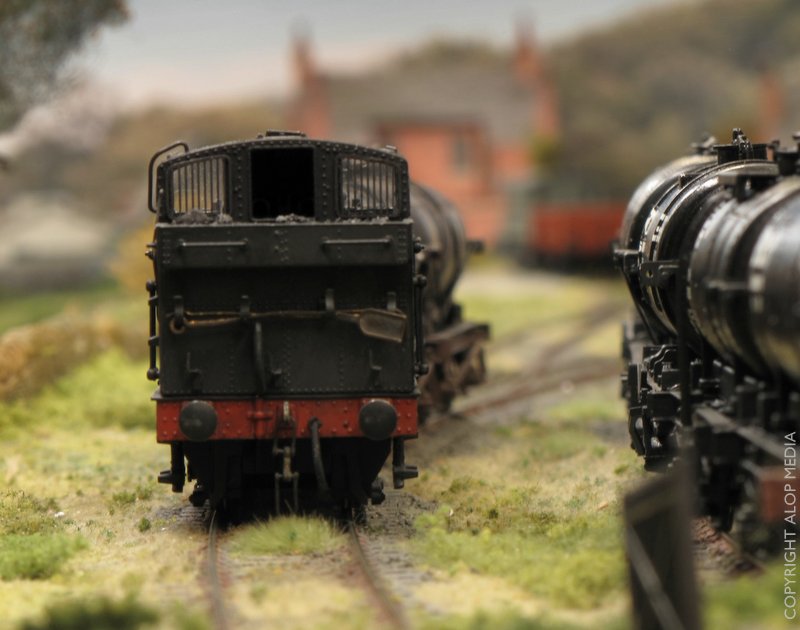
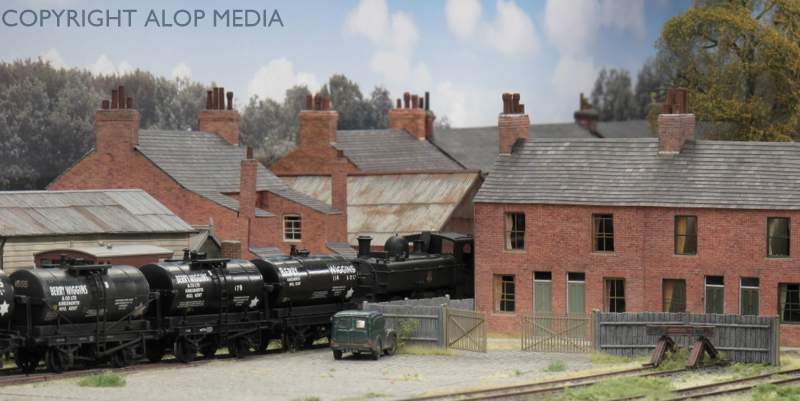
Two of the tasks I did prior to Model Rail was to add a further siding and make a train of Berry Wiggins Bitumen tankers, These ran to Whimsey in the Forest of Dean just north of Cinderford. I wanted to make one of these trains, to help set the scene, similar to Pete Kirmonds Anhydryte train used on Blea Moor. This is the new area of the layout, new cottages, the new siding is on the far right, and one of the Panniers is taking the Bitumen tanks away form the yard.

Berry Wiggins Bitumen Tankers Depart Cinderford

The prototype Berry Wiggins Bitumen tankers can be seen in these images:
http://www.sungreen.co.uk/Cinderford/Cinderford_Rail.html
The train is a rough representation of the tanks, comprised of a mix of Bachmann and Peco 14t tank weagons, the decals came from Model Masters, their sheet number 4826. http://www.modelmasterdecals.com/

I was asked by quite a few people what will happen to the layout after the September RM article and a recent t’interweb posting. The layout has a few more shows to do next year, and then I’ll decide how to dispose of it. Anyone who has contacted me directly will get a reply in the next week or so with more details. Fortunately this time on the way home I remembered to close the rear doors of the van properly …

Again many thanks for the interest in the layout over the weekend and it was a real pleasure to meet people and talk about this layout with them. One of the oddest in a nice was was being asked for my autograph! I’d have safely bet a significant amount of money that’d never happen in my lifetime, the young lad had got quite a collection of signatures on his magazine too, hopefully small things like that will encourage youngsters like him to take the hobby up in the future.

As a postscript, today Postman Pat put a parcel through the door, with a nice little kit for review in, more in the next day or two on that!

http://www.hornby.com/
http://www.finescale.org.uk/
http://www.modelmasterdecals.com/

Posted in Bachmann, book, Branch Line, Canon G10, Chris Nevard, DCC, decals, Eastern Region, Exhibition, Forest of Dean, Great Western, hobbies, Hornby, Kalmbach, Layout, LMS, LNER, Midland Region, Model Railroad, Model Railway, Model Railway Journal, Modelling, OO Gauge, Railex, Scottish Region, Southern Region, Uncategorized, Wales, waterslide, Welsh Marches, Western Region | Tagged , , , , , , , , , , , , , , , , | 1 Comment

Model Rail 2012 Barrow Hill

Berry Wiggins Bitumen Tanks Leave Albion Yard

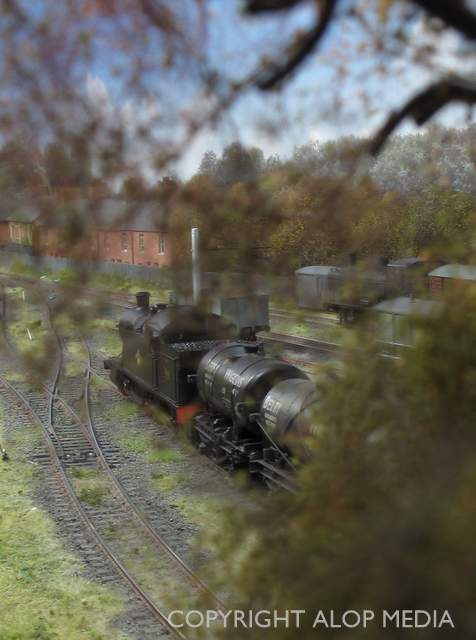
Today I’m packing the train set and setting up at Model Rail Live at Barrow Hill, Chesterfield. Theres a new train, see above image, based on Ben Ashworth and Ian Pope images of the Berry Wiggins Bitumen trains, I’ve re-lettered a selection of assorted tank wagons to make up one of these almost iconic trains of the Forest of Dean in its later years. The fiddle yard area has been changed, giving more operating potential to this small layout, which can have a surprisingly intensive operation even for one engine in steam! More improvements have been made in the main scenic area, and I’m hoping to be able to provide a further big change to that later in the autumn.

Anyway if you’re there, come and say hello, and thanks for taking the time to read the blog.

model rail live.co.uk

Not Everyone
Works For Peanuts …
Posted in 2012, 3f, Airfix, Bachmann, book, Branch Line, brassmasters, Canon G10, Chris Nevard, DCC, decals, Eastern Region, Forest of Dean, Great Western, hobbies, Hornby, Industrial, Kalmbach, Layout, life, LMS, LNER, Midland Region, Model Railroad, Model Railway, Model Railway Journal, Modelling, OO Gauge, paint, Railex, Scottish Region, Southern Region, Uncategorized, Wales, waterslide, Welsh Marches, Western Region | Tagged , , , , , , , , , , , , , , , , , , | 2 Comments

Model Rail Live II

Here’s a bit of a clue as to the changes made since Railex and indeed the September Railway Modeller, they involve a significant change to the buildings, more track, a new train, in the literal sense, and more trees. Theres some interesting news on the subject of the Railway Modeller, it is now available for subscribers in a digital edition, which also includes access to the 2011 back issues. Hopefully over time that back catalogue will increase, as theres a wealth of quality articles over the years within the magazines 61 year history.

RAILWAY MODELLER
Go to: https://www.exacteditions.com/exact/checkAgency.do?titleId=21465

Fill in the form on the Exact Editions Website with your email address and your unique 6-digit customer number and choose a password. This number can be found on the front of the address sheet of your subscription copy of the magazine. If you have any problems or queries give them a call. Phone: 01297 21542 and ask for the Subscriptions Department.

On the subject of magazine longevity Model Rail celebrated their 15th year aniversary with their October issue, well done to them, its always worth looking at. With a week to go to Model Rail’s exhibition at Barrow Hill I’ve still got a few more bits and pieces to add, to finalise, (for this week anyway), the new appearance to the ‘long view’ over the entire length of the layout.

No pressure then …

model rail live.co.uk

Not Everyone
Works For Peanuts …
Posted in 3f, Airfix, Bachmann, Branch Line, British Rail, canon, Chris Nevard, DCC, dcc sound, decals, Eastern Region, Exhibition, Forest of Dean, Great Western, hobbies, Hornby, Kalmbach, Layout, life, LMS, LNER, Midland Region, Model Railroad, Model Railway, Model Railway Journal, Modelling, OO Gauge, Railex, Scottish Region, Southern Region, Wales, Western Region | Tagged , , , , , , , , , , , , , , , , , | Leave a comment

Model Rail Live Update

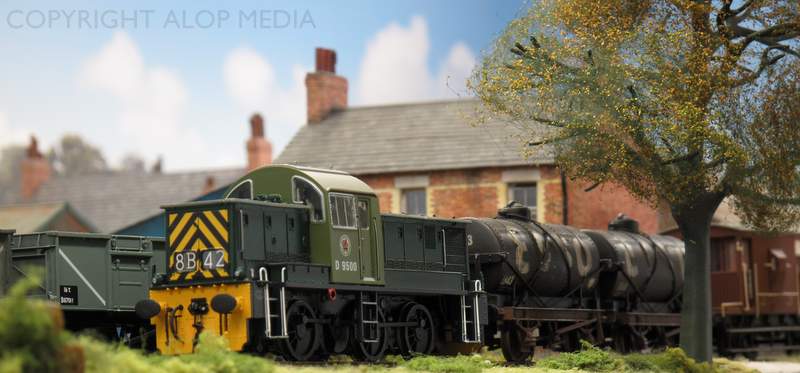
97XX 9711 Shunts Bitumen Tanks at Albion Yard

The layout doesn’t go to many shows and will only got to a couple of shows before its retirement in 2013. One up and coming show with a good mix of model and prototype interest is Model Rail Live at Barrow Hill, Chesterfield. When I wrote about the layout and its development in Septembers Railway Modeller albionyard.september/ I felt the layout was finished.

However, you know how it is, that unfinished business feeling crept up on me and now I’ve been doing a bit more to it. Part of it has changed noticably, and theres a final bit which is still in progress which will significantly change the operation of the layout.
And no, its not going DCC!

Have a look here for more details on Model Rail Live later this month.
model rail live.co.uk

Posted in 2012, Bachmann, British Rail, canon, Chris Nevard, DCC, decals, Eastern Region, Exhibition, Forest of Dean, Great Western, Hornby, Kalmbach, Layout, life, LMS, LNER, Midland Region, Model Railroad, Model Railway, Model Railway Journal, Modelling, Narrow Gauge, Nevard, OO Gauge, Photography, Railex, Scottish Region, Southern Region, Uncategorized, Wales, waterslide, Welsh Marches, Western Region | Tagged , , , , , , , , , , , , , , , , , | Leave a comment

Parklife …

PC84 GWR 10 Ton Goods Van Mink A  Dia/V12, V14 & V16
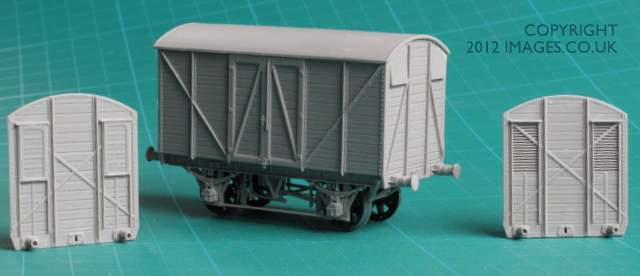
At Aylesbury Railex exhibiton in late May, Parkside released their latest 4mm scale kit. This is for the GWR Diagram V12/V14/V16 10T goods van. The prototype era spanned from 1907 to approximately 1960, and with such longevity is a useful addition to a 4mm modellers armoury.

The kit is complete apart from couplings, transfers and paint. To finish the model I used Precision Paints and transfers from the Modelmasters and Cambridge Custom Transfers ranges. Wheelsets provided in the standard kit are Romfords with pinpoint bearings, however customers can request Alan Gibson replacements when a small surcharge applies.
The kit is moulded in grey plastic, the examples I received were clean of ‘flash’ and with no significant mould lines evident. Detail is crisp and well defined to contemporary standards. Also included are two coupling mounts, the first is a traditional mount for tension lock couplings and the second a pedestal, for fitting NEM pockets. In a trial fit both Bachmann and Hornby couplings fitted perfectly.

The body is of typical van construction, with the two sides and ends making a box on the floor of the vehicle. For this review I added car wheel balance weights of 20 grams before fitting the roof. Instructions are simple and clear, identifying specific components well, and outlining areas where differences occur, the van ends for example.The chassis is rigid, there is sufficient room for anyone who wants to make compensated or sprung variants, though this means working that process by yourself, the kit catering solely for a rigid chassis. Components supplied allow for the modeler to make a vacuum brake fitted chassis, or a standard unfitted variant which we chose. Fit of all components is accurate and the chassis aligns itself between the ends and floor with no clearance issues. The brass axle bearings were a little tight on my sample when fitting into the axleboxes, so no adhesive was required.This kit is suitable for modellers across the whole range of experience, from beginner to expert.

This is a simple and well thought out kit. Build sequence is logical and total construction time was in the order of two hours. The most visible difference being the van ends. Options included allow the builder to make one of three diagrams,and the instructions assist in identifying the detail variations including with or without tie bars.Basic livery details are included with Lot numbers identified for the three variations as originally built and brief outlines of other variations to be aware of. The kit is priced on a par with contemporary ready to run wagons, and offers good value for money, for a well detailed, accurate and easy to build model.

http://www.parksidedundas.co.uk/

Posted in Airfix, Bachmann, British Rail, Canon G10, Chris Nevard, decals, Eastern Region, Great Western, hobbies, Hornby, Layout, LMS, LNER, Midland Region, Model Railroad, Model Railway, Model Railway Journal, Modelling, OO Gauge, paint, Railex, review, Scottish Region, Southern Region, Uncategorized, Welsh Marches, Western Region | Tagged , , , , , , , , , , , | Leave a comment

Several Shades of Grey, Some Say, as Many as Fifty …

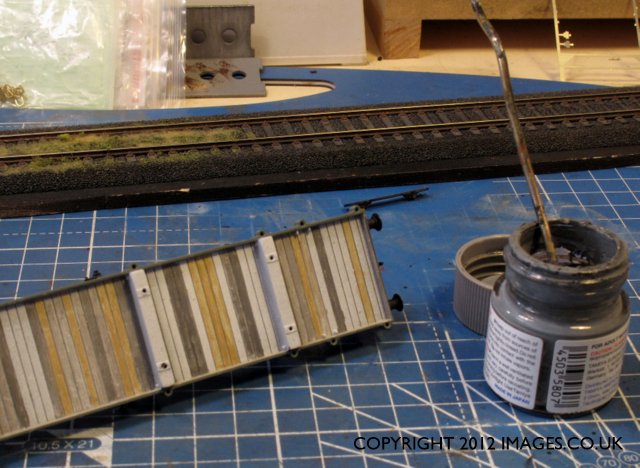
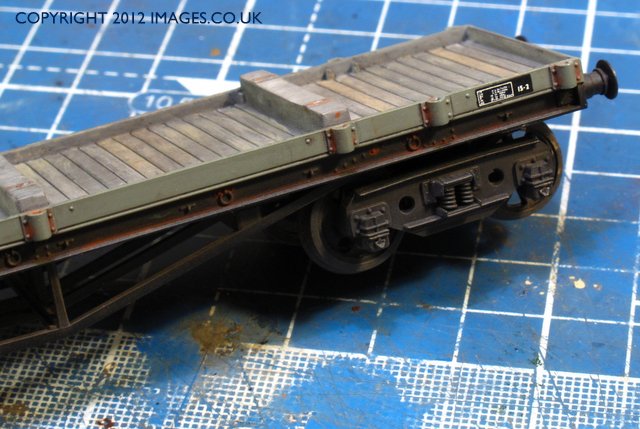
In another ’15 minute hero’ heres how to get a better looking planked finish to a wooden floored wagon such as bogie bolsters or flat wagons. As you can see from the image below (Mainline Bogie Bolster), the ready to run wagons often come with a dark brown finish for plain wood. It’s like primary school art, trees are (Michael Caines acting is) wooden, so therefore, wood = brown.

Normally however, trees are shades of grey, some say, up to fifty, and also grey/brown mixes. Unfortunately this really shows up when you start to add color and weathering to your other models. It is also the wrong color for fresh wood, unless you’re considering a dark wood like mahogany. However, mahogany would be far too expensive to use for a vehicle that had the harsh life of freight stock, so it’s a good idea to change the color. The next few illustrations show how I do it quickly and easily.

Applying Regular Household Masking Tape

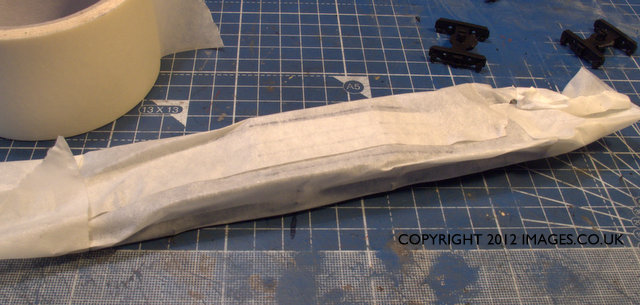
First thing is to remove the bogies and or any detail that can be easily damaged, like pipework or stantions. I’m using normal household masking tape here, if the shapes were more complex I’d use Tamiya masking tape for the edges and then back fill with paper or the masking tape above.

Ensure Sides Are Well Covered

Enclose Entire Wagon Chassis

Ensure that any area of the wagon you don’t want painted is covered. Using these car paint cans is a bit crude, the spray is wide enough to cover the whole model and then some! I’ve left enough tape at the ends to actually use as a handle to hold the wagon whilst spraying. Doing this speeds the job up and ensures complete coverage.

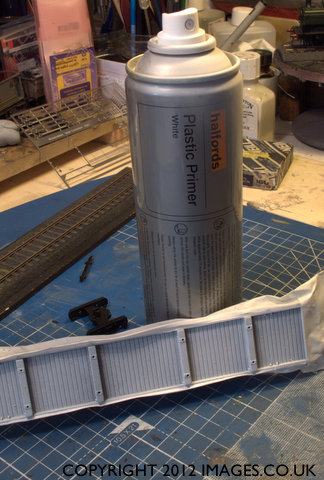
Halfords White PLASTIC Primer

This is the stuff, use white rather than grey as it will make varying the planking shades easier later on. Also make sure its the Plastic primer. There are still some agressive paints that are available that may damage the model, this Halfords stuff, has not damaged anything I’ve used it on.

So far …

Remove Masking Tape

Mist it on with several thin coats from about 30cm away. To accelerate the drying process I use an old hair dryer, this dries the paint and helps it shrink and grab hold of the surface. One aid to this is sanding the planking to start with, however I rarely find that’s neeeded. Don’t leave the masking tape on too long. On this sort of work I remove it pretty much immediately, the above was done within five minutes of spraying,

Painting Planks By Numbers

I use a variety of paint types, here I’m using Tamiya acrylics, but other planks were painted with Vallejo, and also Humbrol enamels, basically I use whats to hand and use black to add a tonal variation. I paint the planks individually even if using the same color. For the lightest color planks I use a strong wash over the white undercoat.

Pigment Wash Accentuates Planks & Textures

To accentuate the joins I’m using a MIG pigment wash, the density of the wash can be easily varied. The pigment is easily described as paint without the liquid, and I’ll put up a posting in the future on how I use them, they are a very valuable medium to use in the paint shop. This post https://albionyard.wordpress.com/2011/11/27/rust-dirt/ details the colors and mediums that are my primary work palet.

Painting Completed, Bogies Re-attached

There may be some thinking this is never fifteen minutes work. Well its not far off, probably a bit longer as I was snapping as I went. The initial mask and spray takes about five minutes, particularly if you accelerate the drying time. Then its up to you how much time you put in the next stage of varying shades and painting. Even if you only do a single shade of grey, the improvement is far better than the original deep brown fresh from the box.

Final Weathering, MIG Pigments and Winsor & Newton Pastells

This is the completed wagon, its been toned down with a dusting of light greys and browns from artists pastels and then ‘fixed’ using Vallejo acrylic matt varnish. All I need to do now is add some knackered stantions and chains and shackles waiting their next load.

Not Everyone
Works For Peanuts …

Posted in 3f, Airfix, Bachmann, Branch Line, brassmasters, British Rail, Canon G10, Chris Nevard, Eastern Region, Exhibition, GNR, Great Western, hobbies, Hornby, Kalmbach, Layout, life, LMS, LNER, Midland Region, Model Railroad, Model Railway, Model Railway Journal, Modelling, Narrow Gauge, OO Gauge, paint, Railex, Scottish Region, shades of grey, Southern Region, Uncategorized, Western Region | Tagged , , , , , , , , , , , , , | 2 Comments

Albion Yard’s Trees

C&L Armature Constructed Tree

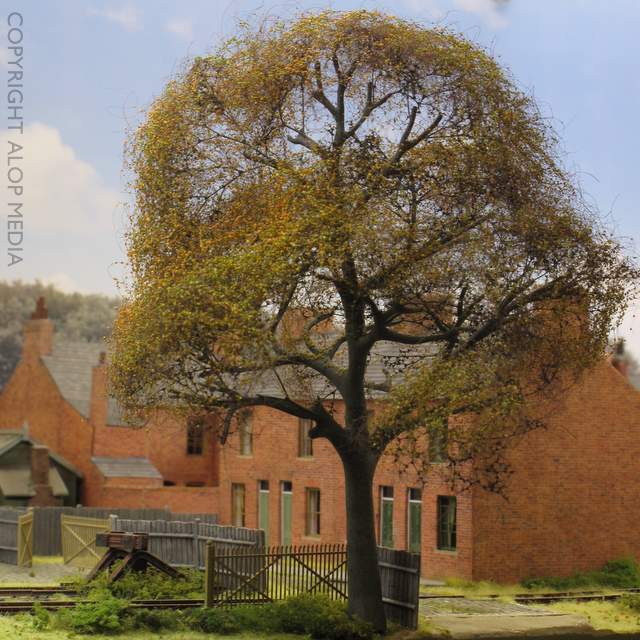
One of the things the people seem to respond to most when they see the layout, are the trees. The core of these are made from plastic armatures from C&L finescale. At Railex, http://www.railex.org.uk/ Peter from C&L wasn’t sure if the tree armatures would be retained in the range, however having seen the Albion Yard trees and some correspondance from other modellers, there may be a run of armatures produced to test the water for the market.

If you are interested in using these armatures then contact Pete at C&L http://www.finescale.org.uk/ and let him know. The layout is currently up at home, being prepaired for Model Rail Live in September http://www.modelraillive.co.uk/page/?title=The+Event&pid=2  This will be the only opportunity to see Albion Yard in the remainder of the year, as the layout is not on the exhibition circuit.

Not Everyone
Works For Peanuts …
Posted in 2012, Airfix, Bachmann, Branch Line, British Rail, Canon G10, Chris Nevard, DCC, dcc sound, Eastern Region, Exhibition, Forest of Dean, Great Western, hobbies, Hornby, Ian Futers, Kalmbach, Layout, LMS, LNER, Midland Region, Model Railroad, Model Railway, Model Railway Journal, Modelling, OO Gauge, Railex, Scottish Region, Southern Region, Uncategorized, Wales, Welsh Marches, Western Region | Tagged , , , , , , , , , , , , , | Leave a comment

Mags and Mountains …

September 2012 Railway Modeller

September 2012 Railway Modeller

To date there’s not been much in this blog section regarding the build of Albion Yard and how its developed over the years. In this Septembers Railway Modeller the layout is featured in a break from the normal style of layout presentation article. The article is an interview where Steve Flint, the editor, and I sat down and talked about the layout and its development. It was all the more interesting to do as Steve hasn’t actually seen the layout first hand, but has seen it appear as a photo set in videos, various magazines including Railway Modeller, Model Railroader and MRJ. On its old fotopic site the layout galleries received over 200,000 views, which always pleasantly surprised me.

It’ll be interesting to hear if the style of article was of interest, feel free to post comments here or email the team at Railway Modeller. There are a couple more pieces in the pipeline about the layout, for a number of magazines. All of them will take a different view or aspect for discussion with new images, as its important for me that each piece if used says something new or different about the layout or any of its features.

One to consider

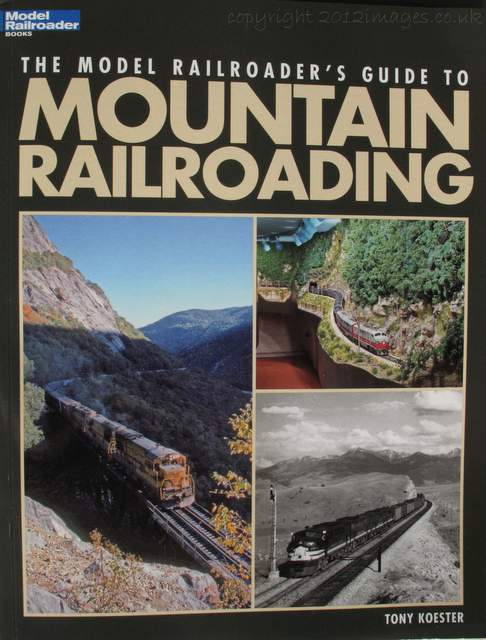
One book I’ve recently read is Kalmbachs Guide to modelling Mountain Railroad’s. Written by Tony Koester the title doesn’t quite match the book as it isn’t so much a guide, as a well laid out series of chapters as discussion points. If you’re looking for ‘how to make’ a high country or hilly layout this probably isn’t for you. What this book does is sets out the various considerations to make before deciding to build such a layout, comparing and contrasting advantages and disadvantages of the types of layout, scenery, gauge and scale, era, locomotives, rolling stock and operation.

The illustrations are both color and black and white, all well produced in the typical Kalmbach house style. Whilst written primarily for the North American market and layout styles, there is plenty of food for thought for other modellers. Many of the discussion points work equally well changing the prototype for a UK or European theme. Many of us want to build various prototypes and eras, much of the content translates to factors that affect any railway wherever its located, and I found that I was thinking much more about how I chose settings and prototype in the past and those I have in mind for the future. On the basis that it got me mentally reviewing those factors I feel it was good value for money, and book that I’m likely to return to in the future.

http://www.kalmbachstore.com/12462.html

Posted in Airfix, Bachmann, Branch Line, brassmasters, British Rail, canon, Chris Nevard, DCC, dcc sound, Eastern Region, Exhibition, Forest of Dean, Great Western, hobbies, Hornby, Ian Futers, Industrial, Kalmbach, Layout, life, LMS, LNER, Midland Region, Model Railroad, Model Railway, Model Railway Journal, Modelling, OO Gauge, Railex, Scottish Region, Southern Region, Uncategorized, Wales, Welsh Marches, Western Region | Tagged , , , , , , , , , , , , , , | Leave a comment

The Good, The Not So Good, and the Indifferent

Parkside 7mm Southern Dia 1477 Insulated Van

Its been an interesting couple of weeks, I’m lucky in a way that I get to mess about with different things, across scales and eras, but mostly within my overall interests. You do see interesting variations as well especially looking at the products that are available. Above is an example of ‘The Good’. Its a Parkside kit in 7mm of a Southern Railway Insulated Van. Parkside have really hit a sweet spot of late, the kits that I have built have all been well designed and engineered. They fit, they work, they look right. Theres still some of the older kits in the range that aren’t as good, but what is noticeable is the current trend of consistent improvement with any of their new releases over the past five years or so. A real show of sustainability in improvement and leaving a legacy of good kits in their range.

4mm Road Transport Images tanker / Scale Link Ford

The next items are vehicles for Albion Yard, one is a very simple whitemetal kit, found in the ‘started’ drawer. An evenings work and it’ll be complete. I’ve also got hold of an articulated tanker kit from Road Transport Images. This is a resin and whitemetal kit which I’m making up to be similar to the Bitumen tankers used by Berry Wiggins in the Forest of Dean. This has meant cutting the chassis of the tractor unit to shorten it, which has improved it, but it needs to be shorter still. The chassis has a solid top to it, which I’m not entirely happy with, however I may actually scratch build the core of a chassis and graft components across, which is another big positive to take out of this whole thing going forward.

Dapol OO LMS Home Signal, Scale etch overlaid

The next two show ‘The Not So Good’. Dapols ready to use OO signals are a real ‘six out of ten’. When I say ‘Not So Good’ they are to me frustratingly ‘Not So Good’, though I’m under no illusion that they won’t or shouldn’t sell. There’s potentially a wide diversity in the types of signals that could be produced in N gauge, OO gauge and O gauge. It’s interesting to see the use of ‘gauge’ rather than ‘scale’, if you think of the signals as scale models, then you’ll consider these signals more of a problem than a solution. Using such a description, gauge, rather than scale, (a Perfect Curveism if ever there was one), instantly negates any argument that the signals dimensions are all incorrect.

Dapol OO GWR Home Signal. Scale etch overlaid

Why frustratingly? Now here’s the thing, this is where we are with this, I’m not over bothered if something isn’t quite right, I will leave it, modify it or make my own. As you can see from the simple overlays above the arms are the wrong shape and size. This isn’t just the signal arm, its the location of the spindle, and the lamp position on the post too. Oh and the posts, including the ‘ribbed for pleasure’ Great Western one. So, if you’re thinking like with the Stove R chassis, that this was “a totally routine accident of design” and you can totally fix it with ‘additionality’ of scale etches, unfortunately you can’t. The defining design feature of the OO products are that, no matter which direction you view them, or measure them from, they’re wrong, and critically, look wrong, check your OPC references out. So if you want to fit etched arms then you need to design some the wrong size and shape first. This is a real shame, the N gauge models are much smaller, or, they’re further away, so changing the dimensions and proportions relative to one another to get them correct for OO gauge, shouldn’t have been a problem. Hopefully it’ll be even easier to get right on the forthcoming O gauge signals. When you consider the inclusivity shown when checking the detail variations etc on the Western/Cl22/Beattie Well Tank, these signals as their most recent release leave me indifferent towards their new products. Information to have got them right or certainly much more accurate is readily available, Steve Jones on electricnose was certainly ‘on the money’ on some things and this leaves the market wide open for another manufacturer, or Dapol themselves to improve on these models.

Dapol’s OO ‘scale’ LMS signal

I should emphasise the signals do work as advertised, and as per the instructions, you need a 16Vac source and a pulse switch. The arm movement is smooth and realistic in terms of speed through the movement range, the LED stays lit and is a bit bright to say the least. Whilst current signals are 16V and not supplied with any DCC instructions, there’s still the possibility that we may be overlooking Dapols digital strategy.

IMG_8427

The next logical step being the introduction of Virtual Signals for DCC users …

Posted in 2012, Airfix, Bachmann, book, canon, Canon G10, Chris Nevard, DCC, Eastern Region, Exhibition, Great Western, hobbies, Hornby, humour, Kalmbach, Layout, LMS, LNER, London 2012, Midland Region, Model Railroad, Model Railway, Model Railway Journal, Modelling, Narrow Gauge, OO Gauge, research, review, Scottish Region, Southern Region, Uncategorized, Western Region | Tagged , , , , , , , , , , , , , , , , , | 3 Comments

108 Connections

This was the result of one of those ‘good ideas’ you have from time to time. For my EM layout Bawdsey http://bawdsey.wordpress.com/, I’ve been building up the motive power and stock to reflect Eastern Region Practice in the late 1950’s through the early 60’s. As such I’d got hold of a Bachmann Derby Lightweight DMU which I’d converted to EM gauge. I’d done this using a Branchlines conversion kit. As I did this I swapped the OO wheels from that unit back into this my 108 unit which had provided the original DMU service on Bawdsey.

Frame with assembled scissors in place

As I’d found a couple of Slaters scissors corridor connection kits in my pile of ‘to do’ stuff I thought I’d use them for the Derby lightweight. (These were items I’d bought in the 80’s for use on a Lima 117 DMU makeover, but never got round to using). A wonderful plan apart from once I’d removed the endplates from the etches, the endplates and scissors as seen above, were too wide to fit between the Derby’s exhausts. So I now had two DMU’s that wouldn’t work for me, the Derby still had too wide a gap between the corridor ends, and the 108 that whilst close coupled still niggled as not being quite right, there being a visible gap between corridor ends.

Test fit of the Bellows

I took the easy way out, I tried fitting the paper concertina bellows into the Slaters unit as a dry run, (see top above), and fitted that to the end of the 108. This showed a massive improvement, so out with the soldering iron and I built them carefully soldering captive washers at the joints to keep the belows active.

Test Fitting of Both Assemblies

My first option was just to make one unit for expediency. It looked ok butted against the original plastic version, but it was clear they were two different types, and types of construction. Even allowing for the new one painted they were still going to look odd. So I bit the bullet and put together a second corridor, and I’m so glad I did. The pic above just shows them as an interference fit hence the different heights on the ends.

Test Running of New Corridors

As I have the unit close coupled I was able to loosely fit the connections, and couple the units. This mad a huge visual difference and immediately I knew I’d made the right choice to do this conversion. Running through a crossover the unit bellows gently compress and expand keepng the coupling under tension, but not tight. Such a small difference makes a really big visual impression.

Halfords Black (as usual) …

Next job involved the regulation application of Halfords black primer to both units before the final fitting. The spray was misted across the bellows units, which has allowed the scissors to still function.

Ready for Service on ‘East Dursley’

Whilst not a fast job, it was at least an evenings modelling to get the corridor units together working and painted, its a job that has been really worthwhile. I didn’t get the Derby done, but I did get my eye back in for soldering small functioning joints, which has spurred me on to complete a functioning lattice post LSWR starter signal, and got me back into making signals, one of which is required for a book project. The final benefit is I’ve ended up with a 108 that will now go straight into ‘stock’ for East Dursley, a project layout I’m working on. (Theres a link on the right hand side here but it’s currently not active.) I also have a Blue Grey variant too so I know that can be done next evening I want to build something ‘complete’, which gives a really satisfying feeling. I now have to get some corridor etches from Masokits, to see if theirs fit any better for the Derby unit, so I’ve not finished with DMU’s just yet!

Posted in 3f, Bachmann, Branch Line, canon, Eastern Region, Exhibition, Great Western, hobbies, Hornby, Kalmbach, Layout, LMS, Midland Region, Model Railroad, Model Railway, Model Railway Journal, Modelling, Nevard, OO Gauge, Scottish Region, Southern Region, Uncategorized, Western Region | Tagged , , , , , , , , , , , , | 1 Comment