New Radnor Stepping Stone to ‘Finescale’

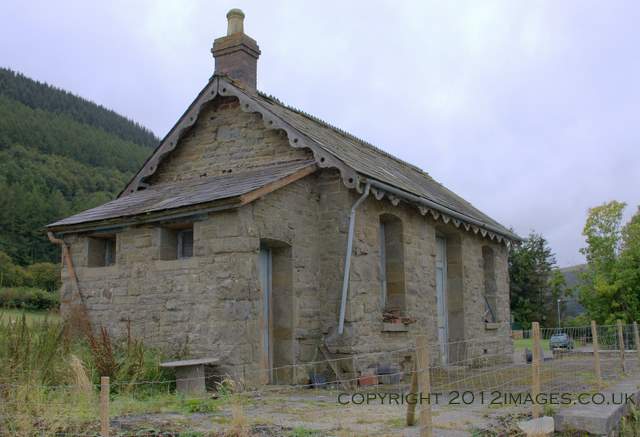
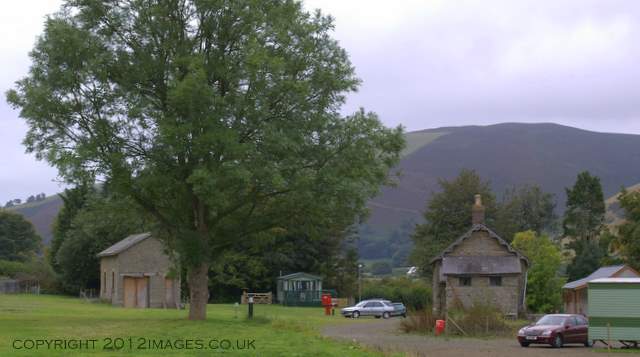
New Radnor Station Looking West

Thursday 24th April 1930 isn’t much of a date in the history books, we were a month away to the day from Amy Johnson landing in Darwin for example, and it appears that nothing much happened that day of any real importance, certainly by today’s media hungry, event driven, standards. People went about their daily lives and in some cases as we shall see later, left their mark, unassumingly, for posterity. Many modellers like to take elements of real railways and weave them into their designs, some use a completely freelance template, and others like to model an exact location. The last option is frequently a path trodden by a modeler with a good bit of experience under their belt. With this plan the simplicity allows all three approaches to be followed, but the part that makes the exact location option quite easy is the fact that the main buildings are still extant, and the location relatively small.

Today after all the festivities I often take a few moments to just sit and chill out frequently picking up one of my collection of books and ‘imagineering’ a model railway layout. For many years the Great Western branch line terminus has been seen as a bit of a cliché, of late, modern MPD’s or Scottish BR Blue era branch line termini are also sometimes regarded as a ‘stereotype’ model railway. So then, unashamedly returning to the Great Western branch line terminus, for the same reasons as they, and the above more modern subjects are so popular. Using these ‘cliched’ prototypes, a modeller can often achieve a good, realistic layout in a relatively modest amount of space. This time its not looking at a postcard seaside Devon or Cornwall with Southern running powers, but rural Mid Wales. We will also look at how you can adapt the prototype with readily available scenic items and rolling stock to make your own interpretation of this charming and quintessentially Great Western branch terminus. When I look at such a project I tend to look at some of the social history of the area. This wouldn’t have been a chocolate box type Western terminus, in a pretty thatched village, this was rural mid Wales Marches, well off the beaten track with a harsh rural economic climate too.

New Radnor lies approximately 20 miles west of Leominster, and lies against the eastern foothills of the Cambrian mountains. I first came across the Station buildings on the way back from Llandovery to Hertfordshire, in the late 90’s, and was staggered to find myself driving past a station that seemed to be complete apart from the lack of track. At that time the site was a bit run down and was a caravan site, it still is, but has been upgraded significantly, and the owners have an interest in the history of the site too, which bodes well for the buildings futures.

The site has a natural backdrop of a hill which if you model an early era can be left as upland grazing, or if you bring your era to the 1940’s and later, the backdrop would be Forestry Commission woodland. If you are going to have a go at re-creating this station or one with a similar backdrop, one thing you’ll need to be good at is making trees, and I will add a posting in due course to the blog on how I do mine.

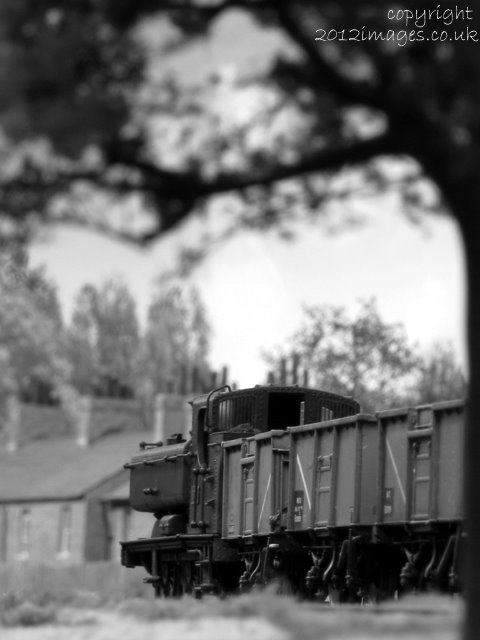
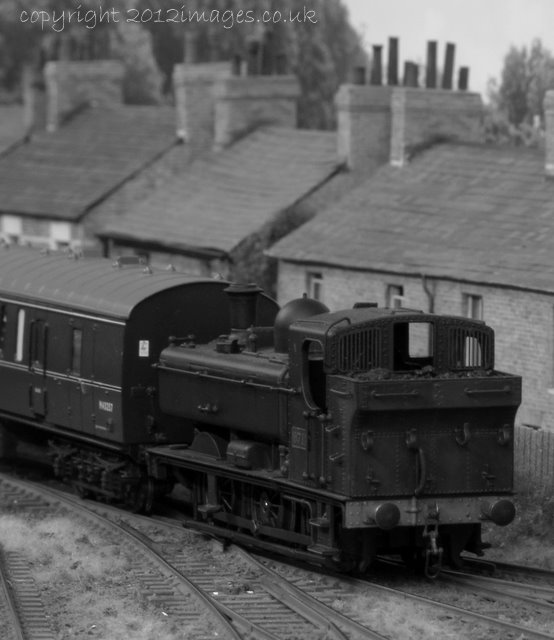
Panniers & Trees

The main station area comprises just two buildings, the goods shed, and the station building itself. Both are relatively simple in design, drawings are available in the Wild Swan book of the branch, and both buildings are still extant. The track plan is simple too so the whole station easily provides that first stepping stone for those wishing to widen their skills into scratch building, replicating an actual location, or interpreting a real location with a high degree of authenticity.
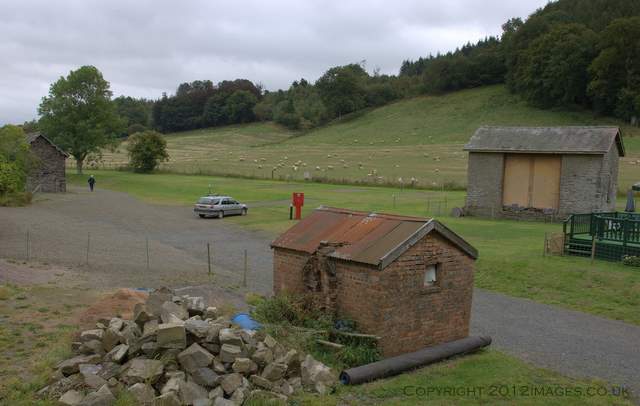
New Radnor Station Looking East

The track plan changed a few times over the years but is in essence a simple run round loop with a couple of sidings. As such it suits all modelers from those using set-track up to those who hand build track from individual components. Again the simplicity of the design lends itself to the stepping stone of building your first track, or a change to a finer scale standard, OO to EM/P4 or N to 2mm. With four turnouts, the wiring for either DC or DCC operation will be very simple. The track layout is interesting in that it looks like a through station, and that was the original builder’s intention, with an extension to Rhayader and then on to Aberystwyth being the somewhat optimistic goal. Alas as with many of the early railway ideas, money and practicality put paid to such grand designs and New Radnor was as far as the line got. The station platform is on what would normally appear to be the run round part of the loop, thus emphasizing the fact that this was a truncated line.

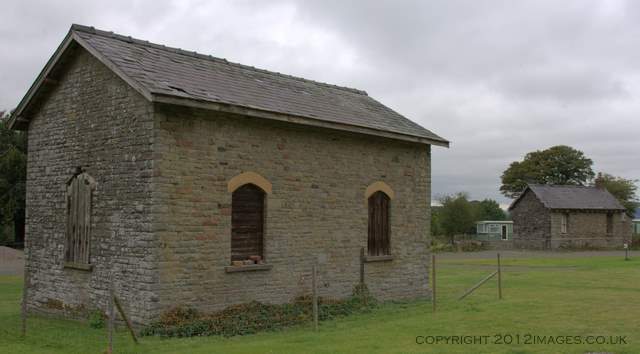
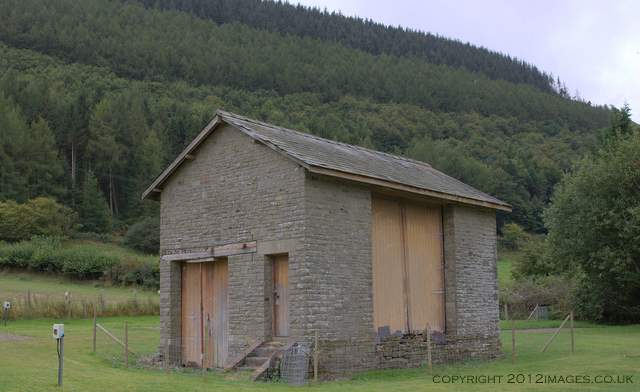
The structures still standing as of late 2009 were the station building and the goods shed. The station was small and even as a terminus there was only a covered ground frame for the signalling. There was a brick built water tower next to a cattle pen, and in keeping with the size of the station these were quite small. The station and goods shed building appear to have been built from local stone, as you can see from the pictures they are very simple straightforward structures to attempt a scratch building project with.

New Radnor Goods Shed

However for the modeler who doesn’t want to go that far there are some easy ways round the buildings. In both the Ratio and Wills ranges of kits there are buildings that could be used to give the flavor of just this sort of terminus. There are of course ready made cast buildings available too which shouldn’t be overlooked, but the beauty of a compact layout like this is the opportunity to make something distinctive and unique by either scratch building or modifying kits to give a model which has your, as the modeller, signature or style. To use current TV talent show vernacular you can ‘make it your own’.

So if we look at what’s available to easily modify in 4mm scale we have from the Wills Kit range
Ground level signal box SS29,
Water tower (stone) SS34,
Station building SS67
Goods Yard Store SS63
Platelayers Hut SS50
Also in the Ratio range you could swap the yard store SS63 for the Provender goods store 513, and cattle docks are available in both OO (502) and N (202). These products listed above are not a definitive purchase list, but give an idea of what is easily available in many model shops throughout the country. The key thing about all of the above items is that built and painted to a consistent standard they will give a believable set of small terminus buildings and set the scene for our Great Western or Western Region terminus. You can do much the same with N gauge, the Ratio, Peco and Kestrel ranges of kits all have suitable buildings which you can use as per the kit, or adapting them to make your own design.
New Radnor Goods Shed

Stock
For the person who wants to run stock straight from the box with a prototypical mix of locos and stock, New Radnor offers a cheap and pragmatic option. In both OO and N gauge ready to run options are readily available.
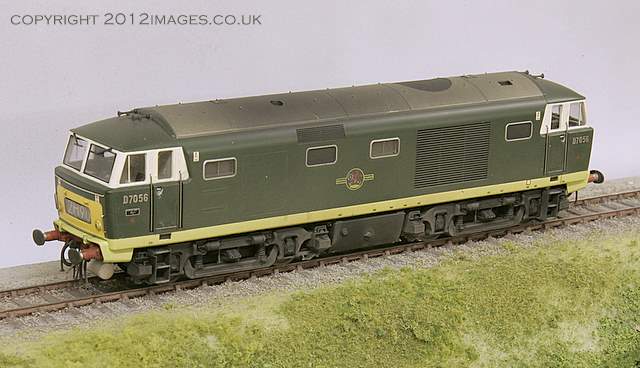
The branch was operated primarily by the GWR class 58XX 0-4-2T, coaching stock was recorded as Worcester Division ‘B’ sets with a typical range of freight wagons, and the classic GWR/WR 20 ton ‘Toad’ brake van. To ring the changes in motive power a 57/37/74XX pannier tank could be used. The 58XX can be easily represented by the Hornby and Dapol 14XX tank models in OO and N gauge respectively, all that’s really required being a number change with 5807 and 5814 being the staple locomotives used on the line. The most notable difference being the 58xx’s were not motor fitted, so wouldn’t be seen with the ubiquitous ‘push-pull’ driving trailers so often associated with a GWR branch line. The coach ‘B’ sets were a high density seating suburban design, frequently coupled in pairs. Both the Hornby and Dapol versions are of similar diagram and can easily be utilized straight from the box. The goods stock can be made up from a wide range of kits, and also from the ready to run ranges. As the branch line was a small and very rural affair then the art of the mundane is what you should look for in terms of stock, so it’s very typical standard freight stock of open wagons and vans. Typically for wooden body opens the RCH six and seven plank private owner as well as Great Western company prototypes, mixed in with some ‘foreign’ company stock. In BR days the RCH wagons would be in tatty condition with them being rapidly replaced by the BR 16 ton steel mineral wagon. To add more variety whilst remaining plausible, a bogie bolster may occasionally turn up to take large tree trunks away felled from the local forestry, and cattle wagons for livestock. On occasion a horsebox could be added to either the passenger or goods train as you desire, Parkside produce a 4mm and 7mm kit of the N13, a typical Great Western design that lasted into BR days, and Hornby in 2011 also brought out a new tooling of the GWR horsebox. If you decide that you’d like to bring it up to BR diesel era, as a line that escaped the Beeching axes that can be modelled using an Heljan (OO) or Dapol (N) Hymek as per the Newcastle Emlyn branch, with the passenger traffic being provided by a Hornby (OO) or Dapol (N) class 121 single car DMU. So the modeller can have a prototypical range of locomotives and stock available off the shelf, and in the overall scheme of things keeping the prototypical flavour can make cost savings as you aren’t tempted by the latest releases from the manufacturers.

Stock readily available in OO
14XX Hornby
57xx Bachmann
B-Set Coaching stock Hornby
Class 35 Hymek Heljan or Hornby
Class 121 DMU Hornby
GWR Toad Hornby or Bachmann

Heljan 'OO' Class 35 Hymek

Stock readily available in N
14xx Dapol
57xx Bachmann Graham Farish
Class 35 Hymek Dapol
Class 121 Dapol (2010 Release)

This quick overview of a long disused rural backwater shows that if you search hard enough, or are just plain lucky like I was, there are some real gems still hidden in the British landscape, even in excess of fifty years after the last train ran, even down to what appears to be on some of the doors GWR light and dark stone colors. For those of you who want a challenge and want to build something with a little more purpose or realism than a rough sketch in the pub it gives a good template to work from. It’s compact enough to be built by one person, and if you wanted to make an accurate portrayal of the station the Wild Swan book and the fact that the real thing is still there gives plenty of inspiration for the project. When I was there the site owners were very interested in my idea to actually build a model of where they live, and they are keen to hear and see any new information regarding the railway. They were kind enough to show me inside the station and goods shed, both of the buildings are being looked at with a mind to convert them for accommodation. Whilst there, I noted painted on the crane that is still inside the goods shed, the date, 24th April 1930. That was presumably a date it was inspected or tested, and was a fascinating link back to the 1930’s when the site was still very much an active station.

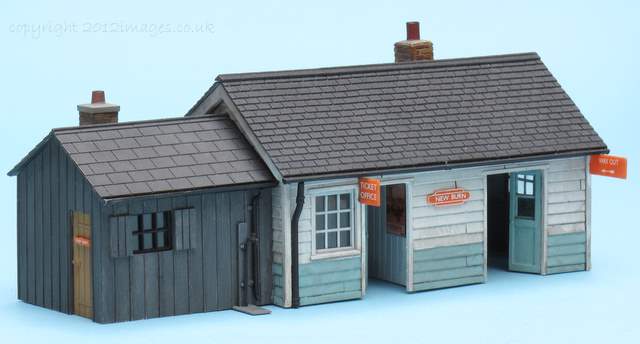
New Radnor Station Building

There you have it then, a Great Western Branch Line which isn’t the typical portrayal so frequently seen in the printed media or at exhibitions. If you’d like to see an example of how this type of model can make a plausible layout I can reccommend ‘The Chronicles of Penhydd’ http://thechroniclesofpenhydd.blogspot.com/, which not only covers the layout, but has plenty of valuable ideas on capturing that most elusive element of a layout, ‘atmosphere’.

Further reading
The New Radnor Branch
Wild Swan Publications ISBN 1 874103 06 2

New Radnor Station Campsite http://www.oldstationcaravanpark.co.uk/

Finally many thanks for taking the time to read this blog over the year and wishing you all the compliments of the season.

Posted in Airfix, Bachmann, book, Branch Line, British Rail, canon, Chris Nevard, Exhibition, Great Western, hobbies, Hornby, Kalmbach, Layout, life, Model Railroad, Model Railway, Modelling, Nevard, New Radnor, OO Gauge, paint, Photography, research, Uncategorized, Wales, Welsh Marches, Western Region | Tagged | 4 Comments

Rust & Dirt

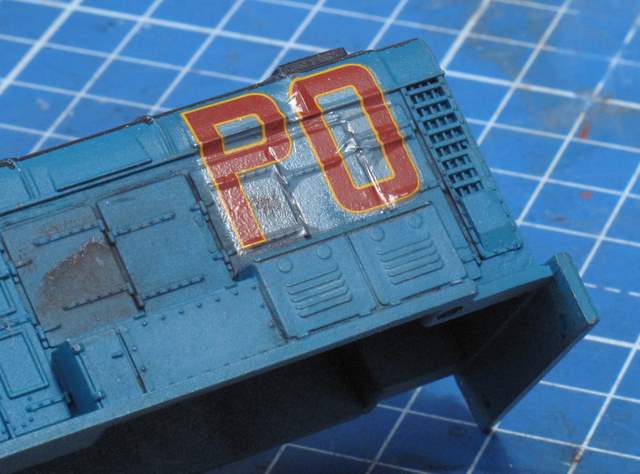
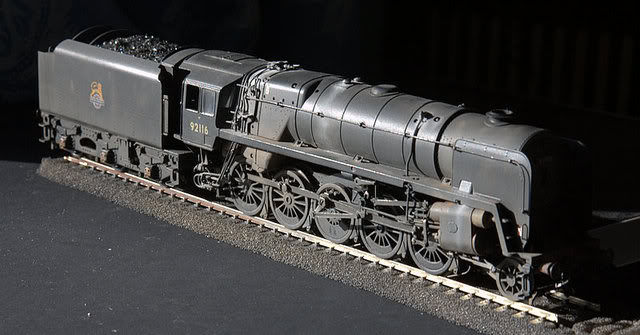
I often get asked what mediums I use for my paint finishes, they are really pretty simple, easy to obtain supplies from good quality art and model shops. Firstly I tend not to skimp on the cost of paint/mediums or applicants, eg brushes. This is because in my experience quality products tend to make these tasks easier, because they make the techniques and materials work better. The models shown are by myself and the finishes achieved using the listed products below.

Where thinners are required I will always try to use the same brand, as I they are formulated to work together, so any problems usually lie within the operator error category. The reason why I mention the shade and order is that in a very interesting conversation a while ago, the topic of color blindness came up.

Enamels
Humbrol Matt black No33
Acrylics Airbrush toning on the diesel body and steam locos. What I reffered to as my ‘basic palette’. In descending order of darkness shade, dark at top.
Matt Black Tamiya
Nato Black
German Grey
Flat Earth
And I always use the Tamiya thinner, but isopropyl alchohol works well as a thinner with those too, which a chemist can supply.

Rust patches on wagons in descending order of darkness shade, dark at top
Tamiya Acrylics
XF9 Hull Red
XF10 Flat Brown
XF68 Nato Brown (good basic rail color too, if you remember the painted streamline)
XF52 Flat earth

Mig Pigments again descending order of darkness shade, dark at top
Black Smoke PO23
Standard Rust PO25
Light Rust PO24
Vietnam Earth PO31
Industrial City Dirt PO39
Ashes White PO22

Artists pastels by Rowney and Winsor and Newton
Black/White/ and a WWII RAF Brown earth shade, and two or three others from a bright orange rust color to a reddy orange rust color.

Posted in Airfix, Bachmann, book, canon, Canon G10, Chris Nevard, decals, Exhibition, hobbies, Hornby, Layout, library, life, Manchester, Model Railroad, Modelling, OO Gauge, paint, Photography, review, Uncategorized, waterslide | 7 Comments

The Start Line

We are very fortunate that the history of the British Isles railway system has generally been very well documented through the years. There are exceptions of course, and when you start doing detailed research on well known lines and or stations or locomotives you can find blank areas of information, where you have to make educated guesses, perhaps using known standard practices from an earlier railway company or region.

When embarking on a new project I do enjoy the search through books and maps and going through boxes of pictures at exhibitions looking for data I don’t have. This is all well and good if you have a clear idea of what you want to model, but sometimes there’s ‘modelers block’, where you may have one or two ideas that are germinating but no clear path to follow. This is where the wide range of photo album books can pay huge dividends. Some are quite expensive it has to be said, but it’s still worth remembering that there are Libraries, and are an underutilized resource by many researchers. I have found them a particularly good source for information, especially for their local areas. They will know of local authors, books, museums and societies, who may have those little golden nuggets of information you’re looking for.

Let me give you a couple of examples. I am researching two projects, one of which will almost certainly be built. The two stations are geographically far removed, Ayot, in Hertfordshire, and Meldon, Northumberland. For both of these stations I was familiar with the location, and had found some images through contacts, and books. Where the libraries came into their own was when I asked if they had mapping of the station areas. In both cases they were able to provide at very little cost, copies of Ordnance Survey maps which included the track plans. These gave rise to being able to work out how the station was actually worked, how shunting moves were restricted for example. The internet is another source, the search engines providing quick access to images, these are particularly good for current era modelers, though there are some stunning examples of 50’s and 60’s work now appearing. These will help enormously in determining coloring and weathering for specific eras. Unfortunately the further in time you travel the less is available, and it is a transient data source, if you find info you need, always save it, as one day the site/site owner may be gone.

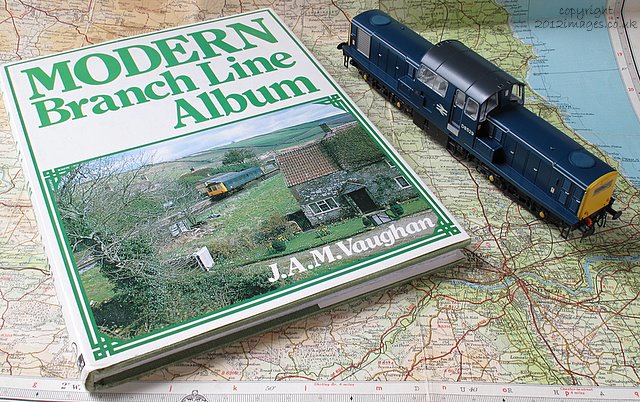
So returning to books, and the header picture, this image shows three of my favorite rail related subjects, a transition era diesel, a map of Northumberland, one of my preferred areas, and a good photo album book. It’s the book that really for me holds all three items together, and if ever on desert island discs, it’d be my book choice. So what’s so special about this sort of book for me as a modeler? The title is ‘Modern’, in fact it was published in 1980 and reflects the era of the diesel transition, through branch line operations across the UK covering the previous 20 years. The image quality and variation of subject matter is key. There are few ¾ front platform edge shots, as not only does the book reflect the change in motive power and rolling stock, it covers the infrastructure too, showing how that deteriorated and changed too. The book is well laid out and there is a geographic progression through it, in general terms it’s south to north so there’s a logic to how the book flows as you read it. The captioning covers basic train details and a line or two on the branch line in question, enough to get you thinking in more detail about the images, and the history behind them. The book therefore forms the key for me, as you turn the pages its beginning to make me think, ‘that lines of interest’ or I can do that train formation with manufacturer X, Y or Z’s loco, and rolling stock or kits from other manufacturers. The landscape nature of the pictures will tell me a bit about if I’m going to have to consider flat scenery, hills, mountains, urban, rural, industry in the scenic makeup, also can I use kits, what buildings are available, how many do I need to build to capture the flavor of the area?

Ben Ashworth Style Inspired Image

For me some of the most effective models are those where you can look at them without a train on scene, and immediately think, that’s Somerset/London/West Highlands and Scotland in the 1960’s/70’s because the modeler has captured the scene so well. To pick a few examples from recent published layouts would include Saffron Street and South Pimlico for London, Catcott Burtle, Bath Green Park and Engine Wood for Somerset, and Lochside and Burntisland for Scotland. There are of course a good few other layouts that have appeared on line, in magazines and exhibitions that immediately give a ‘time and place’ feel. Two essential elements of the time and place come from the buildings, many regions of the country provided local materials for the construction of the railways and their infrastructure, for example Kings Cross and some of the suburban stations on the Great Northern route out of London were built from London Yellow brick, and are still extant today. To capture the location a modeler should consider how to replicate that, a Great Northern suburban station made from stone for example would look completely out of place. A photo album allows you to look at and absorb detail, sometimes without really being conscious of it. I realized that one day when looking for models of platform barrows, ok perhaps a bit esoteric, but I realized that the Coopercraft GWR trolleys looked ‘wrong’ on a layout that depicted East Anglia.

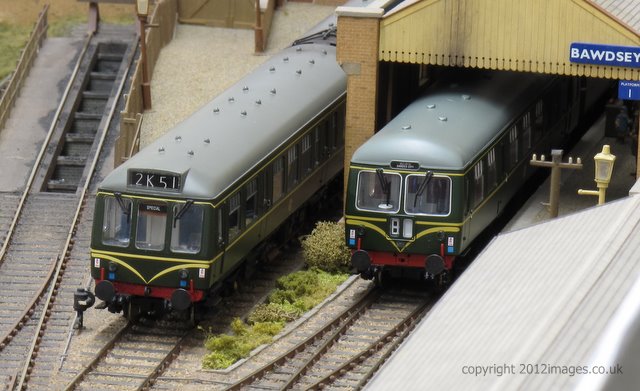
Bawdsey, closely based on Aldeburgh, Suffolk

It wouldn’t have been the end of the world to leave them, but to me removing them actually made more sense. I subsequently found a set of LNER etched platform barrows from the London Road range and substituted these in place. A more common kind of example is the modern car, in a 1950’s car park. As modelers we are very fortunate that we are now seeing more road vehicles becoming available that are appropriate to different eras.
A further area of research to explore that is extremely useful, is societies that deal with the historical side of railways. Most of the major companies that operated in the UK have a society of some kind, and they vary in their modeling content as they will have members who collect railwayana, academic type study, and those who use the society to make their modeling more accurate. Many of the socities attend exhibitions, and they can be a wonderful resource both of data they hold and publish in their own magazines and web pages, but also providing a link to an expert or authority on particular subjects, be it a particular class of locomotive or the company architecture. The Historical Model Railway Society, is a good place to start, they have a large amount of data themselves and their links through to other societies and model manufacturers is a very useful tool for the researcher.

With the use of the internet increasing, it’s worth remembering that there is still a large amount of analogue data, in the form of books, photographs and maps that is available. For example the maps for Ayot and Meldon mentioned earlier simply weren’t available on line, or in any easily accessible digitized format that I’m aware of. Actually going to the local museums and seeing the maps allowed me to copy them, cross reference and make notes from other maps I didn’t need, and pick the brains of the librarians to see if they knew of any local authors or history groups/societies that may have extra data. It’s these sorts of details that provide a keystone to making a layout that can really capture that elusive quality of atmosphere, and what I’m trying to achieve with Albion Yard. When I make a layout or building or an item of rolling stock that is one of my main criteria to try to achieve, and the background research, from photo album books and other non internet sources is essential in my attempts to reach those goals.

Northumbrian take on a Wills kit

Posted in Airfix, Bachmann, book, Canon G10, Chris Nevard, DCC, Exhibition, Forest of Dean, hobbies, Hornby, Ian Futers, Kalmbach, Layout, library, life, Model Railroad, Model Railway, Modelling, Nevard, OO Gauge, Photography, research, review, Uncategorized | Leave a comment

Thank you

Just a quick line to say thank you to all our friends, whom have been so supportive over the past few weeks.

The calls, messages, emails and cards have all been very much appreciated during this difficult time. We are now starting to make some headway into normal life again.

best regards

Posted in Airfix, Bachmann, book, Canon G10, Exhibition, Forest of Dean, hobbies, Hornby, Layout, life, Manchester, Model Railroad, Model Railway, Modelling, Nevard, OO Gauge | Leave a comment

Manchester Cancellation

'Sandy'

You’ll be missed more than you could ever have imagined.

Posted in Exhibition, Manchester | Leave a comment

Today’s the day they’re …

97xx 9711 at Albion Yard

Today will be interesting. I’ll find out if the layout fits in the car. Breaking the layout down was entertaining as the mods listed in yesterdays post were sort of built one on top of the other, I knew how to take it apart when I started, but with the new backscene, fascia, wiring loom, legs, and lighting rig, it’s all ‘a bit different’ as it comes to bits. Today I’ve been scribbling letters and numbers on all the new components as they come off, and making a list of all the bits, new and old.

As the layout is as old as one of my daughters it’ll be intriguing to see if anyone recalls it in its earlier ‘fotopic’ days, the basic core of the layout has never changed, though I’ve been a serial building developer and mover throughout the period. Anyone who has had a layout for a while will know the project stagnates from time to time, this happened with Albion Yard too. With it now being ‘finished’ with the new display, I can see me actually installing it in the back of the garage to play with after the show, I’d assumed I’d bung it into ‘storage’, but the apearance now has made seriously consider using it rather than hiding it away. Also some of the locos like the one above, have had subtle alterations like the Shawplan ‘Heritage’ laser cut cab glazing fitted, all these sorts of modifications make the train set ‘new’ even for an old layout which this one is in my eyes, though this is its first show. What a difference a week can make.

Posted in Airfix, Bachmann, book, canon, Canon G10, Chris Nevard, DCC, dcc sound, Exhibition, Forest of Dean, hobbies, Hornby, Ian Futers, Kalmbach, Layout, Manchester, Model Railroad, Model Railway, Modelling, Nevard, OO Gauge, Photography, review, Uncategorized | Leave a comment

Modification Mungus

Albion Yard in the 80's

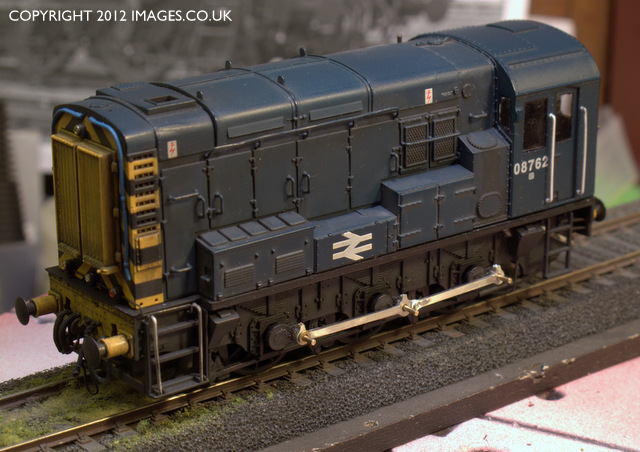
The layout is pretty much complete for the show, but any of those few that have actually visited and seen the layout over it’s life won’t be surprised to know that even today, I’m still moving buildings and changing viewpoints to get the final ‘fix’. I had a visitor last night and even today buildings have been changed to improve the visual look from the arrangement he viewed. I’ve also been a bit naughty with this image, the layout will be operated in its steam era for the whole weekend, this is just a trail shot with a Bachmann 08. The 08’s were tried in the Forest but for some reason, possibly their lack of speed, were not used regularly.

The list of modifications I’ve done over the past few weeks makes it almost a rebuild
New legs and support design
Backscene (it never had one)
Fascia (see Backscene)
Lighting Gantry (see Backscene)
Carry Case/structure (see Backscene)
Curtains to cover legs and supports (see Backscene)
Wiring Loom (Being a home layout it didn’t need to be tidy, exhibiting, it does)
Locomotives (modified to create Forest Of Dean specific engines)
Scenery (Trees, fencing, structures, new grass, teddy bear fur modified, + stuff I’ve forgot)

The big leap forward this week came from the backscene, and the invaluable help and thoughts of Chris Nevard http://nevardmedia.blogspot.com/ , and John Heathcote from J.P. Grafix http://www.jpgrafix.co.uk/ , which has brought a really interesting aspect of the layout to fruition, and theres more to come for Railex next year.

Posted in Airfix, Bachmann, book, Canon G10, Chris Nevard, DCC, dcc sound, Exhibition, Forest of Dean, hobbies, Hornby, Ian Futers, Kalmbach, Layout, life, Manchester, Model Railroad, Model Railway, Modelling, Nevard, OO Gauge, Photography, review | 2 Comments

Pannier Progress

3737 returns to Albion Yard

I make no apologies for another image of 3737, it’s one of my favourite locomotives. It’s basically the Bachmann Branchlines OO model that I’ve re-numbered weathered and today spent an hour opening the rear cab doors and windows. It’s a very simple conversion, but makes such a difference and gives the model a bit more character. There are a few more modifications to come for this loco and it’s being used as a test piece for different products and techniques. A low cab 57xx version of the Pannier is also having similar work done, the amount of light that can now get into the cab interior makes a marked difference and means that the cab interior requires painting to make the best of its appearance.

Revised cab shutter doors and windows 37xx

Yesterday and today I was at Barrow Hill where I had the opportunity to see and privelidge of operating for a short while, Chris Nevards’ “Brewhouse Quay”.
http://nevardmedia.blogspot.com/2011/08/angle-of-bq-you-won-normally-see.html

I spent a good while looking at the lighting and backscene of Chris’s model and found plenty of food for thought on how to achieve an interesting, descrete, and seamless backscene for Albion Yard. If you get the opportunity to see Brewhouse Quay its well worth viewing for the presentation alone, regardless of wheter the subject matter is your thing or not. Two weeks left to go, no pressure then …

Posted in Airfix, Bachmann, canon, Canon G10, Chris Nevard, DCC, dcc sound, Exhibition, Forest of Dean, hobbies, Hornby, Ian Futers, Kalmbach, Layout, life, Model Railroad, Model Railway, Modelling, OO Gauge, Photography, Uncategorized | Leave a comment

Manchester 2011 Preparations

Albion Yard

It seems odd that almost a year to the day on the ‘Bawdsey’ blog I was writing about the final preparations for taking that layout to Manchester. A year on I find myself in a similar position. I’m now into the final stages of prepartion for Albion Yard, this has included all elements of the layout, wiring, scenery, the display and stock. The previous post relates to fitting DCC sound to a Bachmann Pannier. Well I did two of them for the Railway Modeller article and DVD, and both have been reverse engineered to remove the DCC fitting to run with other DC stock during the exhibition which is quite unusual. The locomotive roster will feature high and low cab 57xx’s, a 45xx small Prairie and the Iconic class 14 ‘teddy bear’. There will be one or two reserves as well which whilst not strictly Forest of Dean, are plausible substitues. The majority of traffic and roster will be entirely typical of the Forest area.

The layout has also had a quick reversion to photo ‘set’ to picture Shawplans latest release of laser cut windows for the Heljan Class 27, this being some of the primary use for the layout in its earlier days.

Posted in Airfix, Bachmann, canon, Canon G10, DCC, dcc sound, Exhibition, Forest of Dean, hobbies, Hornby, Layout, life, Model Railroad, Model Railway, Modelling, OO Gauge, Photography, review, Uncategorized | Leave a comment

DCC Sound Bachmann Pannier

This article was originally written for the Railway Modeller magazine to look at how easy it was to fit a DCC sound system to a small locomotive and in 2007, was one of the first such installations of its type.

37xx Souls of the Departed
I’ve been following the DCC debate for a while on-line, in face to face discussions, and of course in the printed media. From many of the discussion points I could see that DCC did not have significant amounts to offer me, and I certainly wasn’t bothered if I should fall behind, or if I’d be accused of being a luddite, as being espoused by some of the more evangelical style preaching which I’d read or heard from DCC enthusiasts. Having always had an interest in broadcasting and live music, when I started to read in American magazines of ‘sound’ being available, my interest was significantly raised. I guess in our modeler’s book of dreams we’d want steam, sound and weather too. Well here was the possibility of getting at least one of those, all I needed was living proof that it worked and wasn’t gimmicky. The last thing I wanted to do was spend money on something that didn’t match up to my expectations. I was very fortunate that living close to Lincoln there was a local dealer, Digitrains, who specialized in DCC and had significant experience of it, a working layout to see, and for me, critically, in this leap of faith, to hear.

A visit to them left me in no doubt that sound was worth investigating further. To do this, one step that I had to consider, was going DCC and with what. I wanted a simple to use and set up system with high specification at reasonable cost. Primarily to fit and function test chips once they were installed. My brother coming over from Kansas on a business trip brought an unexpected surprise, an NCE Power Cab DCC controller, as a surprise gift. So I now had my ‘control’, but nothing to run with it! The last thing I wanted to do was convert my layout over to DCC and not be able to run the majority of my locomotives, due to the cost of putting chips in them. Whilst watching a demonstration of programming chips at the shop I was taken by a rolling road they used, and I realized that this would be very useful, for testing and running in locomotives, but would also allow me to play with DCC before committing one way or another to it.

The Bachmann 97xx is an cracking example of current ready to run products, for most modelers the locomotive is excellent straight from the box, and I have to admit until recently, for me, that was the case too. Like many of us I’d do a little more to it to customize it, and then it’d join my stock on the layout whirring backwards and forwards as it went around it’s allotted shunting and branch passenger or local freight services, a real local hero. I’d seen in much of the DCC debate the scales here in the UK were, and at the time of writing early 07, still are tipped firmly in the direction of diesel powered locomotives rather than steam. Because I have a wide range of interests, steam sound was important to me as my layout is operated in one of its phases in the BR steam or transition era, therefore I chose steam as the introduction to DCC sound.

Having looked at DCC sound diesels it was clear that there are usually relatively easy ways of locating a speaker in the locomotive inside them without too much hassle, likewise with a tender loco the task is also relatively easy in terms of finding space. My specific interest was to get sound into a 97/57xx pannier, as I have a couple of them for a latent idea to do a Forest of Dean layout, having been inspired on many an occasion by the photographs of Ben Ashworth in particular. A little bit of research uncovered South West Digital (SWD), whom in their range included a 2-cylinder GWR steam sound chip, recorded on the West Somerset Railway from a Manor. (SWD reference number 520GWR) so I had a chat with them to determine which chip and speaker combination would be the most appropriate for me to try. The chip which we determined to be the best to try was the ESU LokSound Micro, which was duly ordered and arrived very promptly. The loco selected is the ‘DCC ready’ version of the Bachmann pannier. This is subtly different inside to the regular model in that the boiler weight has been reduced in size to allow the easy installation of a DCC chip.
The body is easily removed for access to the chassis, first take the couplings off and unscrew the body from the chassis at either end. On the top of the chassis you will see the DCC blanking plate for analogue operation, this needs to be removed, keep it safe if you need to covert it back at some time in the future.

The chip comes with a comprehensive instruction leaflet, including the fitting instructions. This is a very simple installation as the loco does not have lights, externally or internally, and will be hard wired into the loco. This simply means I’ll attach it directly to the motor pick ups and the motor terminals rather than via a multi pin DCC connector to the DCC board on the chassis. To access the loco pickups there are two screws underneath the loco unscrew these and the keeper plate drops away which has the pick ups attached to it. There is a simple rhyming verse which will help here, in attaching the wires from the chip.
‘Red and Black to the track, orange and grey the other way’.

Chassis cable routing

So attach the red and black wires to the pick up strip, red to the right hand side and black to the left hand side. A very quick touch of a soldering iron is all it needs with one wire connected either side of the pick up strip as above. The other two the orange and grey need attaching to the pick up terminal on the motor frame. Not a problem on this loco, but you must always make sure that the orange and grey wires only touch the motor connections.

Chassis side view

If they have electrical contact with the chassis or wheels then you will have big problems and potentially need to replace the chip, which in this instance costs more than the locomotive! There is a yellow capacitor which needs to be removed, this is easily done with a pair of sidecutters. You will now have your loco DCC sound chipped! At this point place it on your programming track and check the functions work. With a rolling road as I have used you can check the ‘moving’ sounds, like chuff rate for this loco or diesel throttle acceleration and deceleration, but I’d suggest leaving getting into that until a little later. Probably one of the next thoughts going through your mind is, ‘this’ll never fit in that’. Well it does, and we will now turn our attention to the body modifications required, which are very few.
The loco is available as a low (early) and high (late) cab variant, the type illustrated is one of the late variants but the process is the same for either. We will be fitting the speaker into the locomotives coal bunker, it can be fitted into the cab, but unfortunately is visible from many normal viewpoints. By undoing the two retaining screw underneath the bunker the back of the bunker and the weight simply lifts out. To make this installation as simple as possible, we won’t get into swapping speakers, I’ll just use the chip as it comes. The weight will have to be discarded which means losing 25g of weight. My loco still pulled six Bachmann Bullied coaches afterwards with no ‘ill effects’, so don’t worry unduly
about losing weight from the loco.

'Pepper pot' bunker

The bunker has a floor which needs to be removed to allow the speaker to fit, I cut this out by scoring around the edge with a Stanley knife, and cutting slits with razor saw until it would break free, the rough edges being dressed with a file. The bunker will still fit on the loco as an interference fit, but as we have removed the mounting holes, when we refit it, it will need to be fixed with PVA glue or similar which will hold it in place but allow removal if need be. At this point test fit the body. The chip will lie on top of the chassis in front of the motor. As you fit the body be careful to thread the speaker wires around the motor so they enter the cab at the bottom of the backhead by the floor. There is sufficient space to do this, even if a little bit fiddly.

Speaker cable routing

At this stage you can press fit the bunker and get a good idea how the speaker fits and indeed run it to see what it sounds like. At this stage the sound will be quite a full sound as in reality the speaker in not enclosed. I wanted to get a better appearance so I made a replacement bunker front out of scraps out of plasticard, and left the coal door open for the wires for the speaker.

Bunker blanking plate

Fitting relacement bunker front

See the photo showing the white bunker front and green bunker, a picture after all speaks a thousand words!

Speaker and bunker fitting

Once I had done this and fitted it, again made as an interference fit the sound changed completely, being less in volume and a considerable amount of the bass sound had gone. Clearly the sound had to escape, and I had to think of a way to do this effectively whilst keeping the speaker hidden. The first thing I did was to drill hole in the coal load in a random pepper pot type of style of 1.5 to 2mm drill size. This had an improvement releasing more bass tone to the noise, and it dawned on me that the original mounting holes for the bunker were not required and these could be opened out too. I did this in stages listening for the change in tone and volume as I did so, using different size drills, increasing them gradually in size and eventually stopping at around 7mm diameter on each side.

Sound holes in rear chassis

This prevents the hole appearing in the cab floor, and retains the original chassis mounting point too. At this point the sound had changed again to a nice ‘full’ sounding noise, with no significant bias to tone or pitch. The sound installation was now complete, a very quick and simple fit for my first DCC sound loco. I was very fortunate in that the ‘chuff’ synchronization was spot on for the loco, the loksound instructions provided with the chip give details on how to synchronize the wheel/chuff rate if you need to.

I was very pleased with the relative simplicity of this installation, whilst not ‘plug and play’ its pretty close and anyone who takes a bit of care with a soldering iron will be able to manage this installation in a couple of hours at most. At this point it is just the final touches to complete. The loco and body can be reassembled and the bunker front attached with a dab of PVA as can the bunker. The speaker will be held in place by these two, and the PVA or similar can be broken easily if access is needed to the speaker or to remove the body from the chassis. The only thing that now ‘jars’ is the pepper pot coal in the bunker. It doesn’t take much effort to place coal around the holes making sure they are not blocked and the loco is ready is ready for traffic!

Final fitting

So now it was installed what is it actually like? Well the running has no noticeable improvement in terms of controllability than my existing DC system, a 20 year old Hammant and Morgan Walkabout. The inertia works well, certainly with my NCE power cab and is easy to configure, and adjust settings.

The sound is, in the main, very pleasing. The volume even at maximum power is not particularly loud, I don’t have a problem with that, it’s sort of scale sound if that makes sense! The recordings are very clear and there’s no noticeable distortion of them in this particular configuration. Having heard it myself I wanted others opinions of it, and to this end took it to a couple of shops and also to a few friends houses for them to hear it too. The reception of it has been very positive, particularly as sound in general has previously only been fitted in larger 4mm locos, for those in the trade and at the small meeting I took it too, had not seen sound in a loco this small. Those that had seen sound in BR Class 08’s commented that it was nice to see that the speaker was hidden. I got the most reaction from my daughters, who were really taken with it, one of whom has insisted on showing dads toy train to her friends. Again her friends too thought it was ‘really cool’, which I’m led to believe, translates to, its good!

This is my first step into DCC, but on my layout apart from the sound, the DCC has no advantage over traditional DC control. This is because my layout is designed for one engine in steam operation, so all tracks are live anyway, and the quality of control that’s available from the Walkabout, some 20 years on, is still remarkable. I can see significant advantages with DCC if you have a layout with double heading, a large MPD, or simultaneous movements, where the ability to move a loco independently or combined then DCC will be a useful tool indeed. It’s certainly been an interesting conversion and experience. The biggest disadvantage at the moment is the cost, which in time may come down if the market increases. This installation with just the locomotive and the sound chip has a cost in early 2007 in the order of £140.00.
On the following comments I’m bearing in mind that the recording are from a Manor, and therefore not a true recording of a small pannier. Within the sound files there are three whistle sounds, a single toot, and two longer whistles. Both of the longer recordings are similar, I’d have preferred to have a longer single tone whistle, and perhaps a double toot. The hisses and gurgles of safety valves and cylinder drain cocks are well captured, as is brake squeal. The brake squeal is only available within the deceleration phase and again it would be nice to have that as a separate sound file to select. I don’t know how much of the capacity of the sound files within the decoder are used, but it’d be nice to see a wider variety of sounds to select. If the decoder is full, of those sounds currently included, I’d be happy to lose the shoveling sound or coupling ‘clank’ in exchange for a different whistle or separate brake or flange squeal sound.

Having said that, the quality of the recordings and the decoder make this a very effective installation, and certainly something different. I wouldn’t change to DCC on the basis of this exercise, I’m fortunate in that my layout as configured works as both DCC and DC by changing the controller over. It has caught my imagination though and I have another steam loco at the moment on the ‘sound’ work bench.

I like to weather my models, and this would be no exception. I had already got an idea from a good number of references as to how this loco should look, in particular ‘Steam in Dean’ from the Lightmoor Press, ISBN ref No. 0 899889 06, a stunning collection of photos from Ben Ashworth, with plenty of atmosphere of that area and era.

All that was needed to complete the loco was for me to choose a replacement number, 3737, which was a loco that worked in the Forest of Dean area. Long since departed, but with sound, something of it’s soul had returned.

Posted in Airfix, Bachmann, DCC, dcc sound, Exhibition, Forest of Dean, hobbies, Hornby, Layout, life, Model Railroad, Model Railway, Modelling, OO Gauge, review, Uncategorized | Tagged , , , , , , , | Leave a comment