Forty Shades of Grey, The Impressionists II

IMG_1007

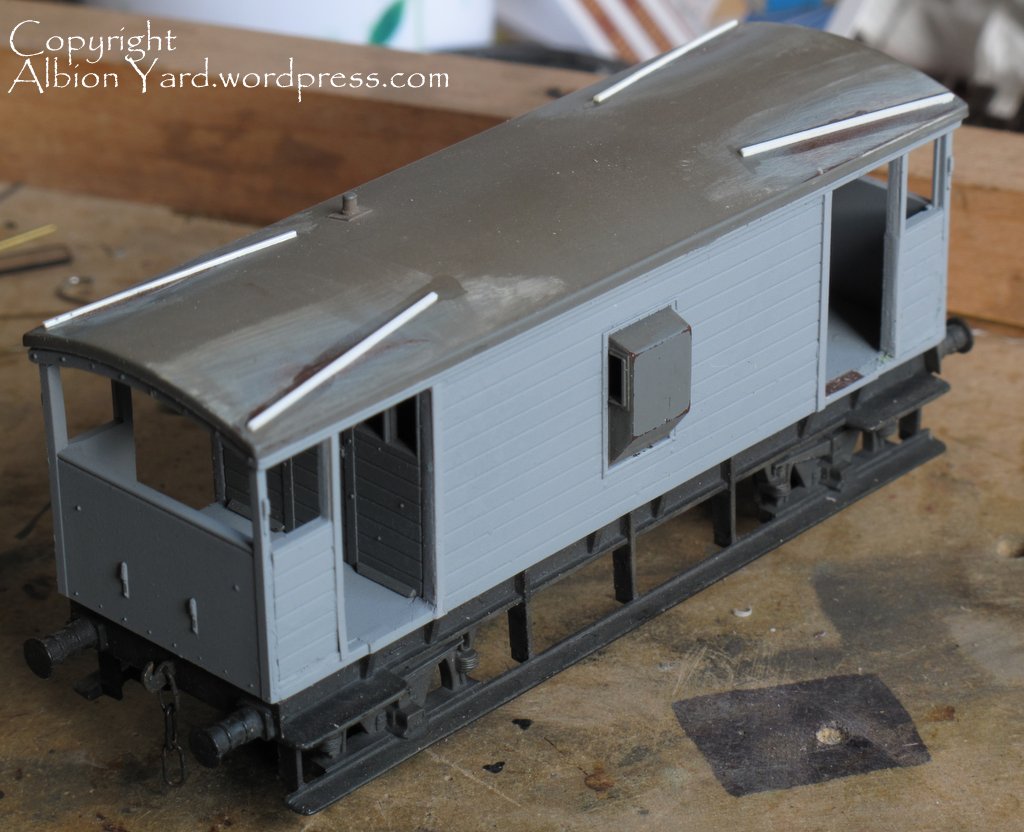
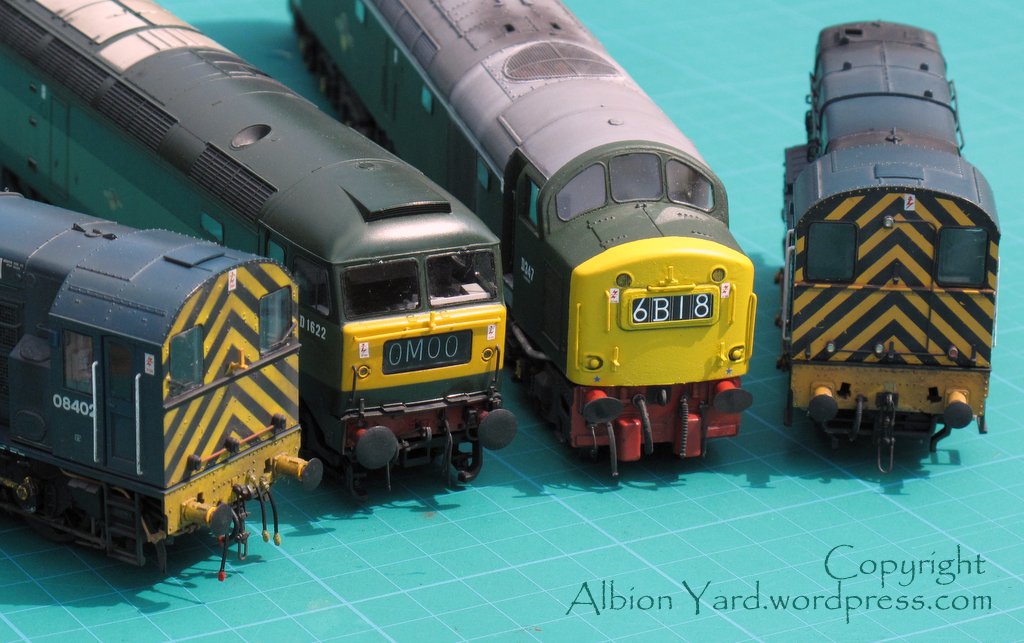
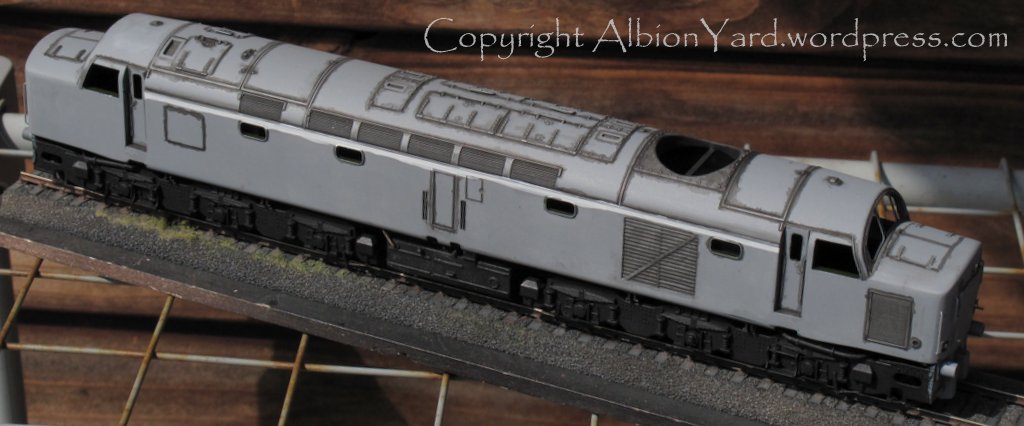
This is the latest to go to the paint shops, its a Hornby Railroad class 40, or to some of us who have been round the block a bit, Lima. Its pretty much ready the undercoat being Halfords plastic grey primer. The windows will be removed prior to the painting rather than masking them, with final fitting before weathering. The cab and bodyside windows are from the Shawplan range (Cat No EEFG4001) as are the other shiney bits. This model has had a significant amount of extra underframe detail added which was a bit challenging to keep it practical enough to run over second radius curves, which it still does. The detail is all impressionistic, quite a bit of time was spent looking at images of the 40’s and then making something that looks like it should, but is far from a copy of the real thing. One thing I would like to do is change the wheelsets out for finer scale versions. Unfortunately due to the axle diameter there isn’t a drop in replacement set. What was quite interesting is finding that the main bogie axles run in square bearings, so the Hornby 42XX/72XX models aren’t breaking the new ground that some have thought they are. This means Hornby have been using this system for approximately three years at least, with no obvious repercussions.

The body has some issues, though not as many as the Bachmann version, I’m referring to the original Bachmann model, not the latest version due for release this summer, the pre-production shots of that showing a much improved model. The paint for this model will depict a late green version with full yellow ends and DXXX number series. Hopefully it’ll get to stretch its legs across a good section of the S&C which is being modelled by a mate. Joining it are a couple of Bachmann 105 units which will be converted to the large headcode box variant http://www.flickr.com/lightbox/ One thing I’m short of is clear images of the underframes as these had different chassis’ fitted with Rolls Royce engines.

In the next week or so the exhibition diary will be updated, the layout doing its final shows this year.

Not Everyone
Works For Peanuts …
Posted in Airfix, Bachmann, Branch Line, brassmasters, British Rail, canon, Chris Nevard, DCC, dcc sound, decals, Eastern Region, Exhibition, hobbies, Hornby, Layout, life, Midland Region, Model Railroad, Model Railway, Model Railway Journal, Modelling, OO Gauge, paint, Railex, research, Scottish Region, Southern Region, Uncategorized, waterslide, Western Region | Tagged , , , , , , , , , , , , , , , , | Leave a comment

Scalefour North 2013

Robin Whittles' Bristol Barrow Road

Robin Whittles’ Bristol Barrow Road

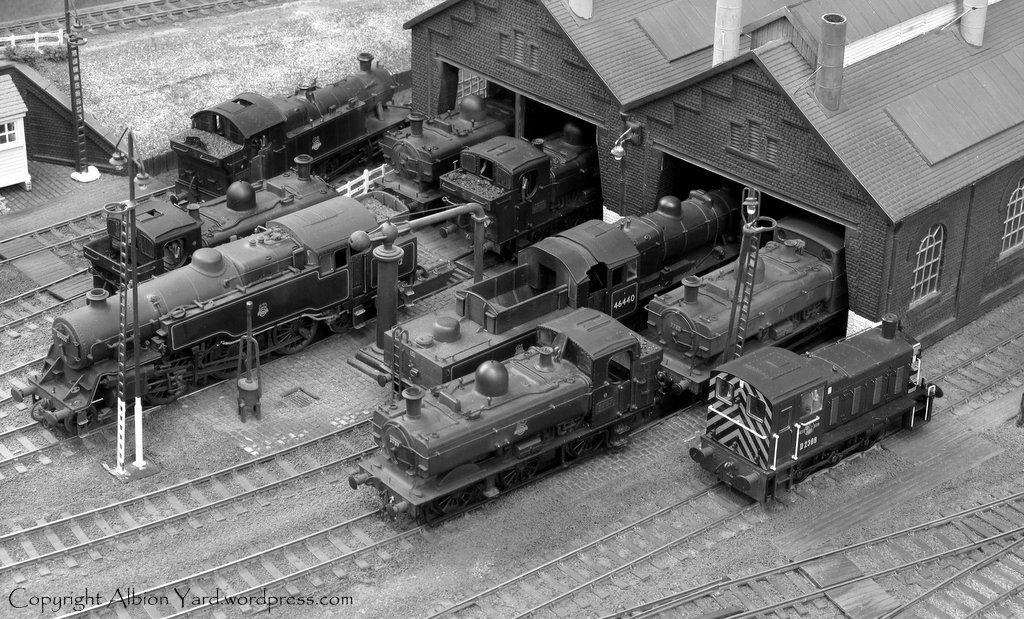
Scalefour North at Wakefield was a good one overall and three layouts caught my particular interest. Bristol Barrow Road, seen above and shown as work in progress. Already there are a good amount of features that are possibly going to make this model one of the best motive power depot models built so far. The above image and view reminds me of John Dormans 7mm shed diorama in MRJ a good few years ago. That model captured the often elusive atmosphere of a steam shed and I think Barrow Road is on that same pathway too.

IMG_0919

IMG_0920

IMG_0924

IMG_0926

IMG_0927

Knutsford, above, is one of those layouts that seems to capture a time and place, its a layout that always brings me back to look at it again, even if there’s nothing moving and there are no trains on the scenic section. One of the key elements between this and Lower Exbury below is the use of colour and lighting on the layout. Despite having two very different styles of presentation the lighting and use of colour on the models and scenery themselves bring a consistency in appearance that isn’t there in many layouts.

IMG_0929

IMG_0930

IMG_0932

IMG_0933

IMG_0934

Lower Exbury is a small layout and of the light railway genre. It does show how well S4/P4 track looks and is a good advert for P4/S4 in a small space. This element struck me as one project I have underway is a small space layout with a footprint of 4ft x 1ft. Lower Exbury has a dimensions and pretty much encapsulates the feeling and use of space and quality that I want to capture, but for me it’ll be in OO in an urban environment.

IMG_0935

My shopping bag this weelend was a bit of an odd mix, a Comet BR Mk1 57ft underframe for detailing a Bachmann Suburban coach. Assorted Shawplan bits and pieces for a 31/4 based on the current Hornby model, decals for some hoppers for Roy Jacksons Retford, paint for an aircraft project and a photo of Welwyn Garden City in 1961 with a view into the station I’ve not seen before. Also on the board are components for a 2FS Great Western lower quadrant signal I’ve agreed to have a go at for another friends project. I anticipate making heavy use of the Wild Swan Scratchbuilders Guide to Semaphore Signal Construction (ISBN 978 1 905184 68 2). I now have to find the stiffest and thinnest wire possible, I’ll let you know what I find!

Not Everyone
Works For Peanuts …
Posted in Bachmann, Branch Line, brassmasters, British Rail, canon, Chris Nevard, DCC, dcc sound, Exhibition, hobbies, Hornby, Layout, life, Model Railroad, Model Railway, Model Railway Journal, Modelling, OO Gauge, Photography, Uncategorized | Tagged , , , , , , , , , , , , , , , , , | 4 Comments

Boston

Stay Strong. Your friends are behind you, always.

Stay Strong. Your friends are behind you, always.

Posted in canon, copyright, hobbies, life, media, Photography, travel, usa | Tagged , , , , , , , , | Leave a comment

The Importance of Being Idle

IMG_0655

I was asked a few days ago whats next on the blog?, and I replied I don’t know. Theres good reason for this, I tend to spend a good amount of time just ‘looking’ at all manner of things, and bringing those across to modelling, to me not only is modelling a ‘making’ past time, its a visual one. So one thing can lead to another and I’ll be grabbing thoughts and techniques from other genres, and this ‘thinking time’ is often the part that makes or breaks a modelling idea.

One of those days was last week, a day spent in London at the Tate Modern looking at the work of Roy Lichtenstein http://www.tate.org.uk 
As one of the most recognisable ‘pop artists’ you’d think theres little that can be learnt for something as ‘accurate’ in appearance as a model railway.

whaam

Well, not so, it depends on how you think, and looking at an artists techniques and material use can cross over into other fields, for example texture, one of the most difficult things to capture and scale. Scale is an interesting concept too, we are used to seeing these images in a book, when you see the real thing 15ft by 6ft on a wall in front of you the impact is very much heightened. I did find myself wondering at ‘Whaam’ if Lichtenstein was trying to say something more about American military policies too, though he wasn’t a political activist type of artist in the wider sense. In the original artwork he adapted the aircraft being hit is clearly a Russian Mig 15, on Lichtensteins’ work its changed to an F-86, so he’s depicted a ‘blue on blue’ event, an American aircraft destroying another American aircraft, not ‘an enemy aircraft’ as is so often written. Not only that, the reference to ‘enemy’ is missing from his work where it’s on the original, see above. I didn’t expect to be thinking that when I walked through the door, or later trying to make sense of it in the beer festival …

One modeller on the blog column to the right hand side has a spectacularly good example of how to achieve this sort of crossover from art to modelmaking. On Iain Robinsons’ blog there is a very good piece on replicating texture and color, http://iainrobinson-progress
As Iain points out the painting of this model, (a clay dry) would be the making or breaking of it and he is right, the other thing though is the ability to recognise that, capturing the colors and texture in the painting of the building.

So you may not consider yourself as a ‘artist’ or painter, but by looking at others work you can often find a way, or route if you like of achieving what you want. For me at the Tate Modern, taking the time to look and get my head round some of the technique Lichtenstein used has meant that I have a new idea to try on the seamless digital backscene that we pioneered over a year ago, how time flies! My printer is going to be asking, did you think of this before you got to the beer festival, or after …

Not Everyone
Works For Peanuts …

Posted in Airfix, Bachmann, Branch Line, copyright, Exhibition, hobbies, Hornby, Industrial, Kalmbach, Layout, life, LMS, LNER, Midland Region, Model Railroad, Model Railway, Model Railway Journal, Modelling, Narrow Gauge, Nevard, OO Gauge, paint, Photography, research, travel, Uncategorized, Wales, Welsh Marches, Western Region | Tagged , , , , , , , , , , , , , , , , , , , , | 4 Comments

The Backscene (Railway Modeller March 2013)

b6o4472-cr2

One of the features of the layout that has attracted a great deal of interest is the backscene. This is a digitally printed image 14ft x 2ft. In the March 2013 Railway Modeller theres a how to article if you’re interested in gettting rid of square corners, joint lines made by ‘The Bachmann Trencher’ and square holes to let the trains in and out.

IMG_8889

IMG_8890

The image was kindly supplied by Chris Nevard http://nevardmedia.blogspot.co.uk/ and after a bit of trial and error with John, our tame printer, a really good result was obtained and a huge amount learnt. That which was learnt is already being put into practise on a number of layouts, including one which will really break some presentation boundaries.

Posted in Bachmann, book, Branch Line, canon, Chris Nevard, DCC, Eastern Region, Exhibition, Forest of Dean, Great Western, hobbies, Hornby, Kalmbach, Layout, LMS, LNER, Midland Region, Model Railroad, Model Railway, Model Railway Journal, Modelling, OO Gauge, Photography, Railex, research, Scottish Region, Southern Region, Uncategorized, Wales, Welsh Marches, Western Region | Tagged , , , , , , , , , , , , , , , , | 10 Comments

Buckets of Nothing …

IMG_0518

Buckets, what about them? Well they are surprisingly common and noticeable when you see them. For the steam era modeller they are often seen on a locomotive tender or hanging from a lamp iron. Sand buckets for fire fighting are seen around railway buildings, this useage carries on into the diesel era too.

IMG_0520-001

There are a number of bucket models available particularly solid plastic or whitemetal, and in an early MRJ there was a how to on scratchbuilding them as well in 4mm scale. I wanted empty buckets as seen hanging off GWR Pannier lamp brackets in photos by the likes of Ben Ashworth. Some readers will know I sort of scattergun across modelling genres, and I found these etched gems the other day from Brengun, a Czech company who make some brilliant stuff for military modellers.

IMG_0513

Having treated myself to a few sets, I set about putting a couple together and I’ll cover that in a day or so with some sequence snaps. Theres two types, parallel sided and truncated cone shapes. Having formed them I then soldered them for extra strength and because I needed the soldering practise, being a bit rusty. They do make a nice touch though adding that little bit of something even though its a bit of ‘ordinaryness’ that you’d not pay any attention to on a daily basis. Sometimes that is very difficult to achieve, try making nothing much at all, its really satisfying making ‘nothing’ and capturing peoples attention …

http://www.brengun.cz/

Not Everyone
Works For Peanuts …

Posted in Bachmann, brassmasters, canon, Chris Nevard, Exhibition, Great Western, hobbies, Kalmbach, Layout, Model Railroad, Model Railway, Model Railway Journal, Modelling, OO Gauge, Western Region | Tagged , , , , , , , , , , , , | 1 Comment

Toy Trains on Telly, Timeshift BBC4

IMG_9258

If you missed it, or didn’t know it was on, the BBC Timeshift team have made a very good documentary on our hobby. You can view it here on the BBC’s iplayer

http://www.bbc.co.uk/iplayer/episode/b01q9vhy/Timeshift_Series_12_The_Joy_of_(Train)_Sets/

Albion Yard was one of the layouts they’d looked at to use in the programme and we had a filming slot set up too. Unfortunately the production schedule didn’t allow filming to take place, but it was nice to be asked. Having spoken to the production team and Richard Nichol, the researcher who had no prior knoledge of the subject, I thought they put together a very good programme, which shows the hobby off in a balanced and entertaining way. I also spied a some bits I’ve done for Mr Waterman in the background too, four of the coaches appeared in James May’s toy stories, and I’m wondering if they have an equity card!


Posted in Exhibition, hobbies, Hornby, humour, Kalmbach, Layout, life, Model Railroad, Model Railway, Model Railway Journal, Modelling, Narrow Gauge, Nevard, Photography, research, television, Uncategorized | Tagged , , , , , , , , , , , , , , , , , | 1 Comment

Letters (and Numbers) from America

B&O I-12 Caboose B&O I-12 Caboose

Many of us will be familiar with iconic American F series diesels, the streamlined nose, Santa Fe ‘Warbonnet’, Union Pacific, or Canadian National ‘Pacman’ or ‘Wet Noodle’ color schemes, as UK modellers we may not know what they are, but we often recognise them when we see them. I’d had a similar thing for the B&O caboose, the pictures I’d seen showed a very different design to the traditional cupola or extended vision cabooses the average uk modeller may be familiar with. I’d started to get rid of some of the small collection of US HO scale items I have, the items were incompatible in eras and liveries. I get Model Railroader as a subscription and in there an announcement caught my eye, for these iconic B&O I-12 ‘wagontop’ cabooses. My interest had been re-kindled last year in Canada and by receiving a couple of HO Rapido coaches from a good friend over there.

B&O I-12 Caboose B&O I-12 Caboose

Well temptation got the better of me, and seeing these cabooses got me ordering a couple for my preffered era early 60’s through to 67’ish’. They were limited editions too, and not cheap but the quality was clearly very good, so my US/Canadian short line idea has come a step forward. With my liking for B&O and Canadian National somewhere in the Buffalo New York area is the most plausible, (sort of), in terms of route network, though theres a good deal of research, or ‘making it up’ to be done yet.

B&O I-12 Caboose B&O I-12 Caboose

With all the foam that that has been generated by recent news that Hornby is going to reduce fitted components to their models I took a comparison look between the I-12 and a recent release from Bachmann UK, the Southern 25 ton brake van. There are manufacturing differences between these two products, the Bachmann model is mass market ready to run and the I-12 firmly in the ‘finescale’ limited edition camp. I still think its worth looking at them together though. Why haven’t I chose a Hornby model? well I’ve bought very few recently to be honest, they’re not making many items which float my boat. The cost of the SMD I-12 (£37) is a little over twice that of the Bachmann Pill Box (£14 RRP), and the I-12 is a limited edition. Neither of these have previously been available as an accurate ready to run model, so do you get twice the value from the US product?

4mm (OO) scale SR 25 Ton Pill Box Brake Van & 3.5mm (HO) scale B&O I-12 Caboose 4mm (OO) scale SR 25 Ton Pill Box Brake Van & 3.5mm (HO) scale B&O I-12 Caboose

Much as I like Bachmann products and this particular van, in my opinion in this case I think the US product is better value. In terms of construction the Bachmann van has very few components and you get a few brake gear details in a bag to fit yourself. Handrails are wire which is a nice touch for the UK market, but lamp irons are moulded on to the body or relatively thick plastic details. The foot boards are seperately moulded in plastic which has allowed the brake shoes to allign with the wheel treads, which hasn’t been the case in previous brake van releases. For a few dollars more some of these details could be changed to metal components giving a vastly improved appearance. The paint finish is excellent across all the livery variants, with a few errors, eg this grey version should normally have a black panel behind the lettering. Overall, dimensionally the van is good, but there are a few detail errors, eg the stove chimney is incorrectly located.

4mm (OO) scale SR 25 Ton Pill Box Brake Van & 3.5mm (HO) scale B&O I-12 Caboose 4mm (OO) scale SR 25 Ton Pill Box Brake Van & 3.5mm (HO) scale B&O I-12 Caboose

By comparison the I-12 has many separate components plastic, etches and wire. Detail differences are noticeable across the range of liveries carried from the first introductions of the 1940’s through to the Chessie System 1980’s livery version. Detail differences are many and significant on the four liveries produced so far. Things like toilet vents, handrail shapes, roof vents, roof walkways, window shapes are all included in these differences. The things which impressed me were the add on details, lamps, handrails etc and the quality of the paint finish of them. The Bachmann model could easily step up to Premier league with similar additions, it would be very intertesting to see what price difference it would make. Thoughtfully the I-12 also has extra weight to allow it to be pushed against when banking a train on a layout, I do a similar thing with car wheel balance weights with my brake vans.

B&O I-12 'Wagontop' Caboose B&O I-12 ‘Wagontop’ Caboose

Clearly such additional details and paint cost money to provide, in terms of tooling and assembly costs in the simplest overview. The model has pretty much sold out however, and indications are that other more mainstream cabooses new to market, and at a similar price point are pre-ordering well. Theres been a huge amount of froth and foam about Hornby’s ‘design clever’ stance and what it actually means. With the I-12 ‘design clever’ can be seen to work very effectively at premium prices. Choose your prototype well, make an accurate model at a reasonable price for that premium quality, and they will sell. Fast. There have been new model commissions made by retailers in the UK market, not all of them however have been premium products, with faults in fidelity and some perculiar chassis designs. However with one soon to be released UK model, these issues have been taken on board, and pre-production samples are absolutely stunning. The US and Canadian market embraces this production methodology and has done for a good number of years, as well as the normal and ‘train set’ ranges. It’ll soon be time to see if the UK will accept this style too.

Spring Mills Depot are here >> http://www.smd.cc/

The future for Albion Yard?? The future for Albion Yard??

Not long after its appearance in Railway Modeller and at Model Rail Live 2012 I was asked what was going to happen to Albion Yard as it will be disposed of one way or another. Rather than immediately chopping it up at year end, I’m seriously considering giving it a re-vamp into a US or Canadian prototype, in effect converting it to HO gauge. That’ll give me an opportunity to play with my North American toys, so is this the future above?, I’ll let you know later in the year …

Not Everyone
Works For Peanuts …
Posted in Bachmann, Branch Line, canon, Chris Nevard, hobbies, Kalmbach, Layout, Model Railroad, Model Railway, Modelling, OO Gauge, research, review, Southern Region, travel, Uncategorized | Tagged , , , , , , , , , , , , , , , , , , , , , , | 4 Comments

Window Dressing and First Show

First Show 2013

Sheep Pasture 'P4'

Sheep Pasture ‘P4’

Yesterday I went to the CMRA show at St Albans for a day out. It was pretty much what I expected of the show, which has always been a good regional event. Spread over three floors of the civic centre it is compact and bijou for a show, with indifferent lighting. There were as usual with St Albans a good selection of layouts with a couple of notable ones that caught my eye. One thing I like about St Albans is their exhibition manager rarely picks a ‘Ready to Run’ layout, pretty much all of them show a good cross section of modelling skills from completely scratch built to those that use commercial products but in a way that makes them stand out.

Sheep Pasture 'P4'

Sheep Pasture ‘P4’

Sheep Pasture 'P4'

Sheep Pasture ‘P4’

Sheep Pasture 'P4'

Sheep Pasture ‘P4’

Sheep Pasture is a layout that has been around for a while, it is however well worth looking out for capturing the High Peak rail system of Derbyshire really well, the landscape textures are paricularly well done.

St Juliot 'S'Scale

St Juliot ‘S’Scale

St Juliot 'S' Scale

St Juliot ‘S’ Scale

St Juliot was a brilliant example of a compact layout in this scale ( ‘S’ 1/64th). The whole baseboard is designed to fold up to make one easily portable unit. This is the sort of idea that is well worth seeking out, the pre group era may not be your thing, but the baseboard design just might be. So like an earlier posting regarding ‘nothing to see here’ http://nuthin-to-see-here/ regarding real life, a closer look at a layout thats not initially of interest may well reap real rewards in another field of modelling completely.

Earl's Court 'OO'

Earl’s Court ‘OO’

Earl’s Court was another eye catcher as normally micro style layouts do nothing for me, however this layout is really well thought out and really well modelled. With this layout the more you look, the more you see, so if its at a show you’re at, spend some time on it. The whole scenic display as well as carefully chosen stock, depict West London in the early 1960’s brilliantly. There’s more pictures here http://ecmr.webs.com/ and a couple on Chris Nevards blog http://nevardmedia.blogspot. where he too was taken by the atmosphere of this very simple layout.

Another example of modelling the 1960’s, (not at St Albans) which I’ve recently added to the blogroll at the right hand side is Andy Coopers EM gauge ‘New Hey’ layout, http://newhey.wordpress./ In Mr Coopers normal style the entries will range from taking the piss http://newheytoilet-humour/ to useful techy stuff like wheel pulling http://newheymodelrailwaythe-real-design-clever/ drop by and have a read when you’ve got a few spare minutes.

Window Dressing
One of the things I get asked when people see Albion Yard, is how do I fit the glazing on the flush glazed stock and locomotives. The easiest way to describe this is to show you, and this is a bit I wrote for Brian at Shawplan and am reproducing with his kind permission. The glazing technique shown here is the standard one I use, the same technique works across various scales and is a development of how I used to do it the longhand way, when individually cutting glasing panes.

Old style glazing

Since we started producing the glazing we have changed the way we cut the transparency fret. If you’ve bought one of our earlier releases they are on a sprue in a similar fashion to a traditional Airfix kit, and you can see in the following images we’ve used an older fret.

Glazing sheet (current style)

The current windows are supplied as a push out window, see the image of the BR MK1 suburban fret above. There is no difference to the size or shape of the components, but this is a more effective production method, and all future releases are anticipated to be in this style. The laser is set to cut the material so that all you need to do is gently flex the material whilst applying gentle pressure on the window you want and they will drop out. One thing we have found is that window aperatures on models can vary significantly. This is not generally noticeable but when laser cutting it makes a huge difference. If on a fret we indicate a window for a specific aperature or window, please make sure you use the correct one. An easy way to ensure this is to use non permanent OHP pens to mark the window. Even factory paint thickness can have an effect, so often there is a need to just sand the window or aperature to get the flush fit. 1500 wet and dry grade paper is a good starting point to remove very small amounts of material from either the body or the window. For fixing the windows you can use a variety of adhesive materials. I use a very thin gloss varnish so that capilary action runs the varnish around the aperature before drying and setting. PVA or ‘Canopy’ glue can also be used with just a very small amount applied in a corner or around the perimeter of a window. We have been told superglue works but there is the potential of paint damage by chemical reaction ‘blooming’ on some manufacturers finishes, so we would advise particular care if trying that technique.

ViTrains Cl 47 as supplied

This is typical of many diesel and steam locomotives today, take note of any particular pieces that may be light conduits from LED’s before removal.

Remove cab insert

With this model we supply cab and body window glazing, so remove the black inserts for the roof fans, and then the cab interior. Some interiors are glued in so be prepared to cut away glued areas.

Remove all original glazing

On this model gentle inward pressure on the glazing made it fall inwards makeing removal easy. Be prepared as glue amounts vary from model to model within manufacturers ranges. This is true of rolling stock as well as locomotives.

Paint cab window aperatures

Ready for glazing

Once the windows are removed, touch in any areas with the body surround color, this makes a noticeable improvement where there is a thick body side.

Test fit of glazing

Test fit each glazing piece, if possible slide the transparency in as flat as you can this helps it sit better, and any fit problems are easier to see.

Test fitting shows slightly oversize for this window.

If the aperature is too small the glazing will sit ‘proud’ of the aperature. In this instance we used wet and dry to take a few thou from the door pillar and base of the glazing transparency. It’s usually obvious which to work on, the body or the glazing transparency and once you’ve done one or two it’ll become intuitive which is the easier component to work on.

Fitting completed to check seating of glazing.

Fitted windows labelled with non-permanent OHP marker pen

Each glazing panel will be custom fitted to your model, there are two options on fitting. You can fit them as you go fixing them and then moving on to the neext panel after they have set. This particular model has more work to be done to it, so using the OHP pen each panel is marked as is the corresponding window on the model. This means they can be stored safely and fixed after the rest of the conversion work has been completed.

Finished effect.

This is the finished effect, the last touch is to run a black marker pen or paint around the edge of the window glazing, this kills any refraction of light through the edge. The difference can be seen comparing the door(treated), and cab side window. The door window edge has dissapeared, but there’s still a slight refraction on the cab side glazing.

http://www.shawplan.com/

http://www.cmra.org.uk/

Posted in Bachmann, Branch Line, British Rail, Canon G10, Chris Nevard, DCC, Eastern Region, Exhibition, Great Western, hobbies, Hornby, Kalmbach, Layout, life, LMS, Midland Region, Model Railroad, Model Railway, Model Railway Journal, Modelling, Narrow Gauge, OO Gauge, Scottish Region, Southern Region, Uncategorized, Western Region | Tagged , , , , , , , , , , , , , , , , | Leave a comment

Last one out

IMG_0120

Today has been a quiet day just tidying up a few loose ends.

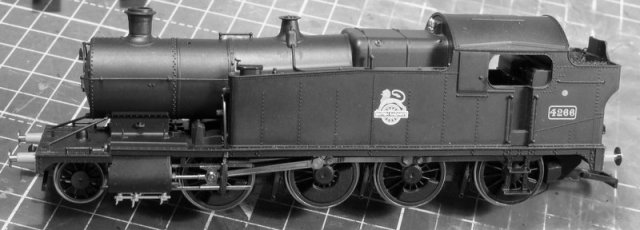
One of those was 3725, a Forest of Dean Pannier with the base model again being the excellent Bachmann high cab version. Its fine having a number of locos of the same type, in fact for many layouts that would be prototypical. For Albion Yard the high and low cab panniers have been just right in helping set the scene. With this one I wanted it to be slightly different to the others, so I’ve modelled it with a nearly empty bunker. That was no big deal, just cutting away the bunker top, thinning the edges and replacing it. I’ve also added the lasercut windows from Shawplan and opened the cab rear doors and roof vent. This was quite a common configuration and gives the locomotives a bit of character. I wanted this one finished today as next year, (see what I did there) the layouts being photographed for a magazine, and whilst they are all the same varieties I wanted detail differences to be seen.

One thing I get asked is how I repaint the locos, well heres a quick how to …

IMG_0111

Often I use the Halfords Matt black plastic spray, but for this loco I’ve chosen Tamiya AS-6 matt black acrylic to add a variation to the color schemes. This will give a slightly different shade base color to the other three black panniers I have. The other items I used were Tamiya masking tape, and Humbrol Maskol.

IMG_0113

The route restriction indicator on the cab side is nicely printed and I wanted to keep that. Just place a tiny bead of maskol over the indicator (see the pinky purle dot) and wait for it to go off, that means goes a transparent purple, takes about 10-25 minutes. Wrap the buffers and vac pipes/couplings with masking tape. The Tamiya is excellent for this as is ‘low tack’ but very flexible

IMG_0114

Thats pretty much it, on this loco I’ve also applied a matt black wash to get into the restricted areas like corners and behind pipes. I also kept the cab roof color and that was masked too.

IMG_0117

I use a Tamiya paint stand when spraying, thats the wire ‘thing’ the loco is sitting on, as it allows the model to be held and moved around ensuring an even coverage, particularly usefull when using an aerosol can. After about ten minutes all the masking can come off, I accellerate the drying with a hair dryer too, then Fox waterslide British Rail emblems were applied and varnished to hide the carrier film. I run some metal blacking across handrails and their stantions too, this dulls them down and colors any shiny metal that may have been scratched.

IMG_0125

I’ve weathered this one lightly, just as well really as the cabside numbers (from Modelmaster), are a bit too low and they’ll need to be moved before the week is out! The black is a slightly different shade to the Halfords painted locos which has worked really well, it’s not enough to stand out but enough to be a realistic variation of the same base color. Also completed over the weekend is the Ratio 522 GWR signal box, a brilliant kit and well worth spending your christmas pocket money on! It came in for a straightforward review, but I may just see if theres a plausible location for it on my train set!

IMG_0091

Finally, thank you again for dropping by, and have a good new year!

Not Everyone
Works For Peanuts …

Posted in 2012, Airfix, Bachmann, book, Branch Line, British Rail, canada, canon, Exhibition, Forest of Dean, Great Western, hobbies, Hornby, Layout, life, Model Railroad, Model Railway, Model Railway Journal, Modelling, Nevard, OO Gauge, paint, Photography, research, review, Uncategorized, Wales, waterslide, Welsh Marches, Western Region | Tagged , , , , , , , , , , , , , , , , | 3 Comments