Wonderwall

IMG_1615

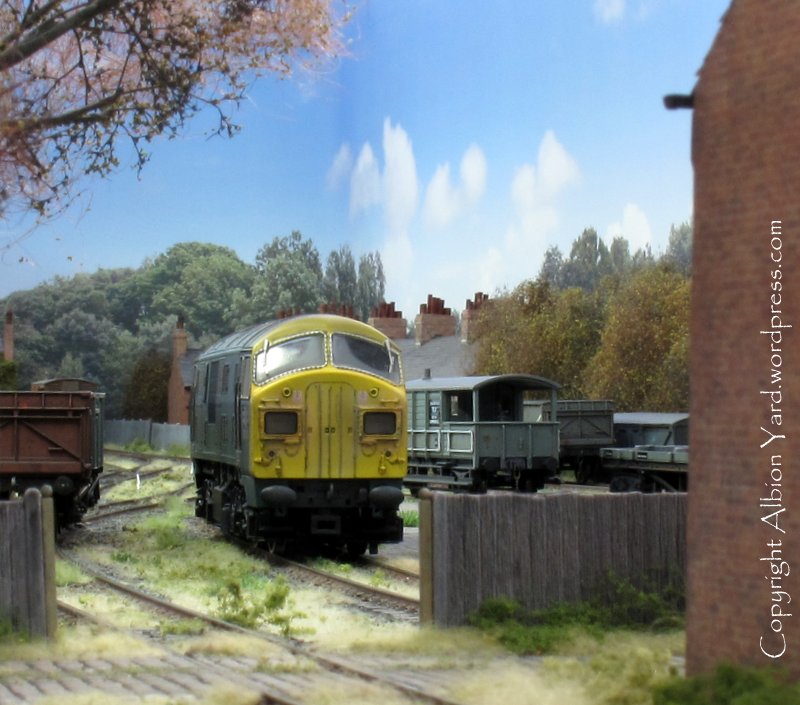
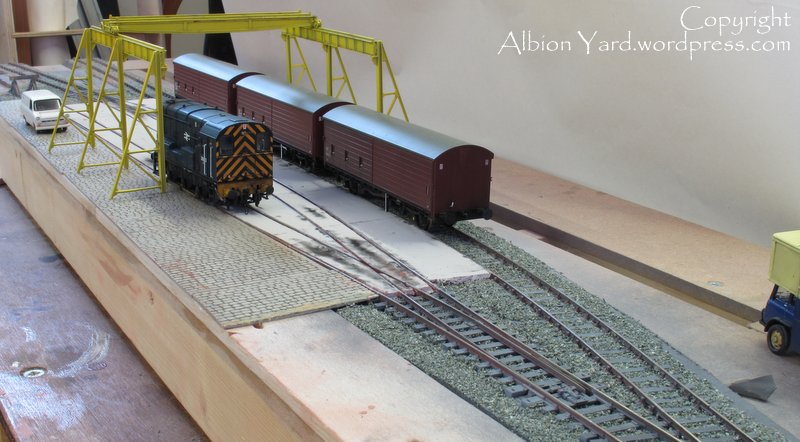
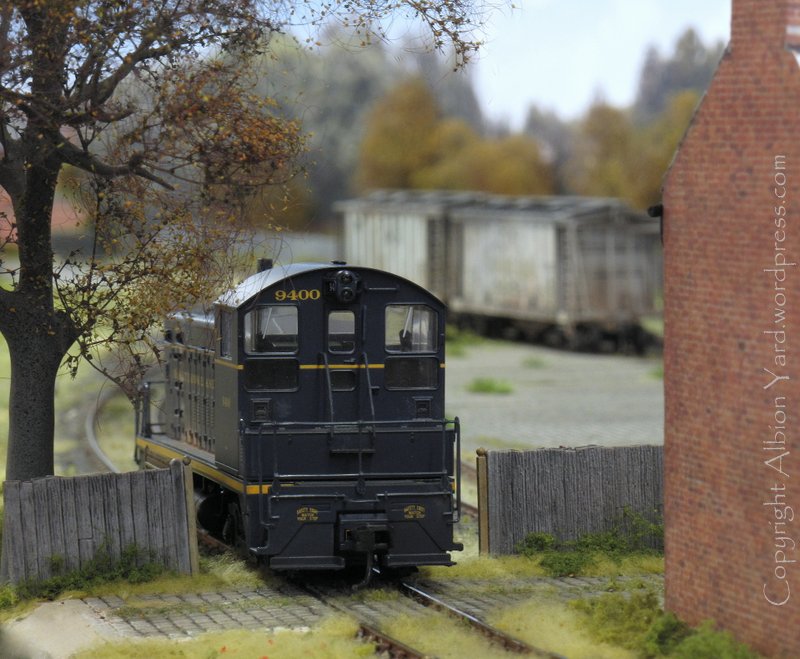
If like me your train set sits against the wall when its set up, or if it’s permanent, then the wall is a big feature as is how to deal with it. This is a picture of Wharfedale Road, my current project. It’s unusual for me in that it’s a micro layout, not that I’ve built any large layouts like Roy Jackson’s Retford , though I have helped on a few of that size of layout. Making a Micro has been a challenge, as I found out with Collier Street for the Railway Modeller which was a similar footprint. The surprise I had there was that was in N gauge and the scale didn’t save time, as I originally thought it would. It was like working in 4mm scale only smaller, ( I know, I know, that sounds like Father Ted explaining Cows to Dougal), pro rata I was making the same amount of models and scenery, and I don’t know why but I’d fallen into the ‘its N gauge, it’ll be faster, its smaller’ trap.

Wharfedale Road

Wharfedale Road

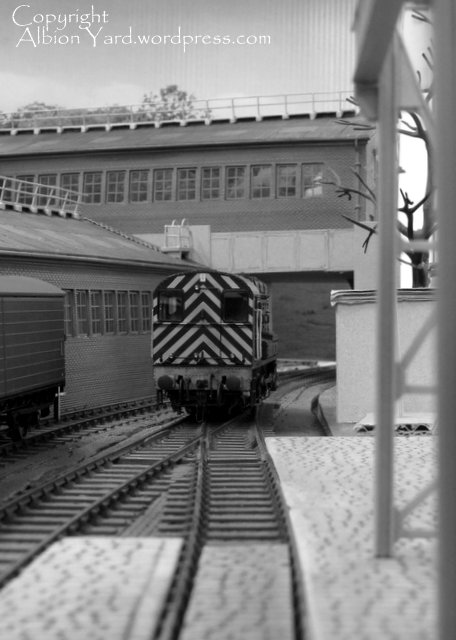
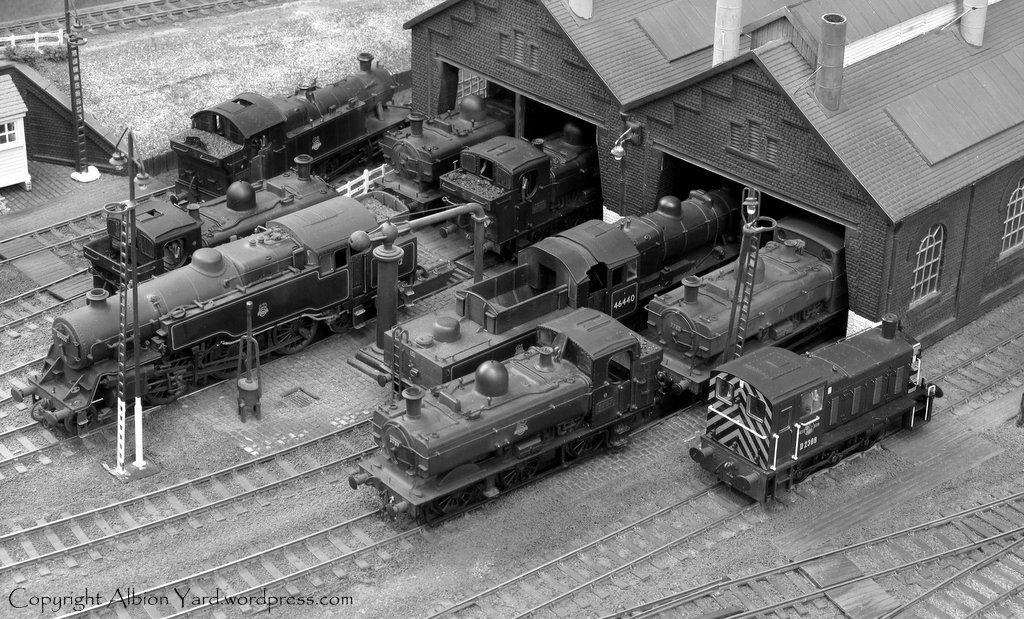
Well a similar thing has happened with ‘Wharfedale Road’. The size caught me out. I wanted something that would keep me interested whilst building it, and as it’s for a DVD had to reflect the story we’ll be telling in due course. Paul Lunn has supplied me with a plausible idea and building mock ups. I’d actually started making a different scenic fit for it, which is where the wall came in. With it in its location in the workshop, what I was building wasn’t working for a number of reasons, but the space element behind the layout and filling it well, became paramount, which is something we’ll tell in the DVD.

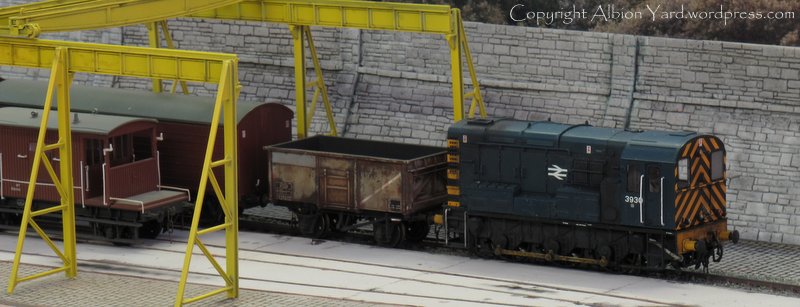
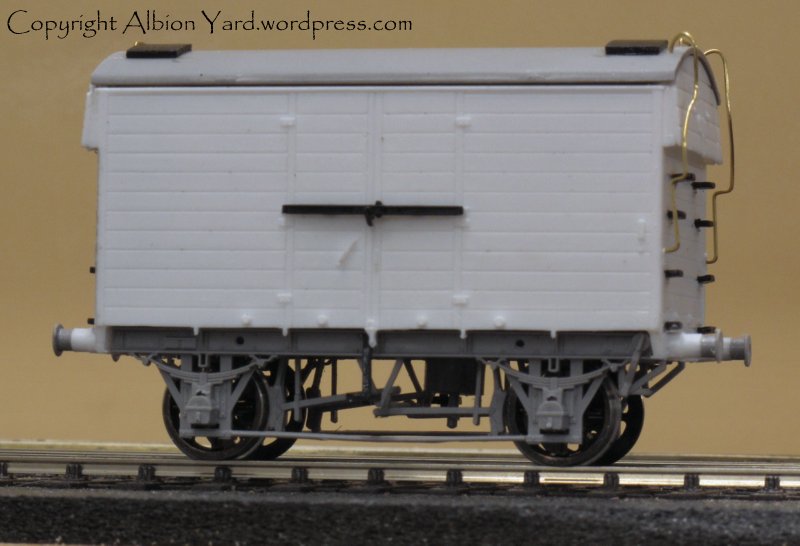
Changing the scenic side in good time saved the layout and regenerated the enthusiasm to get it right. So, I started to rebuild it, and every day for the past week or so I’ve found something to do on it be it scenery or stock, all sort of fifteen minute heroes, small bites out of the metaphorical elephant. This week has seen the layout ballasted and the loading area concrete infill completed from Das modelling clay. Then there’s been painting the track and weathering the scenery so far, and building the retaining wall and overhead crane. This so far has been really enjoyable, particularly the thought processes of getting such a small compact space to ‘work’. That of course includes choosing the right stock and motive power, that doesn’t just mean choosing the shortest and smallest stock either, that too came as a surprise, and tied into it being a plausible model rather than a cliché.

In getting the space to work has made me think about what’s next for the Albion Yard Forest of Dean theme, I’m now having thoughts about an ‘American’ style layout with multi levels, and a number of stations/yards to replicate some of the Forest network. Key to this is working how to get a narrow ‘shelf layout’ to work visually like this one is now doing. It won’t be a set of micro layouts connected, more ‘small layouts’ joined. After all Albion Yards scenic section is only 8ft long in reality so four of those per level could give me eight or twelve scenic elements if I opt for two or three levels respectively. In N gauge the same space could give really nice spacious feelings to those sections.

One things for certain, it won’t save me any modelling time at all …

_B6O4719.CR2

Posted in Airfix, Bachmann, Branch Line, brassmasters, canon, Chris Nevard, DCC, dcc sound, Eastern Region, Exhibition, Forest of Dean, GNR, Great Western, hobbies, Hornby, Ian Futers, Industrial, Kalmbach, Layout, life, LMS, LNER, Midland Region, Model Railroad, Model Railway, Model Railway Journal, Modelling, Nevard, OO Gauge, Photography, research, Scottish Region, Southern Region, Uncategorized, Western Region | Tagged , , , , , , , , , , , , , , , , , | 3 Comments

Redemption

IMG_0259

I’ve written in the two layout articles that have been published that Albion Yard was/is to be scrapped, and that feeling of there still being value for me in getting something out of it modelling wise, resulted in it not being scrapped yet. After a lengthy chat with one of my operators and a few emails from others I think there is still a bit more to come from the layout in its British guise. What is key for me is that if it appears in print again, and there is some potential for that, it has to tell a different element of the layouts story as well as a bit of the technical and prototype inspiration behind it. In addition to that the photos should be targeted to that piece of writing too and try and show something different as well. Unless I’m specifically talking about the history and physical development of the layout there’s little point in putting up images of it which are six years old. So much has changed in its appearance since then, the real constant being the track plan, and even that’s changed. After Warley I’ll take a breather with the layout and make a final decision as to whether to modify it further, it would be a logical extension of the layouts prototype story, but depends on if there’s enough modelling value from it for me. It certainly won’t be back on the exhibition circuit as Albion Yard though, Warley is the layouts final show.

Wharfedale Road

Wharfedale Road

In terms of layout work Wharfedale Road above is the current project and the images above shows some of my ‘Typical Smoke and Mirrors’ as a good mate entertainingly called it. What you see is what you get, this section is about 18 inches long and there’s no photoshop here. Its a micro layout, the first I’ve really done, following a plan from my good friend Paul Lunn. everything you can see in the picture apart from the track and stone setts is removable providing a jig saw assembly. It’s an urban shunting yard which has some good realistic operating potential, thanks to the careful and prototypical attention to detail that Paul Lunn takes. I’m hoping to have it completed in time for Model Rail Live, http://www.modelraillive.co.uk/  where Paul may have it as part of his layout planning clinic, I’ll confirm if we’re taking it along closer to the day. Albion Yard will be there too in its familiar Western Region, Forest of Dean set up.

_B6O4719.CR2

Posted in Airfix, Bachmann, Branch Line, British Rail, canon, DCC, dcc sound, Eastern Region, Exhibition, Forest of Dean, Great Western, hobbies, Hornby, Ian Futers, Industrial, Kalmbach, Layout, life, LMS, LNER, media, Midland Region, Model Railroad, Model Railway, Model Railway Journal, Modelling, Nevard, OO Gauge, Photography, Scottish Region, Southern Region, Uncategorized, Wales, waterslide, Western Region | Tagged , , , , , , , , , , , , , , , , , , | Leave a comment

Fog in the Forest

One of those cold damp autumn mornings, winter's definitely on its way ..

One of those cold damp autumn mornings, winter’s definitely on its way ..

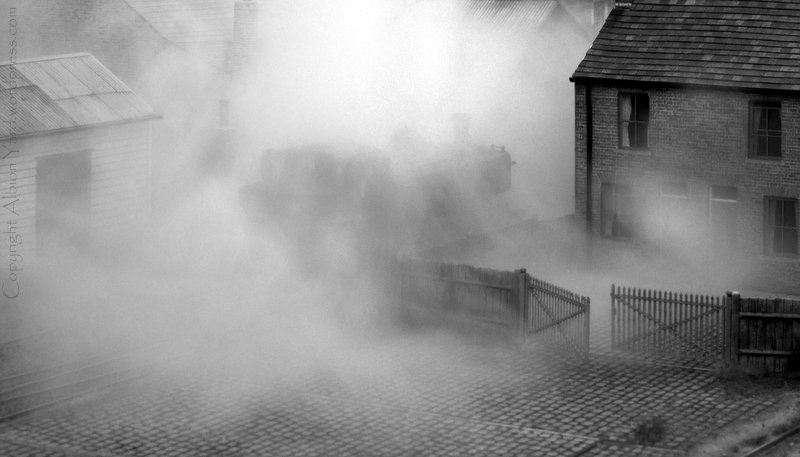
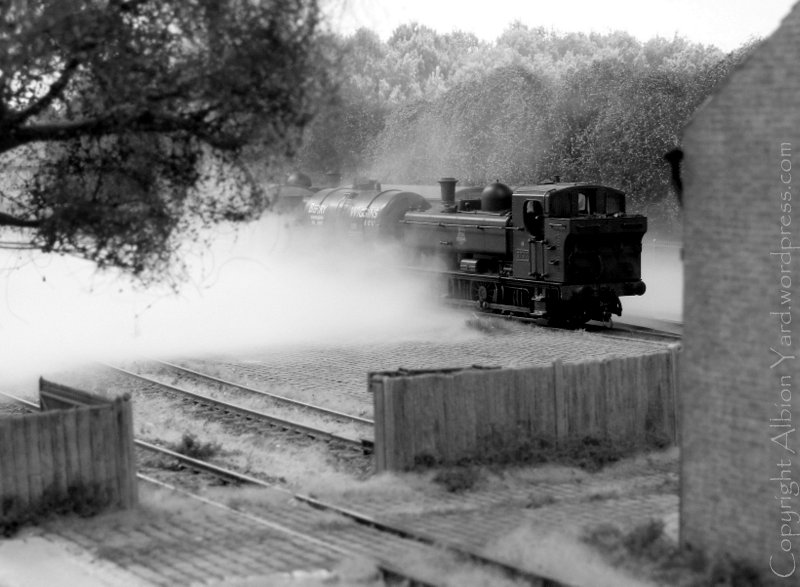
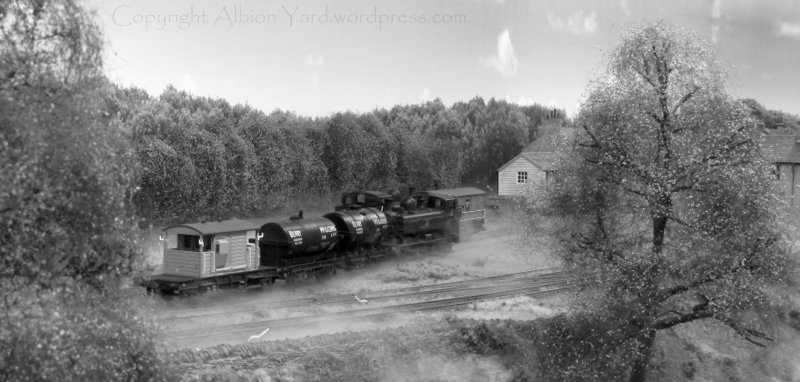
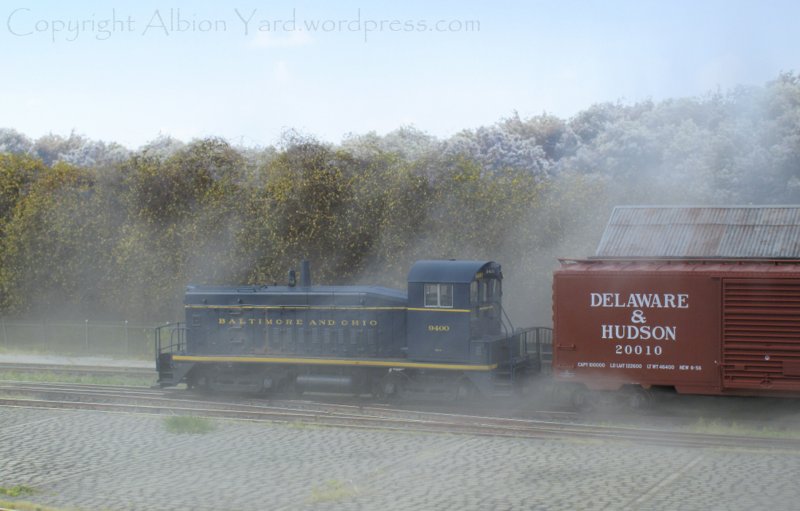
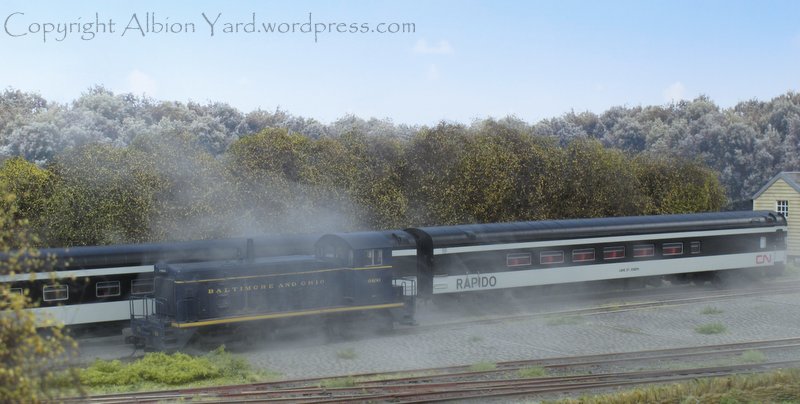
I’ve had a couple of queries regarding the dry ice we used in some of the pictures for Model Rail 186. The photoshoot for Model Rail 186 was one of the most interesting and challenging sets I’ve ever done. The magazine shots were all taken by Chris Nevard and ranged from those taken at home and on location at Model Rail Live at Barrow Hill last year. Hopefully Chris will get the opportunity to use some more of his ‘fog’ shots, having seen the proofs, they are absolutely stunning. The autumn lighting effect Chris got I felt captured what I wanted to achieve with the model and I felt that to use some of the fog shots was an excellent choice by the editorial team.

IMG_0246

At the end of the shoot I had some dry ice left and had a go myself. The pictures shown here are some of those from my solo session later on, and what you see is what you get, there’s no photoshop manipulation here. All I’ve done here is some changes made in Google Picassa, primarily using the black and white functions. Pictures were taken with a Canon G10.

IMG_0256

A word of caution though, dry ice is potentially dangerous. It is very cold, its around -80c/-110F so you can’t just pick it up, it burns, you need proper handling gloves! It needs transporting and storing with caution, some couriers won’t handle it, and it literally is an oxygen thief. We were very careful that the studio we’d made was large enough to work with the amount of carbon dioxide we were adding. To give an idea of the properties of this material we had a large rectangular bucket for the waste material, this was so cold it froze to the floor overnight and had to be chipped off the floor the following morning. The temperature in the studio, roughly double garage size, was noticeably cooler than outside. In January I was opening the door to let the heat in ..

IMG_0187

It is a material I’d use again, but the shoot we did really underlined that its not stuff to be fooled around with. Oh, and the final note of caution, it burns your wallet too!

Chris’ blog
http://nevardmedia.blogspot.co.uk/

_B6O4719.CR2

Posted in Airfix, Bachmann, Branch Line, brassmasters, British Rail, canon, Canon G10, Chris Nevard, copyright, Eastern Region, Exhibition, Forest of Dean, GNR, Great Western, hobbies, Hornby, Ian Futers, Kalmbach, Layout, life, LMS, LNER, Manchester, media, Midland Region, Model Railroad, Model Railway, Model Railway Journal, Modelling, Nevard, OO Gauge, paint, Photography, Railex, Scottish Region, Southern Region, Uncategorized, Wales, Welsh Marches, Western Region | Tagged , , , , , , , , , , , , , , , , , , , | 6 Comments

Model Rail 186

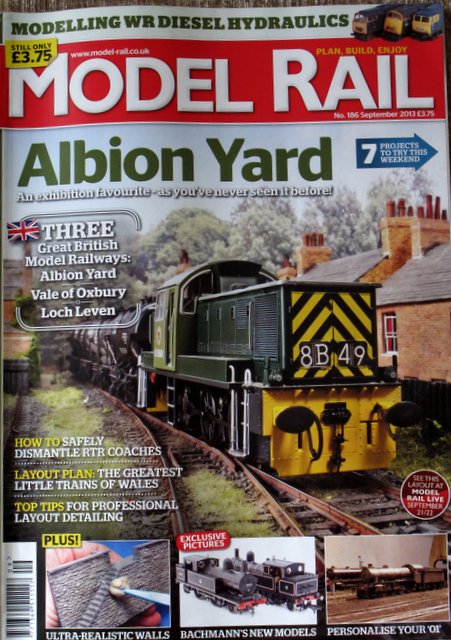
Model Rail 186 September 2013

Model Rail 186 September 2013

For September’s Model Rail,  https:modelrail I’ve been very fortunate and privileged to have Albion Yard featured as one of the magazine layouts and be on the front cover. Inside are some brilliant pictures from Chris Nevard http://nevardmedia and there is an unusual twist to some of them, a hint of which is below.

The Future?

The Future?

The layout as I’ve mentioned previously is on its last year of shows so have a look at the diary page for the last few if you’d like to see it ‘in person’. The issue is a good one and if you like Western Hydraulics George Dent has an excellent piece on weathering three of the most popular candidates available and there’s a flavour of it here http://faded-glory.html


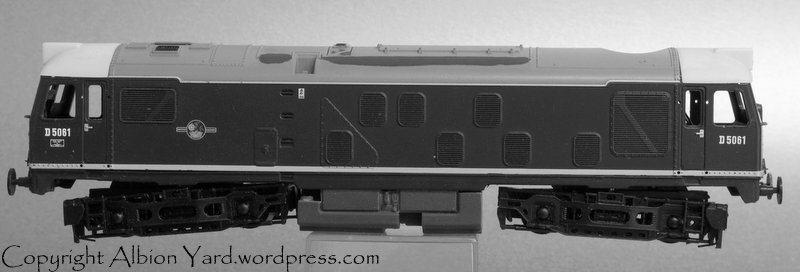
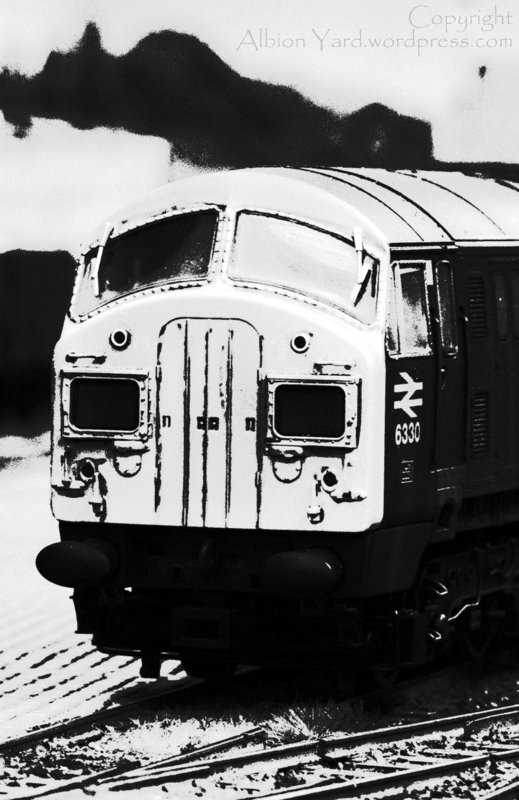
On my workbench is the Rat Pack, a variety of assorted Class 24’s and 25’s having a programme of subtle modifications, there’ll be more on those soon with information on other ways to tackle your baby Sulzers.

The Rat Pack

The Rat Pack

Brassmasters Fuel/Water Tanks for Class 24/25

Brassmasters Fuel/Water Tanks for Class 24/25

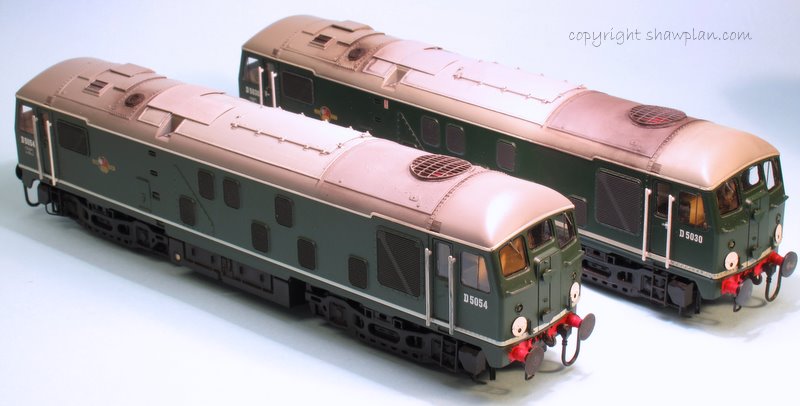
And in best Blue Peter tradition, here’s two I did earlier, these are early variants with Shawplan detailing. Roof details are a pain on these types as it almost seems no two have the same roof panel configuration. A type to try and work from photographs on!

img_5520

Not Everyone
Works For Peanuts …

Posted in 3f, Airfix, Bachmann, Branch Line, brassmasters, British Rail, canon, Chris Nevard, DCC, dcc sound, Eastern Region, Exhibition, Forest of Dean, Great Western, hobbies, Hornby, Ian Futers, Industrial, Kalmbach, Layout, LMS, LNER, Manchester, media, Midland Region, Model Railroad, Model Railway, Model Railway Journal, Modelling, Nevard, OO Gauge, Photography, Scottish Region, Southern Region, Wales, Welsh Marches, Western Region | Tagged , , , , , , , , , , , , , , , , , | 1 Comment

Vitamin ‘C’ for Hornby’s 42XX

IMG_1396

Oranges?, nup, its an easy way to give your ‘sloppy’ chassis a quick boost to stiffen them up, and perform better. Best of all its another fifteen minute hero, it takes no time at all to do this modification. Most RTR is designed (not unreasonably) to go round ‘train set’ curves, which of necessity are pretty tight. So you’ll often find that on some loco chassis and bogie/pony trucks there is what appears to be too much lateral movement on the axles. ‘Too much’ really relates to your own requirements, if using second radii or less this modification isn’t going to be of much use to you as it will prevent the stock working well, particularly through reverse curves. Some of us who have been round the block a bit can easily see a quick fix and sometimes its easy to forget that the old dodges we learnt too long ago to mention, are still relevant to new modellers, and those who simply haven’t come across them before.

Peco R9 Fibre Washer Cut to Circlip

Peco R9 Fibre Washer Cut to Circlip

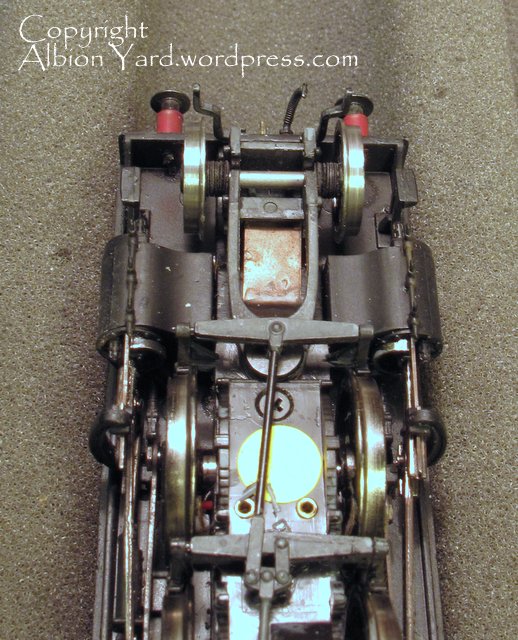
If you’re using Peco streamline medium radii curves or greater this easy modification will give you better running and in some instances make the ‘sit’ of the locomotive on the track look much better too. On Albion Yard I have some of the medium radii curves on ‘Y’ points and the asymmetric three way point. On my new ‘micro’ layout I have a similar mix including one of the Code 75 curved points. There are three RTR locomotives that I’ve done this modification to that immediately spring to mind. They are the Bachmann 45XX pony trucks, the Heljan class 14 ‘teddy bear’ drive and crank axles, and the Hornby 42xx drive axles.

Fitting Circlips to Heljans Class 14

Fitting Circlips to Heljans Class 14

If you’ve built locomotive chassis kits, at some time you’ll have encountered ‘side play’, the lateral movement of axles and wheels and how to reduce it. Often it can be done with washers of the same internal diameter as the axle. There is an element of trial and error, ideally you can fit the wheels to the chassis and body and move it through pointwork and curves to see if there are any places where wheels and coupling rods foul parts of the chassis or bodywork. With Romfords for example its easy to unscrew the wheels adjust the number washers and replace them. However if your wheelset is pre assembled like on RTR locomotives unless you take the axle assembly apart, you need another process to do this. The simple way is with the fibre washers provided by Peco.

42xx Leading axle with circlips fitted. Note how close the crosshead/crankpin will be without them.

42xx Leading axle with circlips fitted. Note how close the crosshead/crankpin will be without them.

They are coded R-8 and R-9 (R8 = 1.59mm internal diameter and R9 = 3.0mm internal diameter) As they are fibre washers you can cut them with a sharp craft knife. Its also worth colouring them with a black marker pen to help disguise them when fitted, (recent production has been a sky grey color). On the 42xx (and HJ Cl14) the chassis has a very marked lateral movement across all axles. The leading axle and cross heads have the potential to collide if they are mishandled, so I decided that this axle should have minimum movement. Using R9 washers I cut them to a ‘C’.

Its important that the ends of the C look like the C on your keyboard, (see class 14 image), the ends must be close rather than a semi circle. This prevents the washer from falling off. What you’ve now made is a sort of circlip. Using tweezers these circlips can be put onto the axle, I find it easier to do this with the axle removed from the chassis, and remember to keep an equal number either side of the chassis.
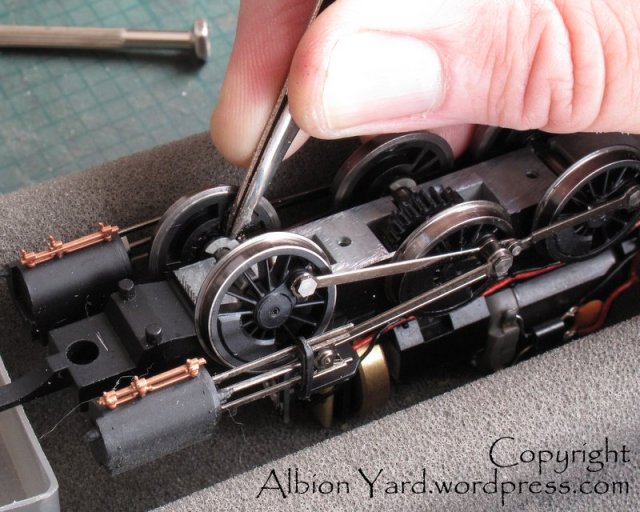
Fixing circlips with chassis baseplate removed

Fixing circlips with chassis baseplate removed

It doesn’t matter if the axle diameter is a little less than the internal diameter of the washer/circlip as that allows a little play and prevents binding. If you have too many either side of the chassis they can cause friction between the wheel and chassis so be mindful of that when adding them. I then test run the chassis through the tightest of my curves, if the loco runs smoothly then its right, if not then adjust the number on each axle to suit, (this is the trial and error/gaining experience apprenticeship bit we all go through. Basically look to get a smooth and regular amount of play across the axles, difficult to describe, but you’ll know it when you see it! I’ve set mine up so that the drive axle hasn’t got much play and the leading axle much the same.

Circlips in place on Heljan's Class 14

Circlips in place on Heljan’s Class 14

I did the same with the Class 14 too, this loco as supplied almost waddled on straight track which was noticeable with such a relatively long body. adding the washers sorted this and the loco runs much better too as there is less movement in the chassis, so the drive train works more efficiently.
Bachmann 45xx Pony Truck

Bachmann 45xx
Pony Truck

Pony and bogie trucks can be modified in the same way, axle diameter is usually suitable for the R8’s, what I tend to do is change the original wheels for Alan Gibson equivalents to improve the appearance. I use an Alan Gibson back to back gauge to ensure the wheels are the correct distance apart when fitting them.

Not Everyone
Works For Peanuts …

Posted in Airfix, Bachmann, brassmasters, British Rail, canon, DCC, dcc sound, Eastern Region, Great Western, hobbies, Hornby, Ian Futers, Kalmbach, Layout, LMS, LNER, Midland Region, Model Railroad, Model Railway, Model Railway Journal, Modelling, Narrow Gauge, Nevard, OO Gauge, Scottish Region, Southern Region, Uncategorized, Western Region | Tagged , , , , , , , , , , , , , , , , , , | 4 Comments

Six of the Best

Some more stunning footage from the recently rebuilt Mosquito flying from Hamilton Airport in Canada with the CWH Lancaster, Spitfires, Hurricane and B25 Mitchell. The Mosquito is one of my favourite aircraft and I can remember being allowed access to the BAe photo library at Hatfield a couple of times when I worked there. It was an absolute treasure trove of images, some of them were technically still ‘classified’ even though they were pictures of WWII equipment.

The Canadian Warplane Heritage Museum at Mount Hope (Hamilton) is well worth the visit, last time I was there I nearly came away with an F-86 deal, real ones!

She always gives me that look whenever I’m near this sort of museum, that ‘don’t you even think about it’ one! :0)

Posted in aviation, canada, hobbies, life, media, Photography, travel, Uncategorized | Tagged , , , , , , , , | 2 Comments

Last call for Albion Yard …

Port Albion Ont. ?

Port Albion Ont. ?

As I’ve mentioned before this year is going to be the last shows for Albion Yard. The dates below are the final bookings for the layout, so if you’re attending one of these shows and want to see the layout, come along and say hello. The future for the layout after Warley has not yet been decided, options include moving parts of it on to interested parties or recycling track sections to a US/Canadian project in HO. That final decision will be made in November.

http://www.titfield.co.uk/Camrail/Camindex.htm

http://www.modelraillive.co.uk/

http://www.mmrs.org.uk/exhibition/exhibition.htm

http://www.thewarleyshow.co.uk/

Not Everyone
Works For Peanuts …

Posted in Airfix, Bachmann, Branch Line, British Rail, canada, canon, DCC, dcc sound, Eastern Region, Exhibition, Great Western, hobbies, Hornby, Industrial, Kalmbach, Layout, LMS, LNER, Manchester, Midland Region, Model Railroad, Model Railway, Model Railway Journal, Modelling, Nevard, OO Gauge, Railex, Scottish Region, Southern Region, Uncategorized | Tagged , , , , , , , , , , , , , , , | 3 Comments

Not another MPD, & Parkside’s Mica X7…

IMG_1336

It’s easy to think that sometimes, and I have to admit I’m not the biggest fan of this type of layout as often they are a bit ‘samey’ and it takes a real artistic touch and observational flair in particular to make an MPD layout stand out for me.

Today I was fortunate enough to have a look at one that some friends are selling on behalf of an estate, and take a few snaps with some of Albion Yards motive power on it. It’s a really nice layout, well observed and with scratch built buildings. With a little TLC it could be a show stopper. More details a bit later but the above image gives a bit of the flavour of it.

Parkside PC85 GWR Mica X7

Parkside PC85
GWR Mica X7

This is the ‘first draft’ build of the new Parkside X7 Mica in 4mm scale. Up to their current excellent standard, and just the couplings and final handrails to fit at the left hand end. The tie bar is perfectly straight out of the pack, but unfortunately has stretched and bent due operator error in handling. I do tend to replace them with brass wire anyway for extra rigidity, for this one I’ll simply make one cut and re-glue it which will resolve the stretch for the time being.

Not Everyone
Works For Peanuts …

Posted in 3f, Airfix, Bachmann, Branch Line, brassmasters, British Rail, canon, Chris Nevard, DCC, dcc sound, Eastern Region, Great Western, hobbies, Hornby, Kalmbach, Layout, LMS, LNER, Manchester, Midland Region, Model Railroad, Model Railway, Model Railway Journal, Modelling, Nevard, OO Gauge, Photography, Scottish Region, Southern Region, Wales, Welsh Marches, Western Region | Tagged , , , , , , , , , , , , , , , | Leave a comment

Exhibition Diary 2013

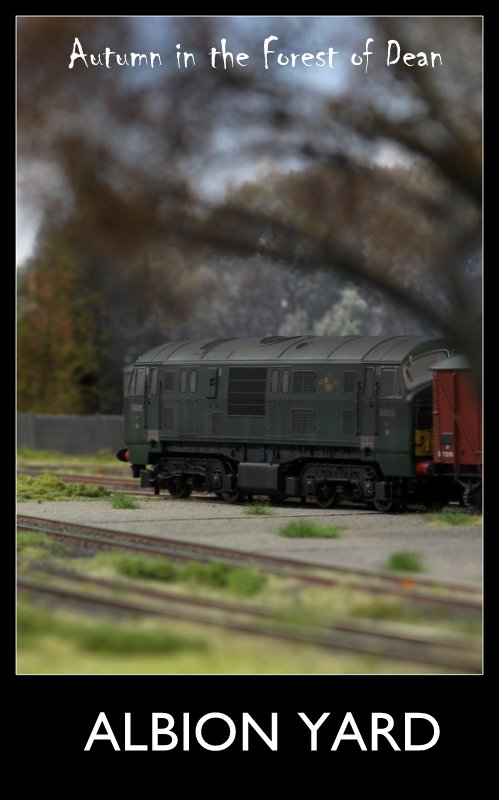
'Tin un's'  in the Forest

‘Tin un’s’ in the Forest

This year is going to be a short season starting next weekend 20th July for Albion Yard at Larkrail 2013
http:Camrail.htm

The exhibition page will be updated in the next week or so with the remaining three shows the layout will do. The line up for Larkrail looks very interesting with plenty of demos and an Expo feel to it, this year will be a smaller show than Camrail which I understand it replaces this year.

As this is going to be Albion Yards last season I’m thinking what I can make or finish in the next week to bring along. Two candidates stand out, Oil Burner 3711 or the 42xx. It will give a spur to finish a few wagons too, the new Parkside Mica X7 is all but complete on the bench, a couple of Z2 gunpowder vans and two Hornby horseboxes that just need couplings and pipes.

Decisions decisions …

Not Everyone
Works For Peanuts …

Posted in Airfix, Bachmann, book, Branch Line, brassmasters, British Rail, canon, DCC, dcc sound, Eastern Region, Exhibition, Forest of Dean, Great Western, hobbies, Hornby, Ian Futers, Industrial, Kalmbach, Layout, life, LMS, LNER, Manchester, Midland Region, Model Railroad, Model Railway, Model Railway Journal, Nevard, OO Gauge, Photography, Scottish Region, Southern Region, Uncategorized, Wales, Welsh Marches, Western Region | Tagged , , , , , , , , , , , , , , | Leave a comment

Hornby 42xx Chassis modifications

IMG_1246

This is a view of the new guard irons that I’ve made for Hornby’s 42xx, which has given an immediate improvement in the locos appearance both from the side and rear view. Its an easy mod to do and I’ll cover that in this posting. Apart from the pony truck, which I will either replace or modify, I’ve now completed the significant modifications to the chassis. In the previous post I referred to the axle side play and fixing that with Peco fibre washers. The chassis has now had a good amount of running on a test bed, and back and forth through a crossover and curved points with no detriment to the running, so the fibre washers are well worth doing. With the reduced side play particularly on the leading axle there is much less opportunity for the crosshead and slide bar to cause problems which was one concern I had. Another benefit of this is improved contact with the pick wipers on the backs of the wheels. I’m of a mind to replace the pickups on mine with top wiping pickups, these will fit easily into the body. The reason I may do this is Albion Yard has significant weed growth particularly in the sidings and there’s clearly the potential for one of the existing pickups to catch. The layout will be up for testing and filming soon so I’ll re-assess the pick ups at that point.

IMG_1240

So how easy is it to make guard irons?, the answer is, very. Above you can see a couple of pieces of scrap etch that have been soldered together to make a sandwich. Once they are soldered together file them to match the shape required from a drawing or good photograph. By having them soldered together you do two things, you save time as you are working on a pair of guard irons at the same time. If I were doing more than one loco I’d just add further layers to suit. The second and important benefit is that you are making a mirrored pair, left and right hand versions of the same shape and dimensions.

IMG_1242

Once you’re happy with the initial shape of the guards unsolder them and form the first one. If using brass like I have, they will bend easily to shape.

IMG_1241

Make sure you check the first one against the chassis and running rail so you have the correct amount of drop, and width from the chassis to the rail. Once happy with the first one, form the second one, make sure you get it the correct way round if they have an uneven taper to them, so check the orientation before making your first bend. It’s simple to make a mirror image of the first guard by checking both of them match visually as above.

IMG_1245

Using either a drawing or photographic references like I did, cut the guard irons to length. The mounting plate fixing to the chassis is actually quite short on the prototype and is noticeable. Rather than relying on superglue I drilled and pinned my guards with a 0.4mm drill and made a rod between the two. This will give added strength to the joint so in the event of a knock on the guard irons they are much less likely to be displaced. Total time for this job was about an hour, definitely an hour well spent. Next up will be the cab area and/or pony truck. The cab area looks to be a easy fix, I’ve already opened up the roof sliding vent throwing more light into the cab. Using detail pictures I took of a 52xx I’ll make the details around the rear cab doors and windows, I don’t see any potential problems with them or replacing the glazing. The final detailing will be replacing the buffers for sprung versions, lamp and fire irons where appropriate, possibly a re-number, for a loco that would have worked regularly through Aberbeeg and weathering.

Again I’m really pleased with the impact these small changes are making, partly because whilst its a Hornby 42xx, its now very definitely my Hornby 42xx. And that’s quite a nice feeling.

Not Everyone
Works For Peanuts …
Posted in Airfix, Bachmann, Branch Line, brassmasters, British Rail, canon, Canon G10, Chris Nevard, DCC, dcc sound, Eastern Region, Exhibition, Great Western, hobbies, Hornby, Kalmbach, Layout, life, LMS, LNER, Midland Region, Model Railroad, Model Railway, Model Railway Journal, Modelling, OO Gauge, Railex, Scottish Region, Southern Region, Uncategorized, Wales, Welsh Marches, Western Region | Tagged , , , , , , , , , , , , , , , | 2 Comments